
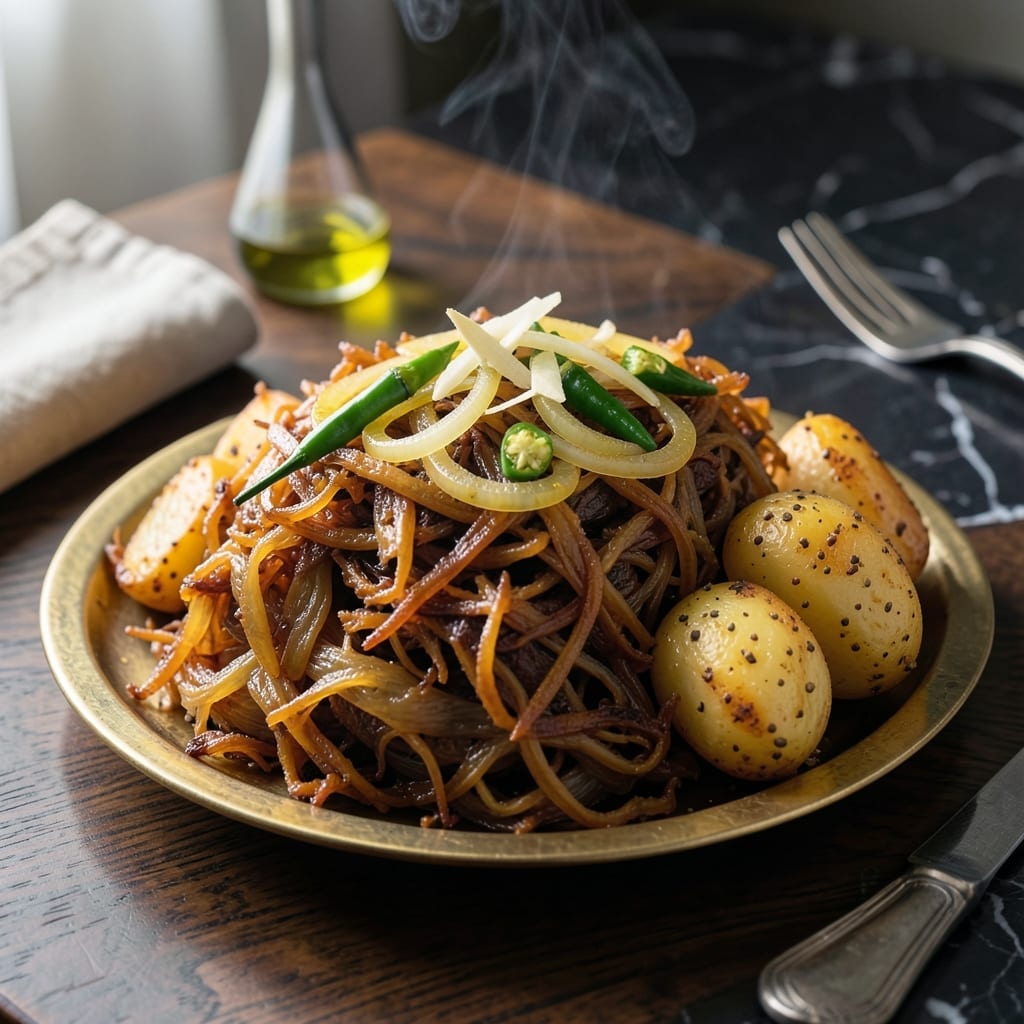
This Bengali-style dish transforms humble cabbage and potatoes into a comforting meal with bold spices. The slow cooking process allows the vegetables to absorb the warm, aromatic flavors deeply.
I developed this method to highlight the natural sweetness of cabbage while balancing it with earthy potatoes and traditional Bengali spices. The result is a dish that feels both hearty and nourishing.
What makes this creation special is its simplicity—everyday ingredients come together to create something far greater than the sum of its parts. The spices build layers of flavor without overpowering.
Serve it with steamed rice or warm roti for a complete, satisfying meal that brings a taste of Bengal to your table.
Ingredients for Phulkopir Roast Recipe Bengali Style
Everyday vegetables and warm spices create this deeply comforting Bengali classic.
| Ingredient | Amount | Notes |
|---|---|---|
| Green Cabbage 🥬 | 1 whole | Medium head, about 2 lbs, cored and chopped |
| Yukon Gold Potatoes 🥔 | 4 whole | Medium, peeled and cubed |
| Yellow Onion 🧅 | 1 whole | Large, finely sliced |
| Fresh Ginger 🌿 | 1 tbsp | Grated or minced |
| Fresh Green Chilies 🌶️ | 2 whole | Slit lengthwise, seeds optional |
| Cumin Seeds 🌿 | 1 tsp | Whole, for tempering |
| Mustard Seeds 🌿 | ½ tsp | Black or yellow variety |
| Ground Turmeric 🌶️ | 1 tsp | For color and earthiness |
| Ground Coriander 🌿 | 1 tsp | Freshly ground preferred |
| Garam Masala 🌶️ | 1 tsp | Bengali blend if available |
| Mustard Oil 🫒 | 3 tbsp | Traditional choice, or use vegetable oil |
| Fresh Cilantro 🌿 | ¼ cup | Chopped, for garnish |
| Salt 🧂 | 1 ½ tsp | Adjust to taste |
| Sugar 🧈 | 1 tsp | Balances the spices |
The cabbage and potatoes should be fresh and firm—look for dense heads without blemishes and potatoes with smooth, unbroken skin. Bengali grocers often stock the specific spice blends, but Indian markets like Patel Brothers or Whole Foods will have most of what you need. Mustard oil is traditional (available at Kaluustyan’s online), but avocado oil works as a neutral substitute if you can’t source it.
Out of fresh ginger? Ground ginger at half the amount works in a pinch, but the fresh has better brightness. No mustard seeds? Fennel seeds add a different but pleasant anise note. For heat control, reduce or omit the green chilies—cayenne or red pepper flakes can substitute if you need to add heat back in. The garam masala is key; Bengali or Indian blends are ideal, but any warm spice mix will do.
This keeps well for 3-4 days in the fridge—flavors deepen as it sits. Reheat gently on the stove with a splash of water to refresh. The dish freezes beautifully for up to 3 months (thaw overnight before reheating).
Why You’ll Love This Recipe
- One Pot Wonder: I love that this comes together in a single pan—just cabbage, potatoes, and a handful of spices, no complicated steps.
- Spice That Pops: Here’s what sold me—the ginger and green chilies give it that authentic Bengali heat without overpowering the sweetness of the veggies.
- Feeds a Crowd: Honestly, I make a big batch on Sunday and it reheats beautifully for lunches all week.
Step-by-Step Instructions for Phulkopir Roast Bengali-Style
Master the technique that transforms humble vegetables into a deeply flavorful, comforting dish.
Step 1: Temper the Spices in Hot Oil
Heat the 3 tbsp mustard oil in a heavy-bottomed pan over medium heat until it begins to shimmer. Add the 1 tsp cumin seeds and 0.5 tsp mustard seeds, stirring constantly. You’ll hear the mustard seeds pop—this is your cue that they’re ready.
Once the seeds begin to sizzle and turn a shade darker, add the 1 tbsp fresh ginger and 2 whole fresh green chilies. Sauté for 30 seconds until the ginger releases its aroma. This tempering process builds the foundation of flavor for the entire dish.
Step 2: Sauté the Aromatics and Potatoes
Add the 1 whole yellow onion to the pan and cook for 3-4 minutes until it softens and turns translucent. Then incorporate the 4 whole Yukon Gold Potatoes, stirring to coat them in the spiced oil.
Sprinkle in the 1 tsp ground turmeric, 1 tsp ground coriander, 1.5 tsp salt, and 1 tsp sugar. Cook for 5 minutes, stirring occasionally, until the potatoes begin to develop a light golden crust. The sugar balances the spices while the turmeric lends its characteristic warmth.
Step 3: Incorporate the Cabbage and Simmer
Add the 1 whole green cabbage to the pan, stirring well to combine with the potatoes and spices. The cabbage will initially seem voluminous, but it will wilt down significantly as it cooks.
Cover the pan and reduce the heat to low. Let it cook for 15-20 minutes, stirring every 5 minutes to prevent sticking. You’ll know it’s ready when the cabbage is tender but still retains some bite, and the potatoes are fork-tender with a slight crispness at the edges.
Step 4: Finish with Garam Masala and Fresh Cilantro
Uncover the pan and sprinkle the 1 tsp garam masala over the top. Stir gently to distribute the spice blend evenly. This final addition layers in the complex, warming notes that define Bengali-style dishes.
Cook uncovered for an additional 2-3 minutes to allow the flavors to meld. Remove from heat and garnish with the 0.25 cup fresh cilantro. The cilantro adds a bright, fresh contrast to the rich, spiced vegetables. Serve warm with steamed rice or roti for the ultimate comforting meal.
Pro Tips For Making Phulkopir Roast Recipe Bengali Style
- Shred Cabbage Fine: Use a sharp knife or mandoline to cut the green cabbage into thin, even strips—this ensures it cooks through quickly and absorbs the spices better. I learned this the hard way after chewing on undercooked chunks in my first few attempts. —
- Parboil the Potatoes: Boil the Yukon Gold potatoes for 5-7 minutes before adding them to the pan. Sounds like an extra step, but it prevents them from turning mushy while the cabbage finishes cooking. —
- Bloom the Spices: Cook the grated ginger and chopped green chilies in hot oil for 30 seconds before adding anything else. My grandmother swore by this, and it actually changes the outcome by deepening the flavor base. —
- Skip the Overcrowding: Resist the urge to dump all the cabbage in at once—cook it in batches if needed. Steaming from too much volume leaves you with a soggy roast instead of that perfect caramelized texture.
Perfect Pairings for This Recipe
Bread Pairings
Warm luchi or paratha are traditional Bengali breads that soak up the spiced juices beautifully. I love serving this with whole wheat roti for a healthier twist. The soft texture complements the hearty vegetables perfectly.
Rice Options
Steamed basmati rice is the classic choice—its light, fluffy texture balances the bold flavors. For variety, try jeera rice (cumin-infused) or ghee rice for extra richness. I always use 1:1.5 rice-to-water ratio for perfect results. 💛
Protein Additions
For a non-vegetarian version, serve with bengali fish curry or chicken rezala. The mild, creamy sauces contrast nicely with the spiced cabbage. I particularly enjoy it with grilled hilsa when in season.
Fresh Sides
A simple kachumber salad (diced cucumber, tomato, onion) with lemon juice cuts through the richness. Or try begun bhaja (fried eggplant slices) for an authentic Bengali meal. The crispiness adds wonderful texture contrast.
Beverage Pairings
Serve with cha (Bengali black tea) or a cooling yogurt-based lassi. For alcohol, a light Indian lager like Kingfisher complements the spices without overwhelming them. I prefer mine slightly chilled. 🍺
Condiments
Offer green chili paste or tamarind chutney on the side for those who want extra heat or tang. A squeeze of fresh lime just before serving brightens all the flavors beautifully.
Nutrition Facts
Frequently Asked Questions
Can I use other cabbage varieties?
Yes, red or savoy cabbage work well. Red adds color but may turn the dish pink, while savoy has a more delicate texture. Adjust cooking time by 2-3 minutes as needed.
Why is mustard oil traditional?
Mustard oil’s pungent flavor is iconic in Bengali cooking. It mellows when heated, adding depth that neutral oils can’t. If unavailable, use 1 tbsp ghee mixed with 2 tbsp vegetable oil.
How do I prevent the dish from getting watery?
Cook uncovered for the last 5 minutes to evaporate excess moisture. Also, salt the cabbage lightly 10 minutes before cooking to draw out water.

- Potato Candy Recipe 1933: Vintage Peanut Butter Roll Delight - October 30, 2026
- Potato Chip Cookie Recipe With Pecans: Buttery Crunch Meets Nutty Richness - October 30, 2026
- Potato Patty Recipe No Egg: Crispy Edges Without the Binder - October 30, 2026