
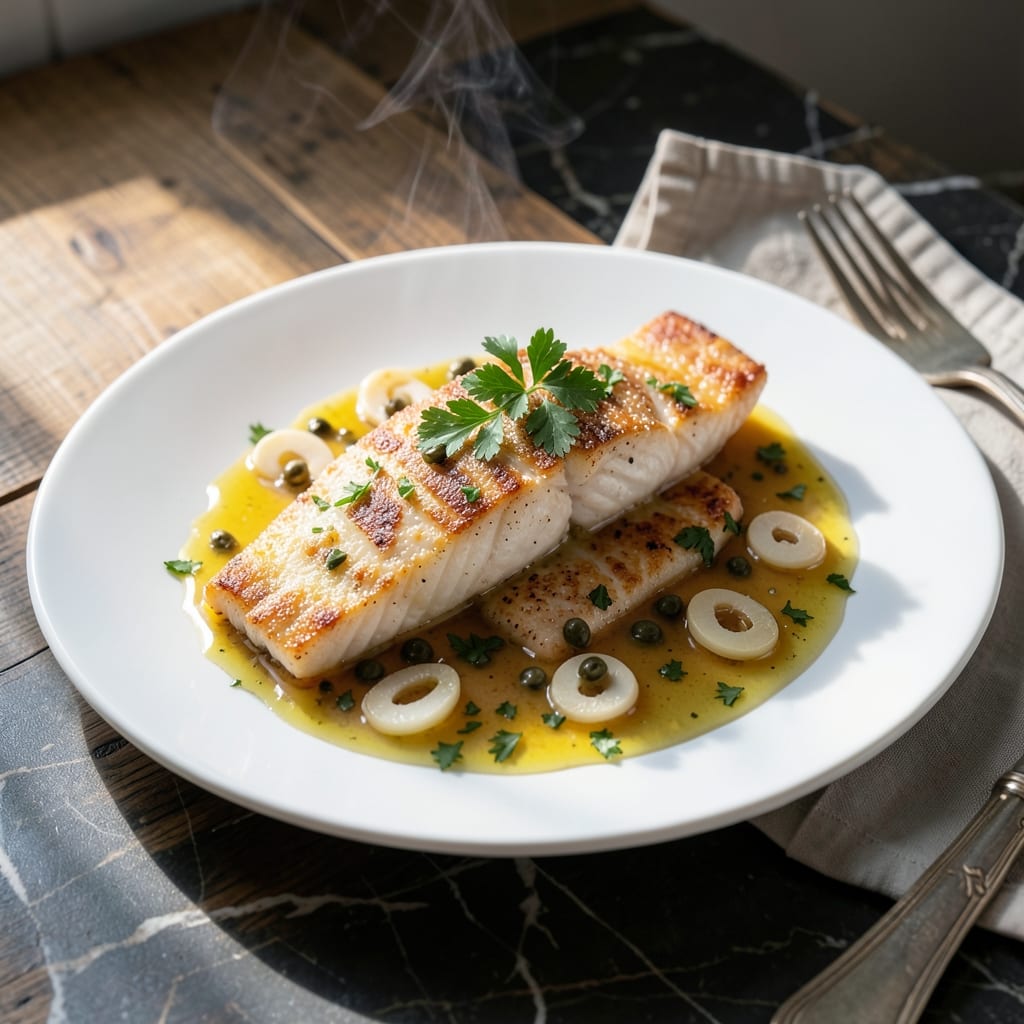
This piccata sauce transforms simple fish into a restaurant-worthy dish with minimal effort. The bright lemon and briny capers create a zesty emulsion that complements delicate seafood perfectly.
I developed this method after years of testing to achieve a sauce that clings beautifully to fish without overpowering it. The key is reducing the liquid just enough to create a velvety consistency that coats every bite.
The fish cooks in 10 minutes while the sauce comes together, making this a foolproof weeknight meal. The combination of buttery richness and tangy acidity balances the natural sweetness of the fish.
Serve immediately for the best texture and flavor. The sauce pairs equally well with salmon, halibut, or cod.
Ingredients for Piccata Sauce Recipe for Fish
Transform seafood with this bright, briny emulsion of lemon, capers, and butter.
| Ingredient | Amount | Notes |
|---|---|---|
| White Fish Fillets 🐟 | 1 ½ lb | Cod, halibut, or salmon preferred |
| Unsalted Butter 🧈 | ½ cup | Divided for sauce and fish |
| All-Purpose Flour 🌾 | ¼ cup | For light dredging of fish |
| Olive Oil 🫒 | 2 tbsp | For searing fish fillets |
| Garlic Cloves 🧄 | 3 cloves | Minced finely for sauce |
| Dry White Wine 🍷 | ½ cup | Sauvignon Blanc or Pinot Grigio |
| Fresh Lemon Juice 🍋 | ⅓ cup | About 2-3 medium lemons |
| Capers 🌿 | 3 tbsp | Drained and rinsed |
| Chicken Broth 🥣 | ½ cup | Low-sodium preferred |
| Heavy Cream 🥛 | ¼ cup | For velvety sauce texture |
| Fresh Parsley 🌿 | 2 tbsp | Chopped, for garnish |
| Salt 🧂 | 1 tsp | Divided to taste |
| Black Pepper 🌶️ | ½ tsp | Freshly cracked preferred |
| Lemon Zest 🍋 | 1 tsp | From 1 medium lemon |
The fish is the canvas, so opt for fresh, firm fillets—Whole Foods or a trusted fishmonger is ideal. Cod and halibut hold up best to the sauce, but salmon works if you prefer its richness. The capers should be non-pasteurized (look for brands like Divina in the refrigerated section) for the best texture and briny punch. Unsalted butter gives you control over seasoning—Plugrá or Kerrygold are reliable choices.
No white wine? Substitute with equal parts chicken broth and a splash of white wine vinegar. For a lighter sauce, omit the heavy cream and increase the butter by 2 tablespoons. Fresh lemon juice is non-negotiable—bottled lacks the vibrant acidity this sauce demands. If capers are unavailable, chopped green olives provide a similar salty note, though the flavor profile shifts slightly.
The sauce is best served immediately but can be held at room temperature for 1 hour without breaking. Store leftovers in an airtight container for up to 3 days—reheat gently to avoid curdling. The fish, however, is best eaten fresh. Fresh parsley wilts quickly, so chop it just before serving.
Why You’ll Love This Recipe
- One Pan Dinner: I love that it’s just fish, butter, and a few pantry staples—no extra pots, no fuss.
- Bright and Zesty: That buttery garlic sauce with a squeeze of lemon makes the fish taste restaurant-worthy.
- Weeknight Hero: Honestly, it’s my go-to for busy evenings when I need something fast and impressive.
- Budget Keeper: White fish fillets are affordable, and the sauce stretches the flavor without stretching my wallet.
Step-by-Step Instructions for Piccata Sauce for Fish
Master the technique for a velvety lemon-caper emulsion that complements delicate seafood perfectly.
Step 1: Prepare and Sear the White Fish Fillets
Pat the 1.5 lb white fish fillets completely dry with paper towels to ensure a proper sear. Season both sides evenly with ½ tsp black pepper and ½ tsp salt (reserving the remainder for the sauce). Lightly dredge each fillet in the 0.25 cup all-purpose flour, shaking off any excess to avoid a gummy coating.
Heat the 2 tbsp olive oil in a large skillet over medium-high heat until it shimmers but does not smoke. Add the fillets and sear for 3-4 minutes per side until they develop a golden-brown crust and release easily from the pan. Transfer to a warm plate and tent with foil to keep them hot.
Step 2: Build the Aromatic Base for the Sauce
Reduce the heat to medium and add 2 tbsp unsalted butter to the same skillet. Once melted, add the 3 cloves minced garlic cloves and sauté for 30 seconds until fragrant but not browned. Browning the garlic can introduce bitterness, so keep the heat controlled and stir constantly.
Pour in the 0.5 cup dry white wine and scrape up any browned bits from the bottom of the pan with a wooden spoon. This deglazing step incorporates the fond—those caramelized bits left from searing the fish—into the sauce for added depth of flavor. Simmer for 2-3 minutes until the liquid reduces by half.
Step 3: Create the Lemon-Caper Emulsion
Add the 0.5 cup chicken broth, 0.33 cup fresh lemon juice, and 1 tsp lemon zest to the skillet. Stir to combine and bring the mixture to a gentle simmer. Then, add the 3 tbsp capers and the remaining ½ tsp salt. The capers will soften slightly as they warm through, releasing their briny, tangy essence into the sauce.
Simmer the mixture for 3-4 minutes until it reduces slightly and the flavors meld. Then, reduce the heat to low and stir in the remaining 6 tbsp unsalted butter, one piece at a time, whisking until each addition is fully emulsified. This creates a glossy, velvety texture that clings beautifully to the fish.
Step 4: Finish with Cream and Serve
Stir in the 0.25 cup heavy cream and simmer for 1-2 minutes until the sauce thickens enough to coat the back of a spoon. Taste and adjust seasoning if needed, though the capers and lemon should provide a balanced briny and acidic profile.
Return the fish fillets to the skillet and spoon the sauce over them, ensuring each piece is thoroughly coated. Garnish with the 2 tbsp chopped fresh parsley and serve immediately. The sauce should be vibrant and tangy, with the capers and lemon providing a bright contrast to the rich, buttery base. Each bite of fish should be perfectly complemented by the luscious emulsion.
Pro Tips For Making Piccata Sauce Recipe For Fish
- Dry the Fillets: Pat the white fish fillets completely dry with paper towels before dredging in flour—this guarantees a crispy coating that won’t fall apart in the sauce.
- Brown the Butter: Let the unsalted butter cook until it turns golden and nutty before adding garlic; it adds depth to the piccata sauce that raw butter just can’t.
- Skip Overcrowding: Cook the fish in batches if needed—crowding the pan steams the fillets instead of searing them, and you’ll lose that delicate crunch.
- Use Room-Temp Fish: Take the fillets out of the fridge 10 minutes before cooking; cold fish seizes up in the hot pan and cooks unevenly, especially with quick piccata timing.
Common Mistakes When Making piccata sauce recipe for fish
Overcooking the Fish
Delicate white fish fillets cook quickly—over medium-high heat, they’re done in 3-4 minutes per side. I see many people leave them in the pan too long, resulting in dry, rubbery fish. The moment the edges turn opaque and the center flakes easily, pull them off. 🌡️
Skipping the Deglaze
Those browned bits left in the pan after searing are pure flavor. Pouring in the 0.5 cup dry white wine and scraping them up with a wooden spoon adds depth to your sauce. Skipping this step means missing out on a rich, complex foundation.
Burning the Garlic
Garlic burns in seconds over high heat. After adding the 3 minced garlic cloves to the melted 2 tbsp butter, keep the heat at medium and stir constantly. Burnt garlic turns bitter and can ruin the bright, zesty profile of your piccata.
Rushing the Emulsion
Adding the remaining 6 tbsp butter all at once can cause the sauce to break. I add it one piece at a time, whisking constantly over low heat until each addition is fully incorporated. This creates that signature velvety texture. ✨
Over-Reducing the Sauce
Simmering too long after adding the 0.25 cup heavy cream can make the sauce too thick. It should coat the back of a spoon but still drizzle easily. If it becomes gluey, thin it with a splash of chicken broth or water.
Ignoring the Capers
Rinsing the 3 tbsp capers removes excess salt, but don’t skip draining them well. Excess water dilutes the sauce. I also lightly chop larger capers so their briny flavor distributes evenly throughout the dish.
Nutrition Facts
Frequently Asked Questions
Can I use a different type of fish?
While cod and halibut work best, salmon or tilapia also pair well with this bright sauce. Just adjust cooking time to 3-4 minutes per side for thinner fillets.
What can I substitute for white wine?
Use equal parts chicken broth with a splash of white wine vinegar. This maintains the acidity needed to balance the sauce’s richness. Avoid red wine—it overpowers the delicate flavors.
Why did my sauce break or separate?
This usually happens if the butter was added too quickly or at too high heat. Next time, add it slowly over low heat while whisking constantly. If it separates, try whisking in 1 tsp ice water to bring it back together.
How do I prevent a bitter sauce?
Avoid browning the garlic when sautéing—cook it just until fragrant (30 seconds). Overcooked garlic turns bitter and can ruin the sauce’s bright, zesty character.

- Potato Candy Recipe 1933: Vintage Peanut Butter Roll Delight - October 30, 2026
- Potato Chip Cookie Recipe With Pecans: Buttery Crunch Meets Nutty Richness - October 30, 2026
- Potato Patty Recipe No Egg: Crispy Edges Without the Binder - October 30, 2026