
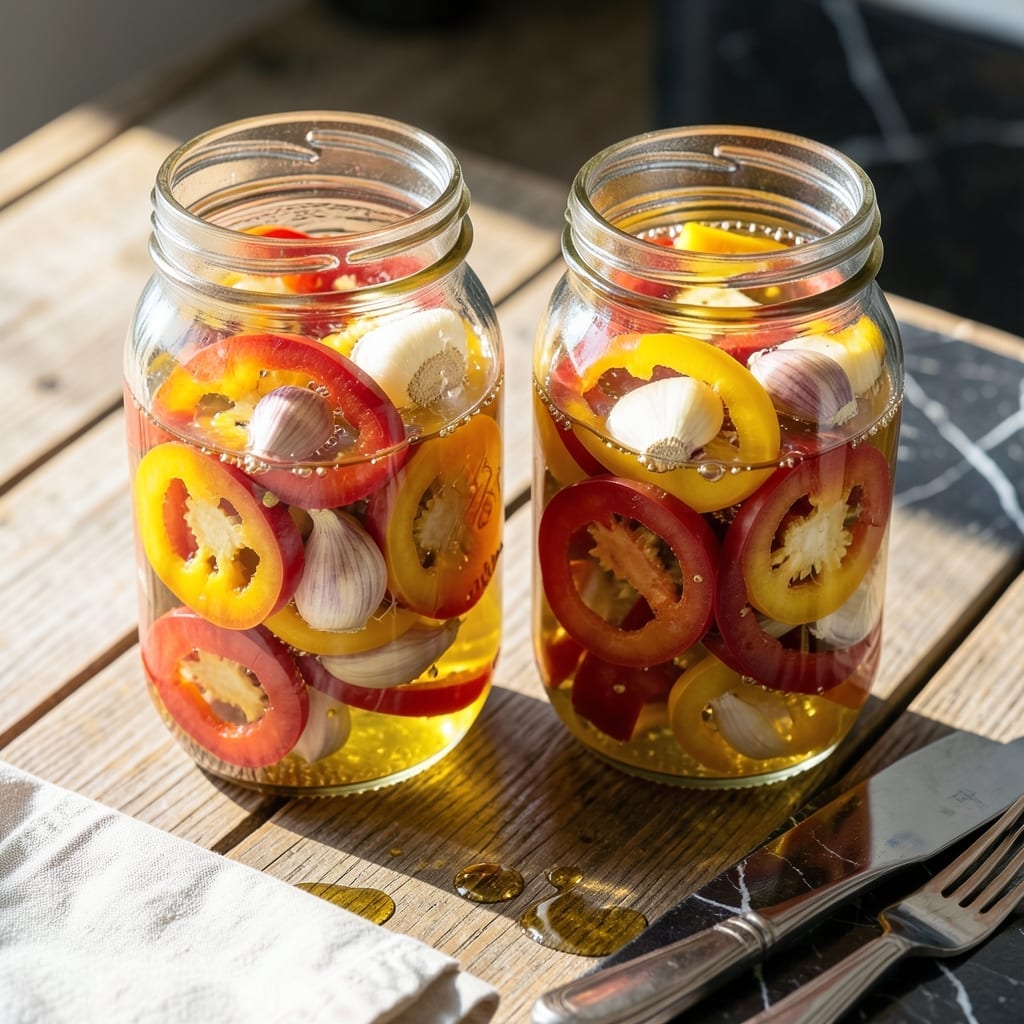
Preserving the bright, tangy flavor of banana peppers has never been more reliable than with this water bath canning method. The process transforms fresh peppers into shelf-stable condiments that maintain their crisp texture and vibrant taste for months.
This recipe focuses on creating the perfect pickling brine—a balance of vinegar, water, salt, and sugar—that enhances the peppers’ natural sweetness while ensuring safe preservation. The water bath step guarantees a tight seal, extending shelf life without refrigeration.
The result is a versatile condiment ready for sandwiches, salads, or antipasto platters. These pickled peppers retain their signature crunch and zesty kick, making them a pantry staple worth the effort.
With clear steps and precise timing, this method delivers consistent, professional-quality results every time.
Ingredients for Pickled Banana Peppers Recipe Water Bath
These vibrant ingredients create a tangy, shelf-stable condiment with perfect crunch and flavor balance.
| Ingredient | Amount | Notes |
|---|---|---|
| Banana Peppers 🌶️ | 2 lb | Fresh, firm, stemmed and sliced into rings |
| White Vinegar 💧 | 3 cups | 5% acidity for safety |
| Water 💧 | 3 cups | Filtered or distilled preferred |
| Pickling Salt 🧂 | 2 tbsp | Non-iodized for clarity |
| Granulated Sugar 🍚 | ¼ cup | Balances acidity and sweetness |
| Garlic Cloves 🧄 | 6 cloves | Peeled, left whole for flavor infusion |
| Mustard Seeds 🌿 | 2 tsp | Yellow or brown variety |
| Black Peppercorns 🌶️ | 1 tsp | Whole for even distribution |
| Dill Seeds 🍃 | 1 tsp | Optional for added depth |
| Red Pepper Flakes 🔥 | ½ tsp | Adjust for desired heat level |
The peppers are everything here. Farmers markets or local produce stands often have the freshest banana peppers with firm, glossy skins—avoid any with soft spots. The vinegar must be 5% acidity to ensure safety; Heinz or Ball brands are reliable. Pickling salt is non-negotiable—iodized salt can cloud the brine. For the best texture, slice peppers uniformly so they pack tightly into jars.
No white vinegar? Apple cider vinegar at 5% acidity works too, but may darken the peppers slightly. Short on pickling salt? Kosher salt at the same volume is an acceptable substitute. For heat variations, add a pinch of cayenne or omit the red pepper flakes entirely. The sugar can be reduced by half, but don’t skip it completely—it balances the vinegar’s sharpness beautifully.
These will keep at room temperature for 12-18 months once properly sealed. Store jars in a cool, dark place to preserve color and flavor. Refrigerate after opening and use within 1 month for best quality. Always check the seal before storing—any jars that didn’t seal should go straight to the fridge.
Why You’ll Love This Recipe
- No-Fuss Canning: I just slice the peppers, pack the jars, and let the water bath do the work—no fancy equipment needed.
- Tangy Crunch: The vinegar and sugar balance makes these peppers pop with bright, zesty heat that’s hard to resist.
- Endless Uses: I toss them on sandwiches, pizzas, or even straight from the jar for a quick snack.
- Pantry Staple: A single batch fills multiple jars, and they keep for months—so I always have some on hand.
Step-by-Step Instructions for Pickled Banana Peppers Water Bath
This water bath canning method ensures shelf-stable pickled peppers with optimal flavor and safety.
Step 1: Prepare the Banana Peppers and Sterilize Jars
Begin by thoroughly washing the 2 lb banana peppers and slicing them into ¼-inch rings. Discard the stems and seeds for a milder flavor profile. Pack the sliced peppers tightly into clean pint-sized canning jars, leaving ½ inch of headspace at the top.
While preparing the peppers, place the jars and lids in a large pot of water and bring to a boil for 10 minutes to sterilize. This step is crucial for preventing spoilage and ensuring the peppers remain shelf-stable after processing.
Step 2: Create the Pickling Brine
In a medium saucepan, combine the 3 cups white vinegar, 3 cups water, 2 tbsp pickling salt, and 0.25 cup granulated sugar. Add the 6 cloves garlic cloves, 2 tsp mustard seeds, 1 tsp black peppercorns, 1 tsp dill seeds, and 0.5 tsp red pepper flakes.
Bring the mixture to a rolling boil over medium-high heat, stirring until the salt and sugar fully dissolve. This ensures the brine is properly balanced for both flavor and preservation. Once boiling, reduce the heat to low and let it simmer for 5 minutes to infuse the spices.
Step 3: Fill the Jars and Remove Air Bubbles
Ladle the hot brine over the packed peppers in the jars, ensuring they are completely submerged. Use a bubble remover or a clean chopstick to gently press down the peppers and release any trapped air bubbles. This step is essential for preventing mold growth and ensuring even flavor distribution.
Wipe the rims of the jars with a clean, damp cloth to remove any residue that could interfere with the seal. Place the lids on the jars and screw on the bands until they are fingertip tight—do not overtighten, as this can prevent proper sealing during processing.
Step 4: Process in a Water Bath Canner
Place the filled jars in a water bath canner, ensuring they are fully submerged by at least 1-2 inches of water. Bring the water to a boil and process the jars for 10 minutes at a rolling boil. Adjust the processing time if you are at a higher altitude: 15 minutes for elevations above 1,000 feet.
After processing, carefully remove the jars from the canner using a jar lifter and place them on a clean towel to cool. You will likely hear a satisfying “ping” as each jar seals—this is a good sign that the vacuum seal has formed properly. Let the jars cool undisturbed for 12-24 hours.
Step 5: Verify Seals and Store Properly
Once the jars are completely cool, check the seals by pressing down on the center of each lid. If the lid does not pop back, the jar is properly sealed. If any jars have not sealed, refrigerate them immediately and use within 1 week.
Label the sealed jars with the date and store them in a cool, dark place. These pickled banana peppers will remain shelf-stable for up to 12-18 months, though they are best enjoyed within 1 year for optimal flavor. Once opened, refrigerate and use within 1 month.
Pro Tips For Making Pickled Banana Peppers Recipe Water Bath
- Sterilize Jars First: I learned this the hard way—always boil your jars and lids for 10 minutes before filling to prevent mold growth during storage.
- Slice Evenly: Cut banana peppers into consistent 1/4-inch rings so they pickle uniformly and look great in the jar.
- Use Pickling Salt: Skip iodized salt—it can turn your brine cloudy and affect the flavor. Pickling salt dissolves cleanly.
- Simmer Brine First: Heat the vinegar, water, sugar, and salt to a full boil before pouring over peppers to guarantee a proper seal and crisp texture.
Regional Styles of pickled banana peppers recipe water bath
Southern US Style
In the South, I often see apple cider vinegar used instead of white vinegar for a slightly sweeter, more mellow tang. The brine might include 1 tbsp brown sugar for depth. Some families add a bay leaf or two to each jar for an aromatic touch. 💛
Italian Variation
Italian American communities often include fennel seeds and dried oregano in their brine. I’ve seen recipes where 1 tsp fennel seeds replaces the dill, giving the peppers a subtle licorice note. The garlic is always generous—sometimes doubled to 12 cloves.
Hungarian Approach
Hungarian pickling traditions lean into bold flavors. I love adding 1 tsp caraway seeds and a pinch of paprika to the brine for a warm, earthy profile. The vinegar is cut with a touch of white wine for complexity.
Mexican-Inspired
For a south-of-the-border twist, I swap red pepper flakes for 1 sliced jalapeño per jar. The brine might include 1 tsp cumin seeds and a splash of lime juice. This version pairs beautifully with tacos and grilled meats. 🔥
Appalachian Tradition
In Appalachia, pickled peppers often include onion slices packed in with the banana peppers. The brine uses equal parts vinegar and water, and some families add a few blackberry leaves for a unique herbal note.
Midwest Classic
Midwestern recipes tend to keep it simple and crisp. I’ve seen celery seeds used instead of mustard seeds for a more delicate flavor. The sugar is often reduced to 2 tbsp to let the peppers’ natural sweetness shine through.
Nutrition Facts
Frequently Asked Questions
Do I need special equipment for this process?
A water bath canner is ideal, but a large stockpot with a rack works too. You’ll also need canning jars, lids, and a jar lifter for safe handling.
Can I adjust the spice level?
Reduce or omit the red pepper flakes for mild peppers, or add 1 sliced jalapeño per jar for extra heat. Always taste the brine before canning.
How do I know if the jars sealed properly?
After cooling, press the lid center—if it doesn’t pop back, it’s sealed. Unsealed jars must be refrigerated and used within 1 week.
Can I reuse brine from another batch?
No, always use fresh brine for safety. Reused brine may not have the proper acidity to prevent spoilage.

- Potato Candy Recipe 1933: Vintage Peanut Butter Roll Delight - October 30, 2026
- Potato Chip Cookie Recipe With Pecans: Buttery Crunch Meets Nutty Richness - October 30, 2026
- Potato Patty Recipe No Egg: Crispy Edges Without the Binder - October 30, 2026