
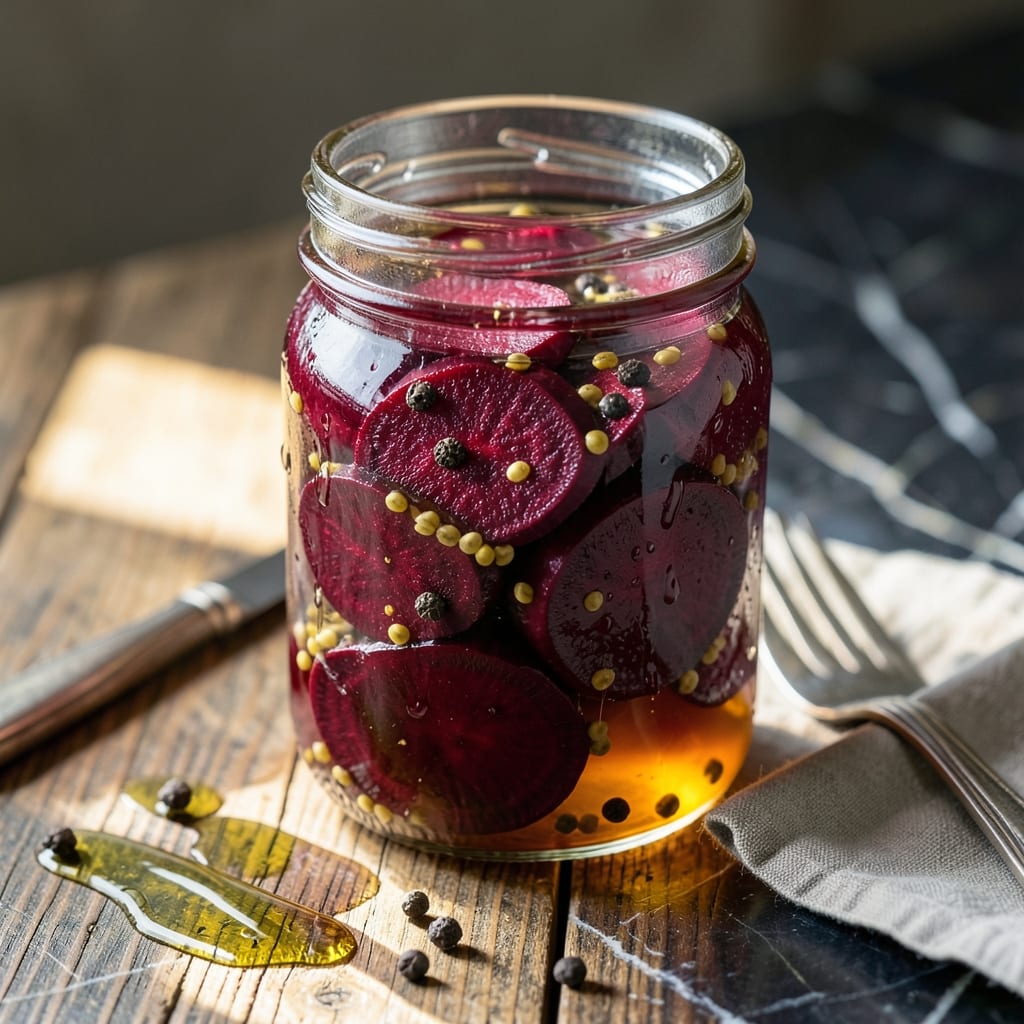
This vibrant pickled beetroot recipe transforms earthy beets into a tangy, naturally sweet condiment that brightens any dish. The apple cider vinegar base creates a balanced flavor profile that’s neither too sharp nor overly sweet.
The process is simple yet precise: beets are peeled, sliced, and submerged in a warm brine of vinegar, sugar, and spices. This method ensures even flavor distribution while maintaining the beets’ firm texture and deep color.
After just 24 hours in the refrigerator, you’ll have a versatile condiment ready to elevate salads, sandwiches, or charcuterie boards. The natural sweetness of the beets pairs perfectly with the tang of apple cider vinegar.
Store in airtight jars for up to 3 weeks, and enjoy the vibrant color and bold flavor these pickled beets bring to every meal.
Ingredients for Pickled Beetroot Recipe Apple Cider Vinegar
Nine simple ingredients create this tangy, naturally sweet condiment with vibrant color and bold flavor.
| Ingredient | Amount | Notes |
|---|---|---|
| Medium Beets 🟣 | 2 lb | Peeled, sliced into rounds |
| Apple Cider Vinegar 🍏 | 2 cups | Raw, unfiltered preferred |
| Granulated Sugar 🍚 | ½ cup | Adjust to taste preference |
| Water 💧 | 1 cup | Filtered for best results |
| Yellow Mustard Seeds 🌿 | 1 tbsp | Whole seeds for texture |
| Black Peppercorns 🌶️ | 1 tsp | Lightly crushed |
| Bay Leaves 🍃 | 2 pieces | Dried, whole leaves |
| Red Onion 🧅 | ½ whole | Thinly sliced (optional) |
| Sea Salt 🧂 | 1 tbsp | Fine grain for brine |
The beets are the foundation here. Look for firm, smooth-skinned beets with deep color—golden or red varieties both work beautifully. Whole Foods or Trader Joe’s often carry organic options with excellent pigment. Avoid pre-cooked beets; raw ensures optimal texture and flavor absorption. The apple cider vinegar should be raw and unfiltered for the most complex tang.
No apple cider vinegar? White wine vinegar at a 1:1 ratio works in a pinch. For a sweeter profile, add 1 extra tablespoon of sugar. Mustard seeds can be swapped for coriander seeds if preferred. The red onion is optional but adds a nice crunch—white or yellow onions can substitute. If omitting sugar, a splash of maple syrup maintains balance.
These keep beautifully in the fridge for up to 3 weeks in airtight jars. The flavor deepens over time, so wait at least 24 hours before tasting. For longer storage, process in a water bath for shelf-stable pickled beets (up to 1 year).
Why You’ll Love This Recipe
- One Pot Wonder: I toss everything in a single saucepan—beets, vinegar, sugar, mustard seeds—no fancy steps.
- Tangy Sweet Bite: Apple cider vinegar gives it that bright zing, and the sugar rounds it out perfectly.
- Salad or Snack: I add these to grain bowls, sandwiches, or just eat them straight from the jar.
- Lasts for Weeks: Honestly, they taste even better after sitting in the fridge for a few days.
Step-by-Step Instructions for Pickled Beetroot with Apple Cider Vinegar
This method ensures vibrant color, balanced tang, and perfect texture every time.
Step 1: Prepare and Cook the Beets
Begin by peeling the 2 lb Medium Beets and slicing them into even ¼-inch rounds. Uniform thickness ensures even pickling. Place the sliced beets in a saucepan and cover with water. Bring to a boil, then reduce heat and simmer for 20-25 minutes until fork-tender but still holding shape.
Drain the beets immediately and transfer to a clean bowl. I find that shocking them with cold water at this stage helps preserve their vibrant color, though it’s optional. The beets should maintain a slight bite—they’ll soften slightly more during the pickling process.
Step 2: Create the Pickling Brine
In a medium saucepan, combine the 2 cups Apple Cider Vinegar, 1 cup Water, 0.5 cup Granulated Sugar, and 1 tbsp Sea Salt. Heat over medium-high heat and stir until the sugar and salt fully dissolve—about 3-4 minutes.
Add the 1 tbsp Yellow Mustard Seeds, 1 tsp Black Peppercorns, and 2 pieces Bay Leaves to the brine. Lightly crush the peppercorns with the back of a spoon to release their aroma. Bring the mixture to a gentle simmer, then remove from heat. The spices will continue to infuse as the brine cools.
Step 3: Layer and Submerge
Divide the 0.5 whole Red Onion, thinly sliced, between two clean 1-quart jars. Pack the cooked beet slices tightly into the jars, alternating layers with the onion. This creates an even distribution of flavor throughout the jar.
Pour the hot brine over the beets, ensuring they’re completely submerged. I use a chopstick to gently press down the beets and release any air bubbles. The liquid should cover the beets by at least ½ inch to prevent spoilage.
Step 4: Cool and Store
Let the jars cool to room temperature—this takes about 1 hour. As they cool, you’ll notice the beets begin to absorb the brine’s color, deepening their hue. Once cooled, seal the jars with lids and refrigerate.
For best flavor development, wait at least 24 hours before eating. The beets will keep in the refrigerator for up to 3 weeks, though I’ve found the texture is optimal within the first 2 weeks. The longer they sit, the more the flavors meld together.
Pro Tips For Making Pickled Beetroot Recipe Apple Cider Vinegar
- Roast Beets First: I learned this the hard way—boiling beets bleeds color and flavor into the water. Roast them at 400°F for 45-60 minutes instead; the concentrated sweetness makes the pickling brine taste richer.
- Use Raw Vinegar: Skip pre-pasteurized apple cider vinegar; the raw, unfiltered kind with the “mother” adds a tangier depth that brightens the beets’ earthiness.
- Peel After Cooking: Sounds weird, but it works: leave the skins on while roasting, then rub them off under running water. The beets hold their shape better and stain your hands less.
- Toast the Seeds: Dry-toast the yellow mustard seeds in a pan for 30 seconds before adding to the brine. It wakes up their nutty bite so they don’t taste flat in the final jar.
Essential Equipment for This Dish
Must-Have Jars
I always use wide-mouth mason jars—Ball or Kerr brands—for pickling. The 1-quart size fits this recipe perfectly and makes packing beets easier. Avoid thin glass; it can crack with hot brine. 💡
Saucepan Selection
A medium stainless steel saucepan (3-4 quart capacity) works best for the brine. I prefer All-Clad for even heat distribution. Nonstick pans can work but avoid high heat to prevent coating damage.
Essential Utensils
You’ll need a sharp chef’s knife (8-inch) for consistent beet slices and a mandoline for paper-thin onion. A wooden spoon helps stir the brine without scratching your pan.
Precision Tools
A digital kitchen scale ensures accurate measurements, especially for sugar and salt. I use Escali Primo. A fine-mesh strainer helps remove spices if you prefer a clear brine.
Safety Gear
Hot brine requires protection. I keep heat-resistant silicone gloves nearby for handling jars. A canning funnel makes pouring brine into jars much cleaner and prevents spills.
Optional Upgrades
For serious picklers, a jar lifter and bubble remover tool are game-changers. I also recommend pH strips to verify acidity for long-term storage. ✨
Nutrition Facts
Frequently Asked Questions
Can I use raw beets instead of cooked?
No, always cook beets first. Raw beets won’t soften properly in the brine. Simmer for 20-25 minutes until fork-tender but still firm. This ensures perfect texture.
Why did my beets turn dull in color?
This happens when beets aren’t fully submerged in brine. Use a chopstick to remove air bubbles and ensure ½ inch of liquid covers them. Shocking cooked beets in cold water also helps preserve color.
How long do they need to pickle?
Minimum 24 hours for basic flavor, but 3-5 days develops the best tang. They’ll keep in the fridge for up to 3 weeks. The longer they sit, the more complex the taste.
Can I reuse the pickling brine?
Yes, but only once. Strain out spices and reuse within 1 week for a new batch. Note that the flavor will be milder the second time.

- Potato Candy Recipe 1933: Vintage Peanut Butter Roll Delight - October 30, 2026
- Potato Chip Cookie Recipe With Pecans: Buttery Crunch Meets Nutty Richness - October 30, 2026
- Potato Patty Recipe No Egg: Crispy Edges Without the Binder - October 30, 2026