
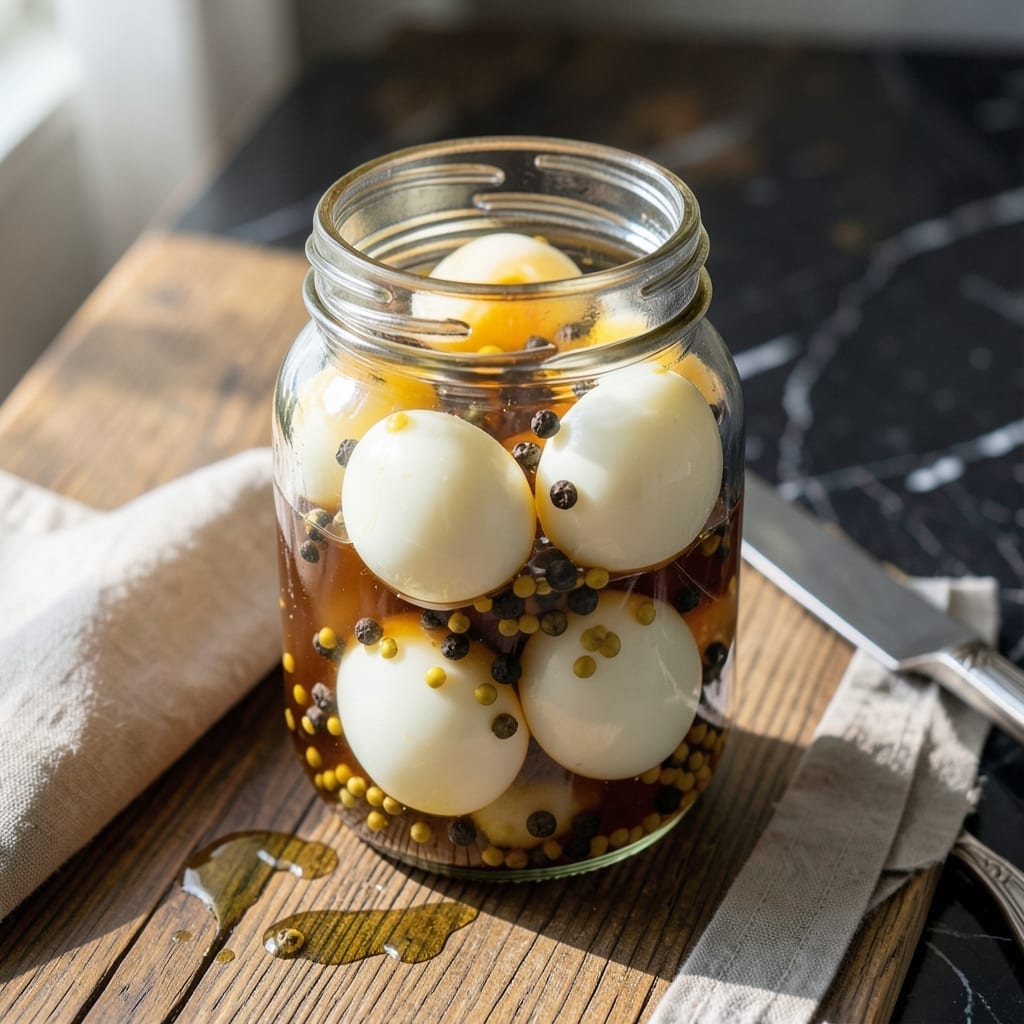
This no-sugar pickled egg recipe delivers bold, tangy flavor without any sweetness. The vinegar brine creates a sharp, zesty profile that enhances the eggs’ natural richness.
I developed this method to prove that pickling doesn’t require sugar for depth. A mix of vinegar, spices, and aromatics infuses each egg with complex, savory notes.
The process is straightforward: hard-boil the eggs, then submerge them in the spiced brine for at least 24 hours. The result is a snack or garnish with a satisfying bite.
These keep well in the fridge for up to 3 weeks, making them a reliable, flavorful addition to charcuterie boards or salads.
Ingredients for Pickled Egg Recipe No Sugar
Bold vinegar, aromatic spices, and fresh eggs create this sharp, sugar-free pickle.
| Ingredient | Amount | Notes |
|---|---|---|
| Large Eggs 🥚 | 8 whole | Hard-boiled, peeled completely |
| White Vinegar 💧 | 2 cups | Distilled, 5% acidity minimum |
| Apple Cider Vinegar 🍏 | 1 cup | Raw, unfiltered preferred |
| Water 💧 | 1 cup | Filtered or distilled |
| Yellow Mustard Seeds 🌿 | 1 tbsp | Whole, not ground |
| Black Peppercorns 🌶️ | 1 tbsp | Whole, lightly crushed |
| Coriander Seeds 🌿 | 1 tsp | Whole, toasted briefly |
| Bay Leaves 🍃 | 2 whole | Dried, whole leaves |
| Red Onion 🧅 | ½ whole | Thinly sliced into half-moons |
| Garlic Cloves 🧄 | 4 cloves | Peeled, smashed lightly |
| Kosher Salt 🧂 | 1 ½ tbsp | Diamond Crystal preferred |
| Dried Dill 🌿 | 1 tsp | Or fresh dill fronds |
The vinegar ratio is critical for that sharp, tangy profile. Heinz white vinegar and Bragg apple cider vinegar deliver consistent acidity—avoid cheap brands with inconsistent strength. Whole spices release flavor slowly; Penzeys or bulk bins at natural food stores offer superior quality. The eggs must be fully cooled before adding to the brine to prevent cracking (a common rookie mistake).
No white vinegar? Rice vinegar with extra salt can substitute, but the flavor profile shifts. Missing mustard seeds? Dried mustard powder at one-fourth the amount works in a pinch. Swap coriander for celery seeds if preferred. The onion can be white or red—red adds subtle sweetness despite the no-sugar approach. Always use filtered water to avoid chlorine aftertaste.
Store in a clean glass jar with a tight seal. Keeps for up to 3 weeks in the fridge—the flavor deepens over time. Discard if the brine becomes cloudy or eggs float (signs of spoilage). The brine itself makes a fantastic salad dressing base.
Why You’ll Love This Recipe
- 5-Minute Prep: I just hard-boil the eggs, mix the vinegars with water and mustard seeds, and they’re pickling while I do the dishes.
- Tangy & Bright: The white vinegar and apple cider vinegar give a sharp, clean bite that’s way more interesting than sweet pickles.
- Fridge Staple: I keep a jar ready for salads, sandwiches, or a quick protein boost—no sugar crash, just flavor.
- Pantry Savior: Eggs and vinegar are always in my kitchen, so this costs pennies and lasts for weeks.
Step-by-Step Instructions for Pickled Eggs
This method ensures perfectly tangy, sugar-free pickled eggs with a crisp texture and bold flavor.
Step 1: Hard-Boil and Peel the Eggs
Place the 8 whole Large Eggs in a large pot and cover with cold water by 1 inch. Bring to a boil over high heat, then immediately remove from heat, cover, and let sit for 12 minutes. This gentle cooking method prevents green yolks and ensures tender, not rubbery, texture.
Drain and transfer eggs to an ice bath for 5 minutes to stop the cooking process. Peel under cool running water—the shock of cold water helps separate the membrane from the shell for easier peeling. Set the peeled eggs aside while you prepare the brine.
Step 2: Toast the Spices and Bloom Aromatics
In a dry skillet over medium heat, toast the 1 tbsp Yellow Mustard Seeds, 1 tbsp Black Peppercorns, and 1 tsp Coriander Seeds for 1-2 minutes until fragrant. Lightly crush the Black Peppercorns with the flat side of a knife to release their oils.
In the same skillet, add the 0.5 whole Red Onion (thinly sliced) and the 4 cloves Garlic Cloves (smashed). Sauté for 2-3 minutes until the onion softens slightly and the garlic just begins to color. This step deepens the flavor profile of the brine.
Step 3: Prepare the Brine
In a medium saucepan, combine the 2 cups White Vinegar, 1 cup Apple Cider Vinegar, and 1 cup Water. Add the 1.5 tbsp Kosher Salt, toasted spices, bloomed aromatics, 2 whole Bay Leaves, and 1 tsp Dried Dill.
Bring to a simmer over medium-high heat, stirring until the salt fully dissolves. Remove from heat and let the brine cool to room temperature—this takes about 20-25 minutes. A warm brine can cook the eggs further, turning the whites rubbery.
Step 4: Pack and Submerge the Eggs
Place the peeled eggs in a clean 1-quart jar or divide them between two pint jars. Pour the cooled brine over the eggs, ensuring they are completely submerged. Use a small weight or a cabbage leaf to keep the eggs under the liquid if needed.
Seal the jar(s) tightly. The eggs will float initially but will absorb some of the brine and sink slightly after a day or two. Let cool to room temperature before refrigerating.
Step 5: Refrigerate and Wait
Refrigerate the jar for at least 3 days before eating to allow the flavors to fully develop. For the best texture and taste, wait 5-7 days. The eggs will keep for up to 3-4 weeks in the refrigerator.
Taste one after 3 days—you’ll notice the tangy vinegar sharpness mellows over time while the spices infuse the eggs with complexity. The whites will firm up slightly but remain tender, and the yolks will develop a creamy, rich texture.
Pro Tips For Making Pickled Egg Recipe No Sugar
- Boil Eggs Gently: I learned this the hard way—hard-boiling eggs at a rolling boil makes them rubbery. Simmer them for 12-13 minutes instead, then plunge into ice water to stop the cooking.
- Use Older Eggs: Fresher eggs are harder to peel. Grab the oldest dozen from your fridge—around 7-10 days old—for clean, easy peeling every time.
- Skip the Cracking: Resist the urge to crack the shells before peeling. Tap the wide end on the counter, roll gently, and peel under running water for smooth, intact whites.
- Heat the Brine: Sounds weird, but it works: Warm the vinegar, water, and mustard seeds together before pouring over eggs. It helps the flavors meld faster and more evenly.
Creative Variations of This Recipe
Spicy Kick Variation
Add 1 tsp red pepper flakes or 2 sliced jalapeños to the brine for heat. The capsaicin infuses beautifully over 5-7 days, creating a fiery version that pairs perfectly with cold beer. I love this with Sriracha for an extra punch. 🌶️
Herb-Infused Brine
Swap the dried dill for 2 sprigs fresh rosemary and 5 fresh thyme sprigs. The piney, earthy notes complement the vinegar’s sharpness. Remove herbs after 1 week to prevent bitterness.
Smoky Depth
Add 1 tsp smoked paprika or ½ tsp liquid smoke to the brine for a barbecue-inspired twist. This works especially well if you’re serving these eggs with grilled meats. The smokiness balances the acidity wonderfully.
Umami Boost
Stir in 1 tbsp soy sauce or 1 tsp fish sauce to the brine before cooling. This adds a savory depth that makes the eggs taste even richer. A splash of Worcestershire sauce also works in a pinch. 💡
Citrus Zing
Add 2 strips of lemon or orange peel (avoid the pith) to the brine. The citrus oils brighten the vinegar’s tang and add a refreshing note. Remove peels after 3-4 days to avoid over-extraction.
Garlic Lover’s Version
Double the garlic cloves to 8 and add 1 tsp garlic powder to the brine. The result is intensely aromatic eggs that are perfect for garlic enthusiasts. The flavor mellows slightly over time but remains bold.
Nutrition Facts
Frequently Asked Questions
What can I use instead of sugar in the brine?
Try 1-2 tsp of erythritol or monk fruit for sweetness without sugar. Or skip it entirely and boost flavor with extra garlic or onion instead.
How long do these stay fresh in the fridge?
Properly stored in a sealed jar, they’ll keep for up to 3-4 weeks. Discard if the brine turns cloudy or develops an off smell.
Can I reuse the brine for another batch?
Yes, but only once. Reheat the brine to a simmer before reusing to kill any bacteria. The flavor will be less intense the second time.
Why did my egg whites turn rubbery?
This happens if the brine is too hot when poured over the eggs. Always let the brine cool to room temperature first.

- Potato Candy Recipe 1933: Vintage Peanut Butter Roll Delight - October 30, 2026
- Potato Chip Cookie Recipe With Pecans: Buttery Crunch Meets Nutty Richness - October 30, 2026
- Potato Patty Recipe No Egg: Crispy Edges Without the Binder - October 30, 2026