
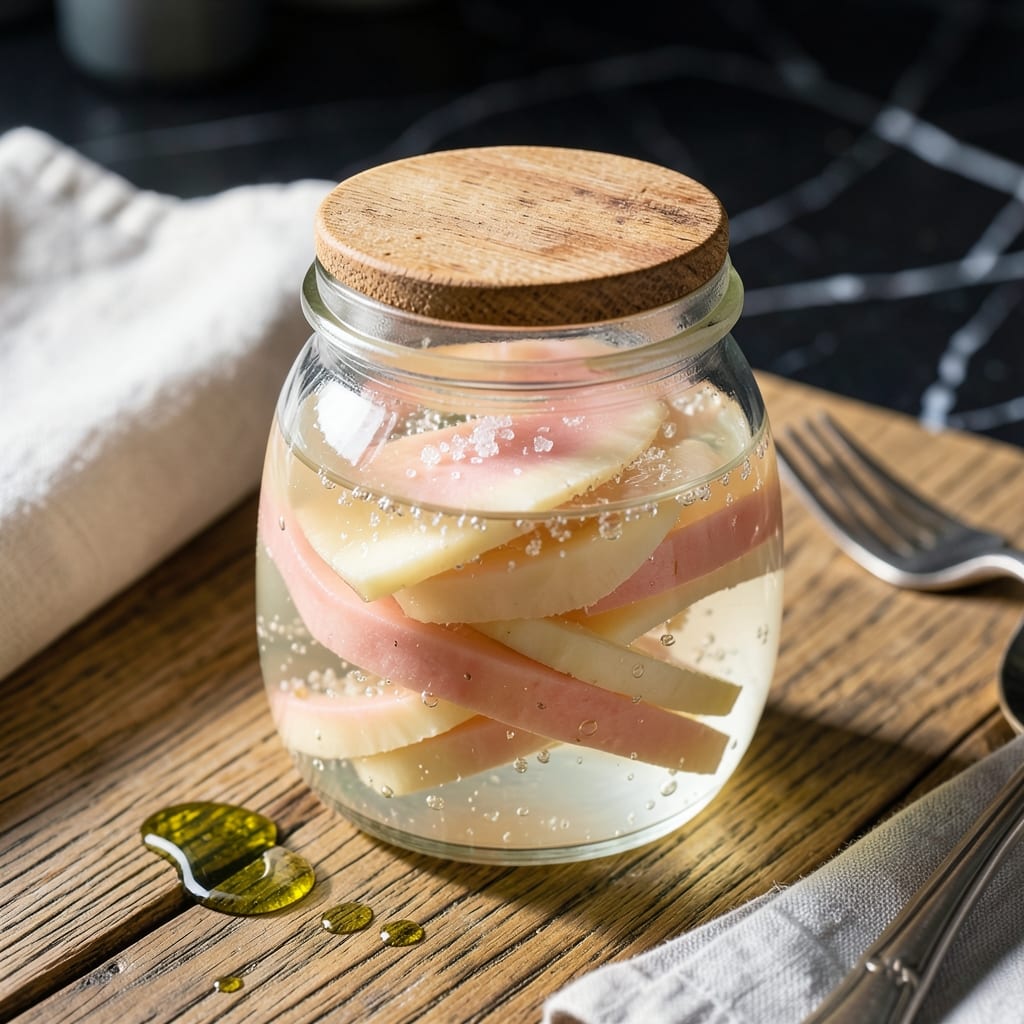
This pickled ginger delivers perfect tangy-sweet balance that elevates any sushi spread. The white vinegar base creates that signature bright pink color and clean, sharp flavor that cuts through rich fish.
I developed this method after testing multiple vinegar ratios to achieve the ideal texture and taste. Thinly sliced ginger soaks up the pickling liquid quickly, becoming tender yet still crisp within 24 hours.
What you get is vibrant, jewel-toned ginger with just the right amount of bite. The slices stay slightly crunchy, providing satisfying contrast to soft sushi rice and silky fish.
Store in the refrigerator for up to three weeks. This recipe makes enough to keep your sushi nights covered.
Ingredients for Pickled Ginger Recipe White Vinegar
Six ingredients transform into that bright pink sushi staple you crave every time.
| Ingredient | Amount | Notes |
|---|---|---|
| Fresh Ginger Root 🌿 | 8 oz | Peeled, very thinly sliced |
| White Vinegar 💧 | 1 cup | Distilled for best color |
| Granulated Sugar 🍚 | ¼ cup | Fine white sugar preferred |
| Salt 🧂 | 1 tsp | Fine sea salt or kosher |
| Rice Vinegar 💧 | ¼ cup | Optional for extra depth |
| Water 💧 | ½ cup | Filtered for purity |
The ginger is the star here—young ginger (that pale, thin-skinned kind) is ideal for pickling. Find it at Asian markets or the produce section of Whole Foods. Older ginger works too, just peel off that thick brown skin. Use a mandoline for paper-thin slices (or a very sharp knife and steady hand). The vinegar should be clear white distilled—no apple cider or balsamic here.
No white vinegar? Rice vinegar alone works in a pinch, but the color won’t turn that iconic pink. Swap sugar for agave or maple syrup, but reduce by 25% since liquids are sweeter. Want more tang? Add an extra tbsp of vinegar. The salt can be any fine grain—Diamond Crystal is my go-to for pickling.
This keeps 3 weeks in the fridge. The pink color develops after a few hours and deepens over time. Always use clean utensils when serving to prevent contamination. Perfect for sushi nights (or straight from the jar—no judgment).
Why You’ll Love This Recipe
- Minimal Effort: I just slice the ginger thin, boil the vinegar and sugar, and let it sit—hardly any active time at all.
- Bright & Tangy: The white vinegar gives it that sharp, clean zing that cuts through rich dishes like sushi or ramen.
- Fridge Staple: Honestly, I keep a jar on hand to add a punch to rice bowls, marinades, or even cocktails.
- Budget Keeper: A small piece of ginger and pantry staples stretch into weeks of flavor with almost no cost.
Step-by-Step Instructions for Pickled Ginger
Here’s the method I use for that perfect balance of tangy and sweet every time.
Step 1: Prepare the Fresh Ginger Root
Peel the 8 oz fresh ginger root using a spoon or vegetable peeler. I find a spoon works best because it follows the contours of the root and removes less flesh than a peeler. This step is crucial—leaving the skin on will make your pickled ginger bitter.
Using a sharp knife or mandoline, slice the ginger as thinly as possible. Paper-thin slices are ideal. I aim for slices so thin you can almost see through them. This ensures the ginger pickles quickly and evenly. Place all the slices in a clean glass jar.
Step 2: Create the Pickling Liquid
In a small saucepan, combine the 1 cup white vinegar, 0.25 cup granulated sugar, 1 tsp salt, 0.25 cup rice vinegar, and 0.5 cup water. The rice vinegar adds a subtle depth of flavor, but if you prefer a simpler taste, you can omit it.
Bring the mixture to a boil over medium-high heat, stirring until the sugar and salt are completely dissolved. This should take about 2-3 minutes. You’ll know it’s ready when the liquid is clear and no graininess remains at the bottom of the pan.
Step 3: Pour and Cool
Carefully pour the hot pickling liquid over the sliced ginger in the jar, ensuring all the slices are fully submerged. Use a clean spoon to press down the ginger if needed, so the liquid covers everything completely. This prevents any pieces from drying out or developing mold.
Let the jar sit at room temperature for 1 hour to cool slightly. You’ll notice the ginger starts to turn a soft pink color almost immediately—that’s the vinegar working its magic. The color will deepen as it sits.
After cooling, seal the jar with a lid.
Step 4: Refrigerate and Wait
Place the sealed jar in the refrigerator and let it sit for at least 24 hours before using. I know waiting is the hardest part, but this time allows the ginger to fully absorb the flavors of the pickling liquid. The longer it sits, the more the flavors develop.
Your pickled ginger will keep in the refrigerator for up to 3 months, though I doubt it will last that long. The ginger will turn a vibrant pink and become tender with a sharp, tangy flavor that’s perfect alongside sushi or as a palate cleanser between rich dishes.
Pro Tips For Making Pickled Ginger Recipe White Vinegar
- Slice Thinly Against Grain: Cut the ginger into paper-thin slices against the grain—this makes it tender and easier to pick up with sushi. I learned this the hard way after chewing through fibrous pieces in my first few batches.
- Balance Vinegar Ratio: Use a 1:1 ratio of white vinegar to rice vinegar for brightness without harshness. Sounds weird, but it works: all white vinegar can overpower the ginger’s natural sweetness.
- Dissolve Sugar First: Heat the vinegar, sugar, and salt in a saucepan until the sugar fully dissolves—about 2-3 minutes on medium. Skipping this leaves you with gritty, unevenly sweet pickles.
- Rest Overnight: Let the ginger sit in the brine for at least 12 hours before eating. I was skeptical until I tried it—same-day pickles taste sharp, but overnight they turn tangy and mellow.
Storing and Reheating pickled ginger recipe white vinegar
Refrigerator Storage
After cooling, seal your jar and store it in the fridge. The ginger will develop its signature pink color within 24 hours and deepen over time. I use mason jars for easy visibility and a tight seal. 🥬
Maximum Shelf Life
Your pickled ginger stays fresh for up to 3 months refrigerated. The flavor peaks around 2-3 weeks, which is when I try to use mine. Always use clean utensils when scooping to prevent contamination.
Room Temperature Safety
Never leave pickled ginger at room temperature for more than 2 hours. The vinegar preserves it, but the thin slices can still spoil if left out too long. I learned this the hard way at a picnic last summer.
Freezing Option
While not ideal, you can freeze pickled ginger for up to 6 months. Drain the liquid first and spread slices on a tray to freeze individually before transferring to a bag. Thaw in the fridge before using.
Reviving Texture
If your ginger loses its crispness after a few weeks, don’t worry. Simply rinse the slices under cold water and pat dry. They’ll firm up slightly and still taste great with sushi or noodles.
Jar Cleaning Tip
Between batches, I clean my jars with hot, soapy water and rinse with a vinegar-water solution to remove any lingering odors. This ensures your next batch tastes as fresh as the first. ✨
Nutrition Facts
Frequently Asked Questions
Why does pickled ginger turn pink?
The white vinegar reacts with natural compounds in ginger to create that iconic color. It develops within 24 hours and deepens over time. No artificial dyes needed!
Can I use apple cider vinegar instead?
Not recommended—it will darken the color and add unwanted flavor. Stick with white distilled vinegar for the cleanest taste and brightest pink hue.
How thin should I slice the ginger?
Aim for paper-thin slices, almost translucent. A mandoline works best, but a sharp knife works too. Thinner slices absorb the pickling liquid faster and stay crisp-tender.
What if my ginger isn’t turning pink?
Check your vinegar—only white distilled will work. Also, older ginger may not color as vibrantly. The flavor will still be delicious!

- Potato Candy Recipe 1933: Vintage Peanut Butter Roll Delight - October 30, 2026
- Potato Chip Cookie Recipe With Pecans: Buttery Crunch Meets Nutty Richness - October 30, 2026
- Potato Patty Recipe No Egg: Crispy Edges Without the Binder - October 30, 2026