
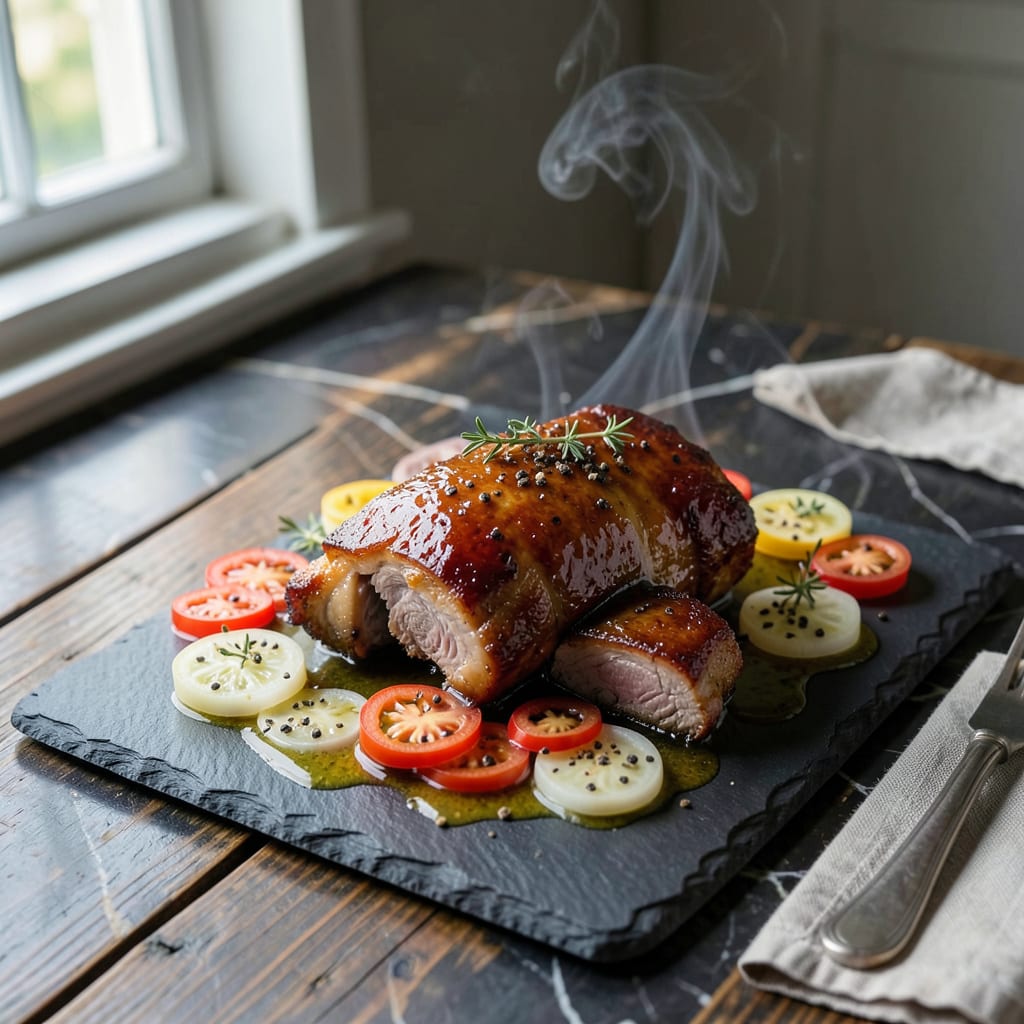
This tangy pickled pork hocks recipe delivers bold, vinegar-infused flavor with a tender texture that melts in your mouth.
Using a simple brine of vinegar, salt, and spices, this method ensures every bite is packed with savory depth. Perfect for sandwiches or as a standalone dish.
Ingredients for Pickled Pork Hocks
Pantry staples plus pork hocks create this tangy, savory dish with minimal effort.
| Ingredient | Amount | Notes |
|---|---|---|
| Pork Hocks 🍖 | 2 lb | Fresh, skin-on for best texture |
| White Vinegar 💧 | 4 cups | 5% acidity for pickling |
| Apple Cider Vinegar 🍏 | 2 cups | Adds fruity depth to brine |
| Water 💧 | 2 cups | Filtered or distilled preferred |
| Kosher Salt 🧂 | ¾ cup | Diamond Crystal recommended |
| Brown Sugar 🍚 | ½ cup | Balances vinegar acidity |
| Black Peppercorns 🌶️ | 2 tbsp | Whole, lightly crushed |
| Mustard Seeds 🌿 | 1 tbsp | Yellow or brown variety |
| Bay Leaves 🍃 | 4 pieces | Dried, for aromatic depth |
| Garlic Cloves 🧄 | 8 cloves | Peeled, smashed |
| Red Onion 🧅 | 1 whole | Thinly sliced for layers |
| Juniper Berries 🌿 | 1 tbsp | Optional, adds piney note |
The pork hocks are key—look for skin-on pieces at the butcher counter or Whole Foods for the best marbling. 4-5 lb total works if you’re feeding a crowd. Brining time is non-negotiable: the longer they soak, the more tender they become. Most butchers will cut them into smaller pieces if you ask, which speeds up the pickling process significantly.
No juniper berries? Skip them—they’re optional but nice. Out of apple cider vinegar? White vinegar plus a splash of apple juice mimics the fruitiness. Mustard seeds can be swapped for coriander seeds if that’s what’s in your spice drawer. For less heat, reduce the peppercorns by half. The brown sugar balances the acid, but honey works too (though it’ll darken the brine).
Pickled pork hocks keep for 3-4 weeks in the fridge, submerged in brine. They’re even better after 5 days once flavors meld. Freezing isn’t ideal—texture suffers. Use leftovers in sandwiches, tacos, or chopped into salads for a punchy, vinegary kick.
Why You’ll Love This Recipe
- I’ll be real: leftovers taste even better, and they stay good in the fridge for over a week.
- No-Fuss Brine: I just mix vinegar, water, and salt—no fancy steps, and the pork soaks up that tangy kick all on its own.
- Tangy Depth: The combo of white vinegar and apple cider vinegar gives it that sharp, fruity zing I crave.
- Feeds the Crowd: Honestly, it’s my go-to for parties or Sunday suppers since a few hocks stretch far.
Step-by-Step Instructions for Pickled Pork Hocks
Follow this precise method to achieve perfectly tangy, tender pickled pork hocks with optimal flavor penetration.
Step 1: Prepare the Brine Base
In a large pot, combine the 4 cups White Vinegar, 2 cups Apple Cider Vinegar, and 2 cups Water. Place over medium-high heat and bring to a gentle simmer. This liquid combination creates the ideal acidic environment for both preservation and flavor development.
The vinegar mixture should reach just below boiling point—look for small bubbles forming at the edges and a temperature around 180-190°F. This ensures the salt and sugar will dissolve completely without evaporating too much liquid.
Step 2: Infuse the Brine with Aromatics
Add the 0.75 cup Kosher Salt and 0.5 cup Brown Sugar to the simmering vinegar solution. Stir continuously until both are fully dissolved—this typically takes 3-5 minutes. The mixture should become clear with no visible grains remaining.
Next, add the 2 tbsp Black Peppercorns, 1 tbsp Mustard Seeds, 4 pieces Bay Leaves, 8 cloves Garlic Cloves, 1 whole Red Onion, and 1 tbsp Juniper Berries. Remove from heat and let this aromatic mixture steep for 15 minutes to allow the flavors to meld.
Step 3: Cool and Submerge the Pork Hocks
Allow the brine to cool completely to room temperature—this is crucial for food safety and proper pickling. I place the pot in a sink filled with ice water to speed this process, which typically takes 30-45 minutes. The brine should feel cool to the touch before proceeding.
While the brine cools, rinse the 2 lb Pork Hocks under cold water and pat them dry. Place them in a clean, large glass or ceramic container that will accommodate both the meat and liquid. Pour the cooled brine over the pork hocks, ensuring they are completely submerged. Use a plate or food-safe weight to keep them under the liquid surface.
Step 4: Refrigerate and Wait for Perfection
Cover the container and refrigerate for at least 3 days, though I recommend 5-7 days for optimal flavor development. The pork hocks should be placed in the coldest part of your refrigerator, typically the bottom shelf near the back.
Check periodically to ensure the pork hocks remain fully submerged. You’ll notice the meat gradually changing color and the brine taking on a richer hue as the pickling process works its magic. The hocks are ready when the meat is firm yet tender and the flavor has penetrated throughout.
Pro Tips For Making Pickled Pork Hocks
- Parboil First: I learned this the hard way—always parboil the pork hocks for 10-15 minutes before pickling to remove impurities and keep the brine clean.
- Use Both Vinegars: Sounds weird, but it works: the combo of white vinegar for sharpness and apple cider vinegar for depth actually changes the outcome.
- Skip the Iodized Salt: Stick with kosher salt—iodized can turn the brine cloudy and leave a metallic taste after a few days.
- Chill Before Serving: After pickling, give the hocks at least 24 hours in the fridge. The flavors meld better, and the texture firms up just right.
Common Mistakes When Making This Dish
Skipping the Cool Down
Never add pork hocks to hot brine. This cooks the meat and creates an ideal environment for bacterial growth. I always cool my brine completely, using an ice bath to speed up the process to 30-45 minutes. 🌡️
Incomplete Submersion
Pork hocks must be fully covered by brine to pickle evenly. Use a plate or food-safe weight to keep them submerged. Any exposed portions won’t pickle properly and may spoil.
Rushing the Process
Pickling takes time. While 3 days is the minimum, I’ve found 5-7 days yields the best flavor penetration and texture. Patience truly pays off here.
Using Metal Containers
Metal can react with the brine, imparting off-flavors and potentially causing spoilage. Always use glass, ceramic, or food-grade plastic containers for pickling. I prefer wide-mouth glass jars.
Skipping the Salt
Salt isn’t just for flavor—it’s essential for preservation and safety. Don’t reduce the 0.75 cup Kosher Salt in the recipe. Using less can lead to unsafe pickling conditions.
If you’re watching sodium, consider reducing intake elsewhere in your diet rather than compromising this recipe. 💡
Nutrition Facts
Frequently Asked Questions
How long do pickled pork hocks keep?
They stay fresh in the fridge for 3-4 weeks when fully submerged in brine. For best quality, use within 2 weeks as the texture gradually softens over time.
Can I reuse the pickling brine?
Yes, but only once and for the same recipe. Boil the used brine for 5 minutes to kill bacteria before reusing. Discard after the second use.
Why must the brine cool completely first?
Hot brine cooks the meat and risks bacterial growth. Cooling takes 30-45 minutes and ensures safe, even pickling throughout the pork.
What if my pork hocks float in the brine?
Use a food-safe weight or plate to keep them submerged. Any exposed portions won’t pickle properly and may spoil during storage.

- BBQ Sausage Recipe Oven: Smoky Depth Without the Grill - September 28, 2026
- BBQ Chicken Bowl Recipe Rice: Smoky Sweetness Over Fluffy Grains - September 28, 2026
- Beef Cutlet Recipe Ideas: Crispy Breaded Patties With Bold Seasonings - September 28, 2026