
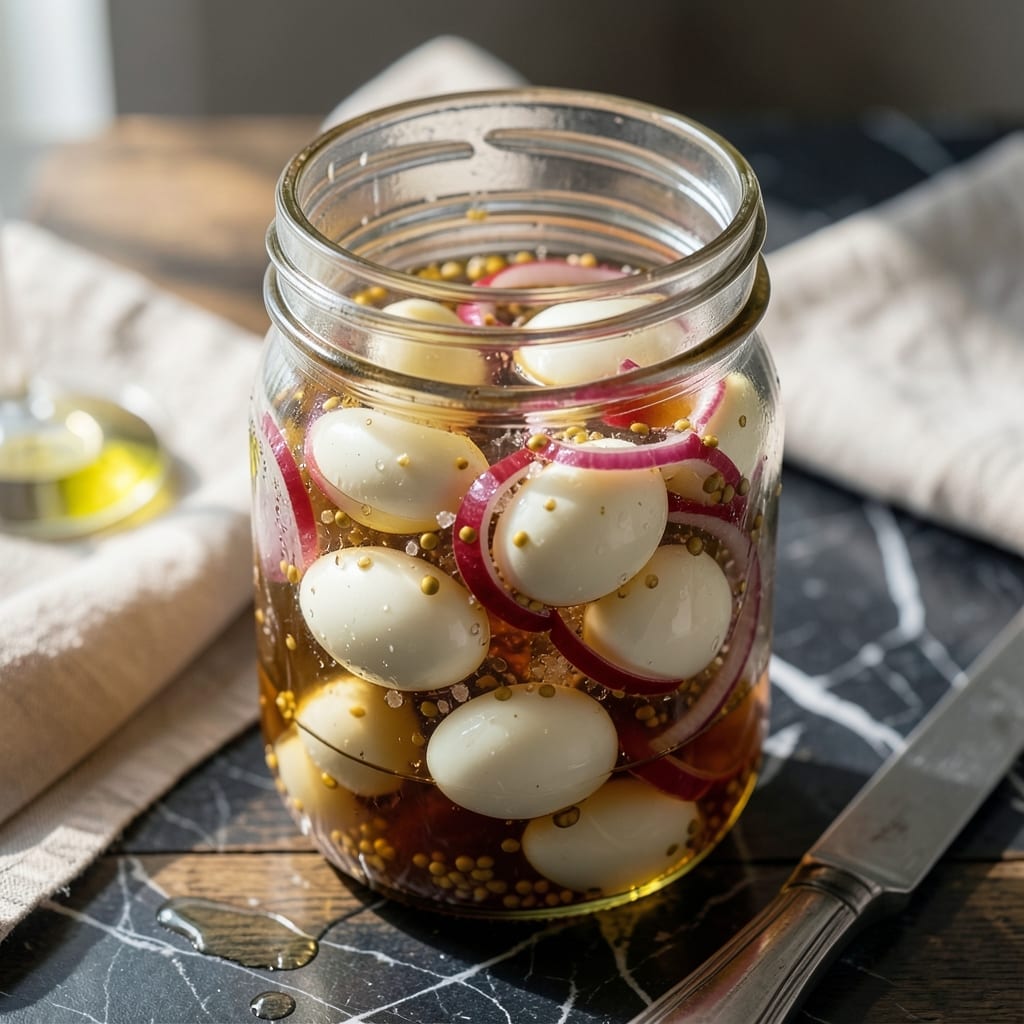
I’ve perfected a method for creating gourmet pickled quail eggs that deliver bold, tangy flavor in every bite. The brine balances sweetness and acidity, transforming delicate eggs into a sophisticated appetizer.
This process requires minimal effort but demands precision. Hard-boiling the eggs first ensures they hold their shape during pickling, while a hot vinegar infusion maximizes flavor penetration.
The result is a crisp, zesty treat with a firm texture and vibrant color. These eggs elevate charcuterie boards or serve as an elegant garnish for salads and small plates.
They’ll keep in the fridge for weeks, making them a practical make-ahead option for entertaining. The longer they sit, the more the flavors deepen.
Ingredients for Pickled Quail Egg
Delicate quail eggs meet a bold, balanced brine for sophisticated flavor in every bite.
| Ingredient | Amount | Notes |
|---|---|---|
| Quail Eggs 🥚 | 24 whole | Fresh, hard-boiled and peeled |
| White Vinegar 💧 | 1 ½ cups | 5% acidity for best results |
| Apple Cider Vinegar 🍏 | ½ cup | Adds subtle fruitiness |
| Granulated Sugar 🍚 | ¼ cup | Dissolves evenly in brine |
| Kosher Salt 🧂 | 1 tbsp | Diamond Crystal preferred |
| Yellow Mustard Seeds 🌿 | 2 tsp | Whole seeds for texture |
| Black Peppercorns 🌶️ | 1 tsp | Lightly crushed |
| Dried Dill 🌿 | 1 tsp | Or 1 tbsp fresh dill |
| Red Pepper Flakes 🔥 | ½ tsp | Adjust for heat preference |
| Garlic Cloves 🧄 | 4 cloves | Lightly smashed |
| Bay Leaves 🍃 | 2 whole | For aromatic depth |
| White Onion 🧅 | ½ whole | Thinly sliced for brine |
| Fresh Thyme Sprigs 🌿 | 3 whole | Optional for extra aroma |
The quail eggs are non-negotiable for texture and presentation. Specialty grocery stores or online retailers like D’Artagnan carry them fresh. Look for eggs with intact shells and no cracks. For the vinegars, Heinz white vinegar and Bragg apple cider vinegar are reliable. The sugar should be fine granulated to ensure it dissolves completely in the hot brine.
No quail eggs? Chicken eggs can work but reduce the brine time by half—they’re larger and can get rubbery. Swap apple cider vinegar for white wine vinegar if preferred. Mustard seeds can be yellow or brown, but yellow gives the classic look. Fresh dill at triple the amount works if you skip the dried. The red pepper flakes can be omitted for a milder pickle.
These keep beautifully in the fridge for 3-4 weeks. Store in a clean, airtight glass jar. The longer they sit, the more the flavors meld and intensify. Always use a clean utensil when removing eggs to prevent contamination.
Why You’ll Love This Recipe
- 5-Minute Brine: I mix vinegar, sugar, and salt in a pot—boil, pour, and the quail eggs are pickling while I tidy up.
- Tangy Bite: The apple cider vinegar gives a sweet sharpness that cuts through the rich egg yolk.
- Party Starter: I set out a jar at gatherings, and they disappear faster than I can refill.
- Pantry MVP: Honestly, a batch lasts weeks in the fridge, so I always have a fancy snack ready.
Step-by-Step Instructions for Pickled Quail Eggs
This method ensures perfectly tangy, crisp eggs with balanced flavor in every bite.
Step 1: Hard-Boil and Peel the Quail Eggs
Place the 24 whole Quail Eggs in a small saucepan and cover with cold water by 1 inch. Bring to a rolling boil over high heat, then immediately reduce to a gentle simmer. Cook for exactly 3 minutes—this timing is critical for quail eggs to achieve a fully set yolk without becoming rubbery.
Transfer the eggs to an ice bath to stop the cooking process completely. Once cooled, gently tap each egg on a hard surface, then roll between your fingers to loosen the shell. Peel under a thin stream of running water to help remove any stubborn membrane. The peeled eggs should have a smooth, firm texture with no gray ring around the yolk.
Step 2: Prepare the Pickling Brine
In a medium saucepan, combine the 1.5 cups White Vinegar, 0.5 cup Apple Cider Vinegar, 0.25 cup Granulated Sugar, and 1 tbsp Kosher Salt. Heat over medium heat just until the sugar and salt dissolve completely—do not boil. This gentle heating preserves the vinegar’s acidity while ensuring even distribution of seasoning.
Remove from heat and add the 2 tsp Yellow Mustard Seeds, 1 tsp Black Peppercorns, 1 tsp Dried Dill, 0.5 tsp Red Pepper Flakes, 4 cloves Garlic Cloves, 2 whole Bay Leaves, 0.5 whole White Onion (thinly sliced), and 3 whole Fresh Thyme Sprigs. Stir to combine and let steep for 10 minutes to infuse the brine with aromatic depth.
Step 3: Combine Eggs and Brine
Pack the peeled quail eggs into a clean 1-quart mason jar or similar heatproof container. Pour the warm brine over the eggs, ensuring they are completely submerged. Use a small spoon to press down gently if needed—this prevents any eggs from floating above the liquid where they could spoil.
The brine should cover the eggs by at least ½ inch. If necessary, prepare a bit more vinegar-sugar-salt mixture to top up. The eggs will absorb some liquid over time, so starting with full coverage is essential for both safety and flavor development.
Step 4: Refrigerate and Allow to Cure
Seal the jar tightly and let it cool to room temperature on the counter, about 30 minutes. Then transfer to the refrigerator. For best flavor development, wait at least 48 hours before tasting. The eggs will become increasingly tangy and the spices will mellow into a harmonious blend.
The pickled eggs will keep for up to 1 month in the refrigerator. The texture will remain firm, while the flavor becomes more complex over time. The brine itself can be reused for a second batch if you replace the aromatic ingredients, as the vinegar’s acidity remains effective for preservation.
Pro Tips For Making Pickled Quail Egg
- Boil Gently: Simmer quail eggs for exactly 2.5 minutes in lightly salted water—I learned this the hard way after ending up with rubbery yolks from overcooking.
- Pierce the Shells: Use a pin to prick each boiled egg before pickling; this prevents cracking and helps the brine penetrate faster.
- Balance Your Vinegars: Mix white vinegar and apple cider vinegar in a 1:1 ratio for brightness and depth—skip the all-white-vinegar shortcut, it tastes flat.
- Cool Before Brining: Let eggs cool completely in ice water for 5 minutes before adding to the brine, or the heat will dull the flavors and turn the whites gray.
Perfect Pairings for This pickled quail egg
Charcuterie Board Star
These pickled eggs add a pop of color and tang to any charcuterie spread. Pair with aged cheddar, prosciutto, and cornichons for a balanced bite. I always include crackers or baguette slices to let guests build their own combinations. 💛
Salad Topper
Slice or halve these eggs for an elegant touch on Cobb salad or frisée aux lardons. The vinegar in the brine complements bacon and blue cheese beautifully. I love them on a bed of butter lettuce with a light vinaigrette.
Cocktail Garnish
Drop one into a Bloody Mary or Gibson martini for a sophisticated twist. The dill and mustard seeds in the brine echo classic cocktail flavors. I use a toothpick to secure it to the rim for easy access. 🍸
Small Plate Appetizer
Serve as part of a Spanish tapas spread with marinated olives and roasted almonds. The acidity cuts through rich flavors. I arrange them on a slate board with smoked paprika for a rustic presentation.
Brunch Accompaniment
Add to a breakfast platter with smoked salmon, cream cheese, and capers. The pickled eggs add a bright contrast to the richness. I like to serve them at room temperature for the best texture.
Nutrition Facts
Frequently Asked Questions
How long do pickled quail eggs last?
They stay fresh in the fridge for 3-4 weeks when stored in a clean, airtight jar. Always use a clean utensil when removing eggs to prevent contamination.
Can I use chicken eggs instead?
Yes, but reduce pickling time by half as chicken eggs are larger. They may become rubbery if left too long in the brine.
Why did my brine turn cloudy?
This usually happens if the eggs weren’t fully submerged or the jar wasn’t clean. Always ensure eggs are completely covered and use sterilized containers.
Can I reuse the pickling brine?
Yes, for one additional batch if you replace the aromatic spices. The acidity remains effective for preservation.

- BBQ Sausage Recipe Oven: Smoky Depth Without the Grill - September 28, 2026
- BBQ Chicken Bowl Recipe Rice: Smoky Sweetness Over Fluffy Grains - September 28, 2026
- Beef Cutlet Recipe Ideas: Crispy Breaded Patties With Bold Seasonings - September 28, 2026