
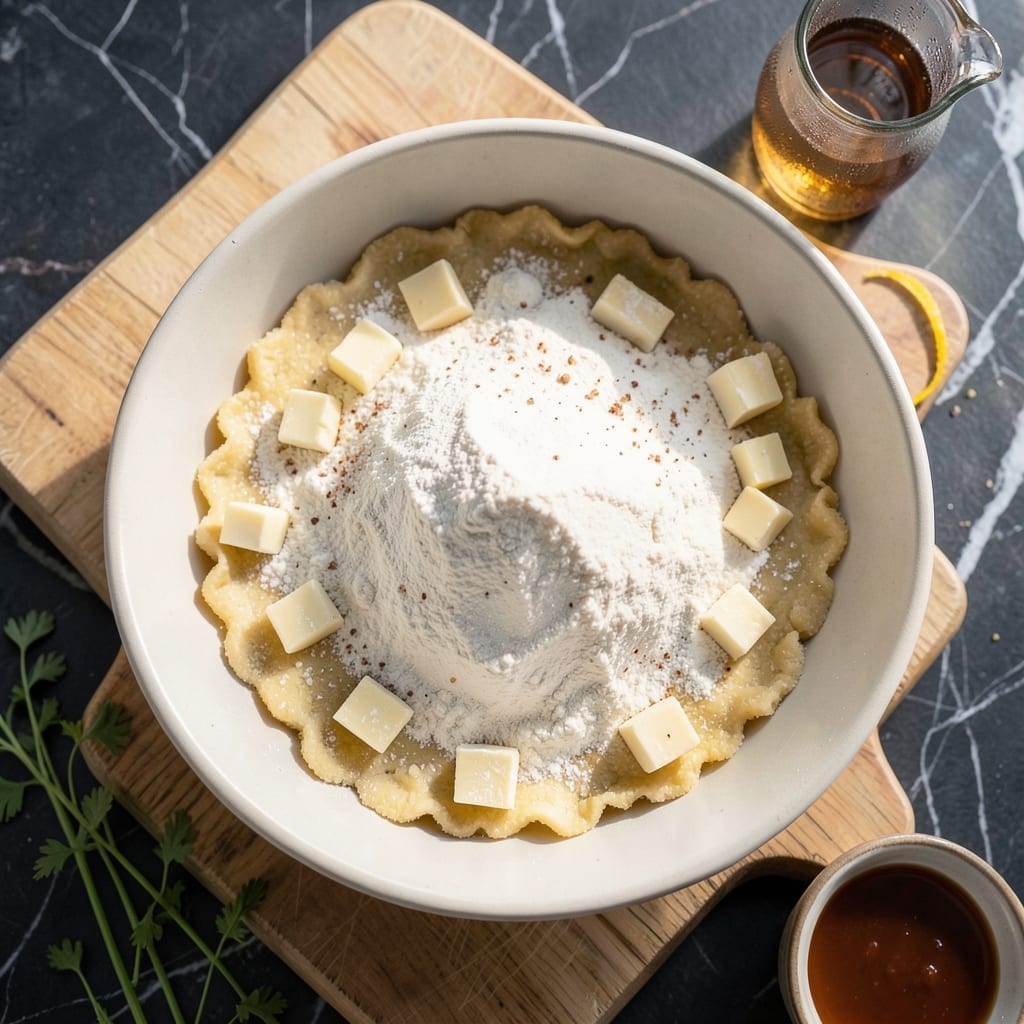
For flaky, golden pie crust, apple cider vinegar is the secret ingredient that makes all the difference. This simple addition tenderizes the dough by inhibiting gluten formation, creating layers that separate beautifully in the oven.
The vinegar also adds a subtle tang that balances the buttery richness, enhancing the overall flavor profile. With just a few basic ingredients and proper technique, you’ll achieve a crust that’s crisp on the outside and perfectly tender inside.
Cold butter and minimal handling are key to maintaining those distinct layers. The vinegar ensures the dough stays workable while adding that extra depth of flavor that sets this crust apart from ordinary versions.
This method delivers consistent results every time, whether you’re making a classic apple pie or a savory quiche. The crust bakes up golden and holds its shape beautifully without shrinking.
Ingredients for Pie Crust Recipe Apple Cider Vinegar
A handful of basic ingredients and cold butter create that perfect flaky crust.
| Ingredient | Amount | Notes |
|---|---|---|
| All-Purpose Flour 🌾 | 2 ½ cups | Sifted for best texture |
| Unsalted Butter 🧈 | 1 cup | Cold, cut into cubes |
| Apple Cider Vinegar 🍏 | 1 tbsp | Cold, for tenderizing |
| Ice Water 💧 | ¼ cup | Plus 1 tbsp as needed |
| Granulated Sugar 🍚 | 1 tsp | Optional, for sweetness |
| Salt 🧂 | 1 tsp | Fine sea salt preferred |
| Vegetable Shortening 🧈 | ¼ cup | Cold, for extra flakiness |
The butter must stay cold—cut it into cubes and return to the fridge until ready. King Arthur Flour is ideal for consistent results, but any all-purpose works. The vinegar is key here; apple cider vinegar adds the tang and tenderness without overpowering the flavor. Ice water ensures the dough stays cold throughout mixing.
No apple cider vinegar? White vinegar or lemon juice works in a pinch but may alter the flavor slightly. Shortening can be omitted if preferred, but it adds flakiness. For a richer taste, substitute half the water with ice-cold vodka. Sugar is optional but balances the richness for sweet pies.
Dough can be refrigerated for up to 2 days or frozen for 3 months. Thaw overnight in the fridge before rolling. Keep butter and shortening cold until the moment of use for best layers.
Why You’ll Love This Recipe
- One Bowl Wonder: I mix everything right in the same bowl—flour, cold butter, a splash of apple cider vinegar, and ice water. No fancy tools, just my hands and five minutes.
- Flaky & Tangy: The vinegar gives it this subtle zing that makes the buttery layers taste even more incredible. Honestly, it’s the secret to my best crust yet.
- Freezer Friendly: I always double the batch and freeze the extra dough. That way, I’m ready for pie night anytime—no last-minute stress.
- Pocketbook Perfect: All-purpose flour and a little vinegar keep it cheap, but it tastes like a bakery special. Between us, my wallet thanks me every time.
Step-by-Step Instructions for Pie Crust With Apple Cider Vinegar
This method ensures a perfectly flaky crust with tender layers and just the right tang.
Step 1: Combine Dry Ingredients
In a large mixing bowl, whisk together the 2.5 cups All-Purpose Flour, 1 tsp Granulated Sugar, and 1 tsp Salt until evenly distributed. I always sift my flour first, as mentioned in the ingredients, to break up any lumps and create the lightest possible texture.
The sugar adds a subtle sweetness that balances the tang of the vinegar, while the salt enhances all the flavors. This dry mixture will form the base of your crust, so make sure it’s well combined before adding the fats.
Step 2: Cut in Cold Fats
Add the 1 cup Unsalted Butter (cut into cubes) and 0.25 cup Vegetable Shortening to the flour mixture. Using a pastry cutter or your fingers, work the fats into the flour until the mixture resembles coarse crumbs with some pea-sized pieces remaining.
Here’s the thing—the key to flakiness is keeping the fats cold and creating visible layers. Don’t overmix; you want those distinct fat pieces to melt during baking, creating steam that separates the flour into flaky strata. If the mixture starts feeling warm, chill the bowl for 10 minutes before continuing.
Step 3: Add Liquids and Form Dough
Create a well in the center of the mixture. Pour in the 1 tbsp Apple Cider Vinegar and 0.25 cup Ice Water. Using a fork, gently toss the liquid with the dry ingredients until the dough just begins to come together.
The vinegar tenderizes the gluten, preventing toughness, while the ice water keeps everything cold. If the dough seems too dry, add additional water 1 tbsp at a time until it holds together when pressed. Turn the dough onto a lightly floured surface and gently knead just until it forms a smooth ball—overworking develops gluten and results in a tough crust.
Step 4: Chill and Rest the Dough
Divide the dough into two equal portions and shape each into a disc about 1 inch thick. Wrap each disc tightly in plastic wrap and refrigerate for at least 1 hour (or up to 2 days).
This resting period allows the flour to fully hydrate and the gluten to relax, making the dough easier to roll out. It also gives the fats time to rechill, which is essential for maintaining those flaky layers we worked so hard to create.
Step 5: Roll and Prepare for Baking
On a lightly floured surface, roll out one disc of dough to about ⅛-inch thickness. Start from the center and work outward, turning the dough occasionally to prevent sticking. If the edges crack, press them together gently with your fingers.
Transfer the rolled dough to your pie dish, pressing it lightly into the bottom and up the sides. Trim any excess dough hanging over the edge, leaving about ½ inch overhang. Crimp the edges decoratively with your fingers or a fork. Chill the crust for 30 minutes before baking to prevent shrinking. This final chill ensures your crust maintains its shape and develops maximum flakiness in the oven.
Pro Tips For Making Pie Crust Recipe Apple Cider Vinegar
- Chill the Butter: Cut the butter into small cubes and freeze for 15 minutes before mixing—I learned this the hard way after ending up with a tough crust from room-temp butter.
- Use Ice-Cold Water: Fill a glass with water and ice cubes, then measure from that. Sounds obvious, but warm water is the fastest way to ruin a flaky texture.
- Skip the Overmixing: Stop as soon as the dough comes together, even if it looks shaggy. Overworking develops gluten, and nobody wants a chewy pie crust.
- Add Vinegar Last: Mix the apple cider vinegar into the ice water first, then drizzle it in at the very end—about 1 tablespoon is all you need to tenderize without altering the flavor.
Creative Variations of This pie crust recipe apple cider vinegar
Herb-Infused Savory
Swap the 1 tsp Granulated Sugar for 1 tsp dried herbs like thyme or rosemary. Add ½ tsp black pepper to the dry mix for a savory crust perfect for quiches or pot pies. The vinegar still tenderizes while the herbs add depth. 🌿
Whole Wheat Version
Replace 1 cup All-Purpose Flour with whole wheat flour for a nuttier flavor. Add 1 extra tbsp ice water since whole wheat absorbs more liquid. The vinegar helps offset the denser texture, keeping layers distinct.
Cheesy Cheddar Crust
Mix in 1 cup shredded sharp cheddar after cutting in the fats. This works wonderfully for savory pies. The vinegar balances the richness, and the cheese adds a golden, crispy edge. I love this with chicken pot pie.
Spiced Sweet Crust
Add 1 tsp cinnamon and ¼ tsp nutmeg to the dry ingredients for apple or pumpkin pies. The vinegar enhances the spices’ warmth without overpowering. It’s my go-to for fall desserts. ✨
Gluten-Free Adaptation
Use a 1:1 gluten-free flour blend like King Arthur’s. Add 1 extra tbsp vinegar to help bind the dough. Chill the dough for 2 hours—gluten-free flours need more time to hydrate properly.
Brown Butter Variation
Brown ½ cup of the butter before cooling and cubing. The nutty notes pair beautifully with the vinegar’s tang. Use the remaining ½ cup butter cold for structure. This adds a gourmet touch to any pie.
Nutrition Facts
Frequently Asked Questions
Why add vinegar to pie dough?
It tenderizes by inhibiting gluten formation, creating a more flaky texture. The acidity also adds subtle depth to the flavor without being noticeable.
Can I use white vinegar instead?
Yes, but apple cider vinegar’s milder taste blends better. White vinegar works in a pinch but may add a sharper tang. Use the same 1 tbsp measurement.
How long should I chill the dough?
Refrigerate for at least 1 hour but up to 2 days. This allows fats to rechill and gluten to relax for easier rolling.
What if my crust shrinks when baking?
Chill the rolled dough for 30 minutes before baking. This prevents shrinking by keeping the butter firm until it hits the oven.

- Potato Candy Recipe 1933: Vintage Peanut Butter Roll Delight - October 30, 2026
- Potato Chip Cookie Recipe With Pecans: Buttery Crunch Meets Nutty Richness - October 30, 2026
- Potato Patty Recipe No Egg: Crispy Edges Without the Binder - October 30, 2026