
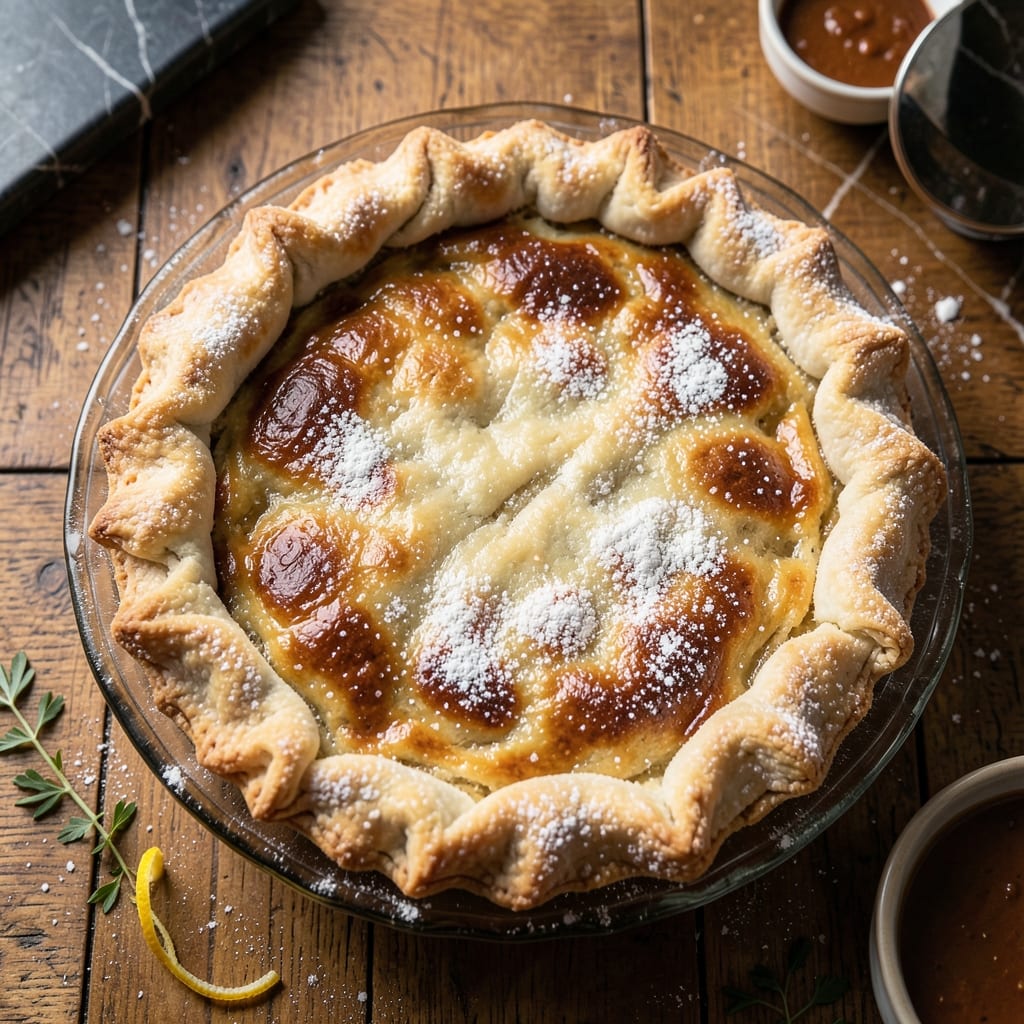
This pie crust recipe delivers the flaky, buttery foundation your pecan pie deserves. No soggy bottoms here—just golden layers that hold up to the rich, nutty filling.
Cold butter and minimal handling create those coveted flakes, while a touch of vinegar prevents toughness. The dough rests for 30 minutes before rolling, ensuring it stays tender.
Blind-baking isn’t required for pecan pie, but a pre-baked crust adds extra crispness. The result? A perfect balance of texture and flavor to complement the gooey filling.
Master this crust, and your pecan pie will stand out every time. Simple ingredients, professional results.
Ingredients for Pie Crust Recipe for Pecan Pie
Six simple ingredients for the perfect flaky, buttery foundation to support your pecan pie.
| Ingredient | Amount | Notes |
|---|---|---|
| All-Purpose Flour 🌾 | 2 ½ cups | Sifted for even texture |
| Unsalted Butter 🧈 | 1 cup | Ice cold, cubed |
| Granulated Sugar 🍚 | 1 tbsp | Fine grain preferred |
| Salt 🧂 | ½ tsp | Fine sea salt |
| White Vinegar 💧 | 1 tbsp | Distilled or apple cider |
| Ice Water 💧 | ¼ cup | Plus extra as needed |
The butter is non-negotiable here. European-style unsalted butter (like Plugrá or Kerrygold) gives superior flakiness due to higher fat content, but standard grocery store butter works perfectly fine. Ensure it’s ice cold—straight from the fridge, not softened. The flour should be all-purpose; avoid cake or pastry flour as they’ll create a tougher crust.
No vinegar on hand? Lemon juice or vodka can substitute in equal amounts. For a richer flavor, replace 1 tablespoon of water with heavy cream. The sugar can be omitted if you prefer a neutral crust, but it adds a subtle sweetness that pairs beautifully with pecan. If using salted butter, reduce the added salt by half.
The dough can rest in the fridge for up to 2 days or freeze it for 3 months. Once rolled and shaped, the unbaked crust can be frozen for 1 month. Always let it thaw in the fridge before baking for best results.
Why You’ll Love This Recipe
- One Bowl Wonder: Honestly, I just dump the flour, butter, sugar, and a splash of vinegar in one bowl, mix, and it’s ready for rolling—no fancy tools needed.
- Buttery Crisp Perfection: That flaky, golden crust with just a hint of tang from the vinegar? It holds up to the pecan filling beautifully without getting soggy.
- Holiday Hero: I make this the night before Thanksgiving and it still tastes fresh—saves me a panic attack when the oven’s already full.
- Pantry Staples Only: Between us, I always have these five ingredients on hand, so I can whip this up for potlucks or Sunday dessert without a store run.
Step-by-Step Instructions for Pie Crust for Pecan Pie
Master these precise techniques for a flaky, tender crust that perfectly complements rich fillings.
Step 1: Combine Dry Ingredients and Cut in Butter
In a large mixing bowl, whisk together the 2.5 cups All-Purpose Flour, 1 tbsp Granulated Sugar, and 0.5 tsp Salt until evenly distributed. The sugar adds subtle sweetness that balances savory fillings, while the salt enhances all flavors.
Add the 1 cup Unsalted Butter in cubed, ice-cold pieces. Using a pastry cutter or your fingertips, work the butter into the flour mixture until it resembles coarse crumbs with some pea-sized butter pieces visible. This uneven texture creates the flaky layers that define exceptional pie crust.
Step 2: Create the Liquid Mixture
In a separate small bowl, combine the 1 tbsp White Vinegar with the 0.25 cup Ice Water. The vinegar tenderizes the dough by inhibiting gluten development, while the cold water keeps the butter from melting prematurely.
Stir gently to combine—don’t worry if the vinegar doesn’t fully dissolve. The slight separation is normal and won’t affect the final texture of your crust.
Step 3: Form the Dough
Create a well in the center of your flour-butter mixture. Pour in about half of the vinegar-water mixture and gently fold with a spatula until the dough just begins to come together. The mixture should look shaggy with some dry patches—this prevents overworking.
Add the remaining liquid 1 tablespoon at a time only as needed. You want the dough to hold together when pressed but not be sticky. Over-moistening leads to tough crust, while under-moistening causes cracking during rolling.
Step 4: Chill and Rest the Dough
Turn the dough out onto a lightly floured surface and gently press it into a cohesive ball, handling it as little as possible. Divide it into two equal portions and flatten each into a 1-inch thick disc. This shape makes rolling easier later.
Wrap each disc tightly in plastic wrap and refrigerate for at least 1 hour, or up to 2 days. The chilling step relaxes the gluten and re-solidifies the butter, both critical for achieving maximum flakiness and preventing shrinkage during baking.
Step 5: Roll and Fit the Crust
On a well-floured surface, roll one disc into a 12-inch circle that’s about 1/8-inch thick. Use light, even pressure and rotate the dough frequently to prevent sticking. For a pecan pie, you’ll only need one crust for the bottom.
Transfer the rolled dough to your pie dish, allowing it to overhang slightly. Press it gently into the bottom and up the sides without stretching. Trim the excess to 1/2-inch beyond the rim, then crimp the edges decoratively. Chill the fitted crust for 30 minutes before blind baking or filling to maintain its shape.
Pro Tips For Making Pie Crust Recipe For Pecan Pie
- Chill the Butter: Cut your unsalted butter into 1-inch cubes and refrigerate for 30 minutes before mixing—I learned this the hard way after my first three crusts turned out tough as leather.
- Use Ice Water: Replace the white vinegar with ice-cold water for mixing, about 1 tablespoon at a time, to keep the dough flaky and prevent gluten from overdeveloping.
- Skip Overworking: Mix just until the dough comes together—even if it looks shaggy. Overworking the flour and butter makes a dense crust, and nobody wants that.
- Rest Before Rolling: Give the dough a solid 30 minutes in the fridge after mixing. Sounds tedious, but it relaxes the gluten and makes rolling out a breeze.
Dietary Considerations for pie crust recipe for pecan pie
Gluten-Free Option
Swap the All-Purpose Flour for a 1:1 gluten-free baking blend like King Arthur Measure for Measure. Add ½ tsp xanthan gum if your blend doesn’t include it. The texture will be slightly more tender but still flaky. Chill the dough for 2 hours to prevent cracking.
Vegan Adaptation
Replace the Unsalted Butter with 1 cup cold vegan butter like Miyoko’s or Earth Balance. Use ice-cold coconut oil in a pinch, but expect a slightly different flavor. The vinegar and water stay the same. Handle the dough gently—vegan fats melt faster. 🌱
Lower Sugar Choice
Omit the Granulated Sugar entirely if you prefer a neutral crust. The filling’s sweetness will still shine through. For a hint of sweetness without sugar, add ½ tsp vanilla extract to the water-vinegar mixture. This works well for less sweet pecan pie variations.
Nut-Free Assurance
This crust is naturally nut-free, making it perfect for pecan pie served to guests with nut allergies. Just ensure your workspace and tools haven’t touched nuts. For extra safety, use a dedicated nut-free facility flour like Pillsbury’s nut-free line. 💡
Dairy-Free Version
Use the same vegan butter swap as above, and ensure all other ingredients are dairy-free. The White Vinegar and Ice Water are naturally dairy-free. Brands like Country Crock Plant Butter work well and are widely available.
Reduced Sodium
Cut the Salt to ¼ tsp or use a salt-free butter substitute. Boost flavor with 1 tsp dried herbs like thyme or rosemary. The crust will still be delicious, just less salty. This pairs well with a salted caramel pecan pie filling.
Nutrition Facts
Frequently Asked Questions
Should I blind-bake the crust for pecan pie?
It’s optional but recommended for extra crispness. Blind-bake at 375°F for 15 minutes with pie weights or dried beans, then remove weights and bake 5 more minutes. This prevents sogginess from the wet filling.
Why does my crust shrink when baking?
Shrinking happens when the dough isn’t chilled enough or is overworked. Always rest the dough for at least 1 hour before rolling, and avoid stretching it when fitting into the pan. This keeps the gluten relaxed.
Can I use a food processor to make the dough?
Yes! Pulse the flour, sugar, and salt first, then add cold butter until pea-sized crumbs form. Transfer to a bowl to add liquid—this prevents overmixing. The processor method saves time while keeping the butter cold.
How do I prevent a soggy bottom crust?
Sprinkle 1 tbsp breadcrumbs or crushed cornflakes in the crust before adding filling. This creates a barrier. Also, avoid overfilling and bake on the lower oven rack for even heat.

- Potato Candy Recipe 1933: Vintage Peanut Butter Roll Delight - October 30, 2026
- Potato Chip Cookie Recipe With Pecans: Buttery Crunch Meets Nutty Richness - October 30, 2026
- Potato Patty Recipe No Egg: Crispy Edges Without the Binder - October 30, 2026