
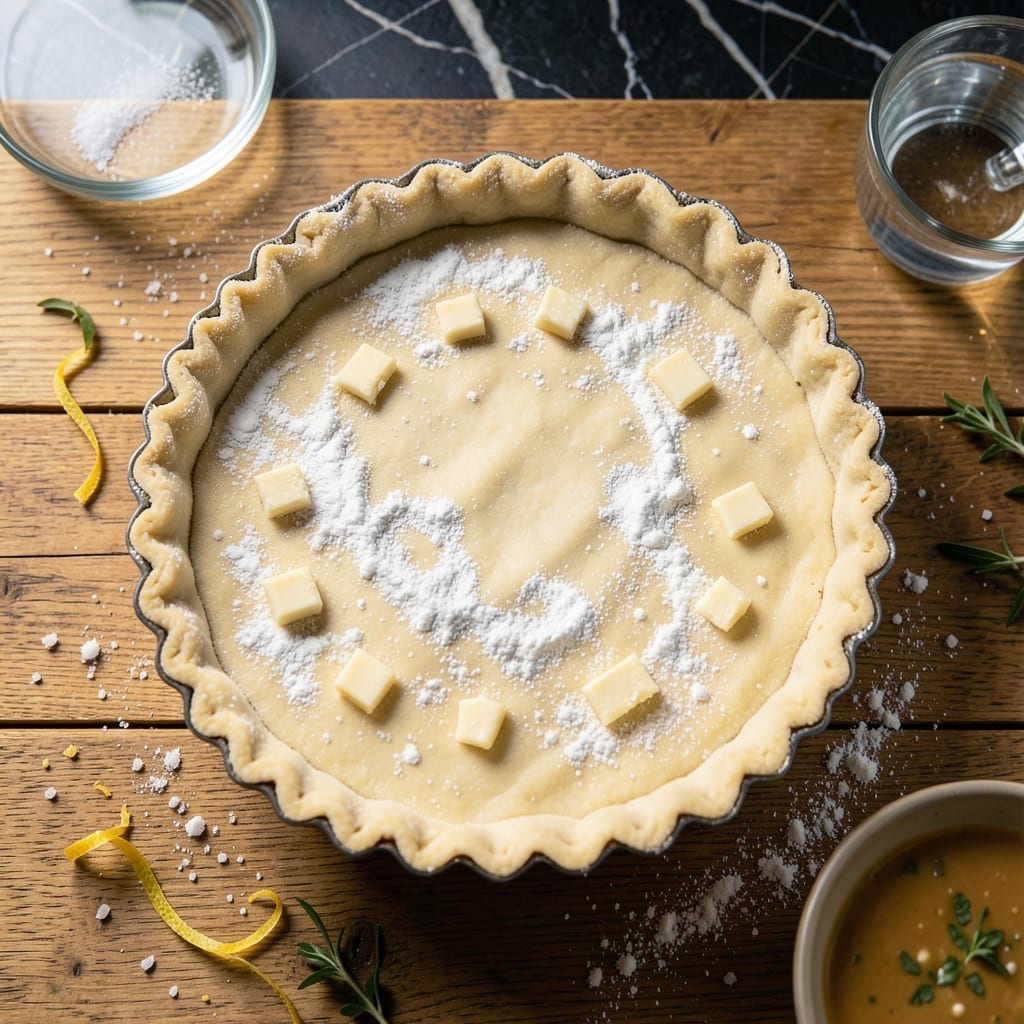
A buttery, flaky crust is the foundation of any exceptional quiche, and this recipe delivers perfect results every time. The secret lies in cold ingredients and minimal handling to maintain those coveted layers.
I developed this method after years of testing to ensure a tender, crisp base that holds up to custard fillings without turning soggy. The key is using ice water and chilled butter to create steam during baking.
What you get is a golden, perfectly structured crust with a delicate crumb that complements rather than competes with your quiche filling. It bakes to a light golden brown with just the right amount of crispness.
This crust works for both sweet and savory applications, but it truly shines as a base for quiche. The recipe makes enough for one standard pie dish.
Ingredients for Pie Crust Recipe for Quiche
Cold butter, minimal handling, and ice water create this flaky, golden foundation for your quiche.
| Ingredient | Amount | Notes |
|---|---|---|
| All-Purpose Flour 🌾 | 1 ¼ cups | Spoon and level for accuracy |
| Unsalted Butter 🧈 | ½ cup | Chilled and cubed into 1/2-inch pieces |
| Ice Water 💧 | 3 tbsp | Plus 1 tsp as needed |
| Salt 🧂 | ½ tsp | Fine sea salt or table salt |
| Granulated Sugar 🍚 | 1 tsp | Optional, for flavor balance |
The butter must stay cold—cut it into cubes and return to the fridge between steps. European-style butter (higher fat content) gives even better layers, but standard unsalted butter works fine. For flour, King Arthur or Gold Medal are reliable. Weighing your flour (150g) is more accurate than volume, but spoon-and-level is the next best method for home cooks.
No unsalted butter? Use salted and reduce the added salt by half. Swap all-purpose for pastry flour for an extra-tender crust. Short on ice water? Very cold tap water works in a pinch, but ice water is ideal. The sugar is optional—skip it for savory quiches, include it for sweet applications.
Dough keeps wrapped in plastic for 2 days in the fridge or 3 months frozen. Thaw overnight in the fridge before rolling. Baked crusts can be stored at room temperature for 1 day or frozen for 1 month (thaw at room temp before filling).
Why You’ll Love This Recipe
- No-Fuss Mixing: I just pulse the flour, cold butter, and a pinch of sugar in the food processor—no fancy techniques, no stress.
- Buttery Crisp: That flaky, golden crust with the richness of real butter? It’s the kind of texture that makes quiche taste like a treat.
- Brunch or Dinner: Honestly, I use this crust for everything from a quick weekday quiche to a fancy weekend brunch spread.
- Freezer Friend: I roll out extra dough, freeze it, and pull it out whenever I need a last-minute crust—saves me every time.
Step-by-Step Instructions for Pie Crust for Quiche
Here’s the method. Tested, reliable, delivers a flaky base every time.
Step 1: Combine Dry Ingredients
In a large bowl, whisk together the 1.25 cups all-purpose flour, 0.5 tsp salt, and 1 tsp granulated sugar until fully combined. The sugar adds subtle sweetness that balances the richness of the butter, but you can omit it if you prefer a purely savory crust for your quiche.
Make a well in the center of the flour mixture. This creates space for the butter to be incorporated evenly. The key here is to work quickly to keep the butter cold—warm butter leads to tough, dense crust rather than flaky layers.
Step 2: Cut in the Cold Butter
Add the 0.5 cup unsalted butter (chilled and cubed into 1/2-inch pieces) to the well. Using a pastry cutter or your fingers, work the butter into the flour until the mixture resembles coarse crumbs with pea-sized butter pieces visible throughout.
Don’t overwork the butter—you want visible flakes remaining. These flakes create the steam pockets during baking that result in those coveted flaky layers. If the butter starts to melt from the warmth of your hands, pause and chill the mixture for 5 minutes before continuing.
Step 3: Add Ice Water Gradually
Sprinkle 1 tbsp of the 3 tbsp ice water over the flour-butter mixture. Using a fork, gently toss to distribute the moisture. Add the remaining water 1 tbsp at a time, just until the dough begins to come together when pressed.
The dough should hold when squeezed but not be sticky. Overworking or adding too much water develops gluten, which makes the crust tough. If the mixture still seems dry after 3 tbsp, add the optional 1 tsp ice water as needed.
Step 4: Chill and Rest the Dough
Turn the dough out onto a lightly floured surface and gently shape it into a disk about 1 inch thick. Wrap it tightly in plastic wrap and refrigerate for at least 1 hour. This resting period allows the gluten to relax and the butter to firm up.
Chilling is non-negotiable. It prevents the crust from shrinking during baking and ensures those flaky layers stay intact. For best results, I recommend chilling for up to 24 hours if time permits.
Step 5: Roll and Blind Bake the Crust
On a lightly floured surface, roll the chilled dough into a 12-inch circle. Transfer it to a 9-inch pie dish, pressing gently into the bottom and up the sides. Trim the edges, leaving a slight overhang, then crimp decoratively.
For a quiche, blind baking is essential. Prick the bottom with a fork, line with parchment paper, fill with pie weights or dried beans, and bake at 375°F for 15 minutes. Remove the weights and bake for another 10-12 minutes until the crust is light golden brown and fully set.
Pro Tips For Making Pie Crust Recipe For Quiche
- Chill the Butter: Cut your unsalted butter into small cubes and refrigerate for 20 minutes before mixing—cold butter creates flaky layers, and I learned this the hard way after ending up with a tough crust.
- Use Ice Water: Fill a glass with water and ice cubes, then measure from that—using room temp water makes the dough sticky, and about 3-4 tablespoons is usually perfect for this recipe.
- Skip Overworking: Mix just until the dough comes together, even if it looks shaggy—overworking develops gluten, and my first few quiches had crusts as chewy as bread because I didn’t stop soon enough.
- Blind Bake First: Pre-bake the crust at 375°F for 12-15 minutes with pie weights or dried beans to prevent a soggy bottom—sounds weird, but it works, and I was skeptical until I tried it.
Flavor Customization for These Flavors
Herb-Infused Savory
Add 1 tbsp fresh thyme or 1 tsp dried herbs de Provence to your flour mixture for a French-inspired crust. I love this with spinach or mushroom quiches. The herbs release their oils during baking, infusing every bite.
Cheesy Crust Boost
Mix ½ cup grated Parmesan or sharp cheddar into the flour for extra depth. The cheese browns beautifully, creating a nutty, crisp edge. This works especially well for broccoli cheddar quiche.
Spiced Sweet Version
For dessert quiches, add ½ tsp cinnamon and ¼ tsp nutmeg to the dough. The warmth of the spices pairs perfectly with apple or pumpkin fillings. I use this for my Thanksgiving quiche every year. 💛
Whole Wheat Option
Replace ½ cup all-purpose flour with whole wheat flour for a nuttier, healthier base. The texture is slightly denser but still flaky. Add 1 extra tsp ice water as whole wheat absorbs more liquid.
I recommend King Arthur white whole wheat for the best flavor and texture.
Citrus Zest Twist
Stir 1 tsp lemon or orange zest into the flour for a bright, aromatic crust. This complements seafood or goat cheese quiches beautifully. The citrus oils make the crust smell amazing while baking.
Nutrition Facts
Frequently Asked Questions
Can I use this crust for sweet pies too?
Just add 1 tsp sugar to the dough for balance. The buttery flavor works beautifully with fruit fillings. For extra flair, try adding ½ tsp cinnamon to the flour.
Why did my crust shrink during baking?
This usually means the dough wasn’t rested long enough. Always chill for at least 1 hour before rolling. Also, avoid stretching the dough when fitting it into the pan.
What’s the best way to prevent a soggy bottom?
Blind baking is essential. Bake the crust at 375°F with weights for 15 minutes, then 10-12 minutes without. Brushing the baked crust with egg white before adding filling helps too.
Can I make this ahead of time?
The dough keeps wrapped in plastic for 2 days refrigerated or 3 months frozen. Baked crusts stay fresh at room temperature for 1 day.

- BBQ Sausage Recipe Oven: Smoky Depth Without the Grill - September 28, 2026
- BBQ Chicken Bowl Recipe Rice: Smoky Sweetness Over Fluffy Grains - September 28, 2026
- Beef Cutlet Recipe Ideas: Crispy Breaded Patties With Bold Seasonings - September 28, 2026