
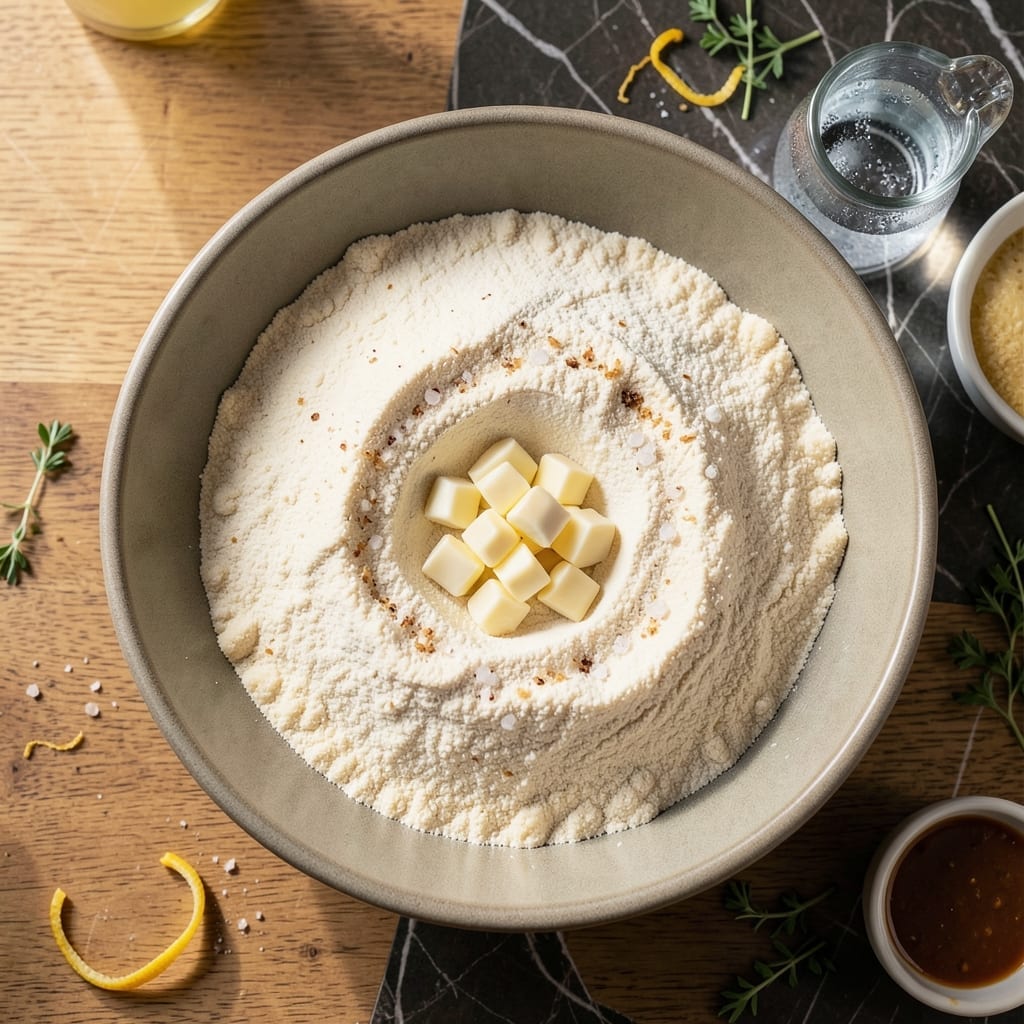
Nana Mae taught me that the secret to extraordinary pie crust lies in the fat—this version uses both lard and butter for unmatched flaky texture and rich flavor. The lard creates tender layers while butter adds depth that can’t be replicated.
This combination delivers a crust that’s sturdy enough to hold hearty fillings yet delicate enough to shatter at the touch. The technique is straightforward but precise: keep everything cold, handle minimally, and let the dough rest before rolling.
What results is a golden, layered foundation that elevates any pie from good to memorable. The dual fats create pockets of air that crisp beautifully during baking.
Perfect for fruit pies, pot pies, or even as a base for quiche. Here’s how to achieve this professional-quality crust at home.
Ingredients for Pie Crust Recipe Using Lard and Butter
Cold fat and minimal handling create that signature flaky, layered texture everyone loves.
| Ingredient | Amount | Notes |
|---|---|---|
| All-Purpose Flour 🌾 | 2 ½ cups | Chilled before use |
| Lard 🧈 | ½ cup | Leaf lard preferred for purity |
| Unsalted Butter 🧈 | ½ cup | Cut into small cubes, chilled |
| Salt 🧂 | 1 tsp | Fine sea salt preferred |
| Ice Water 💧 | ¼ cup | Plus 1 tbsp as needed |
| Granulated Sugar 🍚 | 1 tsp | Optional, for sweet crusts |
| Apple Cider Vinegar 🍏 | 1 tsp | Helps tenderize gluten |
The lard is non-negotiable for authenticity—leaf lard from a trusted butcher or Armour brand at the supermarket works. Butter should be European-style for higher fat content (82-85%), but standard Land O’Lakes is fine if that’s what you have. Flour doesn’t need to be fancy; King Arthur all-purpose is the gold standard. Keep everything ice-cold (literally—use ice water) for maximum flakiness.
No lard? Shortening works in a pinch but lacks that rich depth. Out of butter? Coconut oil at a 1:1 ratio (chilled solid) but the flavor will be different. The vinegar is subtle but important—white vinegar or lemon juice can substitute. For a sweeter crust, bump the sugar to 1 tbsp. The dough rests best in the fridge for 30-60 minutes.
The dough keeps 2-3 days refrigerated or 3 months frozen. Wrap tightly in plastic, then foil to prevent freezer burn. For best results, roll it out while still cold but slightly pliable. Leftover baked crust? Toast and crush for pie crumb toppings.
Why You’ll Love This Recipe
- Five Ingredients: I just dump flour, lard, butter, salt, and ice water—no fancy pantry list needed.
- Flaky Layers: That lard-butter combo gives me crisp, sky-high layers every single time.
- Freezer Friendly: I roll out extra dough and stash it for last-minute quiches or pot pies.
- Pocketbook Pleaser: Lard stretches my butter budget without sacrificing an ounce of flavor.
Step-by-Step Instructions for Pie Crust Using Lard and Butter
Here is the method for achieving perfectly flaky layers with rich depth in your crust.
Step 1: Combine Dry Ingredients and Chill
In a large mixing bowl, whisk together the 2.5 cups All-Purpose Flour, 1 tsp Salt, and 1 tsp Granulated Sugar until evenly distributed. The sugar adds a subtle sweetness that balances the rich fats. Place the bowl in the freezer for 10 minutes to chill the flour mixture thoroughly.
Chilling the flour prevents the fat from melting too quickly when incorporated, which is crucial for creating distinct flaky layers. This step ensures your crust maintains its structure during baking, resulting in that coveted tender yet crisp texture.
Step 2: Cut in Lard and Butter
Add the 0.5 cup Lard and 0.5 cup Unsalted Butter (cut into small cubes and chilled) to the flour mixture. Using a pastry cutter or your fingertips, work the fats into the flour until the mixture resembles coarse crumbs with pea-sized pieces of fat visible throughout.
Be careful not to overwork the mixture—the fat should remain in visible chunks. These pockets of fat will melt during baking, creating steam that separates the layers of dough, resulting in the flaky texture you want. The combination of lard and butter provides both tenderness and rich flavor.
Step 3: Add Liquid Ingredients Gradually
In a small bowl, combine the 0.25 cup Ice Water and 1 tsp Apple Cider Vinegar. Stir to mix well. The vinegar helps tenderize the gluten in the flour, ensuring a more delicate crust. Make a well in the center of the flour-fat mixture and pour in the liquid, 1 tablespoon at a time.
Use a fork to gently toss the flour mixture with the liquid until the dough just begins to come together. You may not need all the liquid—stop adding as soon as the dough starts to clump. Overworking the dough at this stage will develop too much gluten, making your crust tough instead of flaky.
Step 4: Shape and Chill the Dough
Turn the dough out onto a lightly floured surface and gently shape it into two equal balls. Flatten each ball into a disk about 1 inch thick. Wrap each disk tightly in plastic wrap and refrigerate for at least 1 hour, or up to 2 days.
Chilling the dough relaxes the gluten, making it easier to roll out later. It also ensures the fat remains solid, which prevents the crust from spreading too much during baking. This rest period is essential for achieving flaky, even layers in your finished crust.
Step 5: Roll and Fit the Crust
Remove one disk of dough from the refrigerator and let it sit at room temperature for 5-10 minutes to soften slightly. On a lightly floured surface, roll the dough into a circle about 12 inches in diameter, rotating the dough ¼ turn after each roll to prevent sticking.
Carefully transfer the rolled dough to a 9-inch pie dish, pressing it gently into the bottom and sides without stretching. Trim any excess dough, leaving a ½-inch overhang for crimping. If the dough tears, use a bit of extra dough to patch it, pressing lightly to seal. This crust is now ready for your filling.
Pro Tips For Making Pie Crust Recipe Using Lard And Butter
- Keep It Ice Cold: Work the lard and butter into the flour with your fingertips until pea-sized crumbs form, but stop there—I learned this the hard way after overmixing and ending up with a tough crust.
- Chill the Dough: After adding the ice water, wrap the dough and refrigerate for at least 30 minutes, or up to 2 hours. My grandmother swore by this, and she was right: it prevents shrinking during baking.
- Skip the Warm Water: Use only ice water to bind the dough—warm water melts the fat, and you’ll lose that flaky texture everyone raves about.
- Use a Mix of Fats: The combo of lard and butter gives you the best of both worlds: lard for flakiness and butter for flavor. I was skeptical until I tried it, but now I wouldn’t make pie crust any other way.
Troubleshooting pie crust recipe using lard and butter
Dough Too Crumbly
If your dough falls apart when rolling, it likely needs more liquid. Add ice water 1 tbsp at a time, mixing gently until it just holds together. David and I always test with 1-2 tbsp extra water in Austin’s dry climate. The vinegar helps, but don’t overdo it. 💡
Tough Crust Texture
This usually means overworked gluten. Use a light touch when mixing and rolling, and ensure your lard and butter stay ice-cold. I learned this the hard way in Nana Mae’s diner—her pies were always tender because she barely touched the dough.
Shrinking During Baking
Prevent this by chilling the dough at least 1 hour before rolling and blind-baking with pie weights. Roll the dough slightly larger than your 9-inch pie dish and avoid stretching when fitting it into the pan.
Soggy Bottom Crust
Blind-bake your crust for 10-12 minutes at 375°F before adding wet fillings. For fruit pies, sprinkle 1 tbsp breadcrumbs on the crust before adding filling to absorb excess moisture. This trick saved my peach pies last summer.
Uneven Browning
Rotate your pie halfway through baking and tent the edges with foil if they brown too quickly. A light egg wash (1 egg + 1 tbsp water) before baking helps achieve even golden color.
Fat Separation
If fat leaks during baking, your dough may have been too warm. Ensure your lard and butter are chilled and work quickly. If it happens, blot the excess with a paper towel and continue baking. The crust will still be delicious.
Nutrition Facts
Frequently Asked Questions
Why use both lard and butter?
Lard creates incredible flakiness while butter adds rich flavor. Together they make a crust that’s both tender and flavorful.
Can I use all butter instead?
Yes, but the texture will be less flaky. Replace lard with an equal amount of butter, keeping everything ice-cold.
How long should I rest the dough?
Refrigerate for at least 1 hour, or up to 2 days. This relaxes the gluten for easier rolling.
What if my crust shrinks when baking?
Chill the dough thoroughly before rolling and avoid stretching when fitting it into the pan.

- Potato Candy Recipe 1933: Vintage Peanut Butter Roll Delight - October 30, 2026
- Potato Chip Cookie Recipe With Pecans: Buttery Crunch Meets Nutty Richness - October 30, 2026
- Potato Patty Recipe No Egg: Crispy Edges Without the Binder - October 30, 2026