
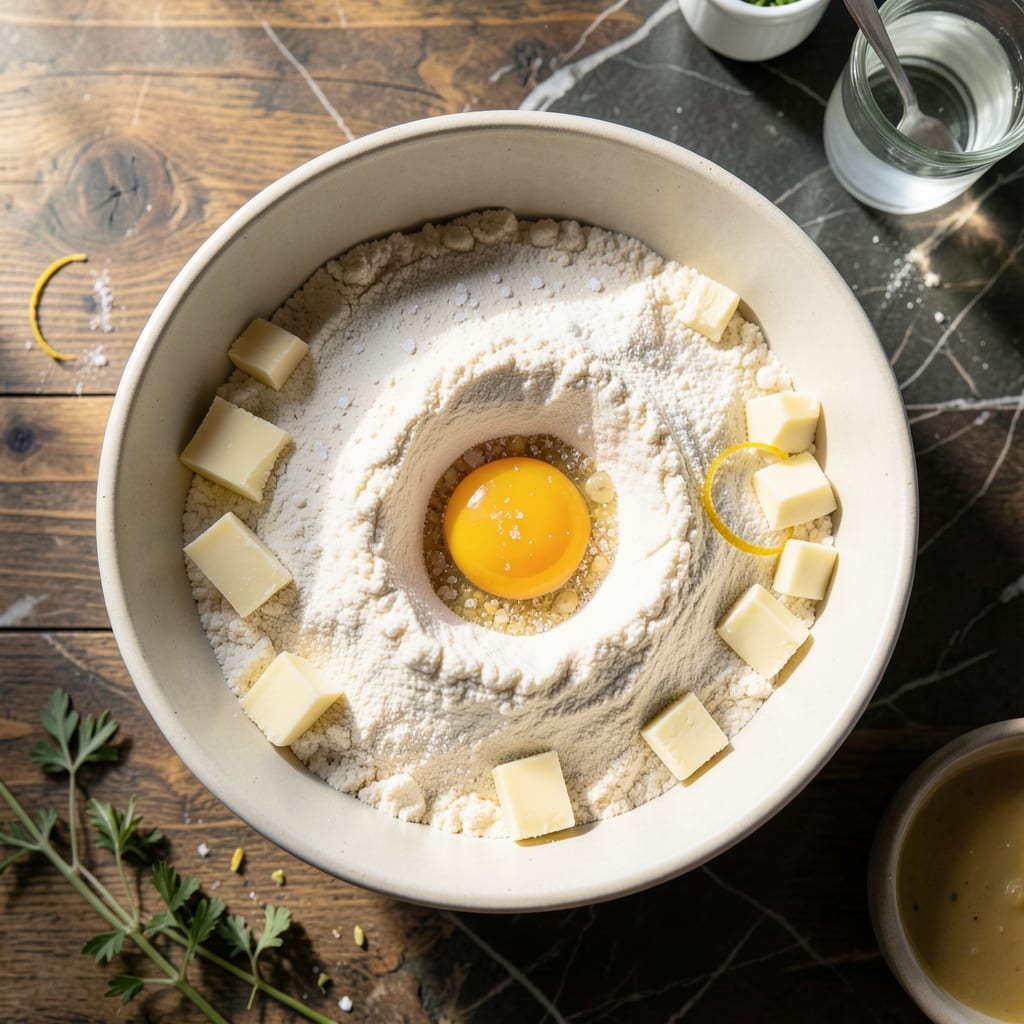
This vinegar-based pie crust delivers the flaky layers you’ve always wanted with minimal effort. The acid tenderizes the gluten, creating a texture that shatters at the touch. No fancy techniques—just a proven method that works every time.
Cold butter and ice water are key, but the vinegar is the secret weapon that prevents toughness. The dough comes together quickly, then rests to relax the gluten. This ensures a crust that bakes up golden and crisp, not chewy.
You’ll end up with a pie crust so light and delicate, it rivals any bakery version. The vinegar leaves no trace of flavor—just perfect, buttery layers that hold their shape. It’s the foundation for any flaky pie you dream of making.
Whether for fruit, custard, or cream fillings, this crust adapts effortlessly. Let’s get started.
Ingredients for Pie Crust Recipe Using Vinegar
A handful of pantry basics creates that perfect flaky crust you crave.
| Ingredient | Amount | Notes |
|---|---|---|
| All-Purpose Flour 🌾 | 2 ½ cups | Spoon and level for accuracy |
| Unsalted Butter 🧈 | 1 cup | Cold, cubed into small pieces |
| White Vinegar 💧 | 1 tbsp | Distilled or apple cider works too |
| Ice Water ❄️ | ½ cup | Plus extra as needed |
| Salt 🧂 | 1 tsp | Fine sea salt or table salt |
| Granulated Sugar 🍚 | 1 tbsp | Optional for sweet pies |
| Large Egg 🥚 | 1 whole | Optional for extra flakiness |
The butter must stay cold—cut it into small cubes and chill them before starting. King Arthur Flour is my go-to for consistency, but any all-purpose works. The vinegar (yes, really) tenderizes without adding flavor. I always keep distilled white vinegar on hand for this, but apple cider vinegar (the clear kind) is fine too. No substitutions for the ice water—warm water = tough crust.
No vinegar? Lemon juice at the same amount works in a pinch. Out of all-purpose flour? Pastry flour plus 1 tbsp vital wheat gluten mimics the protein content. The egg is optional but adds richness—skip it for a vegan version and add 1 extra tbsp ice water. For sweet pies, the sugar balances the salt, but leave it out for savory.
The dough rests best in the fridge for 30-60 minutes (or up to 2 days if wrapped well). Freeze the cubes of butter if your kitchen is warm. This crust bakes beautifully from frozen—just add 5 minutes to the baking time.
Why You’ll Love This Recipe
- Foolproof Mix: No rolling pin stress—just mix, chill, and roll. Honestly, the vinegar keeps it tender every single time.
- Buttery Layers: That flaky, golden crust? It’s all thanks to cold butter and a splash of vinegar for the perfect crumb.
- Endless Options: Sweet pies, savory quiches—this crust handles it all. I’ll be real: it’s my go-to for any filling.
- Pantry Staples: Flour, butter, vinegar, water—no special ingredients. Between us, it’s the cheapest gourmet trick I know.
Step-by-Step Instructions for Pie Crust Using Vinegar
Here’s my foolproof method for achieving those coveted flaky layers with minimal effort.
Step 1: Combine Dry Ingredients and Cut in Butter
In a large bowl, whisk together the 2.5 cups all-purpose flour, 1 tsp salt, and 1 tbsp granulated sugar if making a sweet crust. This ensures even distribution of the leavening agents.
Add the 1 cup cold unsalted butter (cubed into small pieces) to the flour mixture. Using a pastry cutter or your fingers, work the butter into the flour until the mixture resembles coarse crumbs with some pea-sized butter pieces remaining. These visible butter pieces are crucial for creating those flaky layers as the crust bakes.
Step 2: Add Wet Ingredients to Form the Dough
Create a well in the center of the flour-butter mixture. Add the 1 whole large egg, 1 tbsp white vinegar, and 0.5 cup ice water. The vinegar tenderizes the gluten, while the ice water keeps the butter cold, both essential for flakiness.
Using a fork, gently mix the wet ingredients into the dry until the dough just begins to come together. It’s okay if it looks a bit shaggy at this point—overworking the dough will make it tough. The mixture should hold together when pressed but not be sticky.
Step 3: Chill the Dough for Optimal Texture
Turn the dough out onto a lightly floured surface and gently shape it into a disk about 1 inch thick. Wrap it tightly in plastic wrap and refrigerate for at least 1 hour or up to 2 days.
This chilling step is non-negotiable. It allows the gluten to relax and the butter to firm up, which prevents shrinking during baking and ensures those beautiful flaky layers. If you’re in a hurry, you can freeze the dough for 20-30 minutes, but refrigeration is ideal.
Step 4: Roll Out and Shape the Crust
On a lightly floured surface, roll out the chilled dough to a 12-inch circle, about ⅛-inch thick. To prevent sticking, lift and rotate the dough a quarter turn after every few rolls, dusting with flour as needed.
Transfer the dough to a 9-inch pie dish, gently pressing it into the bottom and up the sides. Trim the excess dough, leaving a ½-inch overhang for crimping. For a decorative edge, fold the overhang under and crimp with your fingers or a fork. Chill the shaped crust for 15 minutes before baking to maintain its shape.
Pro Tips For Making Pie Crust Recipe Using Vinegar
- Chill the Butter: Cut your unsalted butter into small cubes and refrigerate for 10 minutes before mixing—I learned this the hard way after ending up with a tough crust from softened butter.
- Use Ice-Cold Water: Fill a glass with ice and water, then measure from that—sounds weird, but it works to keep the dough flaky and prevent gluten overdevelopment.
- Don’t Overmix: Stop mixing as soon as the dough comes together, even if it looks shaggy—overworking it makes the crust chewy instead of tender.
- Add Vinegar Last: Stir the white vinegar into the ice water before adding to the flour mixture—it helps tenderize the crust without altering the texture.
Perfect Pairings for These Flavors
Fruit Fillings
This crust pairs beautifully with tart apple pie filling—the vinegar’s acidity complements the fruit’s natural sweetness. I love using Granny Smith apples for their firm texture and bright flavor. Add 1 tsp cinnamon to the filling for warmth.
Creamy Desserts
For custard pies, try a classic French silk chocolate filling. The buttery crust holds up perfectly to the rich, creamy texture. Top with whipped cream and a sprinkle of chocolate shavings for an elegant finish. 💫
Savory Options
This recipe also shines with savory fillings. A quiche Lorraine with crispy bacon, Gruyère cheese, and a touch of nutmeg is my go-to. The vinegar prevents the crust from getting soggy under the eggy filling.
Ice Cream Pairing
Serve warm slices of pecan pie made with this crust alongside a scoop of vanilla bean ice cream. The contrast of temperatures and textures is irresistible. Drizzle with caramel sauce for extra indulgence.
Beverage Matches
A slice of berry pie calls for a cold glass of milk or a hot cup of coffee. The acidity in the coffee cuts through the sweetness, while milk softens the richness. Either way, it’s a classic combo.
Breakfast Twist
Use leftover dough to make hand pies filled with blueberry compote or peach preserves. They’re perfect for breakfast on the go. Brush with egg wash and sprinkle with coarse sugar before baking.
Nutrition Facts
Frequently Asked Questions
Why does vinegar go in pie crust?
The acid tenderizes the gluten in the flour, preventing toughness while keeping the texture light and flaky. It also helps the butter stay in distinct layers during baking.
Can I use apple cider vinegar?
Yes, clear apple cider vinegar works just as well as white. Avoid colored varieties like balsamic, which can tint the dough. Stick to 1 tbsp regardless of type.
What happens if I skip the chilling step?
Skipping the 1-hour rest causes the butter to melt prematurely, leading to a dense, tough crust instead of flaky layers. Don’t rush this step!
How do I fix a crumbly dough?
Sprinkle in ice water 1 tsp at a time until the dough just holds together. Overworking it will make the crust tough, so handle gently.

- Potato Candy Recipe 1933: Vintage Peanut Butter Roll Delight - October 30, 2026
- Potato Chip Cookie Recipe With Pecans: Buttery Crunch Meets Nutty Richness - October 30, 2026
- Potato Patty Recipe No Egg: Crispy Edges Without the Binder - October 30, 2026