
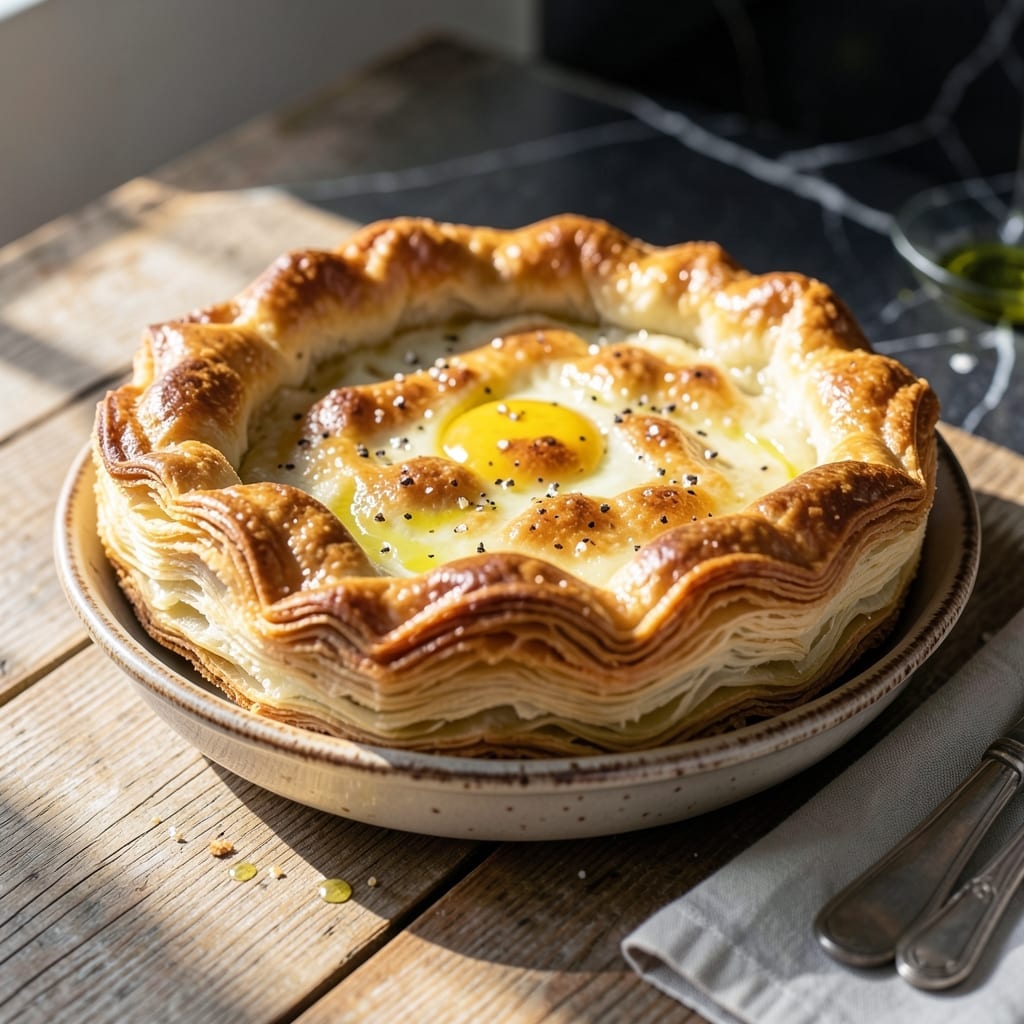
I’ve spent years perfecting pie crust, and adding egg yolk was the missing link to achieving both flakiness and tenderness. This recipe delivers a golden crust that shatters at the touch yet melts in your mouth.
The egg yolk enriches the dough, creating a more pliable texture that rolls out smoothly without cracking. It also adds a subtle richness that complements both sweet and savory fillings, making this crust versatile for any pie.
With a simple mix, rest, and bake process, you’ll achieve consistent results every time. The yolk binds the dough just enough to maintain structure while allowing layers to separate beautifully during baking.
This method proves that the best pie crust requires patience as much as technique. The result is worth every minute of waiting.
Ingredients for Pie Crust Recipe with Egg Yolk
Cold butter, egg yolk, and flour create this golden, tender crust for any pie.
| Ingredient | Amount | Notes |
|---|---|---|
| All-Purpose Flour 🌾 | 2 ½ cups | Plus extra for dusting |
| Unsalted Butter 🧈 | 1 cup | Cold, cut into cubes |
| Large Egg Yolk 🥚 | 1 whole | For richness and color |
| Ice Water 💧 | ¼ cup | Plus 1 tbsp as needed |
| Granulated Sugar 🍚 | 1 tsp | Optional for sweet pies |
| Salt 🧂 | ½ tsp | Fine sea salt preferred |
| White Vinegar 🍶 | 1 tsp | Or apple cider vinegar |
| Vanilla Extract 🌿 | ½ tsp | Optional for sweet pies |
The butter is non-negotiable—use European-style for higher fat content. Land O’Lakes or Plugrá are reliable. Keep it ice-cold until mixing; warm butter ruins flakiness. All-purpose flour works perfectly, but King Arthur or Bob’s Red Mill deliver consistent protein levels. The egg yolk should be fresh (save the white for meringue or breakfast).
No egg yolk? Whole egg works in a pinch but texture changes slightly. Out of vinegar? Lemon juice at the same amount keeps the dough tender. For gluten-free, swap in 1:1 baking blend (add 1 tsp xanthan gum). Skip sugar for savory pies. Butter substitutes like shortening won’t give the same golden color or flavor.
Dough rests best 1-2 hours in the fridge (or 15 minutes in the freezer). Wrapped tightly, it keeps 3 days refrigerated or 3 months frozen. Bring to room temperature before rolling for easiest handling.
Why You’ll Love This Recipe
- I’ll be real: I always make a double batch and freeze one. It saves me 15 minutes on lazy weekends.
- Five Ingredient Magic: Honestly, I love that it only needs flour, butter, egg yolk, ice water, and a touch of sugar—no hunting for obscure ingredients.
- Buttery Richness: The egg yolk adds this deep, velvety richness that makes the crust taste way more indulgent than it is.
- Weekend Baking Hack: I roll it out for pies, tarts, or even hand pies—it’s my go-to for whatever baking mood strikes.
Step-by-Step Instructions for Pie Crust With Egg Yolk
Here’s the method. Straightforward, tested, works every time.
Step 1: Chill the Dough Ingredients
Begin by measuring out the 2.5 cups all-purpose flour, 1 cup unsalted butter (cut into cubes), 0.5 tsp salt, and 1 tsp granulated sugar. Place the butter in the freezer for 10 minutes while you prep the other ingredients—this ensures it stays cold, which is critical for flaky layers.
In a small bowl, combine the 0.25 cup ice water, 1 tsp white vinegar, and 1 whole large egg yolk. The vinegar tenderizes the gluten, while the egg yolk adds richness and a golden hue. If making a sweet pie, whisk in the 0.5 tsp vanilla extract. Keep this mixture chilled until ready to use.
Step 2: Cut Butter Into Flour
In a large mixing bowl, whisk together the 2.5 cups all-purpose flour, 0.5 tsp salt, and 1 tsp granulated sugar (if using). Add the cold, cubed unsalted butter and work it into the flour using a pastry cutter, fork, or your fingertips.
Press the butter into the flour until the mixture resembles coarse crumbs with pea-sized butter pieces visible. This step should take 3-5 minutes. The key is to work quickly to prevent the butter from melting—cold butter creates steam during baking, which lifts the crust into flaky layers.
Step 3: Incorporate Wet Ingredients and Form Dough
Create a well in the center of the flour-butter mixture. Pour in the chilled egg yolk mixture, starting with 3 tablespoons and reserving the rest. Use a fork to gently stir the liquid into the dry ingredients until the dough just begins to come together.
If the dough feels too dry, add the remaining liquid 1 tablespoon at a time until it holds when pressed. Avoid overmixing—this develops gluten, which can make the crust tough. The dough should look shaggy but stay cohesive when gathered. Divide it into two equal portions for a double-crust pie, or leave as one for a single crust.
Step 4: Rest and Roll the Dough
Shape each portion into a 1-inch thick disk, wrap tightly in plastic wrap, and refrigerate for at least 1 hour (or up to 2 days). This resting period allows the gluten to relax and the butter to firm up, making the dough easier to roll out.
On a lightly floured surface, roll one disk to a 12-inch circle (for a 9-inch pie dish) and about 1/8-inch thick. Use even pressure and rotate the dough frequently to prevent sticking. If cracks appear, press them together with your fingers. The dough is ready when it looks smooth and even, with visible butter streaks.
Step 5: Blind Bake for Perfect Texture
Transfer the rolled dough to a pie dish, pressing it gently into the bottom and sides. Trim any excess, leaving a ½-inch overhang, then crimp the edges. For a pre-baked crust, line the dough with parchment paper, fill with pie weights or dried beans, and bake at 375°F for 15 minutes.
Remove the weights and parchment, then bake for an additional 8-10 minutes until the crust is light golden brown and set. This blind-baking step ensures a crisp, flaky base that won’t soggify when filled. Let it cool completely before adding your filling.
Pro Tips For Making Pie Crust Recipe With Egg Yolk
- Chill the Butter: Cut the unsalted butter into small cubes and refrigerate for 15 minutes before mixing—I learned this the hard way after ending up with a greasy, tough crust.
- Use Ice Water: Keep your water ice-cold, and measure about 2-3 tablespoons at a time; the egg yolk adds richness, but cold water guarantees flakiness.
- Don’t Overwork Dough: Mix just until the dough comes together, even if it looks shaggy—overworking develops gluten, and your crust will turn out chewy instead of tender.
- Rest Before Rolling: Give the dough a solid 30-minute rest in the fridge after mixing; it relaxes the gluten and makes rolling out smooth and easy.
Serving Suggestions for This Recipe
Sweet Pairings
For fruit pies, serve warm slices with vanilla bean ice cream from Ben & Jerry’s or Häagen-Dazs. The cold cream contrasts beautifully with the flaky crust. I also love a dollop of freshly whipped cream with 1 tsp powdered sugar per ½ cup heavy cream. 💛
Savory Options
Quiche or pot pie? A simple mixed greens salad with balsamic vinaigrette cuts through the richness. For heartier meals, serve with roasted vegetables like Brussels sprouts or asparagus—tossed with 2 tbsp olive oil and roasted at 400°F for 20 minutes.
Beverage Matches
Sweet pies pair perfectly with coffee or chai tea. I recommend Starbucks or Peet’s for bold coffee flavors. For savory pies, a crisp Sauvignon Blanc or Pinot Noir complements the buttery crust. 🍷
Garnish Ideas
For apple or berry pies, sprinkle powdered sugar through a fine-mesh sieve for an elegant finish. A drizzle of caramel sauce (I use Smucker’s) adds a professional touch. For savory pies, fresh herbs like thyme or rosemary add color and aroma.
Plating Tips
Use a pie server for clean slices—I love the OXO Good Grips version. Place each slice on a warm plate and add garnishes strategically. For a rustic look, serve the whole pie on a wooden board with a wedge missing.
Nutrition Facts
Frequently Asked Questions
Why include an egg yolk in the dough?
The yolk adds richness and a golden color while making the crust more tender. It also helps bind the dough, creating a smoother, more pliable texture that’s easier to roll out.
Can I skip the resting time?
No, resting is crucial. It allows the gluten to relax and the butter to firm up, preventing shrinkage during baking. Skip it, and you risk a tough, uneven crust.
How do I fix cracks in the rolled dough?
Press the edges together gently with your fingers or use a bit of water as “glue.” For larger cracks, patch with extra dough and press lightly to seal.
Can I make this crust ahead?
Yes! Wrap the dough tightly and refrigerate for up to 3 days or freeze for 3 months. Thaw in the fridge overnight before rolling.

- Potato Candy Recipe 1933: Vintage Peanut Butter Roll Delight - October 30, 2026
- Potato Chip Cookie Recipe With Pecans: Buttery Crunch Meets Nutty Richness - October 30, 2026
- Potato Patty Recipe No Egg: Crispy Edges Without the Binder - October 30, 2026