
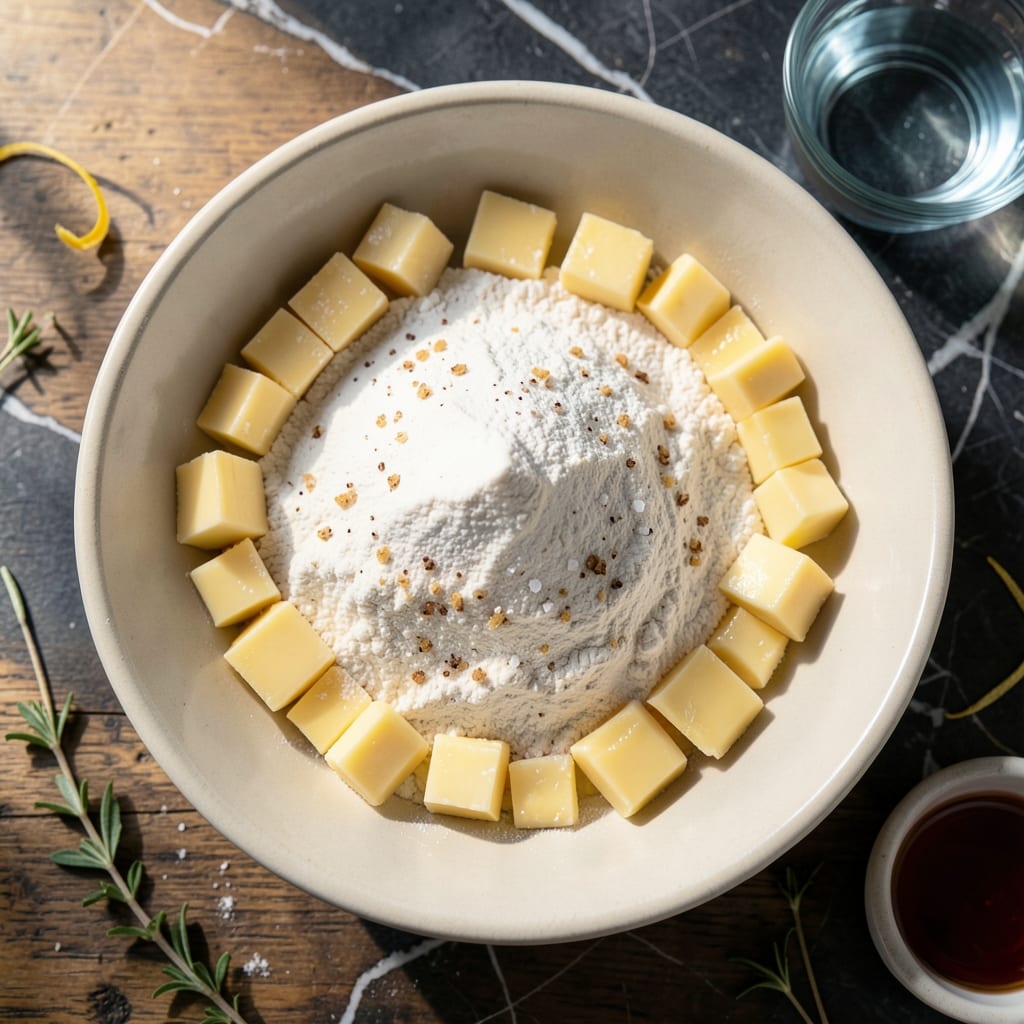
This pie dough recipe delivers the perfect flaky crust your apple pie deserves. No shortcuts, no compromises—just layers of buttery goodness that bake up golden and crisp.
Cold ingredients and gentle handling create the tender texture that makes this dough special. The secret is keeping everything icy until it hits the oven, which prevents the butter from melting prematurely.
With just a few pantry staples and 30 minutes of chilling time, you’ll have a crust that holds its shape yet melts in your mouth. It’s the foundation every great apple pie needs.
Roll it out, fill it with spiced apples, and bake to golden perfection. This is the crust that turns good pies into unforgettable ones.
Ingredients for Pie Dough Recipe for Apple Pie
A handful of pantry staples and cold butter make this flaky crust come alive.
| Ingredient | Amount | Notes |
|---|---|---|
| All-Purpose Flour 🌾 | 2 ½ cups | Spoon and level, do not scoop |
| Unsalted Butter 🧈 | 1 cup | Cold, cubed into small pieces |
| Granulated Sugar 🍚 | 1 tbsp | Fine white sugar preferred |
| Sea Salt 🧂 | 1 tsp | Fine grain for even distribution |
| Ice Water 💧 | ½ cup | Plus 1-2 tbsp as needed |
| Apple Cider Vinegar 🍏 | 1 tsp | White vinegar works too |
| Vanilla Extract 🌿 | ½ tsp | Pure extract for best flavor |
The butter is non-negotiable here. Use unsalted so you control the salt level—Plugrá or Kerrygold are my go-tos. Cut it into small cubes and freeze for 10 minutes before starting. The flour should be all-purpose; no need for fancy stuff. I grab mine from King Arthur when I want consistency. Cold is key, so don’t let the dough sit out too long before rolling.
No apple cider vinegar? Lemon juice at the same amount does the trick. If you’re out of granulated sugar, coconut sugar works but adds a slight caramel note. The vinegar tenderizes the dough—don’t skip it. For extra flakiness, you can swap 1/4 cup flour for cornstarch, but it’s not required. Ice water is exactly that—water with ice cubes floating in it.
This dough needs a 30-minute chill before rolling, so plan ahead. Wrapped tightly, it keeps in the fridge for 2 days or freezes for 3 months. Let it thaw overnight in the fridge before use. Don’t let it sit at room temperature too long—warm dough is sticky dough.
Why You’ll Love This Recipe
- Five Ingredients Only: I love that it’s just flour, butter, sugar, salt, and ice water—no fancy shopping required.
- Buttery Flaky Layers: The cold butter and ice water create that perfect shatter-when-you-bite-it crust every time.
- Holiday Ready: Honestly, this dough handles Thanksgiving pies or a random Tuesday dessert equally well.
- Make Ahead Magic: Mix it the night before, refrigerate, and roll out fresh—saves me an hour on baking day.
Step-by-Step Instructions for Pie Dough for Apple Pie
Follow this method and you’ll get consistently flaky, golden layers for your creation every time.
Step 1: Combine Dry Ingredients
In a large bowl, whisk together the 2.5 cups All-Purpose Flour, 1 tbsp Granulated Sugar, and 1 tsp Sea Salt. I use a fork for this—it breaks up any lumps and aerates the mixture for a lighter texture in the finished crust.
Make sure the sugar and salt are evenly distributed throughout the flour. This ensures every bite of your crust has balanced sweetness and seasoning. Set this bowl aside while you prepare the wet components.
Step 2: Cut in the Cold Butter
Add the 1 cup Unsalted Butter (cold and cubed) to the flour mixture. Using a pastry cutter or your fingers, work the butter into the flour until the mixture resembles coarse crumbs with some pea-sized butter pieces remaining.
Here’s the thing—those visible butter pieces are what create the flaky layers. Don’t overwork it. If the butter starts to melt or the mixture becomes pasty, stop immediately and chill the bowl in the fridge for 10 minutes before continuing.
Step 3: Add Liquid Ingredients Gradually
Create a well in the center of the flour-butter mixture. Pour in the 0.5 cup Ice Water, 1 tsp Apple Cider Vinegar, and 0.5 tsp Vanilla Extract. Using a fork, gently mix from the center outward until the dough just comes together.
You’ll notice the dough will be shaggy at first—that’s perfect. If it’s too dry and not holding together, add 1-2 tbsp more ice water, but be sparing. The vinegar helps tenderize the gluten for a more delicate crust, while the vanilla adds a subtle depth of flavor.
Step 4: Knead and Rest the Dough
Turn the dough out onto a lightly floured surface and gently knead it 2-3 times just until it forms a cohesive ball. Be careful not to overwork it—this develops gluten and makes the crust tough.
Divide the dough into two equal portions, flatten each into a disc, and wrap tightly in plastic wrap. Refrigerate for at least 1 hour (or up to 2 days). This chilling step relaxes the gluten and solidifies the butter, which prevents shrinking and ensures those coveted flaky layers.
Step 5: Roll and Shape for Baking
On a lightly floured surface, roll out one disc of dough to a 12-inch circle about ⅛-inch thick. Transfer it to your pie dish, pressing gently into the bottom and sides without stretching. Trim the edges, leaving a ½-inch overhang.
For a double-crust pie, roll out the second disc and place it over the filling. Trim and crimp the edges, then cut a few slits in the top crust to allow steam to escape. Chill the shaped crust for 30 minutes before baking to prevent shrinking.
Pro Tips For Making Pie Dough Recipe For Apple Pie
- Chill the Butter: Cut your butter into small cubes and freeze for 15 minutes before mixing—I learned this the hard way after ending up with a tough, flat crust instead of flaky layers.
- Use Ice-Cold Water: Fill a glass with ice and water, then measure from that for your dough. Sounds weird, but it works: the colder the water, the less the butter melts prematurely.
- Don’t Overwork It: Mix just until the dough comes together, even if it looks shaggy. After burning three batches of overworked dough, I finally figured out that overmixing = tough crust.
- Rest the Dough: Give it a solid 30 minutes in the fridge before rolling—my grandmother swore by this, and she was right: it relaxes the gluten and makes rolling a breeze.
Best Sauces and Condiments for This Dish
Classic Vanilla Sauce
Warm 1 cup heavy cream with 1 split vanilla bean (or 1 tsp vanilla extract) and 2 tbsp sugar until steaming. Pour over apple pie slices for a cozy, creamy finish. I love how it enhances the crust’s buttery notes. 💛
Caramel Drizzle
Melt ½ cup granulated sugar in a saucepan until amber, then whisk in ¼ cup heavy cream and 2 tbsp butter. Cool slightly before drizzling. The salted version cuts through the pie’s sweetness beautifully.
Spiced Rum Glaze
Combine ½ cup powdered sugar, 1 tbsp dark rum, and 1 tsp cinnamon. Thin with 1-2 tsp milk until pourable. This adds a boozy depth that pairs perfectly with spiced apple filling. 🔥
Brown Butter Topping
Brown 4 tbsp unsalted butter until nutty and golden, then mix with 1 tbsp honey and a pinch of sea salt. Drizzle warm over pie for a rich, toasty finish.
Whipped Cream
Whip 1 cup cold heavy cream with 2 tbsp powdered sugar and ½ tsp vanilla until soft peaks form. Dollop generously for a light, airy contrast to the flaky crust.
Nutrition Facts
Frequently Asked Questions
Why is cold butter important for flaky crust?
Cold butter creates steam pockets during baking, which separate the dough layers. This makes the crust light and airy. If butter melts too soon, the layers collapse.
Can I make this dough ahead of time?
Yes! Wrapped tightly, it keeps in the fridge for 2 days or freezes for 3 months. Thaw overnight in the fridge before rolling.
What if my dough cracks while rolling?
Press the edges together with your fingers, then re-roll. If it’s too dry, sprinkle 1-2 tsp ice water and knead lightly. Avoid overworking.
How thin should I roll the dough?
Aim for ⅛-inch thickness for even baking. Use a ruler or visual cues—it should be slightly thicker than a coin.

- Potato Candy Recipe 1933: Vintage Peanut Butter Roll Delight - October 30, 2026
- Potato Chip Cookie Recipe With Pecans: Buttery Crunch Meets Nutty Richness - October 30, 2026
- Potato Patty Recipe No Egg: Crispy Edges Without the Binder - October 30, 2026