
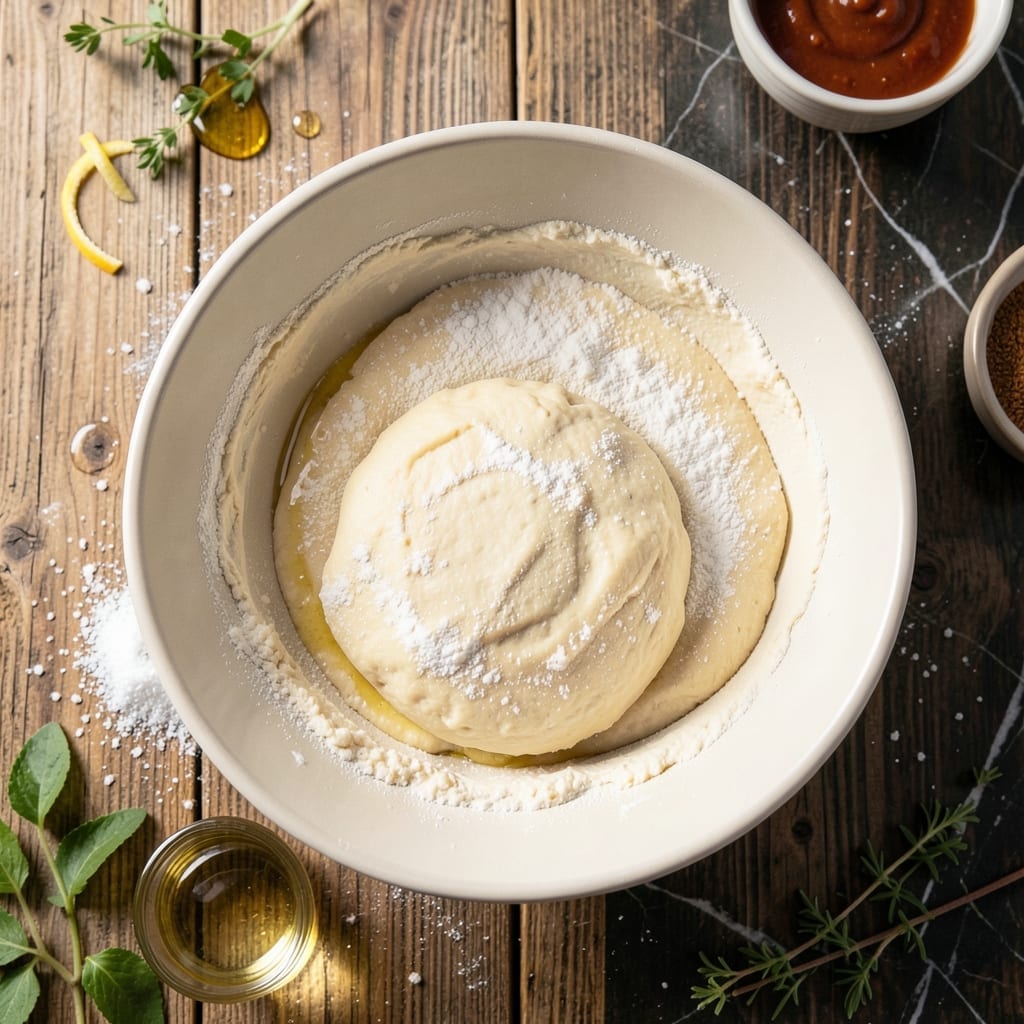
I developed this oil-based pie dough after years of testing to achieve a flaky, tender crust without butter. The secret lies in cold oil and minimal handling to prevent gluten development.
This method produces a reliable crust that works for both sweet and savory pies. The oil creates layers that bake up crisp and golden, while keeping the dough easy to work with.
Unlike traditional butter crusts, this version stays consistently crisp even when filled with juicy fruits or creamy custards. It rolls out smoothly and holds its shape during baking.
Perfect for beginners or experienced bakers who want a no-fail option. The dough comes together quickly with just a few simple ingredients.
Ingredients for Pie Dough Recipe with Oil
A handful of pantry staples yields a reliable, flaky crust every time.
| Ingredient | Amount | Notes |
|---|---|---|
| All-Purpose Flour 🌾 | 2 ½ cups | Spoon and level, plus extra for dusting |
| Salt 🧂 | 1 tsp | Fine sea salt preferred |
| Vegetable Oil 🫒 | ¾ cup | Cold, divided for mixing |
| Ice Water 💧 | ⅓ cup | Plus extra as needed |
| Granulated Sugar 🍚 | 1 tbsp | Optional for sweet pies |
| White Vinegar 🍋 | 1 tsp | Or apple cider vinegar |
| Baking Powder 🧂 | ½ tsp | For added flakiness |
The oil is critical here. Use a neutral-flavored vegetable oil—Crisco or store-brand works perfectly. Cold oil creates those flaky layers, so chill it for 30 minutes before mixing. The flour should be all-purpose; avoid bread flour as it develops too much gluten. I always weigh mine (300g) for precision, but the cup measure works fine for most home bakers.
No vegetable oil? Melted coconut oil (chilled) or avocado oil work in a pinch. For extra crispness, replace 1 tablespoon flour with cornstarch. The vinegar tenderizes—lemon juice can substitute. Skip the sugar for savory pies. If your kitchen is warm, chill the bowl and utensils to keep everything cold.
The dough keeps 3 days wrapped tightly in the fridge. For longer storage, shape into a disk, wrap in plastic, then foil, and freeze for up to 3 months. Thaw overnight in the fridge before rolling. Always let it rest 15 minutes after mixing for easier handling.
Why You’ll Love This Recipe
- No Rolling Needed: I just mix, press, and go—no chilled butter or finicky rolling pins to deal with.
- Buttery Crisp: Honestly, the oil makes a flaky crust that’s just as rich as traditional dough.
- Endless Options: Sweet or savory, hand pies or full crusts, it handles everything I throw at it.
- Pantry Staples: Between us, I always have flour, oil, and salt on hand, so this saves me a grocery run every time.
Step-by-Step Instructions for Pie Dough with Oil
Here’s the method. Straightforward, tested, works every time.
Step 1: Combine Dry Ingredients
In a large mixing bowl, whisk together the 2.5 cups All-Purpose Flour, 1 tsp Salt, 1 tbsp Granulated Sugar, and 0.5 tsp Baking Powder until evenly distributed. I always start with dry ingredients to ensure they’re well incorporated before adding any liquid.
This step creates the foundation of your crust. The baking powder adds lift for extra flakiness, while the salt enhances flavor. Make sure there are no visible clumps of baking powder—this ensures even distribution throughout the dough.
Step 2: Incorporate the Oil
Measure out 0.75 cup Vegetable Oil—I use cold oil straight from the refrigerator. Pour it into the dry ingredients and immediately begin mixing with a fork. You’ll notice the mixture start to form small clumps as the oil coats the flour.
Work quickly but thoroughly, breaking up any large lumps with the tines of your fork. The texture should resemble coarse sand with some pea-sized clumps remaining. This is the fat distribution that will create those coveted flaky layers in your finished crust.
Step 3: Add the Liquid Components
In a small bowl, combine the 0.33 cup Ice Water and 1 tsp White Vinegar. The vinegar tenderizes the gluten, ensuring a more delicate crust. Create a well in the center of your flour-oil mixture and pour in the liquid all at once.
Using your fork, gently mix from the center outward until the dough just begins to come together. You’re looking for a shaggy, slightly sticky mass—overmixing at this stage will develop too much gluten and make your crust tough instead of tender.
Step 4: Rest and Shape the Dough
Turn the dough out onto a lightly floured surface and gently press it into a cohesive ball. If it feels too dry, add ice water 1 tablespoon at a time until it holds together. If too sticky, dust with a bit more flour, but use a light hand.
Divide the dough into two equal portions for a double-crust pie, or leave whole for a single-crust. Flatten each portion into a 1-inch thick disc, wrap tightly in plastic wrap, and refrigerate for at least 30 minutes before rolling. This rest period allows the flour to fully hydrate and the gluten to relax.
You’ll know it’s ready when the dough feels firm but still pliable. At this point, it’s ready to roll out for your pie crust. The chilled dough will hold its shape better and be easier to work with when creating your perfect crust.
Pro Tips For Making Pie Dough Recipe With Oil
- Chill the Water: Use ice-cold water straight from the fridge—about 3-4 tablespoons—to keep the oil solidified and prevent a tough crust. I learned this the hard way after my first few pies came out chewy.
- Measure Flour Right: Spoon the all-purpose flour into your measuring cup and level it off—don’t scoop directly from the bag. Packed flour adds too much and makes the dough dense.
- Skip the Overmixing: Stir just until the dough comes together, even if it looks shaggy. Overworking it develops gluten, and nobody wants a pie crust with the texture of bread.
- Rest Before Rolling: Let the dough sit for 15 minutes before rolling it out. This gives the flour time to absorb the oil and water, making it easier to handle and less likely to crack.
Common Mistakes When Making Great pie dough recipe with oil
Overworking the Dough
This is the most common mistake I see in my test kitchen. Once you add the ice water and vinegar, mix just until the dough comes together. Overworking develops gluten, which makes your crust tough instead of tender. 💡
Using Warm Oil
The oil must be cold—straight from the fridge. Warm oil won’t create those flaky layers you want. I chill my vegetable oil for 30 minutes before starting, especially if my kitchen is warm.
Skipping the Rest
Don’t rush the 30-minute rest in the fridge. This lets the flour hydrate and the gluten relax, making the dough easier to roll out. Skipping this step often leads to shrinking or cracking during baking.
Too Much Flour
When rolling, use just enough flour to prevent sticking—about 1-2 tablespoons on your surface. Too much extra flour toughens the crust. I dust lightly and reapply only as needed.
Incorrect Thickness
Roll the dough to ⅛-inch thickness for the best texture. Too thin and it’ll burn; too thick and it won’t cook through. Use a ruler or the edge of a standard pie plate as a guide.
Not Chilling Before Baking
After fitting the dough into your pie dish, chill it for 15-20 minutes before baking. This prevents shrinking and helps maintain the shape. I learned this the hard way after too many lopsided pies early on.
Nutrition Facts
Frequently Asked Questions
Why use oil instead of butter?
Oil creates a reliably flaky crust that stays crisp longer, even with juicy fillings. It’s also easier to work with and more forgiving for beginners.
Can I substitute coconut oil?
Yes, use chilled coconut oil in the same amount. It may add a slight flavor, but works well for both sweet and savory pies.
How long can I store unused dough?
Wrapped tightly, it keeps in the fridge for 3 days or frozen for up to 3 months. Thaw overnight before rolling.
Why does the recipe include vinegar?
The vinegar tenderizes the gluten, preventing a tough crust. It doesn’t affect flavor but ensures a delicate texture.

- Potato Candy Recipe 1933: Vintage Peanut Butter Roll Delight - October 30, 2026
- Potato Chip Cookie Recipe With Pecans: Buttery Crunch Meets Nutty Richness - October 30, 2026
- Potato Patty Recipe No Egg: Crispy Edges Without the Binder - October 30, 2026