
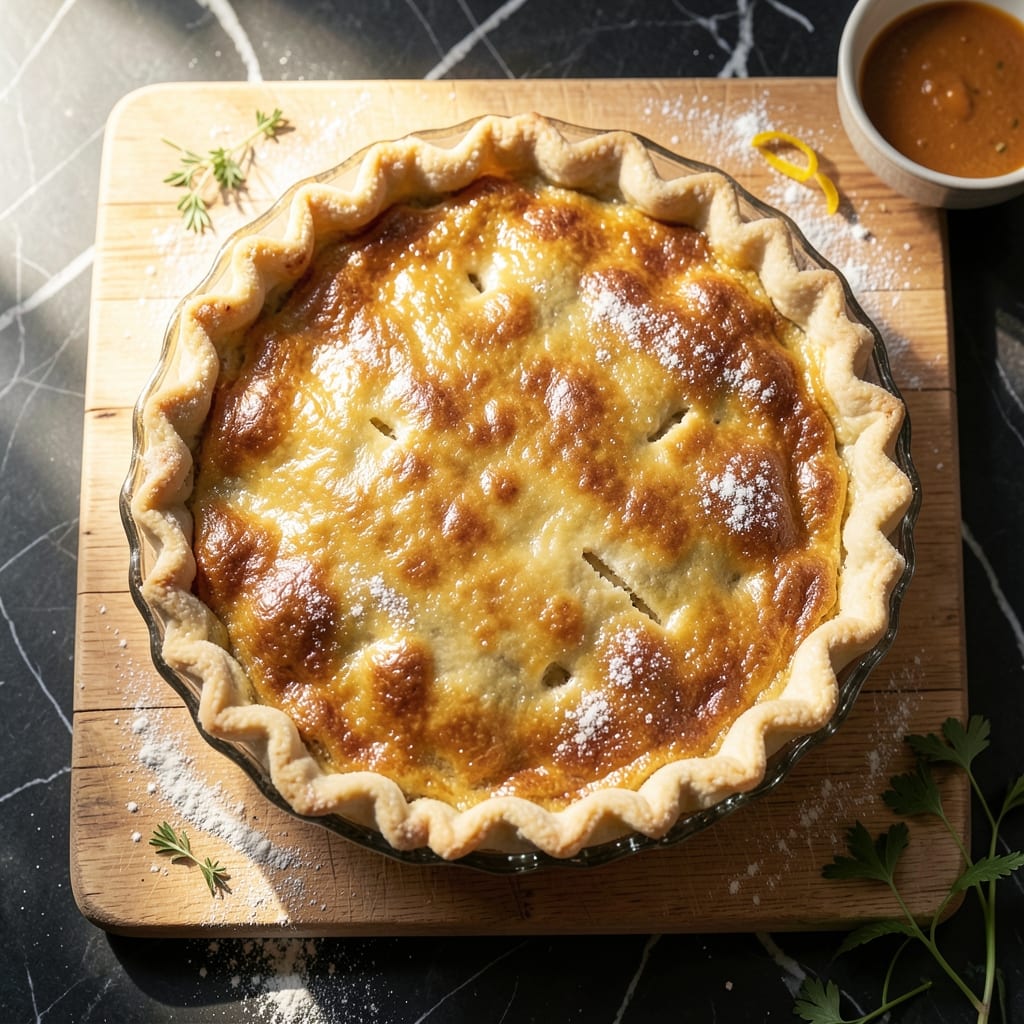
This butter-based pie shell delivers the flaky texture every baker dreams of, without a trace of shortening. I developed this method after years of testing, focusing on cold ingredients and minimal handling for maximum tenderness.
The secret lies in chilled butter and ice water, which create steam during baking for those coveted layers. Unlike shortening-based crusts, this version offers a richer flavor that complements both sweet and savory fillings.
You’ll achieve a golden, crisp shell that holds its shape beautifully. The dough comes together quickly with just a few pantry staples, making it perfect for any pie recipe in your repertoire.
This technique works for single or double crusts, and the results rival any bakery version. The process is straightforward, with foolproof steps that ensure success every time.
Ingredients for Pie Shell Recipe Without Shortening
Just flour, butter, and ice water create this flaky, golden crust with no shortening in sight.
| Ingredient | Amount | Notes |
|---|---|---|
| All-Purpose Flour 🌾 | 2 ½ cups | Spooned and leveled, plus more for dusting |
| Unsalted Butter 🧈 | 1 cup | Cold, cubed into 1/2-inch pieces |
| Ice Water 💧 | ¼ cup | Plus more as needed, 1-2 tbsp at a time |
| Fine Sea Salt 🧂 | 1 tsp | Diamond Crystal recommended |
| Granulated Sugar 🍚 | 1 tbsp | Optional, for sweet crusts |
| White Vinegar 🍋 | 1 tsp | Or lemon juice, for tenderness |
The butter is critical here. Use high-quality unsalted—Plugrá or European-style for superior flavor. It must stay cold, so cube it and chill until ready to use. The flour should be all-purpose; avoid cake or bread flour. For best results, weigh your flour (about 300g for 2.5 cups) to prevent a tough crust. Most supermarkets carry what you need.
No unsalted butter? Use salted and reduce the added salt by half. Short on ice water? Very cold tap water works in a pinch. The vinegar tenderizes the gluten—apple cider vinegar can substitute if that’s what you have. For a richer flavor, replace 1 tbsp of the water with vodka (it evaporates during baking, leaving extra flakiness).
The dough can rest in the fridge for up to 2 days or freeze for 3 months. Wrap it tightly in plastic to prevent drying. Bring it to room temperature for 10-15 minutes before rolling for easier handling. Baked shells keep at room temperature for 2 days.
Why You’ll Love This Recipe
- Five Ingredients Only: I love that this crust comes together with just flour, butter, ice water, salt, and a touch of sugar—nothing complicated.
- Buttery Richness: The unsalted butter gives it that deep, rich flavor that shortening just can’t match.
- Endless Fillings: Sweet or savory, this shell works for fruit pies, quiches, or even a quick pot pie when I’m short on time.
- Budget Friendly: Honestly, it costs pennies compared to store-bought crusts and tastes a hundred times better.
Step-by-Step Instructions for Butter-Based Flaky Pie Shell
Here’s the tested method for achieving a golden, layered crust using only butter.
Step 1: Combine Dry Ingredients
In a large bowl, whisk together the 2.5 cups all-purpose flour, 1 tsp fine sea salt, and 1 tbsp granulated sugar until evenly distributed. This ensures the salt and sugar are properly incorporated throughout the flour, which prevents pockets of over- or under-seasoning in the finished crust.
The sugar is optional, but I include it for sweet crusts, as it adds a subtle caramelized flavor and promotes browning. Make sure your bowl is large enough to accommodate the flour and butter without spilling during the next step.
Step 2: Cut in the Cold Butter
Add the 1 cup unsalted butter, cubed into ½-inch pieces, to the flour mixture. Using a pastry cutter or your fingertips, work the butter into the flour until the mixture resembles coarse crumbs with pea-sized butter pieces visible. This step is critical for flakiness—those visible butter pieces create the layers in your crust.
Keep the butter as cold as possible. If it starts to soften, pause and chill the mixture in the refrigerator for 10 minutes before continuing. The goal is to coat the flour with butter while maintaining distinct pieces that will melt and create steam during baking.
Step 3: Add Liquid and Form the Dough
In a small bowl, combine the ¼ cup ice water and 1 tsp white vinegar. The vinegar tenderizes the gluten, ensuring a flaky rather than tough crust. Drizzle this mixture over the flour-butter mixture, 1 tablespoon at a time, gently stirring with a fork after each addition.
Stop adding liquid as soon as the dough begins to come together. It should hold when pressed but not be sticky. If it feels too dry, add 1-2 tablespoons more ice water, but avoid overworking the dough. This prevents gluten development, which would make the crust tough.
Step 4: Chill and Rest the Dough
Turn the dough onto a lightly floured surface and gently shape it into a disk about 1 inch thick. Wrap it tightly in plastic wrap and refrigerate for at least 1 hour, or up to 2 days. Chilling relaxes the gluten and firms the butter, making the dough easier to roll out and preventing shrinkage during baking.
This resting period also allows the flour to fully hydrate, which improves the texture of your crust. If you’re in a hurry, you can freeze the dough for 20-30 minutes, but the refrigerator method yields the best results for flakiness.
Step 5: Roll and Blind Bake for Perfection
On a lightly floured surface, roll the chilled dough into a 12-inch circle, about ⅛-inch thick. Transfer it to a pie dish, press it gently into the bottom and sides, and trim the edges, leaving a ½-inch overhang. Crimp the edges decoratively for a professional finish.
For a pre-baked shell, chill the lined pie dish for 30 minutes, then line it with parchment paper and fill with pie weights or dried beans. Blind bake at 375°F for 15-20 minutes until the edges are light golden brown, then remove the weights and bake for another 5-10 minutes until the bottom is dry and lightly colored. This ensures a crisp, flaky base for your filling.
Pro Tips For Making Pie Shell Recipe Without Shortening
- Chill the Butter: Cut the unsalted butter into small cubes and refrigerate for 15 minutes before mixing—cold butter makes flakier layers and prevents a soggy crust.
- Use Ice Water: Measure your water then add ice cubes for 2-3 minutes before mixing; the colder the water, the less gluten develops in the flour.
- Skip Overworking: I learned this the hard way—mix just until the dough comes together, or the crust turns tough instead of tender.
- Rest the Dough: Wrap and refrigerate the dough for at least 30 minutes before rolling; it relaxes the gluten and makes it easier to handle.
Perfect Pairings for This Dish
Sweet Fillings
This crust pairs beautifully with classic apple pie filling—toss 6 cups thinly sliced apples with ¾ cup sugar and 1 tbsp cinnamon. The butter-rich flavor enhances the fruit’s natural sweetness. I love how the crust browns perfectly with the juices. 🍏
Creamy Options
For a decadent treat, fill with vanilla custard or chocolate pudding. The crust’s flakiness contrasts wonderfully with the smooth texture. I often dust the baked shell with powdered sugar before adding the filling.
Savory Pies
This shell works for savory applications too. Try a quiche Lorraine with 6 eggs, 1 cup cream, and 1 cup shredded Gruyère. The butter base complements the rich, cheesy filling without overpowering it.
Fruit Variations
Berries shine in this crust—combine 4 cups mixed berries with ½ cup sugar and 2 tbsp cornstarch. The tartness of the fruit balances the crust’s richness. I always brush the top with a little egg wash for extra shine.
Seasonal Ideas
In fall, try pumpkin pie with 1 can pumpkin purée and 1 tsp pumpkin pie spice. The crust’s buttery notes pair perfectly with the warm spices. For summer, peach pie with 2 lbs sliced peaches is my go-to. ✨
Simple Toppings
For an easy dessert, spread lemon curd in the baked shell and top with fresh berries. The crust holds up well to the curd’s tanginess. I often add a dollop of whipped cream for extra indulgence.
Nutrition Facts
Frequently Asked Questions
Can I use lard instead of butter?
Yes! Substitute lard 1:1 for butter. It creates an even flakier texture and works well for both sweet and savory pies. Just ensure it’s cold when mixing.
Why did my crust turn out tough?
Overworking the dough develops gluten. Handle it minimally and keep ingredients cold. If it’s too dry, add ice water 1 tsp at a time.
Do I need to pre-bake the shell?
Only for custard or wet fillings. For fruit pies, skip pre-baking. For cream pies, blind bake at 375°F for 15-20 minutes.
Can I make this dough ahead?
Wrap tightly and refrigerate for up to 2 days or freeze for 3 months. Thaw overnight in the fridge before rolling.

- Potato Candy Recipe 1933: Vintage Peanut Butter Roll Delight - October 30, 2026
- Potato Chip Cookie Recipe With Pecans: Buttery Crunch Meets Nutty Richness - October 30, 2026
- Potato Patty Recipe No Egg: Crispy Edges Without the Binder - October 30, 2026