
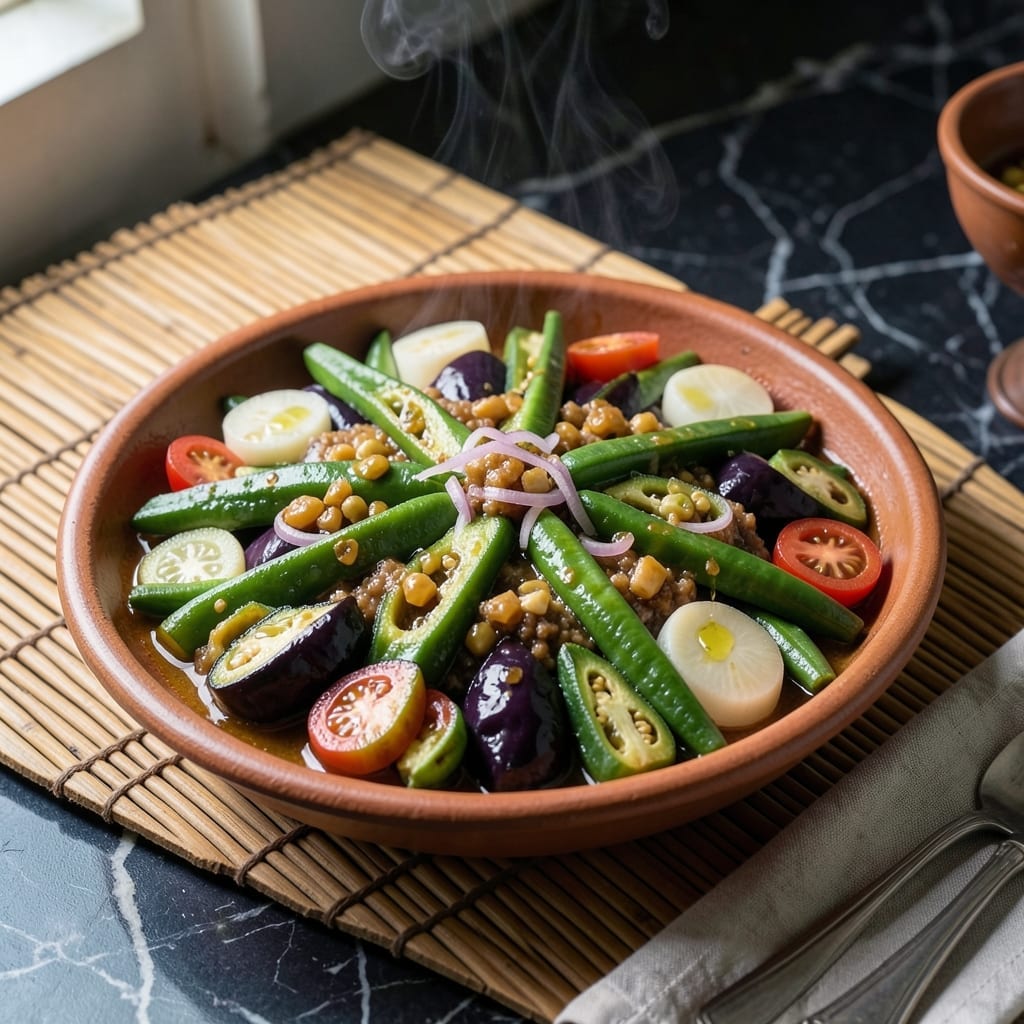
This vegan pinakbet brings authentic Filipino flavors to your table without compromise. Traditional techniques meet plant-based ingredients to recreate the dish’s signature taste.
The stew combines bitter melon, eggplant, and okra with a savory base of fermented soy paste. Each vegetable contributes its unique texture while absorbing the rich, umami-packed broth.
What emerges is a hearty, authentic one-pot meal that honors its roots. The vegan version keeps the soul of pinakbet intact through careful ingredient selection.
Serve with steamed rice to soak up every drop of the flavorful sauce. This dish proves plant-based cooking can deliver tradition without sacrifice.
Ingredients for Pinakbet Recipe Vegan
Authentic Filipino vegetables and fermented soybean paste create this rich, umami-packed vegan stew.
| Ingredient | Amount | Notes |
|---|---|---|
| Bitter Melon 🥒 | 2 whole | Sliced into rings, seeds removed |
| Eggplant 🍆 | 1 whole | Cut into 1-inch cubes |
| Okra 🌿 | 8 pieces | Trimmed and halved lengthwise |
| Long Green Beans 🌱 | ½ lb | Trimmed, cut into 2-inch pieces |
| Daikon Radish 🥬 | ¼ lb | Peeled and sliced into rounds |
| Fermented Soybean Paste 🫘 | 2 tbsp | Bagoong or vegan alternative |
| Tomatoes 🍅 | 2 whole | Diced, for acidity |
| Red Onion 🧅 | 1 whole | Thinly sliced |
| Garlic Cloves 🧄 | 4 cloves | Minced for depth |
| Vegetable Broth 💧 | 2 cups | Low-sodium preferred |
| Coconut Oil 🥥 | 2 tbsp | For sautéing vegetables |
| Ground Black Pepper 🌶️ | ½ tsp | Freshly ground for best flavor |
| Sea Salt 🧂 | 1 tsp | Adjust to taste |
| Chili Peppers 🌶️ | 2 pieces | Optional, sliced for heat |
The bitter melon is non-negotiable for authenticity—look for firm, bright green pods at Asian markets or well-stocked international sections. Eggplant and okra should be fresh, with smooth, unblemished skins. For the fermented soybean paste, vegan bagoong alternatives are available online or at specialty stores. If unavailable, miso paste can work (though it alters the flavor profile).
No bitter melon? Zucchini or green papaya provide texture without the bitterness. Fresh okra can be swapped with frozen (thaw first). For the soy paste, miso at half the amount works in a pinch, but expect a saltier taste. The coconut oil can be replaced with vegetable or avocado oil if preferred. Always taste the broth before final seasoning.
This stew tastes even better the next day as flavors meld. Store in an airtight container in the fridge for up to 4 days or freeze for 3 months. Reheat gently to preserve the vegetables’ texture. Serve with steamed jasmine rice to soak up the savory broth.
Why You’ll Love This Recipe
- One Pot Wonder: I toss everything in a single pan—bitter melon, eggplant, okra—and let the flavors meld while I set the table.
- Umami Bomb: The bagoong substitute (fermented tofu or miso) gives that salty, funky depth that makes the daikon and green beans irresistible.
- Weeknight Hero: Honestly, it’s my Tuesday dinner MVP—ready before the kids finish their homework.
- Budget Stretcher: Five hearty veggies for the price of one fancy ingredient, and leftovers taste even better the next day.
Step-by-Step Instructions for Filipino Vegetable Stew
This traditional method delivers authentic flavors while keeping the preparation entirely plant-based.
Step 1: Sauté Aromatics in Coconut Oil
Heat the 2 tbsp Coconut Oil in a large pot over medium heat. Add the 1 whole Red Onion, thinly sliced, and sauté for 3-4 minutes until translucent and slightly caramelized at the edges. The onions should release their natural sweetness without browning too deeply.
Add the 4 cloves Garlic Cloves, minced, and cook for an additional 30 seconds until fragrant. Stir in the 2 tbsp Fermented Soybean Paste, breaking it up with a wooden spoon to distribute evenly. This paste forms the umami foundation of the dish.
Step 2: Build the Vegetable Base
Incorporate the 2 whole Tomatoes, diced, and cook for 2-3 minutes until they soften and release their juices. This creates a light, tangy base that balances the richness of the fermented soybean paste.
Pour in the 2 cups Vegetable Broth and bring to a gentle simmer. Season with the 1 tsp Sea Salt and 0.5 tsp Ground Black Pepper, stirring to combine. The liquid should taste bold and well-seasoned at this stage—adjust if needed, but remember the vegetables will absorb some of the saltiness.
Step 3: Layer and Simmer the Vegetables
Add the 0.25 lb Daikon Radish, peeled and sliced into rounds, and the 0.5 lb Long Green Beans, trimmed and cut into 2-inch pieces. These denser vegetables need more time to become tender, so they go in first. Simmer for 5 minutes until the daikon begins to soften at the edges.
Next, add the 1 whole Eggplant, cut into 1-inch cubes, and the 2 whole Bitter Melon, sliced into rings with seeds removed. Simmer for another 5 minutes until all vegetables start to soften but still retain some bite.
Step 4: Finish with Delicate Vegetables and Heat
Gently stir in the 8 pieces Okra, trimmed and halved lengthwise. Okra cooks quickly and can become mushy if added too early, so it goes in last. If using, add the 2 pieces Chili Peppers, sliced, for a subtle heat that complements the dish’s depth.
Simmer for a final 3-4 minutes until the okra is tender but still bright green and the bitter melon has mellowed slightly. The stew should be fragrant, with vegetables that are tender yet distinct, and a broth that coats the back of a spoon lightly.
Pro Tips For Making Pinakbet Recipe Vegan
- Salt the Eggplant: I learned this the hard way—salt sliced eggplant for 10 minutes before cooking to draw out excess moisture and bitterness, then pat dry with a paper towel.
- Sear the Bitter Melon: Sounds weird, but it works: lightly sear bitter melon slices in oil for 2-3 minutes before simmering to mellow its harshness without losing texture.
- Skip Overcooking Okra: Add okra last—it only needs 5-7 minutes in the pot, or it turns to mush and ruins the dish’s texture.
- Use Vegan Bagoong: My grandmother swore by this, and she was right: swap traditional shrimp paste for fermented soybean paste or vegan fish sauce to keep the umami depth.
Make-Ahead Tips for This Dish
Prep Vegetables Ahead
Wash and chop all your vegetables the night before and store them in separate airtight containers. Bitter melon, eggplant, and okra keep well for 24 hours when refrigerated. This saves you 20-30 minutes on cooking day. 💡
Make the Broth Base
Prepare the aromatic base by sautéing onions, garlic, and fermented soybean paste, then combine with tomatoes and vegetable broth. This mixture can be refrigerated for up to 2 days before adding the vegetables. The flavors will deepen overnight.
Partial Cooking Method
Par-cook the harder vegetables like daikon and green beans for 3-4 minutes, then cool and refrigerate. Finish cooking with the remaining ingredients the next day. This approach maintains texture while cutting active prep time in half.
Freeze for Later
This stew freezes beautifully for up to 3 months. Cool completely, then portion into quart-sized freezer bags. Thaw overnight in the fridge before reheating. The flavors will taste even richer after freezing. ❄️
Reheating Tips
Gently reheat on the stovetop over medium-low heat for 8-10 minutes, adding a splash of water if needed. Avoid microwaving, as it can make the okra mushy. Stir occasionally to prevent sticking.
Rice Pairing Prep
Cook your jasmine rice fresh when ready to serve, but you can rinse and soak the grains for 30 minutes ahead of time. This ensures perfect texture and saves a few minutes during the final cooking push.
Nutrition Facts
Frequently Asked Questions
Can I use regular soy sauce instead of fermented soybean paste?
Regular soy sauce lacks the depth of fermented soybean paste but can work in a pinch. Use 3 tbsp of soy sauce and add 1 tsp miso for umami. The flavor won’t be identical but will still be tasty.
How do I reduce the bitterness of the melon?
Salt the sliced bitter melon and let it sit for 10-15 minutes, then rinse before cooking. This draws out excess bitterness while keeping its signature taste.
What’s the best way to store leftovers?
Store in an airtight container in the fridge for up to 4 days. For longer storage, freeze for 3 months. Reheat gently on the stovetop to preserve texture.
Can I add tofu for extra protein?
Press and cube 1 block of firm tofu, then pan-fry until golden before adding to the stew during the final 5 minutes of cooking.

- Potato Candy Recipe 1933: Vintage Peanut Butter Roll Delight - October 30, 2026
- Potato Chip Cookie Recipe With Pecans: Buttery Crunch Meets Nutty Richness - October 30, 2026
- Potato Patty Recipe No Egg: Crispy Edges Without the Binder - October 30, 2026