
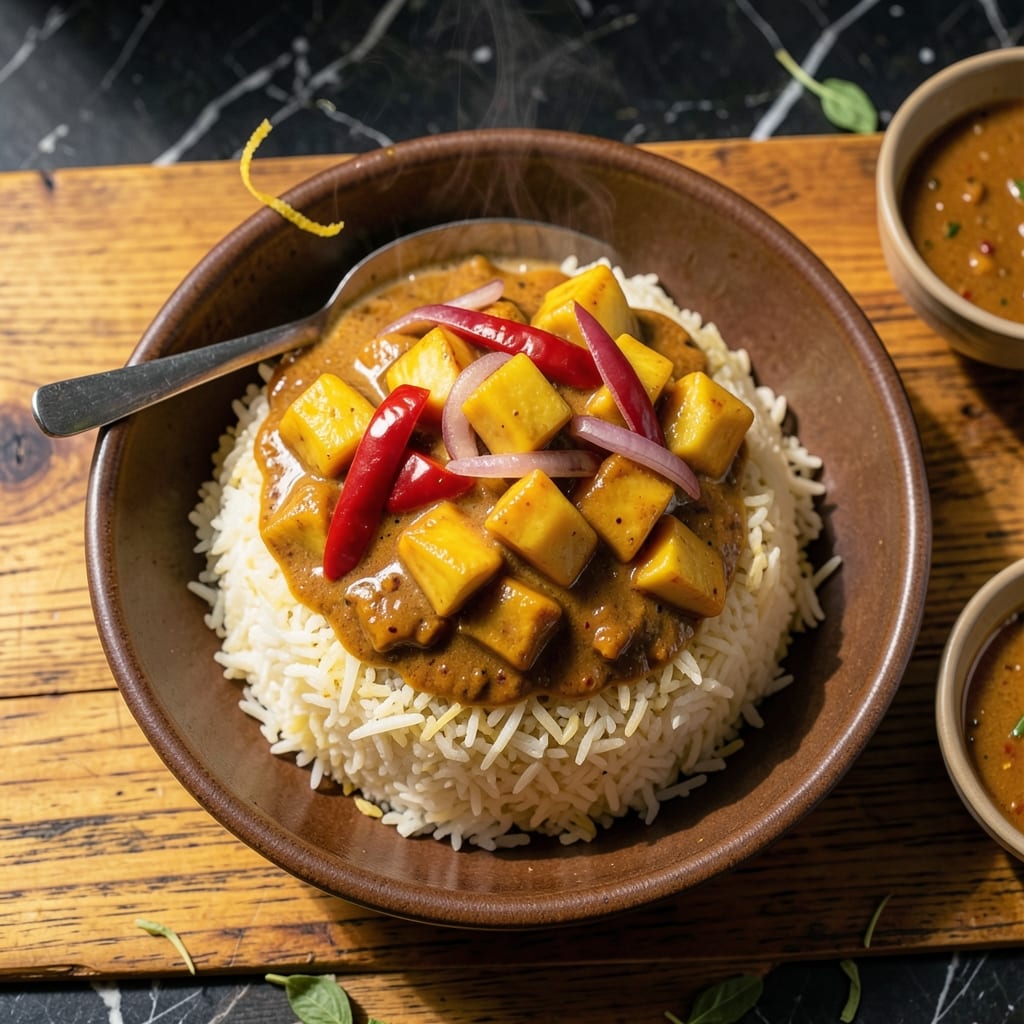
This authentic Thai pineapple curry brings the vibrant flavors of Southeast Asia to your kitchen with a perfect balance of sweet, spicy, and creamy elements.
I developed this recipe using traditional techniques including blooming whole spices in hot oil and layering flavors through careful timing. The combination of fresh pineapple, coconut milk, and aromatic curry paste creates a restaurant-quality dish that’s surprisingly simple to prepare.
The result is a rich, fragrant curry with tender pineapple chunks and vegetables swimming in a velvety sauce. Each bite delivers complex flavors that are both comforting and exciting.
Serve this over steamed jasmine rice for a complete meal that will transport you straight to Thailand.
Ingredients for Pineapple Curry Recipe Thai
Sweet pineapple, creamy coconut, and aromatic spices create this vibrant Thai-inspired dish with ease.
| Ingredient | Amount | Notes |
|---|---|---|
| Jasmine Rice 🍚 | 2 cups | Uncooked, for serving |
| Fresh Pineapple 🍍 | 3 cups | Cubed, ripe but firm |
| Red Bell Pepper 🌶️ | 1 whole | Sliced into strips |
| Red Onion 🧅 | 1 whole | Thinly sliced |
| Thai Red Curry Paste 🌶️ | 3 tbsp | Vegan variety, check label |
| Full-Fat Coconut Milk 🥥 | 2 cans | 13.5 oz cans, well-shaken |
| Vegetable Broth 💧 | 1 cup | Low-sodium preferred |
| Soy Sauce 🫒 | 2 tbsp | Or tamari for gluten-free |
| Brown Sugar 🟤 | 1 tbsp | Or coconut sugar |
| Fresh Lime 🍋 | 1 whole | Juiced, plus wedges for serving |
| Fresh Cilantro 🌿 | ¼ cup | Chopped, for garnish |
| Thai Basil 🌿 | ¼ cup | Loosely packed, optional |
| Garlic Cloves 🧄 | 4 cloves | Minced |
| Fresh Ginger 🌿 | 1 tbsp | Peeled and grated |
| Peanuts 🥜 | ¼ cup | Crushed, for garnish |
The curry paste is non-negotiable here. Maesri or Thai Kitchen brands make solid vegan options—just check the label for fish sauce (some contain it). Asian markets often have the best selection and freshest stock. For coconut milk, full-fat is essential (the light kind won’t give you that velvety texture). I always grab Thai Kitchen or Native Forest brands. Fresh pineapple makes all the difference—pre-cut works in a pinch, but whole pineapple tastes sweeter and more vibrant.
No Thai basil? Regular basil plus mint gets you close. Skip the peanuts? Cashews or almonds work too. The curry paste can be green or yellow if that’s what you have (flavor profiles will shift slightly). If you’re sensory-sensitive to spice, start with 2 tbsp paste and add more to taste. The brown sugar can be swapped for maple syrup or agave for a refined sugar-free version.
This curry tastes even better the next day once flavors meld. Stores in the fridge for 4-5 days or freeze for 3 months. Reheat gently to avoid separating the coconut milk (a splash of water helps if it does). Always serve with fresh lime wedges and cilantro on top.
Why You’ll Love This Recipe
- One Pot Wonder: I love that everything—jasmine rice, pineapple, even the curry paste—simmers together in one pot. Less cleanup, more flavor.
- Sweet Heat: The fresh pineapple balances the Thai red curry paste’s spice so well. That first bite of sweet, tangy, and fiery is pure magic.
- Meal Prep Star: This tastes even better the next day, and the colors stay vibrant. I make a big batch for lunches all week.
- Budget Win: Honestly, red bell peppers and pineapple stretch far in this dish. Feeds four generously without breaking the bank.
Step-by-Step Instructions for Pineapple Curry
Here’s the method I rely on for balanced sweetness, heat, and creamy coconut richness.
Step 1: Sauté Aromatics to Build Flavor
Heat a large, heavy-bottomed pot over medium-high heat. Add the thinly sliced red onion, sliced red bell pepper, minced garlic cloves, and grated fresh ginger. Sauté for 4-5 minutes until the onion softens and the mixture becomes fragrant.
This step is non-negotiable—it develops the aromatic base that defines the dish. Stir frequently to prevent burning, and watch for the moment when the ginger and garlic release their essential oils. That’s when you know the foundation is set.
Step 2: Bloom the Curry Paste and Toast the Spices
Push the sautéed vegetables to one side of the pot and add the 3 tbsp Thai red curry paste to the cleared space. Cook for 1-2 minutes, stirring constantly, until the paste darkens slightly and its oil begins to separate. This “blooming” step intensifies its flavor and ensures it integrates fully into the dish.
Next, add the 1 tbsp brown sugar and 2 tbsp soy sauce, stirring to combine. The sugar caramelizes slightly, balancing the curry paste’s heat with a subtle sweetness. You’ll notice the mixture thicken as the sugar dissolves.
Step 3: Simmer the Coconut Milk Base
Pour in the 2 cans full-fat coconut milk and 1 cup vegetable broth, stirring to scrape up any browned bits from the bottom of the pot. Bring the mixture to a gentle simmer over medium heat, then reduce to low heat to maintain a steady, gentle bubble.
Let it cook uncovered for 10 minutes, stirring occasionally. The goal is to meld the flavors while slightly reducing the liquid. The sauce should coat the back of a spoon, but avoid boiling vigorously—this can cause the coconut milk to separate.
Step 4: Add Pineapple and Finish the Curry
Stir in the 3 cups fresh pineapple cubes and simmer for another 5-7 minutes until the fruit softens slightly but retains some texture. The pineapple’s natural sweetness will balance the curry’s spice, while its acidity brightens the rich coconut base.
Taste and adjust seasoning if needed. The sauce should be creamy, fragrant, and layered with sweet, spicy, and umami notes. Remove from heat once the pineapple is heated through and the flavors have melded.
Step 5: Serve with Garnishes and Jasmine Rice
Squeeze the juice of the fresh lime into the curry and stir to combine. Ladle the curry over steamed 2 cups jasmine rice and garnish with 0.25 cup fresh cilantro, 0.25 cup Thai basil, and 0.25 cup peanuts for crunch.
The herbs add freshness, while the peanuts provide a satisfying contrast in texture. Serve immediately with lime wedges for an extra burst of brightness.
Pro Tips For Making Pineapple Curry Recipe Thai
- Bloom the Paste: Cook the Thai red curry paste in hot oil for 2-3 minutes until fragrant—this wakes up the flavors before adding liquids. I learned this the hard way after making bland curry for years.
- Use Ripe Pineapple: Pick pineapple that smells sweet at the base and yields slightly to pressure. Sounds obvious, but underripe fruit turns the dish sour instead of balanced.
- Don’t Overcook Peppers: Add red bell pepper strips in the last 5 minutes of cooking so they stay crisp. My grandmother swore by this, and she was right: mushy peppers ruin the texture.
- Rinse the Rice: Wash jasmine rice until the water runs clear to remove excess starch—this keeps it fluffy instead of gummy. I skip this when I’m lazy, but the difference is noticeable.
Wine and Beer Pairings for This Recipe
White Wine Pairings
An off-dry Riesling from Germany or Washington State is my top pick. The slight sweetness mirrors the pineapple while the bright acidity cuts through the coconut milk’s richness. Look for Dr. Loosen Blue Slate or Chateau Ste. Michelle for reliable options. 🍷
Rosé Options
A crisp, dry Provence rosé with its strawberry and citrus notes complements the curry beautifully. I love Whispering Angel or Miraval for their consistent quality. Serve well-chilled at 45-50°F for maximum refreshment.
Beer Pairings
A Belgian witbier like Hoegaarden or Blue Moon brings citrus and coriander notes that echo the curry’s spices. The wheat base adds a creamy texture that stands up to the coconut. For craft options, try Allagash White. 🍺
Sparkling Choices
Prosecco’s light bubbles and stone fruit flavors cleanse your palate between bites. La Marca offers excellent value. For a splurge, a dry sparkling rosé from Spain provides both effervescence and berry notes that pair wonderfully with the pineapple.
Non-Alcoholic
Try a ginger beer like Fever-Tree for spicy kick that matches the curry’s heat. Or brew a strong hibiscus iced tea with lime—its tartness balances the dish’s sweetness perfectly. Both options let the curry flavors shine. ✨
Nutrition Facts
Frequently Asked Questions
Can I use canned pineapple instead of fresh?
Yes, canned pineapple works in a pinch. Use chunks in juice (not syrup) and drain well before adding to avoid a watery curry. Fresh is preferred for texture and brightness.
How do I make it spicier?
Add 1-2 tsp of Thai chili paste or 1 chopped Thai chili with the curry paste. For milder heat, remove seeds before adding. Always taste before serving.
Why did my coconut milk separate?
This happens if boiled too vigorously. Simmer gently and stir occasionally. If it separates, whisk in 1-2 tbsp warm water to re-emulsify.
What can I substitute for Thai basil?
Use regular basil plus mint, or just basil alone. The flavor won’t be identical but still delicious. Add at the end to preserve freshness.

- Peach Syrup Recipe for Ice Cream: Sweet and Silky Drizzle for Scoops - October 6, 2026
- Pav Bhaji Recipe Food Lab: Mumbai Street Food Magic at Home - October 6, 2026
- Peach Jelly Recipe Without Pectin: Naturally Set Sweet Spread - October 6, 2026