
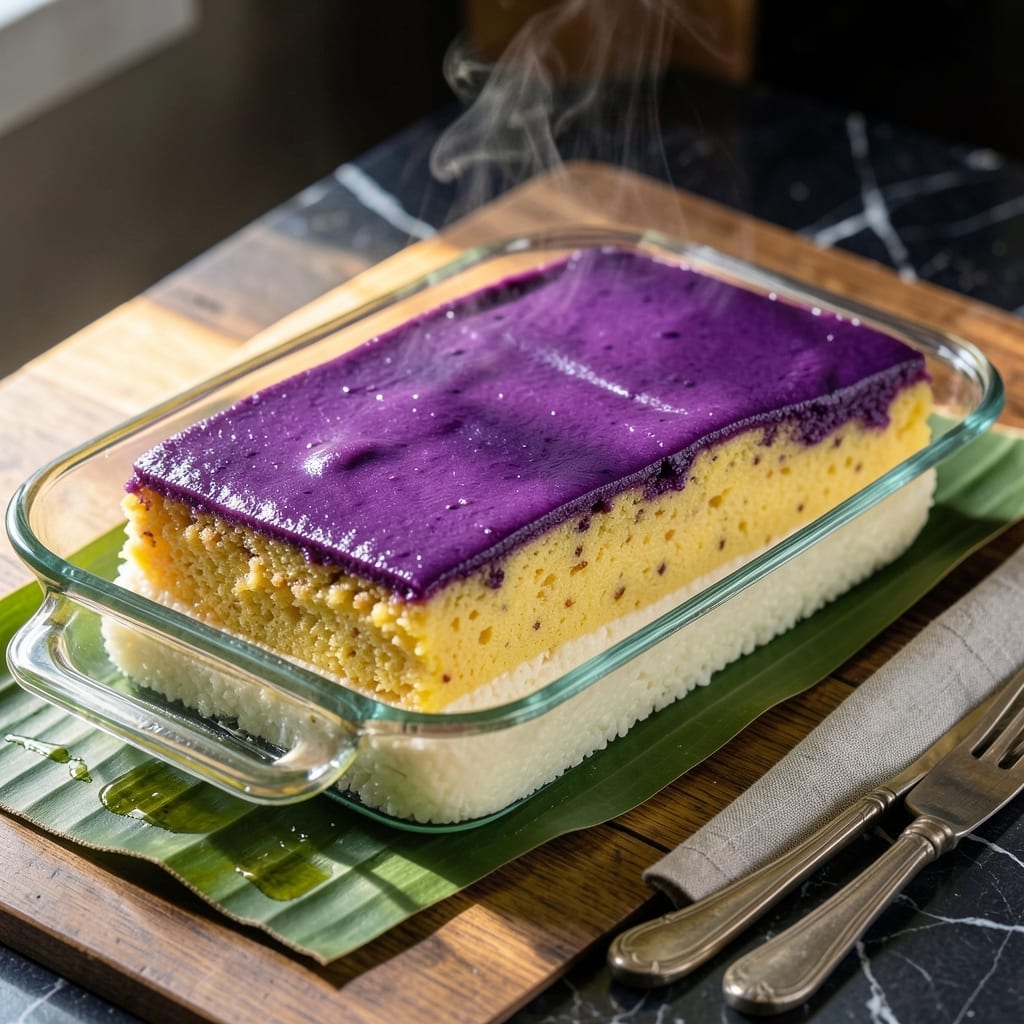
This traditional Filipino dessert showcases the art of layered glutinous rice in vibrant colors. Sapin-sapin captures the essence of Filipino celebrations with its sweet, chewy texture and coconut milk richness.
The dish gets its name from the Tagalog word “sapin,” meaning to layer. Each colorful tier represents different flavors, typically ube, langka, and plain coconut. The layers are steamed sequentially to create a cohesive, visually stunning treat.
What makes this creation special is the balance of sweetness and the slight stickiness that holds the layers together. The top is often sprinkled with grated coconut for added texture and visual appeal.
Perfect for fiestas or family gatherings, this recipe brings a taste of Filipino heritage to your table. The process requires patience but rewards with a dessert that’s as beautiful as it is delicious.
Ingredients for Pinoy Cooking Recipe Sapin Sapin
Pantry staples and specialty Filipino ingredients create this layered sticky rice delight.
| Ingredient | Amount | Notes |
|---|---|---|
| Glutinous Rice Flour 🌾 | 2 cups | Also called sweet rice flour |
| Granulated Sugar 🍚 | 1 ½ cups | Divided between layers |
| Coconut Milk 🥥 | 2 ½ cups | Full-fat for creaminess |
| Ube Halaya 🟪 | 1 cup | Purple yam jam |
| Langka 🍈 | 1 cup | Jackfruit, canned in syrup |
| Purple Food Coloring 🎨 | 1 tsp | Optional for vibrant ube layer |
| Yellow Food Coloring 🎨 | 1 tsp | Optional for langka layer |
| Vanilla Extract 🌿 | 1 tsp | Pure extract preferred |
| Salt 🧂 | ¼ tsp | Balances sweetness |
| Shredded Coconut 🥥 | ½ cup | For topping, toasted optional |
| Coconut Cream 🥥 | ½ cup | For extra richness |
| Butter 🧈 | 2 tbsp | For greasing steamer |
The glutinous rice flour is non-negotiable—look for Bob’s Red Mill or an Asian market brand like Mochiko. Coconut milk should be full-fat for that rich, creamy texture; Thai Kitchen or Goya are solid choices. For ube halaya, Filipino grocery stores will have the good stuff (usually frozen). If you’re near one, grab it there—it’s worth the trip. Jackfruit in syrup (langka) is often sold at Asian supermarkets in cans.
No ube halaya? Mashed purple sweet potato plus a drop of purple food coloring works in a pinch. Swap langka for ripe mango puree or crushed pineapple if needed. The food colorings are optional but help achieve those vibrant layers. If you’re avoiding artificial colors, ube and turmeric can provide natural hues. Coconut cream can be replaced with more coconut milk, but the texture won’t be quite as luscious.
The layers keep well at room temperature for 2 days, but best served fresh. Store leftovers in the fridge for up to 5 days—microwave briefly to soften. Freezing isn’t ideal (textures change), but if you must, wrap tightly and consume within 1 month.
Why You’ll Love This Recipe
- One Bowl Wonder: I just mix the glutinous rice flour, sugar, and coconut milk in a single bowl—no fancy equipment needed.
- Layered Luxe: The ube halaya and langka create these vibrant, sweet layers that melt in your mouth.
- Festive Favorite: I bring this to potlucks and it’s always the first to disappear—birthdays, fiestas, you name it.
- Stretches Far: A big batch costs pennies and feeds a crowd, plus leftovers taste even better the next day.
Step-by-Step Instructions for Sapin Sapin
Here’s the method I use for perfectly layered sticky rice every time.
Step 1: Prepare the Steamer and Base Mixture
Grease a 9×9-inch baking pan with the 2 tbsp Butter, making sure to coat all sides evenly. This prevents sticking and helps the layers release cleanly after steaming. I use a pastry brush for even coverage.
In a large bowl, whisk together the 2 cups Glutinous Rice Flour and 1.5 cups Granulated Sugar. Gradually add 2.5 cups Coconut Milk while whisking until you achieve a smooth, lump-free batter. The consistency should resemble thin pancake batter.
Step 2: Divide and Flavor the Batter
Divide the mixture evenly into three portions. Leave the first portion plain for the white layer. To the second portion, add the 1 cup Ube Halaya and 1 tsp Purple Food Coloring, stirring until fully incorporated and vibrantly purple.
For the third portion, add the 1 cup Langka, 1 tsp Yellow Food Coloring, and 1 tsp Vanilla Extract. Mix well until the langka is evenly distributed and the batter takes on a bright yellow hue. The 0.25 tsp Salt can be divided equally among all three portions to balance the sweetness.
Step 3: Steam the Layers in Sequence
Pour the plain white batter into the prepared pan, spreading it evenly. Place the pan in a steamer with 2-3 inches of boiling water. Cover and steam for 20-25 minutes until the layer is set and a toothpick inserted in the center comes out clean.
Next, carefully pour the purple ube mixture over the white layer, spreading gently to avoid disturbing the first layer. Steam again for 20-25 minutes until this layer is firm to the touch. Finally, add the yellow langka layer and steam for another 20-25 minutes until fully set.
Step 4: Add Toppings and Cool
Once all layers are cooked, drizzle the 0.5 cup Coconut Cream evenly over the top. This adds a rich, glossy finish. Sprinkle the 0.5 cup Shredded Coconut on top for texture and visual appeal, pressing lightly so it adheres.
Remove from the steamer and let it cool to room temperature. This cooling step is crucial—it firms up the layers, making them easier to slice cleanly. For best results, chill in the refrigerator for at least 2 hours before cutting into squares.
Pro Tips For Making Pinoy Cooking Recipe Sapin Sapin
- Steam Evenly: Use a deep steamer with tight lid to prevent water droplets from ruining the layers. I learned this the hard way after my first three batches came out waterlogged.
- Strain Coconut Milk: Always strain your coconut milk before mixing—those tiny bits of pulp can make your sapin sapin texture uneven. Sounds tedious, but it actually changes the outcome.
- Layer While Warm: Pour each colored layer while the previous one is still warm to help them bond. My grandmother swore by this, and she was right.
- Use Ube Halaya Sparingly: Ube halaya is thick, so thin it with a little coconut milk first or your purple layer will be dense and dry. I was skeptical until I tried it.
Creative Variations of This Dish
Fruit-Inspired Layers
Swap the traditional ube and langka for mango puree and crushed pineapple (drained well) to create tropical layers. Use 1 cup of each, adjusting sugar to taste since fruits add natural sweetness. This version brings bright, sunny flavors perfect for summer gatherings. 🌴
Chocolate Lovers Twist
Add ¼ cup cocoa powder to one portion of the batter for a rich chocolate layer. I like to pair it with a plain coconut layer and a pandan-flavored green layer (use 1 tsp pandan extract). The contrast of chocolate and pandan is surprisingly delightful.
Matcha Green Tea
For an earthy variation, mix 1 tbsp matcha powder into one layer for a beautiful green hue and subtle bitterness. Balance it with a sweet coconut layer and a plain white layer. This modern take adds a sophisticated touch to the classic dessert.
Rainbow Variation
Create a vibrant rainbow effect with food colorings in purple, blue, green, yellow, and orange. Each colored layer uses the same base batter, with a drop of extract (like almond or coconut) to distinguish flavors. Perfect for birthday parties or festive occasions! ✨
Pandan-Coconut Duet
Use pandan juice (from 5-6 pandan leaves blended with water) to flavor one layer, giving it a fragrant, floral note. Pair it with a plain coconut layer for a simple yet aromatic version that’s popular in many Filipino households.
Cheese Topping
After steaming all layers, sprinkle ½ cup grated cheddar cheese on top before adding the shredded coconut. Return to the steamer for 2-3 minutes just to melt the cheese. This salty-sweet combo is a hit with kids and adds a fun twist.
Nutrition Facts
Frequently Asked Questions
Can I use regular rice flour instead of glutinous?
No, regular rice flour won’t give the same chewy texture. Glutinous rice flour is essential for that signature sticky consistency that holds the layers together.
Why did my layers mix together?
This happens if a layer isn’t fully set before adding the next. Ensure each layer steams for the full 20-25 minutes and is firm to the touch before adding more batter.
How do I store leftovers?
Keep leftovers in an airtight container at room temperature for up to 2 days. For longer storage, refrigerate for up to 5 days or freeze for 1 month.
Can I make this without a steamer?
Yes! Use a large pot with a heatproof rack and 2-3 inches of boiling water. Cover tightly with foil to trap steam. The key is maintaining consistent heat.

- Potato Candy Recipe 1933: Vintage Peanut Butter Roll Delight - October 30, 2026
- Potato Chip Cookie Recipe With Pecans: Buttery Crunch Meets Nutty Richness - October 30, 2026
- Potato Patty Recipe No Egg: Crispy Edges Without the Binder - October 30, 2026