
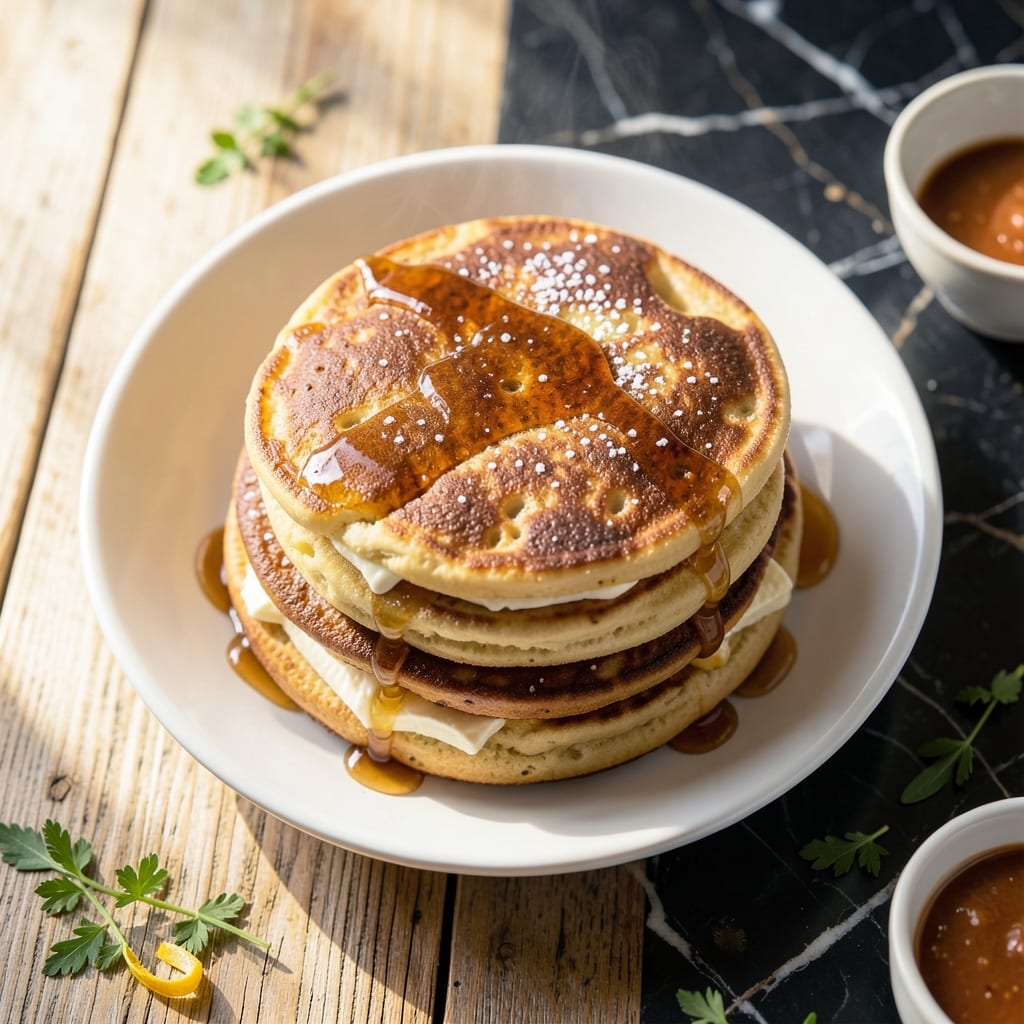
This Filipino breakfast favorite delivers soft, airy hot cakes that melt in your mouth. The yeast makes them light while eggs add richness, creating a texture unlike standard pancakes.
I developed this version after testing multiple ratios to achieve the perfect balance—fluffy yet substantial, with just the right amount of sweetness. The batter rests briefly to allow the yeast to work its magic.
What emerges from the pan are golden-brown hot cakes with a tender crumb and slightly crisp edges. Serve them hot with butter and sugar, or with your favorite syrup.
This recipe comes together in under 30 minutes, making it ideal for busy mornings when you crave something special.
Ingredients for Pinoy Hot Cake Recipe with Yeast and Eggs
Pantry staples plus yeast and eggs make these fluffy Filipino hot cakes happen.
| Ingredient | Amount | Notes |
|---|---|---|
| All-Purpose Flour 🌾 | 2 cups | Sifted for lighter texture |
| Active Dry Yeast 🍞 | 1 tsp | Instant yeast works too |
| Granulated Sugar 🍚 | ¼ cup | Adjust to taste preference |
| Salt 🧂 | ½ tsp | Fine sea salt preferred |
| Large Eggs 🥚 | 2 whole | Room temperature for best results |
| Whole Milk 🥛 | 1 ¼ cups | Warm to 110°F for yeast activation |
| Unsalted Butter 🧈 | 2 tbsp | Melted, plus extra for cooking |
| Vanilla Extract 🌿 | 1 tsp | Pure extract for best flavor |
| Baking Powder 🧂 | 1 tsp | Ensures extra fluffiness |
| Vegetable Oil 🫒 | 1 tbsp | For greasing the pan |
The yeast is what gives these hot cakes their signature airy texture. Use fresh yeast—check the expiration date on the packet. I grab mine from King Arthur or Fleischmann’s at the regular grocery store. The milk needs to be warm but not hot (think bathwater temperature) to activate the yeast without killing it. Room temperature eggs blend better into the batter, so pull them out 30 minutes before starting.
No active dry yeast? Instant yeast at the same amount works—just skip the proofing step. Out of milk? Evaporated milk adds richness, or use water with an extra tablespoon of melted butter. For a lighter color, swap the butter for coconut oil. The sugar can be reduced slightly, but don’t skip it entirely—yeast needs it to feed.
Batter keeps in the fridge for 24 hours (the yeast will keep working slowly). Cooked hot cakes reheat well in a toaster or skillet. Freeze extras between parchment paper for up to 1 month—perfect for lazy mornings.
Why You’ll Love This Recipe
- One Bowl Wonder: I just dump the flour, yeast, sugar, and eggs in one bowl—no fancy steps, and it still turns out fluffy every time.
- Pillowy Perfection: The yeast does its magic overnight, giving these hot cakes that light, airy texture that’s pure comfort in every bite.
- Breakfast to Merienda: Honestly, I make a double batch—great for a quick breakfast or an afternoon snack with coffee.
- Stretches the Budget: A handful of pantry staples and eggs is all it takes to feed the whole family without breaking the bank.
Step-by-Step Instructions for Pinoy Hot Cake
Here’s how to make these quick, fluffy hot cakes with minimal effort and maximum flavor.
Step 1: Activate the Yeast and Combine Wet Ingredients
Start by warming the 1.25 cups whole milk to 110°F—it should feel warm but not hot to the touch. In a small bowl, whisk the 1 tsp active dry yeast into the warm milk with the 0.25 cup granulated sugar. Let this sit for 5 minutes until the mixture becomes frothy and slightly expanded.
In a large mixing bowl, whisk together the 2 whole large eggs, 2 tbsp unsalted butter (melted), and 1 tsp vanilla extract until smooth. Pour in the yeast-milk mixture and stir until fully combined. This creates a rich, flavorful base for your hot cakes.
Step 2: Mix Dry Ingredients and Form the Batter
In a separate bowl, sift together the 2 cups all-purpose flour, 1 tsp baking powder, and 0.5 tsp salt. Sifting ensures a lighter texture, which is key for those airy hot cakes. Gradually add the dry ingredients to the wet mixture, whisking gently until just combined—don’t overmix, or the hot cakes will turn out tough.
The batter should be smooth with a few small lumps remaining. If it looks too thick, add a splash of warm milk, but remember, the yeast and baking powder will help it rise during cooking. Let the batter rest for 5-10 minutes to allow the yeast to start working its magic.
Step 3: Cook the Hot Cakes on Medium Heat
Heat a non-stick skillet or griddle over medium heat and lightly brush it with the 1 tbsp vegetable oil. Once hot, pour ¼ cup of batter per hot cake onto the skillet. Cook for 2-3 minutes until bubbles form on the surface and the edges look set.
Flip each hot cake carefully and cook for another 1-2 minutes until golden brown and fully cooked through. The yeast will give them a slight lift, while the baking powder ensures they stay fluffy. Keep an eye on the heat—if it’s too high, the outside will burn before the inside cooks.
Step 4: Serve Warm with Your Favorite Toppings
Transfer the hot cakes to a plate and cover loosely with a clean towel to keep them warm while you finish the batch. These are best served immediately, while they’re still soft and slightly warm. The yeast adds a subtle depth of flavor that pairs perfectly with a drizzle of syrup or a sprinkle of sugar.
If you’re making a big batch, preheat your oven to 200°F and place the cooked hot cakes on a wire rack set over a baking sheet. This keeps them warm and prevents them from getting soggy. Enjoy them fresh for the best texture!
Pro Tips For Making Pinoy Hot Cake Recipe With Yeast And Eggs
- Activate Yeast First: Always bloom the active dry yeast in warm water with a pinch of sugar for 5-10 minutes until frothy—I learned this the hard way after a few flat, sad hot cakes.
- Room Temp Eggs: Use eggs straight from the fridge and they’ll drag down your batter; let them sit out for 20 minutes so they blend smoothly into the flour.
- Don’t Overmix: Stir just until the lumps disappear, or your hot cakes will turn out tough instead of light and fluffy.
- Rest the Batter: Give the yeasted batter 15-20 minutes to rise slightly before cooking—it makes a real difference in the final texture.
Wine and Beer Pairings for This Recipe
Sweet Pairings
These hot cakes have a subtle sweetness that pairs beautifully with Muscatel wine or a Riesling. The fruity, floral notes complement the rich, airy texture without overpowering it. I love a chilled glass of Moscato d’Asti for brunch. 🍷
Coffee Companions
For a non-alcoholic option, serve with Filipino brewed coffee like Kape Barako. Its bold, earthy flavor cuts through the sweetness. A café latte with a touch of cinnamon is another great match for a cozy morning treat.
Beer Balance
If you prefer beer, try a light lager like San Miguel Pale Pilsen. The crisp, clean finish balances the richness. Avoid heavy stouts or IPAs, as they can clash with the delicate flavor of these hot cakes. 🍺
Syrup and Tea
For a traditional pairing, serve with liquid butter and muscovado sugar, alongside hot tea. I enjoy Earl Grey—its citrusy bergamot notes add a refreshing contrast to the warm, sweet hot cakes.
Nutrition Facts
Frequently Asked Questions
Why does the batter need to rest before cooking?
The resting time allows the yeast to activate and start fermenting the sugars. This creates air bubbles that make the hot cakes light and fluffy. Skipping this step can result in denser pancakes.
Can I use instant yeast instead of active dry?
Yes, you can substitute instant yeast at the same amount. Just add it directly to the dry ingredients without proofing. The texture will be very similar.
How do I know when to flip the hot cakes?
Look for bubbles forming on the surface and edges that appear set. This usually takes 2-3 minutes over medium heat. Flip when the bottom is golden brown.
Can I make the batter ahead of time?
The batter will keep in the fridge for up to 24 hours. The yeast will continue to work slowly, so you’ll get extra fluffy results. Stir gently before using.

- Potato Candy Recipe 1933: Vintage Peanut Butter Roll Delight - October 30, 2026
- Potato Chip Cookie Recipe With Pecans: Buttery Crunch Meets Nutty Richness - October 30, 2026
- Potato Patty Recipe No Egg: Crispy Edges Without the Binder - October 30, 2026