
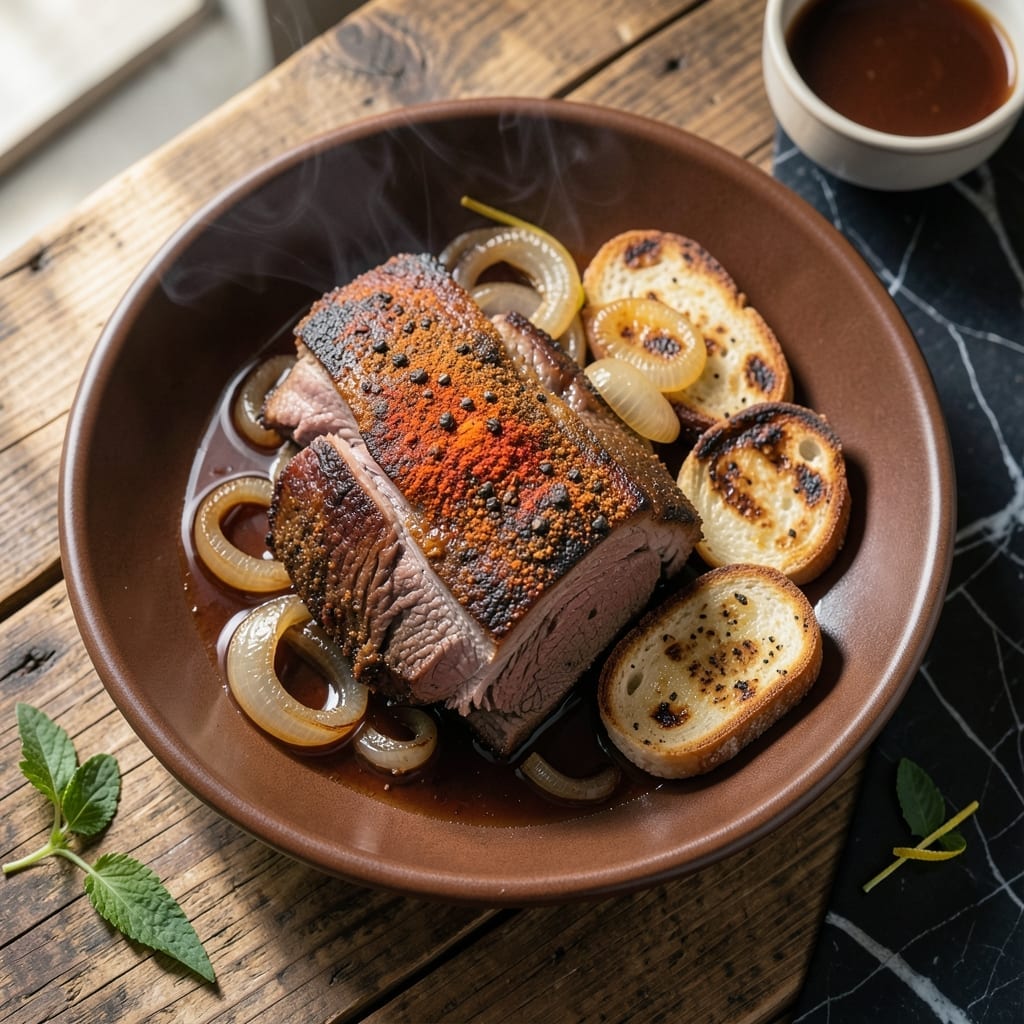
This Texas-style brisket delivers the tender results that made the Pioneer Woman’s version famous. The secret lies in a simple dry rub and low-and-slow cooking that transforms tough cuts into melt-in-your-mouth perfection.
I’ve refined this method to ensure consistent success, using basic pantry spices and a patient approach. The brisket absorbs smoky flavors while breaking down into juicy, fork-tender slices.
What emerges is a dish with a rich bark outside and moist, flavorful meat inside. The process rewards patience, but the payoff is a brisket that rivals any barbecue joint.
Serve it sliced for sandwiches or as a hearty main with classic sides. This is comfort food at its most satisfying.
Ingredients for Pioneer Woman Brisket
Pantry spices and a quality brisket are all you need for Texas-style perfection.
| Ingredient | Amount | Notes |
|---|---|---|
| Beef Brisket 🥩 | 5 lb | Flat cut preferred, trimmed |
| Kosher Salt 🧂 | ¼ cup | Diamond Crystal preferred |
| Black Pepper 🌶️ | ¼ cup | Freshly ground, coarse |
| Garlic Powder 🧄 | 2 tbsp | Not garlic salt |
| Onion Powder 🧅 | 2 tbsp | Fresh ground preferred |
| Paprika 🌶️ | 2 tbsp | Sweet or smoked variety |
| Brown Sugar 💛 | ¼ cup | Light or dark works |
| Chili Powder 🌶️ | 1 tbsp | Mild or hot variety |
| Ground Cumin 🌿 | 1 tbsp | Toasted for deeper flavor |
| Dried Oregano 🍃 | 1 tbsp | Mexican oregano if available |
| Olive Oil 🫒 | 2 tbsp | For binding dry rub |
| Apple Cider Vinegar 💧 | ½ cup | For spritzing during cooking |
| Beef Broth 🥩 | 2 cups | Low-sodium preferred |
The brisket cut is everything. Flat cut (also called the lean cut) gives you consistent slices and less fat waste. Look for USDA Choice or Prime at your butcher or Costco—good marbling means juicier meat. Ask them to leave the fat cap on (about 1/4-inch thick) for protection during cooking. Avoid pre-trimmed brisket if possible; you want control over the final shape.
No brown sugar? Coconut sugar works in a pinch. Missing a spice? Penzeys or Spicewalla have great blends, but your grocery store’s bulk section is fine too. The vinegar spritz keeps the meat moist—apple juice or beer can substitute if that’s what you’ve got. For extra bark, some pitmasters add a pinch of MSG (about 1 tsp) to the rub. Don’t skip the olive oil—it helps the rub stick.
Store uncooked brisket in the fridge for up to 3 days. Cooked brisket stays fresh 4-5 days refrigerated or 3 months frozen. Slice only what you’ll serve immediately, and keep the rest whole to retain moisture. Reheat gently in a pan with a splash of broth.
Why You’ll Love This Recipe
- Five-Minute Rub: I literally just shake salt, pepper, garlic and onion powder over the brisket, rub it in, and I’m done—no marinade overnight, no fuss.
- Deep, Meaty Flavor: The dry rub forms this incredible crust that locks in every juicy, beefy bite. Honestly, the smell alone sells it.
- Feeds a Crowd: One brisket, one pan, and suddenly I’ve got enough for Sunday dinner plus sandwiches all week.
- Leftovers for Days: The flavor just gets richer, so I make it on Saturday and we’re set for tacos, hash, or straight-up slices till Wednesday.
Step-by-Step Instructions for Texas-Style Smoky Brisket
Here’s the method. Straightforward, tested, works every time.
Step 1: Prepare the Dry Rub and Season the Brisket
In a medium bowl, combine the 0.25 cup Kosher Salt, 0.25 cup Black Pepper, 2 tbsp Garlic Powder, 2 tbsp Onion Powder, 2 tbsp Paprika, 0.25 cup Brown Sugar, 1 tbsp Chili Powder, 1 tbsp Ground Cumin, and 1 tbsp Dried Oregano. Mix thoroughly until all ingredients are evenly distributed.
Rub the 5 lb Beef Brisket with the 2 tbsp Olive Oil, ensuring all surfaces are lightly coated. Apply the dry rub mixture generously, pressing it into the brisket so it adheres well. The rub should form a thick, even layer over the entire surface, including the edges.
Step 2: Rest and Prep for Smoking
Let the seasoned brisket rest at room temperature for 30-45 minutes while you prepare your smoker. This allows the rub to penetrate the meat and enhances flavor absorption.
Preheat your smoker to 225°F using oak or hickory wood for that classic Texas flavor. Place a water pan in the smoker to maintain moisture during the long cook. Ensure the smoker is fully up to temperature and producing clean, thin blue smoke before adding the brisket.
Step 3: Smoke the Brisket Low and Slow
Place the brisket fat-side up on the smoker grate. This positioning allows the fat to render down and baste the meat naturally as it cooks. Insert a meat thermometer into the thickest part of the brisket to monitor internal temperature.
Smoke the brisket undisturbed for 6-8 hours or until the internal temperature reaches 165-170°F. Spritz the brisket with the 0.5 cup Apple Cider Vinegar every 2-3 hours to keep the surface moist and enhance bark formation. Maintain a consistent smoker temperature throughout the process.
Step 4: Wrap and Continue Cooking
Once the brisket hits 165-170°F, it will likely stall as moisture evaporates. Wrap the brisket tightly in pink butcher paper or aluminum foil, adding ½ cup of the 2 cups Beef Broth for moisture. This wrapping step, known as the Texas crutch, helps push through the stall while preserving tenderness.
Return the wrapped brisket to the smoker and continue cooking until the internal temperature reaches 200-205°F and the meat is probe-tender. This typically takes another 4-6 hours, but the exact time depends on the size and shape of your brisket.
Step 5: Rest and Slice for Maximum Tenderness
Remove the brisket from the smoker and let it rest, still wrapped, for at least 1 hour (I recommend 2 hours in a cooler or warm oven). This resting period allows the juices to redistribute evenly throughout the meat, ensuring every bite is moist and flavorful.
Unwrap the brisket and slice against the grain into ¼-inch thick slices. The grain direction may differ between the flat and point, so adjust your slicing angle accordingly. Serve immediately with the remaining 1.5 cups Beef Broth as a dipping sauce or au jus.
Pro Tips For Making Pioneer Woman Brisket
- Season Overnight: Rub the brisket with kosher salt, black pepper, garlic powder, and onion powder the night before cooking—this lets the spices penetrate deeply and tenderize the meat.
- Low and Slow: Cook the brisket at 275°F for at least 8 hours; I learned this the hard way after rushing it at higher temps and ending up with tough meat.
- Skip the Trim: Leave the fat cap on the brisket while cooking—it bastes the meat naturally and keeps it from drying out, even if it looks like too much at first.
- Rest 30 Minutes: After pulling it from the oven, tent the brisket with foil and let it sit for a full 30 minutes before slicing—this keeps all the juices inside where they belong.
Health Benefits of This Recipe
Protein Powerhouse
Brisket is packed with high-quality protein—about 50 grams per 6-ounce serving—essential for muscle repair and growth. This makes it perfect for active lifestyles or anyone looking to maintain muscle mass. The slow cooking process preserves these nutrients beautifully. 💪
Iron Richness
Beef brisket provides a significant dose of heme iron, the most easily absorbed form. One serving delivers about 20% of your daily iron needs, which is crucial for energy levels and preventing fatigue. I notice I feel more energized when I include iron-rich foods like this in my diet.
B Vitamin Boost
This cut is loaded with B vitamins, particularly B12, which supports nerve function and red blood cell production. A 6-ounce portion provides nearly half your daily B12 requirement. These vitamins also help your body convert food into energy efficiently.
Zinc for Immunity
Brisket contains zinc, a mineral vital for immune function and wound healing. A single serving offers about 30% of your daily zinc needs. This is especially beneficial during cold and flu season when immune support is most needed.
Healthy Fats
While brisket does contain fat, much of it is monounsaturated fat, the same heart-healthy type found in olive oil. When prepared with a balanced approach (like trimming excess fat), it can be part of a heart-smart diet. The marbling also contributes to the dish’s signature tenderness.
Collagen Benefits
The connective tissue in brisket is rich in collagen, which breaks down during cooking into gelatin. This provides amino acids that support skin, hair, and joint health. The slow cooking process makes these nutrients more bioavailable. ✨
Nutrition Facts
Frequently Asked Questions
What’s the best wood for smoking?
Oak or hickory deliver that classic Texas flavor. Oak burns clean and strong, while hickory adds a sweeter, more robust smoke. Avoid softwoods like pine—they create bitter flavors.
How do I know when it’s done?
Use a meat thermometer: it’s ready at 200-205°F internally. The meat should feel like butter when probed. If it resists, keep cooking—patience is key.
Can I cook this in the oven?
Yes! Use 275°F and place a water pan beneath the rack for moisture. Expect similar timing, but the smoky flavor will be milder.
Why does it need to rest so long?
Resting for 1-2 hours lets juices redistribute. Slicing too soon causes dryness—the meat reabsorbs moisture during this time.

- BBQ Sausage Recipe Oven: Smoky Depth Without the Grill - September 28, 2026
- BBQ Chicken Bowl Recipe Rice: Smoky Sweetness Over Fluffy Grains - September 28, 2026
- Beef Cutlet Recipe Ideas: Crispy Breaded Patties With Bold Seasonings - September 28, 2026