
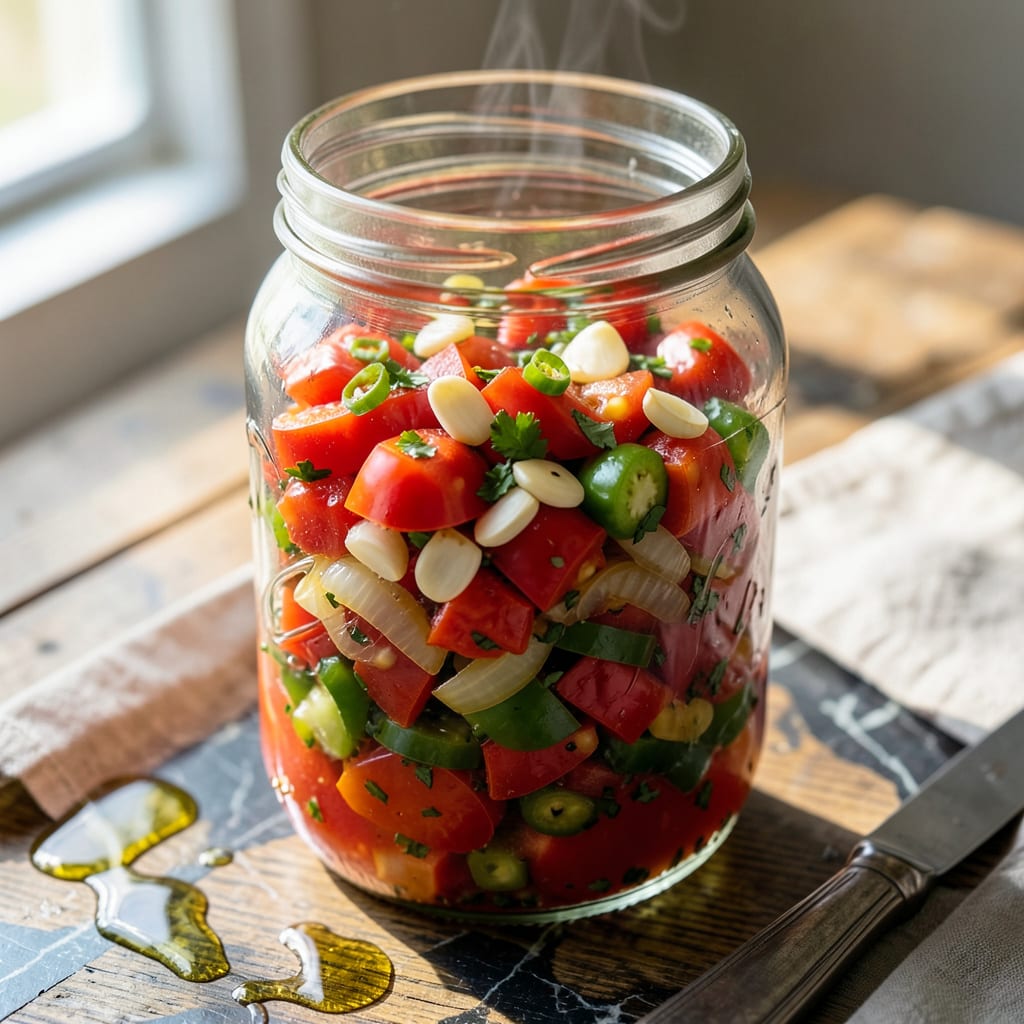
There’s nothing like homemade canned salsa to capture summer’s freshest flavors. This recipe transforms garden tomatoes, peppers, and onions into a vibrant condiment that keeps well for months.
With a simple blend of ingredients and proper canning technique, you’ll create a bold, flavorful salsa that’s perfect for chips, tacos, or any dish needing a zesty kick.
Ingredients for Pioneer Woman Salsa Recipe for Canning
Ten ingredients transform into a bold, garden-fresh salsa for preserving summer flavors in jars.
| Ingredient | Amount | Notes |
|---|---|---|
| Roma Tomatoes 🍅 | 10 lb | Cored, peeled, chopped |
| Yellow Onions 🧅 | 2 whole | Medium, finely diced |
| Green Bell Peppers 🌶️ | 3 whole | Seeded, finely diced |
| Jalapeño Peppers 🌶️ | 4 whole | Seeded, minced for heat control |
| Fresh Cilantro 🌿 | 1 cup | Chopped, packed tightly |
| Garlic Cloves 🧄 | 6 cloves | Minced for even distribution |
| Canning Salt 🧂 | 2 tbsp | Pickling salt preferred |
| White Vinegar 💧 | 1 cup | 5% acidity for preservation |
| Lime Juice 🍋 | ½ cup | Freshly squeezed for brightness |
| Ground Cumin 🌿 | 1 tbsp | Toasted for depth of flavor |
Roma tomatoes are the gold standard here—their low water content and meaty texture make for thicker salsa. Look for firm, deep red tomatoes at peak ripeness from farmers markets or your garden. The onions and peppers should be fresh, not stored for weeks. For the jalapeños, wear gloves and remove seeds for milder heat—keep some in for extra spice. Ball or Kerr canning salt is ideal as it lacks anti-caking agents that cloud brine.
No Romas? Plum tomatoes work equally well. Swap green bells for red or yellow if preferred. Out of cilantro? Fresh flat-leaf parsley at half the amount maintains color, though flavor differs. For vinegar, apple cider (5% acidity) can replace white, but avoid wine vinegar—it’s too mild. Fresh lime juice is non-negotiable; bottled lacks the necessary acidity for safe canning.
This salsa keeps its vibrant color and flavor for 12-18 months in a cool, dark pantry once properly canned. After opening, refrigerate and use within 1 week. Always check for mold or off odors before consuming—safety first with home canning (worth the extra minute).
Why You’ll Love This Recipe
- No-Fuss Chopping: I just toss the Roma tomatoes, onions, and peppers in the food processor—no knife skills required.
- Fresh Garden Taste: The jalapeños and cilantro give it that bright, zesty kick that store-bought salsa can’t touch.
- Pantry Staple: Honestly, I can this salsa in bulk and it’s ready for tacos, chips, or last-minute hostess gifts all year.
- Budget Friendly: A bushel of summer tomatoes turns into jars of salsa for pennies—my wallet actually thanks me.
Step-by-Step Instructions for Pioneer Woman Salsa for Canning
This tested method ensures safe preservation while maintaining vibrant flavor and proper acidity balance.
Step 1: Prepare and Process the Vegetables
Begin by coring, peeling, and chopping the 10 lb Roma Tomatoes. The peeling step is crucial for texture and safety in canning. I score the tomatoes with an X on the bottom, blanch in boiling water for 30 seconds, then shock in ice water—the skins will slip right off.
Finely dice the 2 whole Yellow Onions and 3 whole Green Bell Peppers, ensuring uniform pieces for even cooking. For the 4 whole Jalapeño Peppers, seed and mince them carefully, wearing gloves if sensitive to heat. This prep work creates the base for consistent salsa texture.
Step 2: Combine All Ingredients for Flavor Development
In a large, non-reactive stockpot, combine the prepared tomatoes, diced yellow onions, diced green bell peppers, and minced jalapeño peppers. Add the 1 cup Fresh Cilantro (packed tightly) and 6 cloves Garlic Cloves, both minced for even distribution throughout the mixture.
Stir in the 2 tbsp Canning Salt, 1 cup White Vinegar, 0.5 cup Lime Juice, and 1 tbsp Ground Cumin. The vinegar and lime juice provide the necessary acidity for safe canning, while the cumin adds depth. Bring the mixture to a full boil, then reduce to a simmer for 10 minutes.
Step 3: Cook to Desired Consistency
Simmer the salsa for 20-25 minutes, stirring frequently to prevent sticking. You’ll notice the mixture thicken as the tomatoes break down and release their juices. The salsa is ready when it reaches a consistency slightly thinner than your preference—it will thicken further during canning.
Taste and adjust seasoning if needed, though the measured ingredients should provide perfect balance. The flavors will meld further during the canning process, so avoid over-salting at this stage. The salsa should have a vibrant red color with visible flecks of green peppers and cilantro.
Step 4: Process in Sterilized Jars
Ladle the hot salsa into sterilized pint or quart jars, leaving ½-inch headspace at the top. Remove any air bubbles by running a clean knife or bubble tool around the inside of each jar. Wipe the rims with a clean, damp cloth to ensure a proper seal.
Place the lids and rings on the jars, finger-tightening the rings. Process the jars in a boiling water bath for 15 minutes for pints or 20 minutes for quarts, adjusting for altitude if necessary. The jars are safely preserved when the lids seal completely as they cool.
Pro Tips For Making Pioneer Woman Salsa Recipe For Canning
- Blanch the Tomatoes: Drop Roma tomatoes in boiling water for 30-60 seconds to loosen skins, then shock in ice water. I learned this the hard way—peeling raw tomatoes is a messy nightmare.
- Remove Jalapeño Seeds: Sounds obvious, but I skipped this once and ended up with salsa so spicy it was inedible. Halve the jalapeños and scrape out all seeds and white membranes before dicing.
- Drain the Salsa: After mixing, let it sit in a colander for 10-15 minutes to drain excess liquid—this prevents watery canned salsa. I was skeptical until I tried it.
- Use Fresh Lime: Skip the bottled stuff. Roll a fresh lime on the counter, press hard, then juice—you’ll get twice as much and it actually changes the outcome.
Dietary Considerations for This Dish
Gluten-Free Friendly
This salsa recipe is naturally gluten-free, making it safe for those with celiac disease or gluten sensitivity. All ingredients—Roma tomatoes, peppers, onions, and spices—contain no gluten. Just ensure your cumin and canning salt are pure, without additives.
Vegan and Plant-Based
Perfect for vegan diets, this creation contains no animal products. The acidity from white vinegar and lime juice preserves it without needing preservatives. I love that it’s a vibrant, plant-powered condiment everyone can enjoy.
Low-Calorie Option
A ¼ cup serving contains roughly 15-20 calories, making this a guilt-free way to add flavor. The fresh ingredients keep it light while delivering bold taste. It’s my go-to for healthy snacking. 💪
Sodium Considerations
With 2 tbsp canning salt, the sodium content is moderate. For a low-sodium version, reduce salt by half or use a salt-free seasoning blend. The vinegar and lime juice still ensure safe preservation.
Allergen Information
This recipe is free from the top 8 allergens: no dairy, eggs, nuts, or soy. However, always check labels on spices and vinegar for potential cross-contamination if allergies are severe.
Sugar-Free
Naturally sugar-free, the sweetness comes from ripe tomatoes. No added sugars mean it’s ideal for diabetics or those monitoring sugar intake. The flavors shine without any sweetener. ✨
Nutrition Facts
Frequently Asked Questions
How long does canned salsa last?
Properly canned salsa stays fresh for 12-18 months in a cool, dark pantry. Once opened, refrigerate and use within 1 week for best quality. Always check for mold or off odors before consuming.
Can I adjust the heat level?
Yes! For milder salsa, remove all jalapeño seeds and membranes. For extra heat, keep seeds in or add 1-2 extra peppers. Taste before canning—flavor intensifies slightly over time.
Why do I need to use canning salt?
Canning salt lacks anti-caking agents found in table salt, which can cloud the brine. It also dissolves cleanly, ensuring even distribution and safe preservation. Stick to 2 tbsp for this recipe.
Can I use a different type of tomato?
Roma are ideal, but plum tomatoes work equally well. Avoid high-water varieties like beefsteak—they make salsa too runny. Always use 10 lb total for consistent results.

- BBQ Sausage Recipe Oven: Smoky Depth Without the Grill - September 28, 2026
- BBQ Chicken Bowl Recipe Rice: Smoky Sweetness Over Fluffy Grains - September 28, 2026
- Beef Cutlet Recipe Ideas: Crispy Breaded Patties With Bold Seasonings - September 28, 2026