
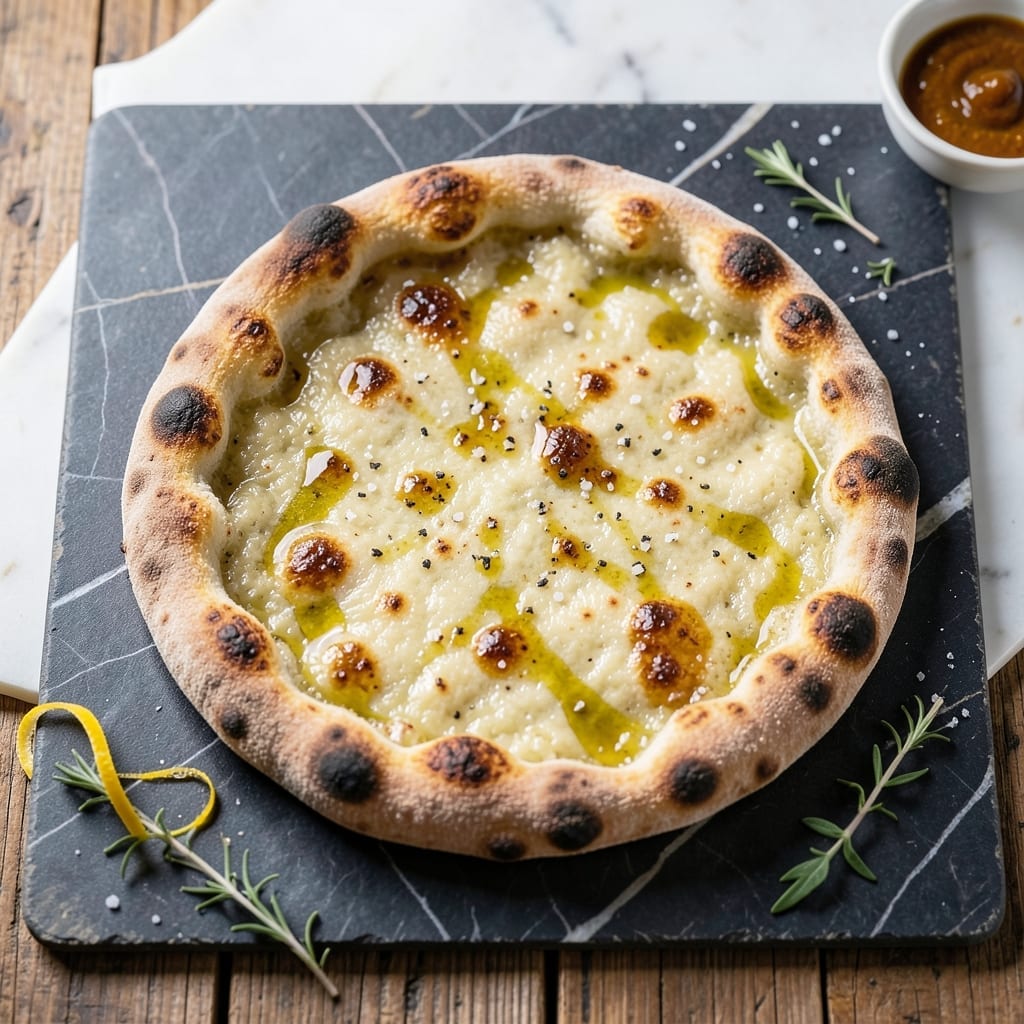
Achieving Neapolitan-style pizza at home starts with the right foundation, and this crust delivers authentic texture and flavor. I developed this method after testing countless variations to perfect the chewy, airy base that defines great pizza.
The secret lies in using 00 flour, which creates a tender yet elastic dough that bakes into a crisp, lightly charred crust. The long fermentation develops complex flavors while maintaining that signature soft interior.
With just four ingredients and a bit of patience, you’ll create a crust that rivals your favorite pizzeria. The dough comes together quickly but needs time to rise for optimal texture and taste.
This recipe scales easily for feeding a crowd or making multiple pizzas. The results are consistently impressive, with a golden, bubbly edge and perfect chew.
Ingredients for Pizza Crust Recipe Using 00 Flour
Four ingredients. One incredible crust. That’s all you need for authentic Neapolitan-style pizza.
| Ingredient | Amount | Notes |
|---|---|---|
| 00 Flour 🌾 | 3 ½ cups | Caputo or Antimo recommended |
| Water 💧 | 1 ½ cups | Room temperature, filtered |
| Active Dry Yeast 🍞 | ¼ oz | One packet, 2 1/4 tsp |
| Sea Salt 🧂 | 2 tsp | Fine grain, Diamond Crystal |
| Extra-Virgin Olive Oil 🫒 | 1 tbsp | For bowl greasing and flavor |
The 00 flour is non-negotiable here—Caputo or Antimo are the gold standard (find them at Eataly or Amazon). Don’t substitute all-purpose; it lacks the fine grind and protein content that gives this dough its signature elasticity. Yeast freshness matters too—check the expiration date. I always keep a vacuum-sealed bag in the freezer to extend its life.
No 00 flour? Bread flour in a pinch, but expect a slightly denser crust. Out of active dry yeast? Instant yeast at the same amount works—just skip the proofing step. Sea salt can be swapped for kosher, but reduce by half since Diamond Crystal is less dense. The olive oil is flexible—any neutral oil works for greasing, though extra-virgin adds depth.
The dough ferments best in a slightly warm spot (like an oven with the light on). Keeps in the fridge for 3 days or freezes for 3 months—just thaw overnight before using. Portion into balls for individual pizzas before freezing.
Why You’ll Love This Recipe
- 5-Minute Mix: It’s just flour, water, yeast, salt, and olive oil—no resting, no fuss, and I’ve got the dough ready before the oven finishes preheating.
- Crisp Yet Chewy: That 00 flour gives me a blistered edge and a light, airy bite that tastes like a Neapolitan pizzeria, not my kitchen.
- Endless Toppings: I’ve done margherita for date night and loaded veggie for the kids—same crust handles everything.
- Stretches Farther: One batch makes two large pies, so I freeze half and pull out a fresh crust any night I’m too tired to think.
Step-by-Step Instructions for Pizza Crust Using 00 Flour
Here’s the method I use to create that perfect chewy, airy Neapolitan-style base at home.
Step 1: Activate the Yeast and Begin the Dough
In a large mixing bowl, dissolve the 0.25 oz Active Dry Yeast in the 1.5 cups Water. I use room temperature water because it activates the yeast without shocking it. Let it sit for 5-10 minutes until the mixture becomes frothy and cloudy—that’s how you know the yeast is alive and active.
Stir in the 3.5 cups 00 Flour and 2 tsp Sea Salt until a shaggy dough forms. I start with a wooden spoon, then switch to my hands once it comes together. The dough will be sticky, but that’s normal at this stage. The high-protein content in 00 flour gives it that elastic quality we’re after.
Step 2: Knead Until Smooth and Elastic
Turn the dough out onto a lightly floured surface. I use a portion of the 00 Flour to prevent sticking. Knead the dough for 8-10 minutes until it becomes smooth, supple, and slightly tacky to the touch. You’ll notice the texture change as the gluten develops.
This is where the magic happens. The 00 flour creates a dough that’s incredibly workable yet strong enough to hold its shape. If the dough feels too sticky, resist the urge to add more flour—just keep kneading. The tackiness is what gives your final crust that perfect chew.
I test the dough by poking it with my finger. If it springs back slowly, it’s ready. If it springs back quickly, knead for another 2-3 minutes.
Step 3: First Rise for Flavor Development
Lightly coat a clean bowl with the 1 tbsp Extra-Virgin Olive Oil. Place the dough in the bowl, turning to coat all sides with the oil. This prevents a skin from forming on the surface as it rises. Cover the bowl with a damp kitchen towel or plastic wrap.
Let the dough rise in a warm, draft-free place for 1 to 2 hours, or until it has doubled in size. I like to place mine near the oven with the light on for a gentle warmth. The dough should look puffy and when you press it gently with your finger, the indentation should remain.
Step 4: Shape and Second Rise
Punch down the risen dough to release the air. Divide it into 4 equal portions for individual pizzas. On a lightly floured surface, shape each portion into a ball. I cup my hand over each ball and rotate it gently to create surface tension—this helps the dough hold its shape during the second rise.
Place the dough balls on a floured surface, cover them with the damp towel, and let them rest for another 30-45 minutes. They’ll puff up slightly but won’t double in size. This second rise relaxes the gluten, making the dough easier to stretch without tearing.
You’ll know they’re ready when they feel soft and pillowy to the touch. At this point, you can either use them immediately or refrigerate for up to 24 hours for a slower fermentation that develops even more flavor.
Step 5: Stretch and Prepare for Toppings
Take one dough ball and place it on a lightly floured surface. Using your fingertips, press down in the center and work your way outward, leaving a slightly thicker border for the crust. I like to pick up the dough and let gravity help stretch it, rotating it as I go.
Stretch it to your desired thickness—I aim for about 10-12 inches in diameter for a classic Neapolitan-style pie. The dough should be thin in the center but with that characteristic puffy edge. If it tears, just patch it with a bit of dough from the edge.
Transfer the stretched dough to a piece of parchment paper or a floured pizza peel. Now it’s ready for your favorite toppings. The beauty of this 00 flour crust is how it puffs up beautifully in a hot oven while staying tender and chewy inside.
Pro Tips For Making Pizza Crust Recipe Using 00 Flour
- Proof the Yeast: Dissolve active dry yeast in warm water (around 105°F) with a pinch of sugar and let it foam for 5-10 minutes. I learned this the hard way—skipping this step can leave your crust dense and lifeless.
- Use Room-Temp Water: Cold water slows fermentation, so use lukewarm (not hot) water to activate the yeast properly. Sounds weird, but it works: your dough will rise more evenly and develop better flavor.
- Don’t Over-Flour: 00 flour is fine and sticky, so resist the urge to dump extra flour on the counter. Too much ruins the texture—just dust lightly and work with slightly tacky dough.
- Rest the Dough: After kneading, let the dough rest at room temperature for at least 2 hours, or overnight in the fridge. My grandmother swore by this, and she was right: the gluten relaxes for a crispier, airier crust.
Common Mistakes When Making This Recipe
Overworking the Dough
Resist the urge to knead beyond 8-10 minutes. Overworking develops too much gluten, making your crust tough instead of chewy. I learned this the hard way with my first few batches.
Skipping the Second Rise
That 30-45 minute rest after shaping is crucial. Skipping it makes the dough fight back when stretching, causing tears. The relaxed gluten also creates better texture.
Cold Ingredients
Always use room temperature water—about 70-75°F. Cold water slows yeast activation, leading to a dense crust. I keep a thermometer in my kitchen for consistency.
Too Much Flour
Adding extra flour when kneading ruins the delicate texture. Trust the process: the dough should be slightly tacky. Use a bench scraper to handle it without sticking. 💡
Rushing Fermentation
The first rise needs 1-2 hours at minimum. Rushing this step sacrifices flavor development. I often let mine go longer for more complex taste.
Poor Oven Temperature
Your home oven needs to be as hot as possible—500°F minimum. Anything lower won’t create that signature puffy edge. Preheat for at least 30 minutes with a pizza stone inside.
Nutrition Facts
Frequently Asked Questions
Why use 00 flour for pizza dough?
It creates a tender, elastic crust that puffs beautifully. The fine grind and lower protein content make it perfect for that classic Neapolitan chew.
Can I use a stand mixer?
Yes! Mix on low for 6-8 minutes with the dough hook. The dough should pull away from the bowl but remain slightly tacky.
How do I store leftover dough?
Refrigerate shaped dough balls in an airtight container for up to 3 days. For longer storage, freeze for up to 3 months.

- Potato Candy Recipe 1933: Vintage Peanut Butter Roll Delight - October 30, 2026
- Potato Chip Cookie Recipe With Pecans: Buttery Crunch Meets Nutty Richness - October 30, 2026
- Potato Patty Recipe No Egg: Crispy Edges Without the Binder - October 30, 2026