
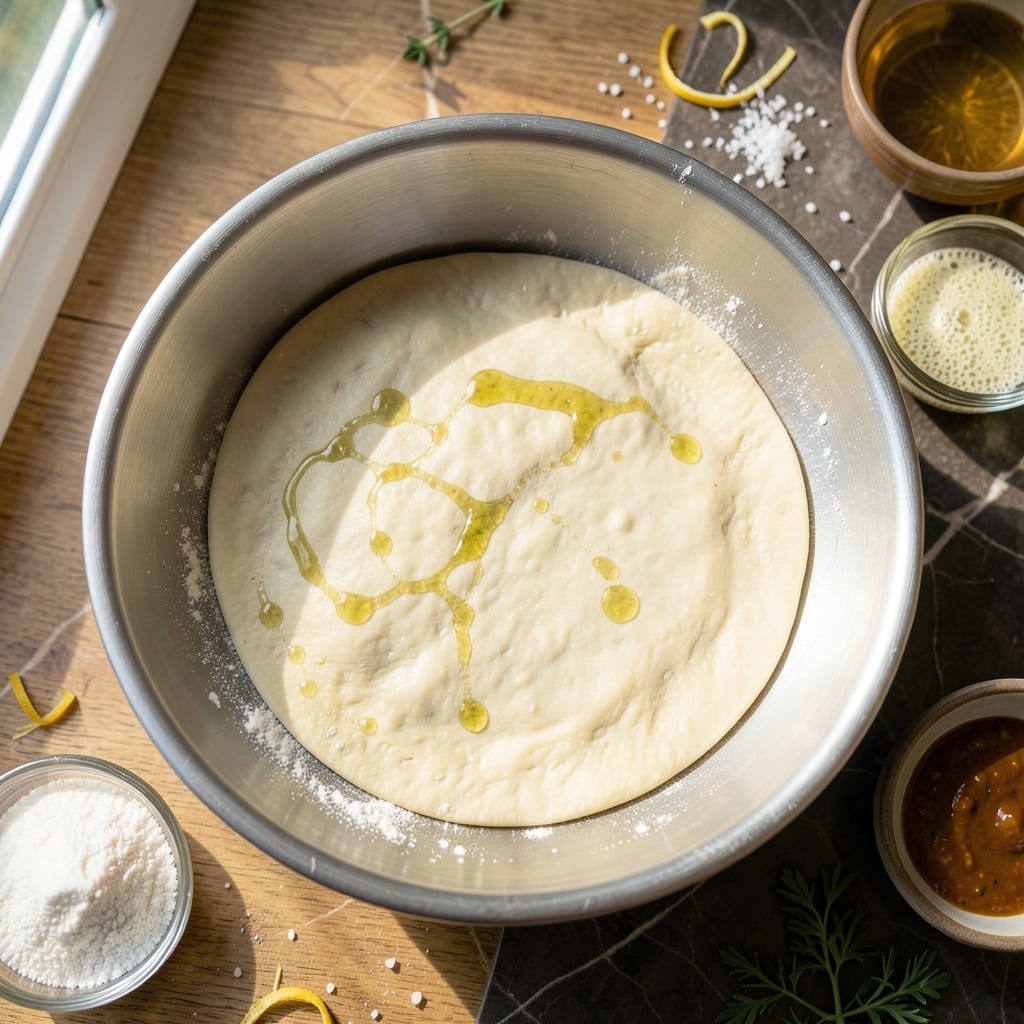
This proven technique delivers chewy crust with those coveted airy bubbles on top. The slow fermentation process develops complex flavors while creating the perfect texture that professional pizzerias achieve.
With precise measurements and simple mixing, you’ll have dough ready for traditional or modern pizza styles. The method ensures consistent results every time, whether you prefer thin or thick crust.
Ingredients for Pizza Dough Recipe Food
Professional-grade ingredients for chewy, airy pizza dough with minimal effort.
| Ingredient | Amount | Notes |
|---|---|---|
| Bread Flour 🌾 | 3 ½ cups | High protein content preferred |
| Lukewarm Water 💧 | 1 ¼ cups | 110°F for optimal yeast activation |
| Active Dry Yeast 🍞 | 2 ¼ tsp | One standard packet |
| Fine Sea Salt 🧂 | 1 ½ tsp | Diamond Crystal preferred |
| Extra-Virgin Olive Oil 🫒 | 2 tbsp | For dough elasticity and flavor |
| Granulated Sugar 🍚 | 1 tsp | Feeds the yeast |
| Semolina Flour 🌾 | ½ cup | For dusting work surface |
| All-Purpose Flour 🌾 | ½ cup | Optional for lighter texture |
| Cornmeal 🌽 | ¼ cup | For pizza peel dusting |
| Honey 🍯 | 1 tsp | Alternative for sugar |
The flour foundation is critical. Bread flour with its higher protein content (12-14%) provides the necessary gluten structure for that coveted chew. King Arthur and Bob’s Red Mill offer excellent options at most supermarkets. For the yeast, verify freshness by checking expiration dates—old yeast won’t achieve proper rise. The olive oil should be high-quality as its flavor comes through in the final crust.
Substitutions require precision. Replace bread flour with all-purpose at a 1:1 ratio, but expect a slightly less chewy texture. Instant yeast can replace active dry at 25% less quantity with no proofing needed. For a whole wheat version, substitute up to 50% of the bread flour with whole wheat flour. Sugar can be replaced with honey or maple syrup at equal amounts, but avoid artificial sweeteners.
Dough keeps well refrigerated for up to 3 days in an oiled, sealed container. For longer storage, freeze portions for 1 month. Bring to room temperature before shaping. Semolina and cornmeal should be stored in airtight containers to prevent moisture absorption, maintaining effectiveness for 6-12 months.
Why You’ll Love This Recipe
- One Bowl Wonder: I mix everything right in the same bowl—no extra dishes, just bread flour, yeast, and a drizzle of olive oil.
- Crispy Chewy Magic: The olive oil and fine sea salt give it that perfect golden crust with a tender bite every time.
- Endless Topping Playground: I’ve used this dough for margherita, BBQ chicken, even dessert pizza with cinnamon sugar.
- Pennywise Feast: Honestly, it costs less than store-bought and makes enough for two pizzas—leftovers reheat like a dream.
Step-by-Step Instructions for Pizza Dough
Master the technique for achieving that ideal chewy texture and airy bubble structure.
Step 1: Activate the Yeast Properly
In a small bowl, combine the 1.25 cups lukewarm water with the 1 tsp granulated sugar or 1 tsp honey. The water temperature should be precisely 110°F—too hot kills the yeast, too cold slows activation. Stir until dissolved.
Sprinkle the 2.25 tsp active dry yeast over the surface and let stand for 5-7 minutes. You’ll know it’s active when the mixture becomes frothy with a creamy foam layer on top. This visual confirmation is critical—if you don’t see this, start over with fresh yeast.
Step 2: Mix and Knead the Dough
In a stand mixer bowl, combine the 3.5 cups bread flour and 1.5 tsp fine sea salt. Make a well in the center and add the yeast mixture and 2 tbsp extra-virgin olive oil. Using the dough hook attachment, mix on low speed until combined.
Increase speed to medium and knead for 8-10 minutes until the dough becomes smooth and elastic. The dough should pull away from the bowl sides and pass the windowpane test: stretch a small piece between your fingers—it should be thin enough to see light through without tearing.
Step 3: First Rise for Flavor Development
Lightly oil a large bowl with some of the extra-virgin olive oil. Transfer the dough to the bowl, turning to coat all sides. Cover with a damp kitchen towel or plastic wrap and let rise in a warm, draft-free location for 1.5-2 hours.
The dough should approximately double in volume. Press your finger gently into the dough—if the indentation remains, it’s ready for the next step. This first rise develops the gluten structure and creates those desirable air pockets for your bubble toppings.
Step 4: Divide and Second Rise
Turn the dough onto a surface lightly dusted with 0.5 cup semolina flour. Divide into 4 equal portions for individual pizzas. Shape each into a tight ball by pulling the edges toward the center and pinching to seal.
Place the balls on a baking sheet dusted with the remaining 0.5 cup all-purpose flour and 0.25 cup cornmeal. Cover loosely and let rest for 30-45 minutes for the second rise. The dough should spring back slowly when pressed—this ensures proper extensibility when stretching.
Step 5: Shape and Prepare for Toppings
Preheat your oven to its highest setting, typically 500-550°F, with a pizza stone or inverted baking sheet inside. Working with one ball at a time, use your fingertips to gently press and stretch the dough from the center outward on a surface dusted with cornmeal.
Stretch to a 12-inch round or your preferred shape, keeping the edges slightly thicker for that characteristic crust. The dough should be thin enough to see your hand through it in places but not so thin it tears. Transfer to a peel dusted with cornmeal and proceed with your toppings.
Pro Tips For Making Pizza Dough Recipe Food
- Proof the Yeast: Always activate your yeast in the lukewarm water with a pinch of sugar for 5-10 minutes until foamy. I learned this the hard way after wasting flour on dough that never rose.
- Use Bread Flour: Skip all-purpose flour—bread flour’s higher protein content gives that chewy, elastic texture pizza dough needs.
- Rest the Dough: Let it rise at room temperature for at least 1-2 hours, or overnight in the fridge for deeper flavor. Sounds weird, but it works.
- Oil the Bowl: Coat the rising bowl with about 1 tablespoon of olive oil to prevent sticking and make the dough easier to handle later.
Dietary Considerations for This Recipe
Gluten-Free Option
Replace bread flour with a 1:1 gluten-free baking blend. I recommend King Arthur’s Measure for Measure for best texture. Add 1 tsp xanthan gum if your blend doesn’t include it. The dough will be stickier, so use parchment paper for shaping. 🌾
Vegan Adaptation
This recipe is naturally vegan as written. For topping ideas, use plant-based cheeses like Miyoko’s or Violife. The dough itself contains no animal products, making it perfect for vegan pizzas.
Low-Carb Alternative
For a keto version, use 1.5 cups almond flour and 1 cup mozzarella cheese with 1 egg and 1 tsp baking powder. The texture differs but satisfies carb cravings. Press between parchment sheets for even thickness.
Dairy-Free Notes
The dough contains no dairy, but watch toppings. Use olive oil instead of butter for brushing crust edges. For cheese substitutes, Daiya or Follow Your Heart melt well on pizzas.
Allergen Awareness
This contains gluten from wheat flour. For nut allergies, ensure your flours are processed in nut-free facilities. Bob’s Red Mill offers dedicated gluten-free and nut-free options. 💡
Sugar-Free Version
Omit granulated sugar entirely—the yeast will still activate with the starches in flour. Or use 1 tsp monk fruit sweetener as a zero-calorie alternative that doesn’t affect blood sugar levels.
Frequently Asked Questions
Can I use all-purpose flour instead of bread flour?
Yes, but expect a slightly less chewy texture. Bread flour has higher protein content which creates more gluten. Use the same amount and add 1 extra tbsp if the dough feels too sticky.
How do I know when the dough has risen enough?
The dough should double in size after 1.5-2 hours. Press your finger gently into it—if the indentation stays, it’s ready. This visual test ensures proper gluten development.
Can I make the dough ahead of time?
Store wrapped dough in the fridge for up to 3 days or freeze for 1 month. Thaw overnight in the fridge before using.
Why didn’t my dough rise properly?
Check your yeast freshness first. Water too hot or cold can kill yeast. Also ensure your kitchen is warm enough—ideal temperature is 75-80°F.
Nutrition Facts

- BBQ Sausage Recipe Oven: Smoky Depth Without the Grill - September 28, 2026
- BBQ Chicken Bowl Recipe Rice: Smoky Sweetness Over Fluffy Grains - September 28, 2026
- Beef Cutlet Recipe Ideas: Crispy Breaded Patties With Bold Seasonings - September 28, 2026