
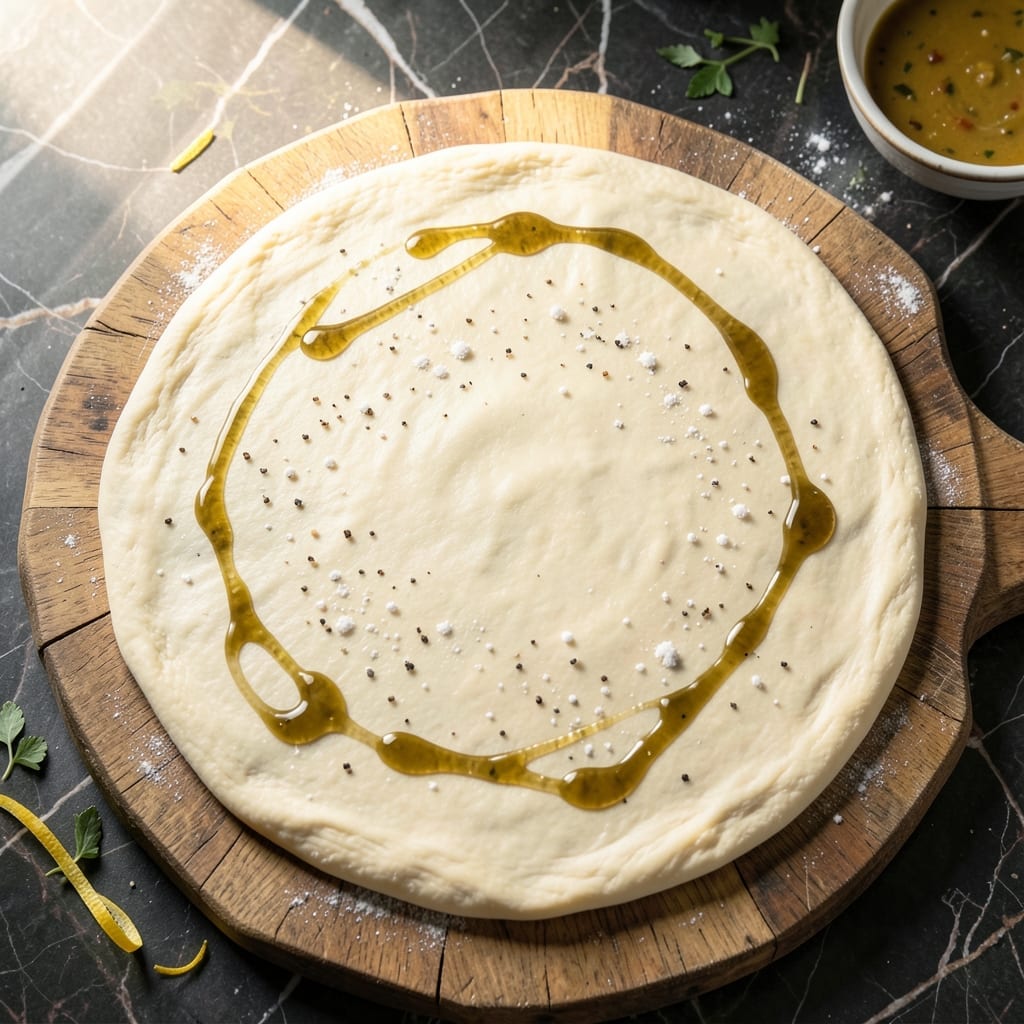
This no-yeast pizza dough proves you don’t need traditional proofing to achieve a fluffy, golden crust. Using simple pantry staples, it comes together in minutes and bakes to perfection.
The secret lies in a combination of baking powder and Greek yogurt, which creates lift and tenderness without waiting for yeast to activate. The result is a light, airy base ready for your favorite toppings.
With just 5 ingredients and no rising time, you can have fresh pizza on the table faster than delivery. The dough handles beautifully and holds up to sauces and cheeses without getting soggy.
Ideal for weeknight dinners or impromptu gatherings, this recipe delivers restaurant-quality results with minimal effort. Here’s how to make it.
Ingredients for Pizza Dough Recipe No Yeast
Five simple pantry staples create this fluffy, no-yeast pizza dough.
| Ingredient | Amount | Notes |
|---|---|---|
| All-Purpose Flour 🌾 | 2 ½ cups | Plus extra for dusting |
| Plain Greek Yogurt 🥛 | 1 cup | Full-fat for best texture |
| Baking Powder 🧂 | 2 tsp | Aluminum-free preferred |
| Salt 🧂 | 1 tsp | Fine sea salt or kosher |
| Olive Oil 🫒 | 2 tbsp | Extra-virgin for richness |
The Greek yogurt is key here—full-fat Fage or Chobani gives the best lift and tenderness. I always grab mine from Whole Foods or Trader Joe’s (their store brand is surprisingly good). Baking powder loses potency over time, so check that yours isn’t expired. If it’s clumping or smells off, toss it. The flour doesn’t need to be fancy—King Arthur all-purpose is my go-to, but store brand works fine.
No Greek yogurt? Regular plain yogurt works in a pinch (strain it in a cheesecloth for 10 minutes to thicken). Swap baking powder for baking soda plus cream of tartar (equal parts) if that’s what you’ve got. The olive oil can be any neutral oil (vegetable, canola), but extra-virgin adds depth. If you’re out of salt, a pinch of garlic powder or Italian seasoning can add flavor.
This dough is best used immediately, but you can refrigerate it for up to 24 hours in an airtight container. It’ll firm up in the cold, so let it sit at room temp for 30 minutes before shaping. Freezing isn’t recommended—it dries out the yogurt.
Why You’ll Love This Recipe
- No Yeast Needed: I can skip the waiting for dough to rise—just mix and roll.
- Creamy Crust: The Greek yogurt gives it this tender, slightly tangy bite.
- Weeknight Hero: Honestly, I toss this together faster than ordering takeout.
- Pantry Staples: All-purpose flour, yogurt, and baking powder—no special shopping trip.
Step-by-Step Instructions for Pizza Dough No Yeast
Here’s the method. Straightforward, tested, works every time.
Step 1: Combine Dry Ingredients
In a large mixing bowl, whisk together the 2.5 cups All-Purpose Flour, 2 tsp Baking Powder, and 1 tsp Salt until evenly distributed. I always use aluminum-free baking powder for a cleaner flavor in this type of dough.
Make sure there are no lumps in the flour mixture. The baking powder needs to be well incorporated to ensure even rising throughout the dough. This step takes less than 1 minute but makes a big difference in texture.
Step 2: Add Wet Ingredients and Mix
Create a well in the center of your dry ingredients. Pour in the 1 cup Plain Greek Yogurt and 2 tbsp Olive Oil. I use full-fat Greek yogurt here—it gives the dough that perfect tender crumb and rich flavor.
Using a wooden spoon or silicone spatula, mix until the ingredients just start to come together. You’ll notice the dough begins to pull away from the sides of the bowl. Don’t overmix at this stage; you just want to incorporate everything.
Step 3: Knead the Dough
Turn the dough out onto a lightly floured surface. I like to use some of the extra all-purpose flour for dusting here. Knead gently for 2-3 minutes until the dough becomes smooth and elastic. You’re not developing gluten like traditional yeast dough, so this is just about bringing everything together.
The dough will be slightly sticky but shouldn’t cling to your hands. If it does, add a small sprinkle of flour. You want it soft and pliable, not tough or dry. The texture should feel similar to playdough when you’re done.
Step 4: Rest the Dough
Form the dough into a ball and place it back in the mixing bowl. Cover with a clean kitchen towel and let it rest at room temperature for 10-15 minutes. This short rest allows the baking powder to activate and the flour to fully hydrate.
You’ll notice the dough becomes slightly puffier and easier to work with after resting. Don’t skip this step—it makes rolling out the dough much simpler and prevents it from springing back when you shape it.
Step 5: Shape and Use Your Dough
Divide the dough into 4 equal portions for personal pizzas or use it all for one large pizza. On a floured surface, roll each portion to your desired thickness. I find this dough works best when rolled ¼-inch thick for a nice, fluffy crust.
Transfer your shaped dough to a parchment-lined baking sheet. Add your toppings and bake as your recipe directs. The beauty of this dough is that it’s ready to use immediately—no rising time needed, which is what makes it so quick and convenient.
Pro Tips For Making Pizza Dough Recipe No Yeast
- Knead Just Enough: Work the dough until it just comes together—overmixing toughens it since there’s no gluten development from yeast to forgive mistakes. I learned this the hard way after my first few batches turned out dense and chewy. —
- Use Full-Fat Yogurt: Skip low-fat versions; the full-fat Greek yogurt adds richness and helps the baking powder create a fluffier texture. Sounds weird, but it works—like a shortcut to a softer crust. —
- Preheat Your Pan: Get your baking sheet or skillet screaming hot before adding the dough—about 5 minutes in a 425°F oven. This mimics the crispness you’d get from a pizza stone, even without yeast. —
- Don’t Drown in Flour: Dust your surface lightly, but resist the urge to add extra flour while shaping. Too much makes the dough dry and crackly instead of tender. My grandmother swore by this, and she was right.
Storing and Reheating This Recipe
Refrigerator Storage
This dough keeps beautifully in the fridge for up to 24 hours in an airtight container. I recommend using a glass container with a tight lid to prevent drying. The cold will firm up the dough slightly, making it easier to handle when you’re ready to use it.
Room Temperature Rest
Before shaping, let refrigerated dough sit at room temperature for 30 minutes. This softens the yogurt and makes the dough more pliable. Skip this step, and you’ll struggle with rolling—it’ll spring right back.
Freezing Not Recommended
Freezing this dough isn’t ideal because it dries out the yogurt, leading to a dense, crumbly texture. If you must freeze, wrap tightly in plastic wrap and use within 1 month, but expect some texture changes.
Reheating Baked Pizzas
To revive leftover pizza, preheat your oven to 375°F and warm slices on a baking sheet for 5-8 minutes. This restores the crust’s fluffiness better than a microwave. For extra crispiness, broil for the last 1-2 minutes. 🔥
Make-Ahead Tip
Mix and knead the dough up to 12 hours ahead, then store it covered in the fridge. This saves time on busy nights while still delivering fresh, fluffy results. Just
Storage Warning
Never leave this dough at room temperature for more than 2 hours—the baking powder will lose its effectiveness. If you’re not using it immediately, refrigerate it right away to maintain quality.
Nutrition Facts
Frequently Asked Questions
Can I use regular yogurt instead of Greek?
Yes, but strain it first. Regular yogurt has more liquid, so drain it in a cheesecloth for 10 minutes to thicken. This prevents a soggy dough.
Why does my dough taste bitter?
Old baking powder is the culprit. Check its expiration date and use aluminum-free for best flavor. Fresh powder ensures a clean, neutral taste.
How thin should I roll the dough?
For a fluffy crust, aim for ¼-inch thickness. Too thin and it crispes like a cracker; too thick and it won’t cook through.
Can I make this dough ahead?
Yes! Mix and knead up to 12 hours ahead, then refrigerate. Let it warm at room temp for 30 minutes before shaping.

- BBQ Sausage Recipe Oven: Smoky Depth Without the Grill - September 28, 2026
- BBQ Chicken Bowl Recipe Rice: Smoky Sweetness Over Fluffy Grains - September 28, 2026
- Beef Cutlet Recipe Ideas: Crispy Breaded Patties With Bold Seasonings - September 28, 2026