
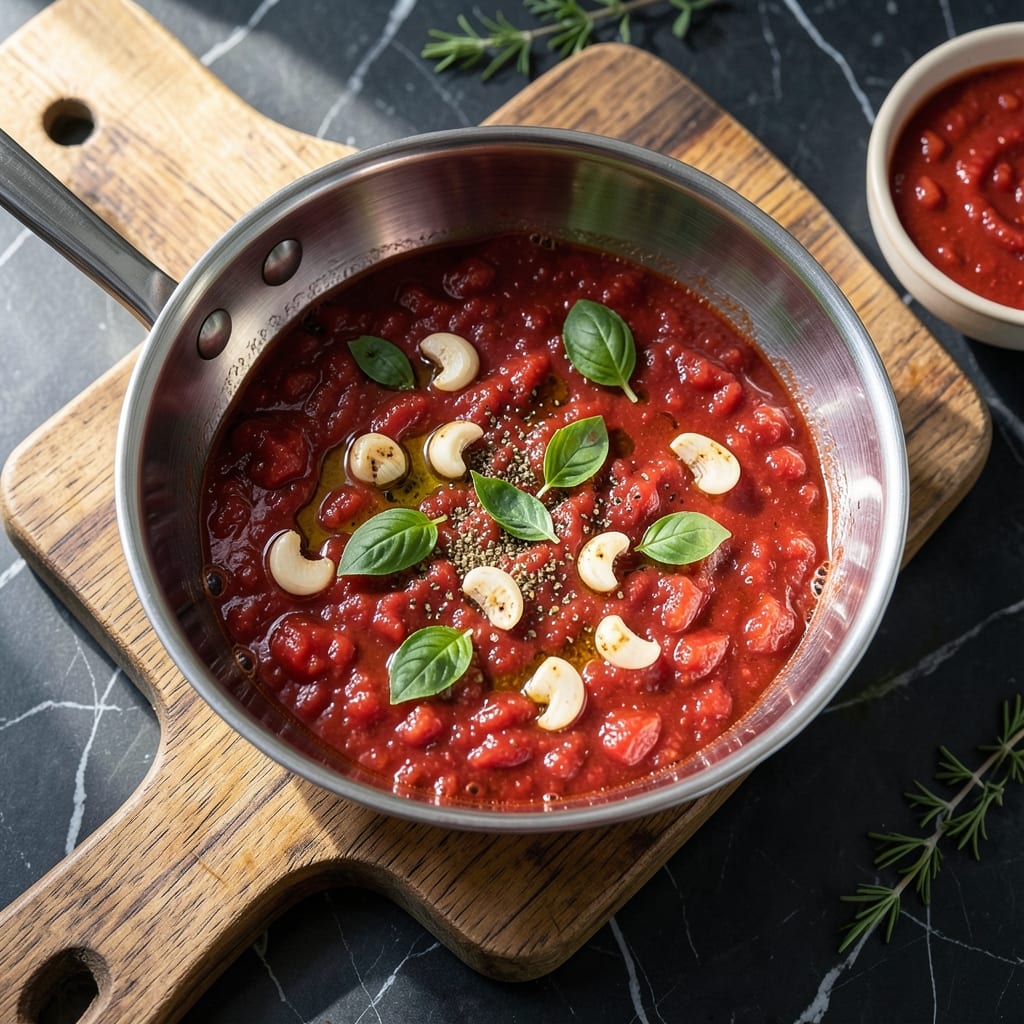
This pizza sauce delivers the authentic Italian flavor that transforms homemade pie from good to exceptional. After years of testing, I’ve perfected a balance of sweet tomatoes, garlic, and herbs that tastes like it came from a Naples pizzeria.
The secret lies in slow-simmering San Marzano tomatoes with fresh basil and a touch of oregano. This method deepens the flavors while keeping the sauce smooth and spreadable. No shortcuts here—just traditional technique with simple ingredients.
What you get is a rich, bold tomato base with the perfect consistency for baking. It clings to dough without making it soggy, and the aromatic herbs shine through in every bite. One taste and you’ll never use store-bought again.
Make a big batch and store it in the fridge for up to a week, or freeze for future pizza nights. This sauce is the foundation of great pizza.
Ingredients for Pizza Sauce Recipe by Food Fusion
Nine simple ingredients create this rich, authentic Italian sauce base for perfect pizza.
| Ingredient | Amount | Notes |
|---|---|---|
| San Marzano Canned Tomatoes 🍅 | 28 oz | Whole, peeled, crushed by hand |
| Extra-Virgin Olive Oil 🫒 | 2 tbsp | High quality, fruity |
| Garlic Cloves 🧄 | 4 cloves | Minced or pressed |
| Fresh Basil Leaves 🌿 | ½ cup | Loosely packed, torn |
| Dried Oregano 🍃 | 1 tsp | Mediterranean variety preferred |
| Salt 🧂 | 1 ½ tsp | Kosher or sea salt |
| Black Pepper 🌶️ | ½ tsp | Freshly ground |
| Sugar 🍚 | 1 tsp | Optional, balances acidity |
| Red Pepper Flakes 🔥 | ½ tsp | Adjust for heat preference |
San Marzano tomatoes are non-negotiable here. Look for the DOP certification on the can for the real deal. Eataly or Italian specialty stores carry them, but most well-stocked supermarkets have a decent version. The olive oil should be something you’d happily drizzle on bread—California Olive Ranch or Cobram Estate are solid, accessible options. Fresh basil makes a noticeable difference, so grab a living plant if you can.
No San Marzano? High-quality canned tomatoes like Muir Glen work in a pinch. Dried basil at one-third the amount can replace fresh, but the flavor won’t be as vibrant. Want more depth? Add a pinch of fennel seeds (very Italian, very traditional). Skip the sugar if you prefer a more tart sauce—the natural sweetness of good tomatoes should balance the acidity.
This sauce keeps 5-7 days in the fridge in an airtight container. For longer storage, freeze in 1-cup portions for up to 3 months. The flavors actually deepen over time, making leftovers taste even better on day two.
Why You’ll Love This Recipe
- 5-Minute Simmer: I just dump the San Marzano tomatoes, garlic, and herbs into a pot and it’s ready before the oven preheats.
- Restaurant-Quality Taste: The San Marzano tomatoes give it that sweet, rich depth you’d pay extra for at a pizzeria.
- Freezer Friendly: I double the batch and freeze in jars—homemade pizza night becomes a last-minute win.
- Pantry Staples Only: Between us, I always have these ingredients on hand, so it’s a no-shopping-required kind of recipe.
Step-by-Step Instructions for Pizza Sauce
This authentic method delivers rich, balanced flavor with minimal effort.
Step 1: Prepare the Tomatoes and Aromatics
Begin by crushing the 28 oz San Marzano Canned Tomatoes by hand directly in the can. This preserves the natural texture better than a food processor. The tomatoes should be broken down but still have some chunkiness.
Mince or press the 4 cloves Garlic Cloves until finely chopped. I prefer pressing as it releases more of the garlic’s natural oils, creating a more robust flavor foundation for the sauce.
Step 2: Sauté the Base for Depth of Flavor
Heat 2 tbsp Extra-Virgin Olive Oil in a medium saucepan over medium heat. When the oil shimmers, add the minced garlic and sauté for 30 seconds until just fragrant but not browned. Browning the garlic can make it bitter, so keep the heat moderate.
Immediately add the crushed tomatoes, 1.5 tsp Salt, 0.5 tsp Black Pepper, 1 tsp Sugar, 1 tsp Dried Oregano, and 0.5 tsp Red Pepper Flakes. Stir well to combine all the ingredients evenly.
Step 3: Simmer to Concentrate the Flavors
Reduce the heat to low and let the sauce simmer uncovered for 20-25 minutes. This slow cooking process allows the flavors to meld together and the sauce to thicken naturally.
Stir occasionally to prevent sticking, especially as the sauce begins to reduce. You’ll notice the color deepen and the texture become more concentrated. The sauce is ready when it coats the back of a spoon but still has a loose consistency.
Step 4: Finish with Fresh Basil for Brightness
Remove the saucepan from heat and stir in the 0.5 cup Fresh Basil Leaves. Tear the leaves by hand rather than chopping to release their aromatic oils. The residual heat from the sauce will wilt the basil slightly, infusing it throughout.
Let the sauce cool to room temperature before using. As it cools, the flavors will continue to develop and harmonize. This step ensures the basil retains its fresh, vibrant character without becoming bitter from prolonged heat.
Taste and adjust seasoning if needed, though the initial measurements should provide perfect balance. The sauce should taste bright, slightly sweet, and richly tomato-forward with a subtle kick from the red pepper flakes.
Pro Tips For Making Pizza Sauce Recipe By Food Fusion
- Simmer Low and Slow: Cook the sauce on low heat for at least 20-25 minutes—rushing it with high heat leaves the San Marzano tomatoes tasting raw and watery.
- Hand-Crush Tomatoes: I learned this the hard way—pulsing them in a blender makes the sauce too thin, but hand-crushing gives that perfect rustic texture Food Fusion’s recipe needs.
- Bloom the Garlic: Sauté the minced garlic in olive oil for just 30 seconds until fragrant, but don’t let it brown—burnt garlic turns the sauce bitter, and no one wants that.
- Add Basil Last: Stir in the fresh basil leaves right at the end of cooking (yes, even if you’re impatient like me)—adding it early dulls the bright, herby flavor that makes this sauce special.
Make-Ahead Tips for This Recipe
Fridge Storage
Let your sauce cool completely at room temperature—this usually takes about 1 hour. Transfer to airtight glass jars (I love Ball Mason jars from New Seasons). It’ll keep beautifully for 5-7 days in the fridge. The flavors actually deepen over time, making it even more delicious.
Freezer Prep
For longer storage, freeze in 1-cup portions using silicone molds or quart-size freezer bags. Lay bags flat to save space—this is a trick I learned from Tom. Label with the date; it’ll stay fresh for up to 3 months. 🌟
Thawing Tips
Move a frozen portion to the fridge 12 hours before use. For a quick thaw, submerge the sealed bag in cold water for 30-45 minutes. Avoid microwaving directly from frozen, as it can create hot spots that affect texture.
Batch Cooking
I always double the recipe—it takes the same effort and gives me extra for future pizza nights. Portion into 1-cup containers for easy grab-and-go use. This way, I’m never without that authentic Italian flavor when the craving hits.
Reviving Leftovers
If the sauce thickens too much in storage, thin it with 2-3 tbsp water and warm over low heat for 5 minutes. Stir in 1 tbsp olive oil to restore brightness. This brings it back to its original vibrant, spreadable consistency.
Garden Fresh Boost
When my basil plants are thriving in the Portland summer, I stir in 2 tbsp fresh leaves after reheating. It’s a simple way to refresh the sauce and remind me why I talk to my plants. Lily thinks it’s magic, and honestly, it kind of is. 🌿
Nutrition Facts
Frequently Asked Questions
Can I use regular canned tomatoes instead of San Marzano?
Yes, but expect slightly less sweetness. Use high-quality canned tomatoes like Muir Glen and add 1 tsp extra sugar to balance acidity. San Marzano’s lower acidity makes them ideal for sauce.
How long does homemade sauce last in the fridge?
Store in airtight containers and it’ll stay fresh for 5-7 days. The flavors deepen over time, making it taste even better on day two.
Can I make this without fresh basil?
Substitute with 1 tsp dried basil added during simmering. Fresh basil brightens the sauce best, but dried works in a pinch.
Why does my sauce taste bitter?
Overcooked garlic or oregano causes bitterness. Sauté garlic only until fragrant (30 seconds) and simmer sauce gently.

- Potato Candy Recipe 1933: Vintage Peanut Butter Roll Delight - October 30, 2026
- Potato Chip Cookie Recipe With Pecans: Buttery Crunch Meets Nutty Richness - October 30, 2026
- Potato Patty Recipe No Egg: Crispy Edges Without the Binder - October 30, 2026