
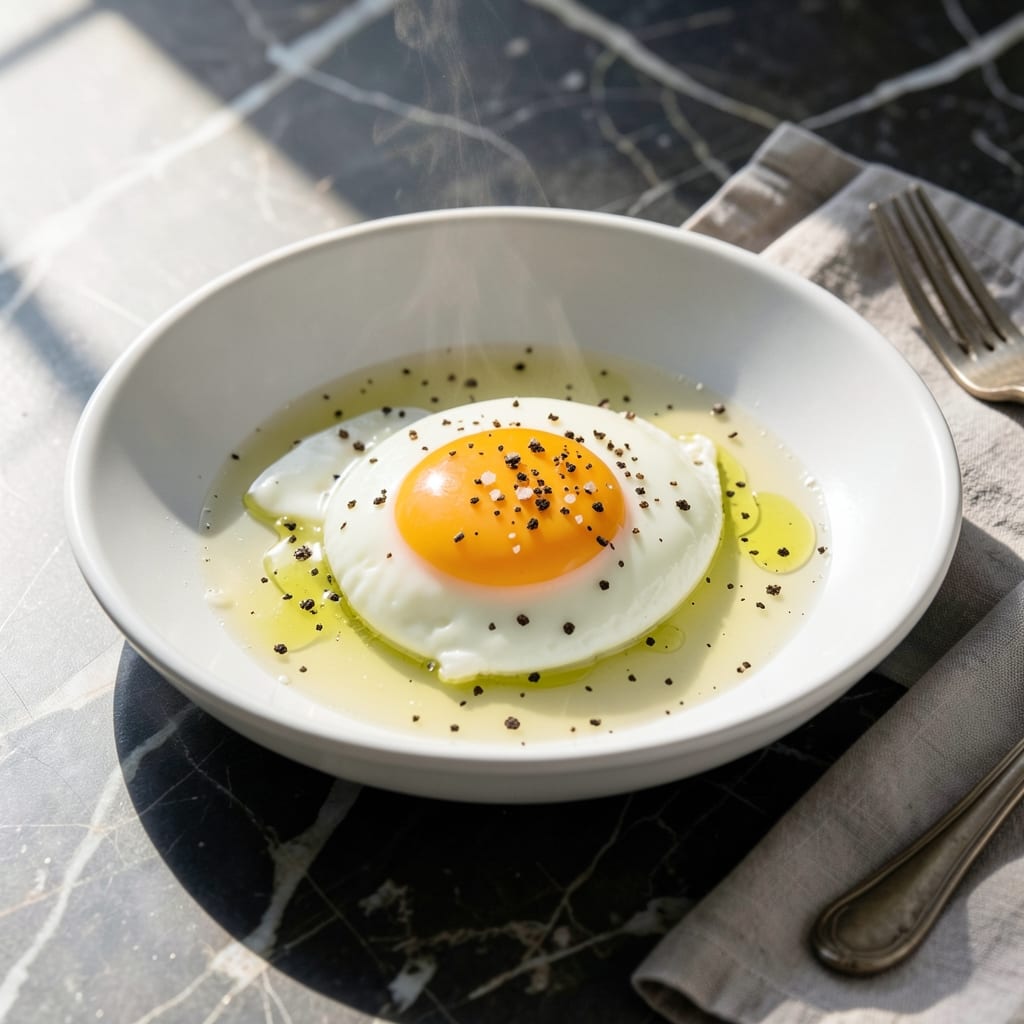
Mastering poached eggs with vinegar delivers perfect results every time. The vinegar helps the whites coagulate faster, preventing those wispy strands that can ruin the presentation.
This method requires just 3 minutes of gentle simmering in water with a splash of vinegar. The key is maintaining water at a bare simmer, not a rolling boil, to keep the eggs intact.
You’ll achieve silky whites with runny yolks that look restaurant-quality. The vinegar doesn’t add flavor—it simply ensures the whites set properly while the yolks stay liquid.
Serve these over toast, salads, or Benedict dishes. The technique is simple but precise, guaranteeing consistent perfect poached eggs.
Ingredients for Poached Egg Recipe Vinegar
Just a few essentials for that restaurant-quality brunch at home every single time.
| Ingredient | Amount | Notes |
|---|---|---|
| Fresh Large Eggs 🥚 | 4 whole | Cold, straight from fridge |
| White Vinegar 💧 | 2 tbsp | Or apple cider vinegar |
| Water 💧 | 8 cups | For poaching, deep pot |
| Kosher Salt 🧂 | 1 tsp | Fine grain preferred |
| Freshly Ground Black Pepper 🌶️ | ½ tsp | To taste for serving |
| Distilled White Vinegar 💧 | 1 tbsp | For water acidification |
| Ice Cubes ❄️ | 6 pieces | For ice bath stop |
| Paper Towels 🧻 | 2 sheets | For draining eggs |
| Slotted Spoon 🥄 | 1 whole | For egg removal |
| Small Ramekin 🍲 | 1 whole | For cracking eggs |
The eggs are the star here—fresh, cold eggs are non-negotiable for tight whites. I grab mine from Whole Foods or the farmers market when I can (the shells are thicker, which helps). The vinegar matters too: white vinegar is classic, but apple cider works in a pinch. Don’t waste good balsamic here—it’s just for coagulation, not flavor. Use a deep pot so the water doesn’t slosh around too much.
No white vinegar? Lemon juice at half the amount does the trick. Want extra-silky whites? Add a pinch of salt to the water before poaching. If your eggs are super fresh (we’re talking same-day fresh), you might skip the vinegar entirely—the whites will hold together anyway. For the ice bath, any ice works, but crushed ice melts faster if you’re in a hurry.
Poached eggs don’t store well—use within 2 days max in the fridge. Reheat gently in warm water for 1 minute. Honestly, they’re best fresh. If you must prep ahead, poach, cool in ice water, then store submerged in cold water. Change the water daily to keep them fresh.
Why You’ll Love This Recipe
- Five-Minute Breakfast: That vinegar swirl in simmering water sets the egg in seconds—no flipping, no fuss.
- Silky Every Time: The white vinegar keeps the whites tight while the yolk stays liquid gold.
- Brunch to Salads: I drop these on avocado toast one day, a grain bowl the next.
- Pantry Staples Only: Eggs, vinegar, water, salt—nothing to buy, nothing to waste.
Step-by-Step Instructions for Poached Eggs With Vinegar
Master this technique and you’ll serve silky, restaurant-quality eggs with perfectly runny yolks every time.
Step 1: Prepare the Poaching Water and Eggs
Fill a deep pot with the 8 cups Water and bring it to a gentle simmer over medium heat. As it heats, add the 1 tbsp Distilled White Vinegar and 1 tsp Kosher Salt, stirring to combine. The vinegar helps the egg whites coagulate faster, while the salt enhances flavor.
Crack each of the 4 whole Fresh Large Eggs into the 1 whole Small Ramekin, one at a time. This step prevents shell fragments and makes it easier to slide the eggs into the water. Keep the eggs cold until ready to poach—they hold their shape better when added to hot water.
Step 2: Create the Vortex and Poach the Eggs
Once the water reaches a gentle simmer (you should see small bubbles breaking the surface, not a rolling boil), use the 1 whole Slotted Spoon to stir the water in a circular motion, creating a whirlpool. This vortex helps the egg whites wrap around the yolks neatly.
Slide one egg from the 1 whole Small Ramekin into the center of the vortex. Repeat with the remaining eggs, spacing them evenly. Cook for 3-4 minutes until the whites are set but the yolks remain runny. Avoid touching or poking the eggs as they cook.
Step 3: Shock in Ice Bath and Drain
Prepare an ice bath in a bowl with the 6 pieces Ice Cubes. Using the 1 whole Slotted Spoon, carefully lift each poached egg from the water and immediately transfer it to the ice bath. This stops the cooking process instantly, preserving the runny yolks.
Let the eggs sit in the ice bath for 1 minute, then transfer them to the 2 sheets Paper Towels to drain. Gently pat the tops with additional paper towels to remove excess moisture, ensuring they hold their shape when plated.
Step 4: Season and Serve Immediately
Place the poached eggs on a serving dish or directly onto prepared toast or salads. Sprinkle with the 0.5 tsp Freshly Ground Black Pepper to taste. The contrast of the warm, runny yolks against the silky whites is what makes this dish extraordinary.
Serve right away—poached eggs are best enjoyed fresh. If you must hold them briefly, place them in a bowl of warm (not hot) water to keep them at serving temperature without overcooking. The 2 tbsp White Vinegar from your ingredients can be reserved for another use, as it’s only needed for the water acidification in this process.
Pro Tips For Making Poached Egg Recipe Vinegar
- Use Room-Temp Eggs: I learned this the hard way—cold eggs straight from the fridge spread too thin in the water. Pull them out 15 minutes before poaching for tighter, prettier whites.
- Swirl the Water: After adding the vinegar, stir the water into a gentle vortex before sliding the egg in. It wraps the white around the yolk like a cozy blanket.
- Skip the Boil: Keep the water at a bare simmer, around 180°F. A rolling boil tears the whites apart—ask me how I know.
- Strain the Egg: Crack each egg into a fine-mesh strainer first to drain the loose white. Sounds fussy, but it prevents those wispy strands that make your plate look messy.
Perfect Pairings for poached egg recipe vinegar
Classic Benedict Style
Serve these over toasted English muffins with Canadian bacon and hollandaise sauce. The tangy vinegar in the poaching water complements the rich sauce perfectly. I use Thomas’ English muffins for their sturdy texture. 💛
Avocado Toast Elevation
Place your egg on smashed avocado spread over sourdough toast. Sprinkle with red pepper flakes and flaky sea salt. The creaminess of avocado pairs beautifully with the runny yolk, creating a brunch masterpiece.
Salad Topper
Transform a simple spinach salad by adding a poached egg. The warm yolk creates a natural dressing when mixed with lemon vinaigrette. I add crispy prosciutto and shaved Parmesan for extra depth.
Ramen Upgrade
Top your miso ramen with a poached egg for an authentic touch. The yolk enriches the broth, while the whites add texture. Add sliced green onions and sesame seeds for garnish. 🔥
Grain Bowl Addition
Place on a quinoa bowl with roasted vegetables and a drizzle of tahini sauce. The egg adds protein and creaminess that ties all the flavors together beautifully.
Brunch Board Star
Create a brunch spread with poached eggs, smoked salmon, capers, and cream cheese on bagels. The vinegar-poached eggs cut through the richness of the other components. ✨
Nutrition Facts
Frequently Asked Questions
Why add vinegar to poaching water?
The acidity helps egg whites coagulate faster, preventing wispy strands. It doesn’t affect flavor when used in small amounts like 1 tbsp.
Can I skip the vinegar?
Yes, but only with very fresh eggs. The whites hold together better when laid recently. For older eggs, vinegar is essential for tight whites.
What if my eggs spread too much?
Your water may be boiling too hard. Use a gentle simmer and create a vortex before adding eggs. Also, use the freshest eggs possible.
How do I know when they’re done?
Cook for 3-4 minutes until whites are set but yolks still jiggle. Lift with a slotted spoon to check the yolk’s wobble.

- Potato Candy Recipe 1933: Vintage Peanut Butter Roll Delight - October 30, 2026
- Potato Chip Cookie Recipe With Pecans: Buttery Crunch Meets Nutty Richness - October 30, 2026
- Potato Patty Recipe No Egg: Crispy Edges Without the Binder - October 30, 2026