
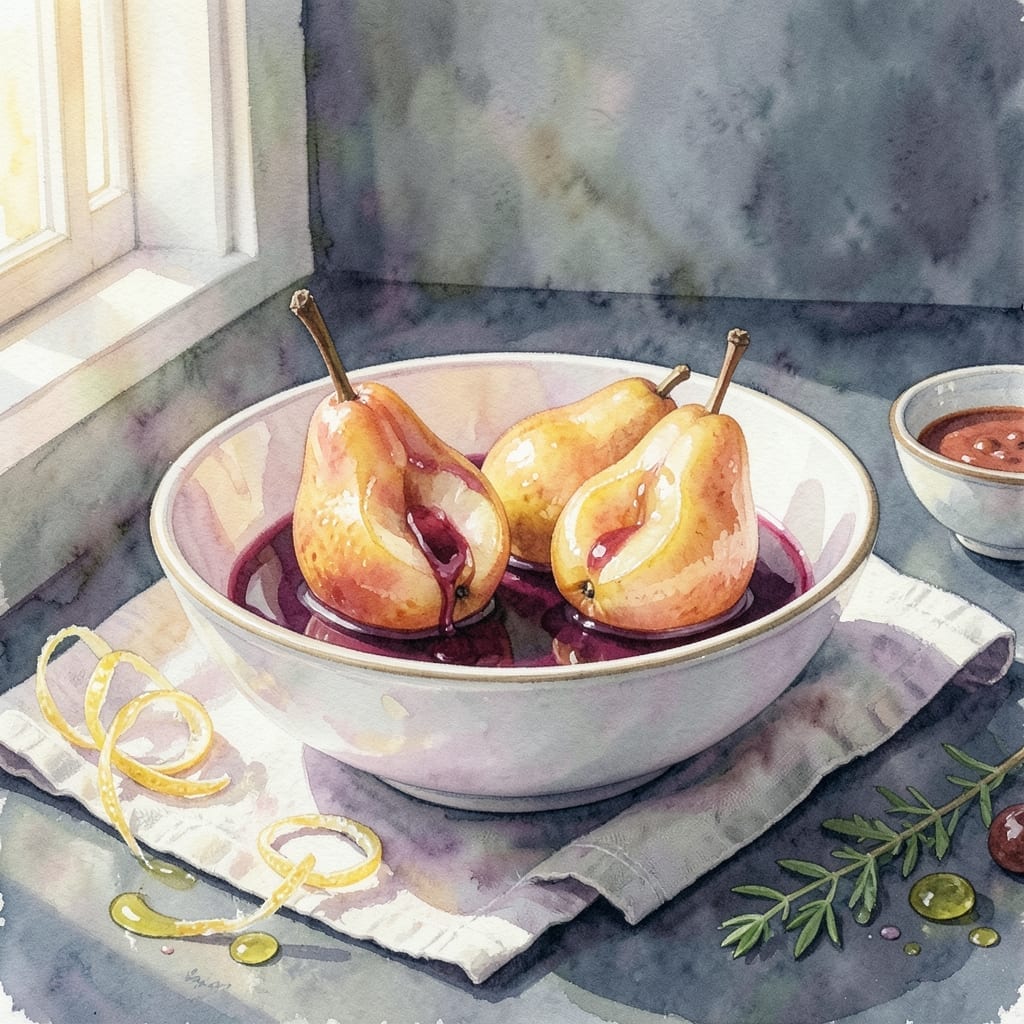
There’s a timeless elegance to pears poached in red wine that transforms a simple dessert into something extraordinary. This method, inspired by classic techniques, coaxes out the natural sweetness of the fruit while infusing it with deep, wine-rich flavors.
The process is surprisingly straightforward: simmer pears in a spiced red wine syrup until tender, then reduce the liquid to a glossy glaze. The result is fruit that’s tender yet holds its shape, bathed in a syrup that’s both rich and subtly spiced.
What emerges is a dessert that feels special enough for company but simple enough for a quiet evening. The pears absorb the wine’s color and complexity, creating a dish that’s as beautiful as it is delicious.
Serve warm or at room temperature with a drizzle of the reduced syrup. Here’s how to make it perfectly every time.
Ingredients for Poached Pears Recipe Barefoot Contessa
Elegant dessert ingredients for pears poached in rich spiced red wine syrup.
| Ingredient | Amount | Notes |
|---|---|---|
| Firm Pears 🍐 | 4 whole | Bosc or Anjou variety preferred |
| Dry Red Wine 🍷 | 2 cups | Cabernet Sauvignon or Merlot |
| Granulated Sugar 🍚 | ¾ cup | For sweetening syrup |
| Water 💧 | 1 cup | To balance wine acidity |
| Lemon Juice 🍋 | 2 tbsp | Freshly squeezed for brightness |
| Lemon Zest 🍋 | 1 tsp | From one lemon |
| Cinnamon Stick 🌿 | 1 whole | For aromatic spice |
| Star Anise Pods ✨ | 2 whole | Optional but recommended |
| Whole Cloves 🌰 | 4 whole | For depth of flavor |
| Vanilla Bean 🌿 | 1 whole | Split and scraped |
| Orange Zest 🍊 | 1 tsp | For citrus complexity |
| Black Peppercorns 🌶️ | ½ tsp | Lightly crushed |
The pears are everything here. Bosc or Anjou hold their shape best during poaching—avoid overripe fruit. For the wine, any bold, dry red works (I reach for Cabernet Sauvignon or Merlot at Trader Joe’s). The spices should be fresh; Penzeys is my go-to for cinnamon sticks and cloves. Vanilla bean makes a difference, but high-quality extract in a pinch works too.
No red wine? Concord grape juice plus a splash of red wine vinegar mimics the depth. Skip the star anise? A pinch of ground allspice adds similar warmth. The sugar can be reduced by one-third if you prefer less sweetness. For a citrus twist, add a strip of orange peel while simmering. The lemon zest is non-negotiable—it brightens the whole dish.
The poached pears keep beautifully in their syrup for up to 5 days refrigerated. The syrup thickens as it cools—reheat gently to loosen. Serve at room temperature for the best texture. Freezing isn’t recommended, as pears turn mushy when thawed.
Why You’ll Love This Recipe
- Hands-Off Cooking: I just simmer the pears in wine and sugar while I set the table—no stirring, no fuss.
- Wine-Infused Magic: The dry red wine soaks into the pears, turning them into a rich, boozy-sweet dessert that feels fancy.
- Dinner Party Star: I serve these warm with mascarpone or cold over ice cream—either way, guests think I slaved for hours.
- Keeps Like a Dream: Honestly, they taste even better the next day, soaking up more of that spiced wine syrup in the fridge.
Step-by-Step Instructions for Poached Pears in Red Wine Syrup
Here’s the method. Straightforward, tested, works every time.
Step 1: Prepare the Poaching Liquid
In a large saucepan, combine the 2 cups Dry Red Wine, 0.75 cup Granulated Sugar, 1 cup Water, 2 tbsp Lemon Juice, 1 tsp Lemon Zest, and 1 tsp Orange Zest. Stir until the sugar dissolves completely over medium heat.
Add the 1 whole Cinnamon Stick, 2 whole Star Anise Pods, 4 whole Whole Cloves, and 0.5 tsp Black Peppercorns. Lightly crush the peppercorns with the flat side of a knife before adding to release their aroma. Split the 1 whole Vanilla Bean lengthwise, scrape the seeds into the pan, then add the pod as well.
Step 2: Peel and Core the Pears
While the liquid heats, prepare the 4 whole Firm Pears. Peel them carefully, leaving the stems intact for an elegant presentation. Use a melon baller or small spoon to remove the cores from the bottom, creating a flat base so they can stand upright in the pan.
This step requires patience—rushing the peeling can leave bits of skin or bruise the fruit. The pears should be smooth and uniform in color when finished. As you work, keep the prepared pears in a bowl of water with a splash of the lemon juice to prevent browning.
Step 3: Poach the Pears Gently
Once the liquid reaches a gentle simmer, carefully add the pears, standing them upright in the pan. The liquid should cover about three-quarters of each pear. If necessary, add a bit more water to achieve this level.
Reduce the heat to maintain a bare simmer and cover the pan. Poach for 20-25 minutes, turning the pears occasionally, until they’re tender when pierced with a knife but still hold their shape. The wine will deepen in color and take on a rich, spiced aroma.
Step 4: Reduce the Syrup and Serve
Using a slotted spoon, transfer the pears to a serving dish, standing them upright. Increase the heat to medium-high and simmer the liquid for 10-15 minutes until it reduces by about half and becomes syrupy. It should coat the back of a spoon and have a glossy sheen.
Strain the syrup through a fine-mesh sieve to remove the whole spices. Pour the warm syrup over the pears, allowing it to pool at the base of the serving dish. Let the pears cool to room temperature before serving, as the flavors meld beautifully as they sit.
Pro Tips For Making Poached Pears Recipe Barefoot Contessa
- Use Bosc Pears: I learned this the hard way—Bosc pears hold their shape better than Anjou or Bartlett when poached in red wine. Their firm texture actually changes the outcome.
- Simmer, Don’t Boil: Keep the wine-sugar mixture at a gentle simmer, or the pears will turn mushy before they absorb the flavor. About 180-190°F is the sweet spot.
- Peel After Poaching: Sounds weird, but it works: Poach them with the peel on, then peel afterward. The fruit stays intact, and you avoid that awkward pre-peeling slipperiness.
- Reduce the Liquid: After removing the pears, boil the poaching liquid for 5-7 minutes to thicken it slightly. Drizzle the syrup back over the pears—it’s a non-negotiable step for depth of flavor.
Common Mistakes When Making This Recipe
Overripe Pears
Using pears that are too soft is a common mistake. Bosc or Anjou work best when slightly firm to the touch. Overripe fruit will turn mushy during poaching and lose its elegant shape. 🍐
Skipping the Peeling Prep
Peel pears carefully and remove cores from the bottom to create a flat base. Rushing this step can leave skin or bruise the fruit, affecting both appearance and texture.
Boiling the Liquid
Never let the poaching liquid boil. A bare simmer at medium-low heat is ideal. Boiling will make the pears tough and can cause the wine to reduce too quickly, altering the flavor.
Insufficient Liquid
Ensure the liquid covers about three-quarters of each pear. If it doesn’t, add more water. Insufficient liquid can lead to uneven cooking and exposed fruit.
Skipping the Syrup Reduction
Reducing the syrup for 10-15 minutes after poaching is crucial. It thickens the liquid into a glossy glaze that complements the pears beautifully. Skipping this step leaves a thin, watery sauce.
Serving Too Soon
Let the pears cool to room temperature before serving. The flavors meld and deepen as they sit, and the syrup thickens slightly, enhancing the dessert’s elegance. 💫
Nutrition Facts
Frequently Asked Questions
What’s the best pear variety for poaching?
Bosc or Anjou pears work best as they hold their shape during cooking. Avoid overripe fruit, as it turns mushy.
Can I use a different type of wine?
Yes, any bold dry red like Merlot or Pinot Noir works. For a non-alcoholic version, try Concord grape juice with a splash of vinegar.
How long can I store the poached pears?
They keep beautifully in their syrup for up to 5 days refrigerated. The syrup thickens as it cools—reheat gently to loosen.
Why do my pears lose color during poaching?
This happens if the liquid isn’t covering three-quarters of the fruit. Ensure proper liquid levels and maintain a gentle simmer, never a boil.

- BBQ Sausage Recipe Oven: Smoky Depth Without the Grill - September 28, 2026
- BBQ Chicken Bowl Recipe Rice: Smoky Sweetness Over Fluffy Grains - September 28, 2026
- Beef Cutlet Recipe Ideas: Crispy Breaded Patties With Bold Seasonings - September 28, 2026