
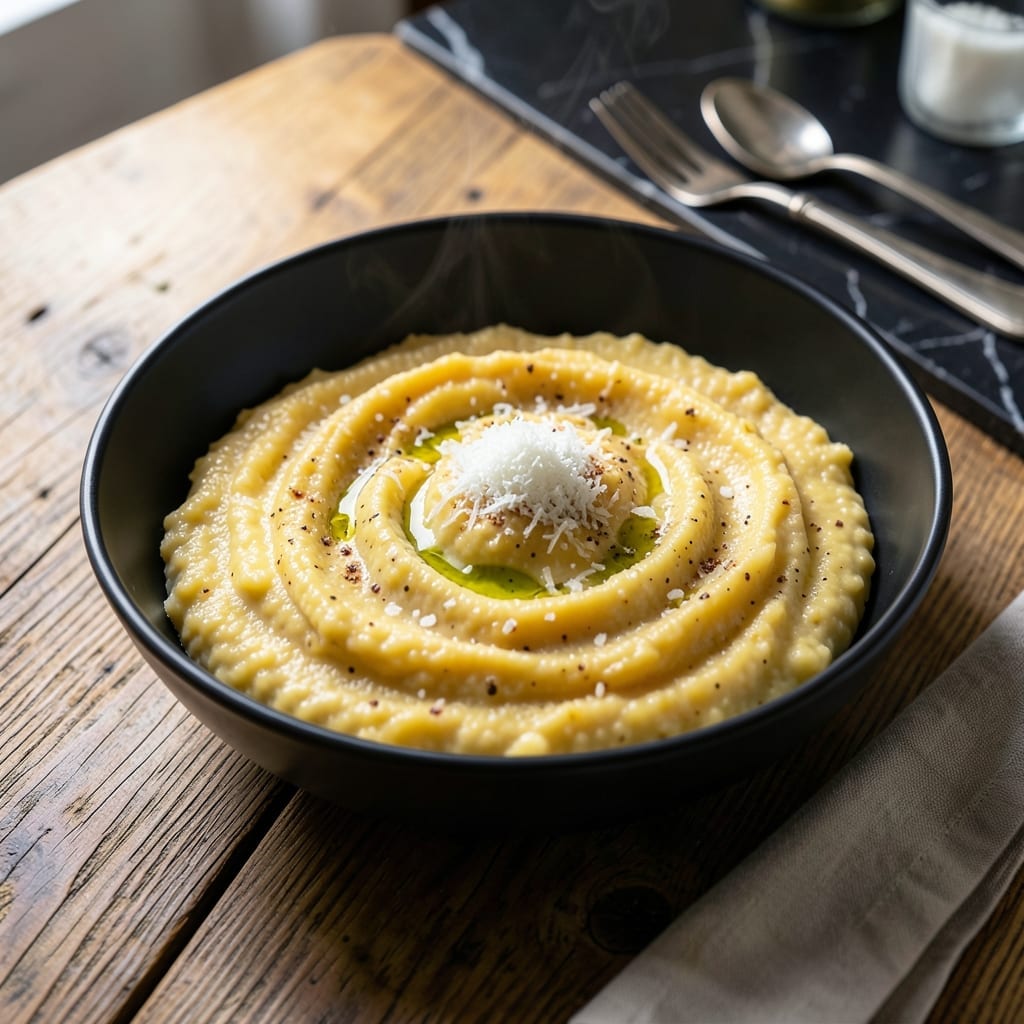
There’s a special warmth in recreating dishes that connect us to our heritage. Standing in my grandmother’s Sicilian kitchen, I learned that the secret to perfect polenta lies in patience and quality ingredients.
This recipe transforms simple cornmeal into a creamy, luxurious dish with the rich depth of Parmesan. The slow cooking process coaxes out the natural sweetness while creating that signature velvety texture.
You’ll find the technique is straightforward yet requires attention to detail. The result is a comforting bowl of polenta that pairs beautifully with any main course or stands proudly on its own.
Whether for a family dinner or a quiet meal, this dish brings Italian tradition to your table with creamy perfection in every bite.
Ingredients for Polenta Recipe with Parmesan Cheese
Quality cornmeal meets rich Parmesan for that authentic Sicilian comfort you remember from Nonna’s kitchen.
| Ingredient | Amount | Notes |
|---|---|---|
| Stone-Ground Cornmeal 🌽 | 1 cup | Fine or medium grind preferred |
| Water 💧 | 4 cups | Divided for cooking process |
| Whole Milk 🥛 | 1 cup | Full-fat for creaminess |
| Unsalted Butter 🧈 | 2 tbsp | For finishing richness |
| Parmesan Cheese 🧀 | ¾ cup | Freshly grated from wedge |
| Kosher Salt 🧂 | 1 tsp | Diamond Crystal preferred |
| Freshly Ground Black Pepper 🌶️ | ½ tsp | Adjust to taste preference |
| Garlic Clove 🧄 | 1 clove | Minced for depth of flavor |
| Extra-Virgin Olive Oil 🫒 | 1 tbsp | For sautéing aromatics |
| Vegetable Stock 🥕 | 1 cup | Low-sodium for control |
| Fresh Thyme Sprigs 🌿 | 2 pieces | Optional for aromatic depth |
| Bay Leaf 🍃 | 1 whole | For subtle background flavor |
The cornmeal is non-negotiable—stone-ground polenta (look for Bob’s Red Mill at Whole Foods or any Italian market) gives you that authentic texture. Parmesan needs to be the real deal: Parmigiano-Reggiano wedge from the specialty cheese counter, not the pre-grated stuff in a green can. The milk matters too—full-fat whole milk (trust me on this) creates that luxurious creaminess you’re after.
Out of vegetable stock? Water with a bouillon cube works in a pinch. No whole milk? Half-and-half plus water at one-to-one keeps the richness. Skipping the thyme and bay leaf is fine, but they add subtle depth. The butter can be swapped for olive oil if you’re avoiding dairy, though it won’t be quite as velvety. For extra richness, stir in a spoonful of mascarpone at the end (worth the splurge).
Polenta thickens as it cools, so serve it right away for that perfect creamy texture. Leftovers? Spread on a tray, chill until firm, then slice and pan-fry for polenta cakes. Keeps in the fridge for 3-4 days or freezes beautifully for 2 months.
Why You’ll Love This Recipe
- I’ll be real: it firms up overnight, so I slice and pan-fry it for crispy edges the next day—zero waste.
- One Pot Wonder: I just stir the stone-ground cornmeal into water and milk, then let it simmer—no fancy techniques, no stress.
- Pure Comfort: That buttery polenta with sharp Parmesan melted in? Honestly, it tastes like a warm hug on a plate.
- Weeknight Hero: Between us, this works as a creamy base for roasted veggies or a quick dinner with just a fried egg on top.
Step-by-Step Instructions for Polenta With Parmesan Cheese
Here’s my method for achieving that luxurious, velvety texture with minimal effort and maximum flavor.
Step 1: Infuse the Liquid Base with Aromatics
In a heavy-bottomed saucepan, heat the 1 tablespoon extra-virgin olive oil over medium heat. Add the minced garlic clove, 2 pieces fresh thyme sprigs, and 1 whole bay leaf, cooking for 1-2 minutes until the garlic becomes translucent and fragrant.
Pour in 3 cups of the water and the 1 cup vegetable stock, then bring to a gentle boil. This aromatic base will infuse the polenta with subtle depth as it cooks. Reduce heat to low and let it simmer while you prepare the remaining ingredients.
Step 2: Whisk in the Stone-Ground Cornmeal
Slowly pour the 1 cup stone-ground cornmeal into the simmering liquid in a thin, steady stream while whisking constantly. This prevents clumping and ensures a smooth texture from the start. The mixture will thicken almost immediately as the cornmeal absorbs the liquid.
Add the remaining 1 cup water and the 1 cup whole milk, whisking vigorously to maintain that silky consistency. I find that using full-fat milk here makes a noticeable difference in the final creaminess. Stir in the 1 teaspoon kosher salt at this stage so the cornmeal absorbs the seasoning evenly.
Step 3: Cook Low and Slow with Constant Attention
Reduce the heat to low and continue cooking the polenta, stirring frequently with a wooden spoon. The mixture will bubble gently—this is where patience pays off. You’ll need to cook it for 25-30 minutes until it reaches your desired thickness.
As it cooks, the polenta will pull away slightly from the sides of the pan and develop a porridge-like consistency. If it becomes too thick before the cornmeal is fully tender, add warm water 1 tablespoon at a time to adjust. The grains should be soft with no gritty texture when tasted.
Step 4: Finish with Butter, Parmesan, and Pepper
Once the polenta is creamy and the cornmeal is tender, remove the pan from heat. Discard the thyme sprigs and bay leaf, then stir in the 2 tablespoons unsalted butter until fully melted. This step enriches the texture and adds a luxurious sheen.
Add the 0.75 cup Parmesan cheese and 0.5 teaspoon freshly ground black pepper, stirring until the cheese is completely incorporated. The result should be a glossy, thick polenta that slowly flows when spooned. Taste and adjust seasoning if needed—this is your final chance to perfect the flavor.
Pro Tips For Making Polenta Recipe With Parmesan Cheese
- Stir Constantly: Polenta thickens fast and sticks even faster—keep a wooden spoon moving in figure-8s, especially once it starts bubbling. I learned this the hard way after scraping burnt cornmeal off the bottom of a pot for 20 minutes.
- Use Freshly Grated Parmesan: Skip the pre-shredded stuff; it’s coated in anti-caking agents that make the sauce grainy. Grate a wedge of good Parmigiano-Reggiano right before stirring it in for that melt-in-your-mouth texture.
- Add Milk Slowly: Pour the whole milk in a thin stream while whisking to prevent lumps. After burning three batches, I finally figured out that dumping it all at once guarantees clumps and a messy texture.
- Finish with Cold Butter: Take the polenta off the heat and stir in cold butter at the end—about 2 tablespoons—for a silky, glossy finish. Sounds weird, but it works and takes 10 seconds.
Make-Ahead Tips for Leftovers
Prep Ahead Strategy
You can cook polenta up to 2 days ahead and store it in the fridge. I make a double batch on Sunday mornings while coffee brews—it’s my quiet ritual. Transfer to an airtight container once cooled to room temperature. 💡
Reheating Technique
To revive, scoop portions into a saucepan with ¼ cup water or milk per cup of polenta. Heat over medium-low, stirring constantly until creamy. The liquid revives the texture beautifully. Add a pat of butter at the end for extra richness.
Freezing for Later
Spread cooled polenta on a parchment-lined tray, cover, and freeze until solid. Then cut into squares and store in freezer bags for up to 2 months. This method prevents clumping and makes portioning easy.
Polenta Cakes Shortcut
For crispy polenta cakes, slice chilled polenta into ½-inch thick rectangles. Pan-fry in olive oil over medium-high for 3-4 minutes per side until golden. My kids love these with marinara for dipping.
This trick turns leftovers into a completely new dish. 🔥
Make-Ahead Flavor Boost
If prepping in advance, under-season slightly—the flavors concentrate as it rests. Stir in extra Parmigiano-Reggiano and butter when reheating to restore the richness Nonna taught me to perfect.
Nutrition Facts
Frequently Asked Questions
What’s the best cornmeal for creamy texture?
Use stone-ground cornmeal for authentic texture. Fine or medium grind works best, like Bob’s Red Mill. Avoid instant—it lacks depth and proper consistency.
Can I use pre-grated Parmesan?
Freshly grated Parmigiano-Reggiano from a wedge is ideal. Pre-grated contains anti-caking agents that affect melt and flavor. For best results, always grate your own.
Why does my polenta get lumpy?
Clumps form when cornmeal isn’t whisked in slowly. Pour in a thin stream while stirring constantly. If lumps appear, whisk vigorously to break them up before cooking.
How do I fix too thick polenta?
Add warm water or milk 1 tablespoon at a time, stirring until smooth. Return to low heat and cook for 2-3 minutes to blend flavors.

- Potato Candy Recipe 1933: Vintage Peanut Butter Roll Delight - October 30, 2026
- Potato Chip Cookie Recipe With Pecans: Buttery Crunch Meets Nutty Richness - October 30, 2026
- Potato Patty Recipe No Egg: Crispy Edges Without the Binder - October 30, 2026