
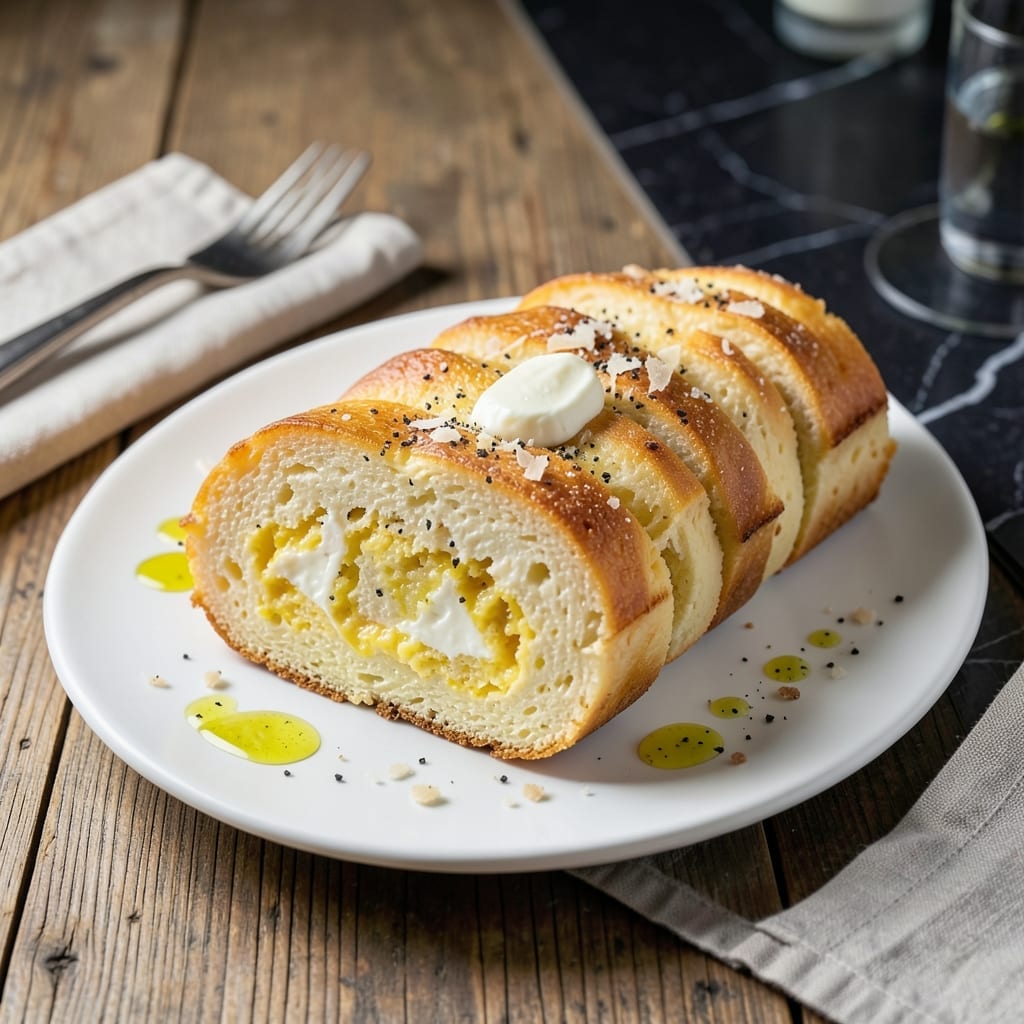
I’ve perfected a baked polenta roll that delivers a golden crust with creamy centers every time. This dish transforms simple cornmeal into an elegant, satisfying meal with minimal effort.
The method involves cooking polenta until thick, then shaping and baking it to achieve a firm exterior while keeping the inside smooth and velvety. A well-seasoned base ensures depth of flavor in each bite.
You’ll love how this recipe balances texture and richness. The contrast between the crisp outer layer and the soft interior makes it a standout dish for any occasion.
Serve warm with your favorite toppings or enjoy it plain. The versatility of this creation makes it a reliable addition to your cooking repertoire.
Ingredients for Polenta Roll Recipe Baked
Transform cornmeal into this elegant dish with just a dozen pantry staples.
| Ingredient | Amount | Notes |
|---|---|---|
| Cornmeal 🌾 | 2 cups | Stone-ground preferred for texture |
| Water 💧 | 6 cups | Or substitute vegetable broth |
| Unsalted Butter 🧈 | ½ cup | Melted, for richness |
| Parmesan Cheese 🧀 | 1 cup | Freshly grated for best flavor |
| Salt 🧂 | 1 ½ tsp | Kosher or sea salt preferred |
| Black Pepper 🌶️ | ½ tsp | Freshly ground preferred |
| Garlic Powder 🧄 | 1 tsp | For depth of flavor |
| Dried Oregano 🍃 | 1 tsp | Mediterranean variety ideal |
| Olive Oil 🫒 | 2 tbsp | For greasing baking sheet |
| Large Eggs 🥚 | 2 whole | Beaten, helps bind polenta |
| Milk 🥛 | 1 cup | Whole milk for creaminess |
| Fresh Parsley 🌿 | ¼ cup | Chopped, for garnish |
The cornmeal is the star here. Stone-ground from Bob’s Red Mill gives that perfect creamy texture—avoid instant polenta, it’s too fine. Parmesan should be Parmigiano-Reggiano from the deli counter (the pre-grated stuff has anti-caking agents that mess with the melt). Most grocery stores carry decent cornmeal, but Whole Foods has the best selection if you want to splurge on organic.
No Parmesan? Pecorino Romano works with a saltier kick (reduce added salt by half). Milk can be swapped for half-and-half if you want it extra rich, or unsweetened almond milk for a lighter version. The eggs are key for binding—no substitute works as well, but you could try 2 tbsp cornstarch mixed with water in a pinch (texture won’t be as firm).
Cooked polenta keeps in the fridge for 3-4 days before shaping. Once baked, rolls are best served warm but reheat nicely in a 350°F oven for 10-15 minutes. Freeze uncooked polenta logs wrapped tight for up to 2 months (thaw before baking).
Why You’ll Love This Recipe
- Five Ingredients: I love that it’s just cornmeal, water, butter, Parmesan, and salt—no shopping stress.
- Crispy Outside, Creamy Inside: The baked edges get golden and firm while the center stays rich and velvety.
- Feeds a Crowd: One batch makes enough to serve at a dinner party or pack for lunches all week.
- Budget Winner: Cornmeal stretches further than pasta, and a little Parmesan goes a long way.
Step-by-Step Instructions for Polenta Roll Baked
Here’s how I create that perfect golden crust with silky centers every time.
Step 1: Cook the Polenta Base to Creamy Perfection
In a large saucepan, bring the 6 cups water to a boil over high heat. Slowly whisk in the 2 cups cornmeal, reducing heat to medium-low immediately to prevent lumps. I keep stirring constantly for the first 2 minutes—this is when it’s most likely to clump.
Cook for 15-20 minutes, stirring every 2-3 minutes, until the mixture thickens to the consistency of mashed potatoes. The polenta should pull away from the sides of the pan slightly when stirred. This is your foundation for the creamy centers we’re after.
Step 2: Enrich the Polenta with Cheese and Seasonings
Remove the pan from heat and stir in the 0.5 cup unsalted butter, 1 cup parmesan cheese, 1.5 tsp salt, 0.5 tsp black pepper, 1 tsp garlic powder, and 1 tsp dried oregano. The butter and parmesan will melt into the hot polenta, creating that rich, velvety texture.
Let it sit for 5 minutes to cool slightly. Then whisk in the 2 whole large eggs and 1 cup milk until fully incorporated. The mixture should be smooth and glossy. Here’s the thing—if it seems too thick at this point, don’t worry. It’ll spread beautifully in the next step.
Step 3: Spread and Shape on the Baking Sheet
Preheat your oven to 375°F. Line a rimmed baking sheet with parchment paper and brush it with 1 tbsp olive oil. Pour the polenta mixture onto the prepared sheet and spread it into an even layer about ½-inch thick using a spatula.
Drizzle the remaining 1 tbsp olive oil over the top and smooth the surface with the back of a spoon. The oil helps create that golden crust we’re promising. Make sure the edges are slightly mounded—they’ll crisp up beautifully in the oven.
Step 4: Bake to Golden, Crispy Perfection
Bake on the middle rack for 25-30 minutes until the edges are deep golden brown and the center is set. You’ll start to smell that wonderful buttery, cheesy aroma about halfway through—this is your cue that it’s working.
For the perfect crust, I broil for 1-2 minutes at the end, watching closely. The top should develop a beautiful golden crust while the inside stays wonderfully creamy. Remove from the oven when the edges look crispy and the center jiggles just slightly.
Step 5: Cool, Slice, and Garnish
Let the polenta roll cool in the pan for 10 minutes. This resting time allows it to set properly so it holds its shape when sliced. Then use a sharp knife to cut into squares or rectangles.
Transfer to a serving platter and garnish with the 0.25 cup fresh parsley. The parsley adds a pop of color and freshness that balances the richness. Serve warm—the contrast between the crispy edges and creamy centers is what makes this dish special.
Pro Tips For Making Polenta Roll Recipe Baked
- Whisk Constantly: I learned this the hard way—polenta thickens fast and will lump if you walk away, even for a second. Keep a whisk in one hand and your phone in the other (yes, it’s that serious).
- Use Coarse Cornmeal: Fine cornmeal turns gluey when baked into rolls. Coarse-ground gives that perfect bite and holds its shape after chilling—skip the instant stuff.
- Salt the Water: Add at least a tablespoon of salt to the boiling water before pouring in the cornmeal. Polenta needs more salt than you think, especially with unsalted butter in the mix.
- Chill Completely: Sounds tedious, but letting the cooked polenta set in the fridge for 2+ hours makes it sliceable without crumbling. I skip this when rushed, and the rolls always fall apart.
Make-Ahead Tips for polenta roll recipe baked
Prep Ahead Strategy
Cook your polenta base up to 2 days ahead and store it in the fridge. This actually improves the texture as the cornmeal fully hydrates. Just bring it to room temperature before adding eggs and milk. I find this makes the mixture even creamier. 💡
Shape Before Baking
Spread and shape the polenta on your baking sheet up to 12 hours ahead. Cover tightly with plastic wrap and refrigerate. When ready to bake, let it sit at room temperature for 30 minutes before putting it in the oven.
Freeze for Later
Form the polenta into a log on parchment paper, wrap tightly, and freeze for up to 2 months. To use, thaw overnight in the fridge, then slice and bake as directed. Add 5-10 minutes to baking time if still cold.
Reheating Tips
Baked rolls keep well in the fridge for 3-4 days. Reheat in a 350°F oven for 10-15 minutes until warmed through. For extra crispiness, broil for the last 2 minutes. Microwaving works but softens the crust.
Portion Control
Cut into individual servings before baking for easy grab-and-go meals. These portions reheat beautifully and are perfect for meal prep. I like to make 1-inch squares for appetizers or 2-inch rectangles for main dishes.
Store cooled portions in airtight containers with parchment between layers to prevent sticking. ✨
Nutrition Facts
Frequently Asked Questions
Can I use instant polenta instead?
No, instant polenta won’t give you the right texture. Stone-ground cornmeal is essential for that perfect creamy interior and firm exterior. Instant versions are too fine and can become gummy when baked.
How do I prevent the roll from cracking while baking?
Let the cooked polenta cool slightly before adding eggs and milk. Spread it evenly on the baking sheet and avoid overworking the mixture. Baking at 375°F ensures even cooking without cracks.
What can I substitute for Parmesan cheese?
Pecorino Romano works well with a saltier kick. Reduce added salt by half if using this alternative. For a dairy-free option, try nutritional yeast for a cheesy flavor, though the texture will differ.
How do I know when it’s done baking?
The edges should be deep golden brown and the center set with a slight jiggle. A toothpick inserted should come out clean. For extra crispiness, broil for 1-2 minutes at the end.

- Potato Candy Recipe 1933: Vintage Peanut Butter Roll Delight - October 30, 2026
- Potato Chip Cookie Recipe With Pecans: Buttery Crunch Meets Nutty Richness - October 30, 2026
- Potato Patty Recipe No Egg: Crispy Edges Without the Binder - October 30, 2026