
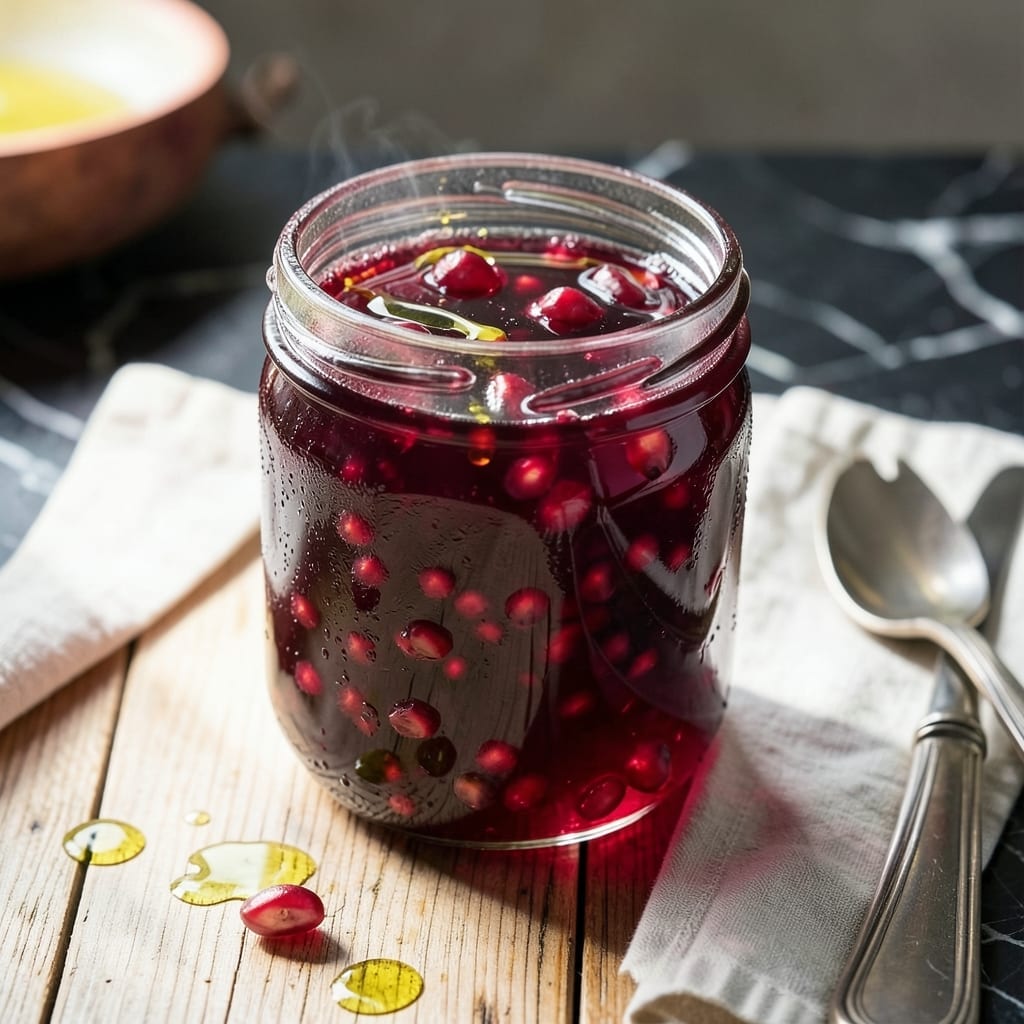
Making pomegranate jelly without pectin is simpler than you might think, and the results are naturally thick with a beautiful gloss.
The secret lies in using the fruit’s natural pectin and a careful cooking process to achieve the perfect consistency. This method preserves the vibrant color and bright flavor of fresh pomegranates.
With just a few ingredients and patience, you’ll create a spread that’s as delicious on toast as it is in pastries.
This jelly keeps well for months, making it a great way to enjoy the taste of pomegranates long after the season ends.
Ingredients for Pomegranate Jelly Recipe Without Pectin
Six simple ingredients transform into a glossy, naturally thick jelly. No pectin required.
| Ingredient | Amount | Notes |
|---|---|---|
| Fresh Pomegranate Juice 🍇 | 4 cups | From about 4-5 pomegranates |
| Granulated Sugar 🥣 | 3 cups | Organic preferred for color |
| Lemon Juice 🍋 | ¼ cup | Freshly squeezed for acidity |
| Pomegranate Seeds 🍇 | ½ cup | For natural pectin boost |
| Water 💧 | ¼ cup | For initial cooking liquid |
| Apple Cider Vinegar 🍏 | 1 tbsp | Balances sweetness subtly |
The pomegranates are everything here. Look for heavy, deep-red fruits with unblemished skins at Whole Foods or a well-stocked farmers market. Seedless varieties don’t exist, so embrace the process (or buy bottled juice from POM Wonderful—100% juice, no added sugar). The seeds you cook with the juice release natural pectin, so don’t skip them. Fresh juice tastes brighter than bottled, but both work in a pinch.
No fresh pomegranates? 100% pomegranate juice from the store is your backup—just reduce the sugar by one-third since bottled juice is often sweeter. Swap lemon juice for lime if that’s what you’ve got. For a different flavor profile, cranberry juice blends work too (though the color will shift). The sugar amount is flexible—adjust based on your juice’s natural sweetness.
Jelly sets as it cools, so don’t rush the process. Stores beautifully in sterilized jars for 12 months unopened, 3 months once opened. Refrigerate after opening. The glossy finish comes from that natural pectin—no artificial thickeners needed.
Why You’ll Love This Recipe
- No-Fuss Cooking: I just simmer the juice, sugar, and lemon until it thickens—no special tools or pectin required.
- Tart & Sweet: The pomegranate juice and lemon give it that bright, tangy kick I crave with just enough sweetness.
- Gift-Worthy Spread: I jar this up for hostess gifts and it’s always the first thing to disappear.
- Pantry Hero: Honestly, it keeps for weeks in the fridge, so I always have a fancy toast topper on hand.
Step-by-Step Instructions for Pomegranate Jelly Without Pectin
This method relies on natural pectin from the seeds to create a perfectly set, glossy jelly.
Step 1: Prepare and Simmer the Pomegranate Mixture
In a large, heavy-bottomed pot, combine the 4 cups Fresh Pomegranate Juice, 0.5 cup Pomegranate Seeds, 0.25 cup Water, and 0.25 cup Lemon Juice. The seeds are crucial here—they release natural pectin as they cook, which will thicken your jelly without store-bought pectin.
Bring the mixture to a gentle boil over medium-high heat, then reduce to medium and let it simmer for 10 minutes. Stir occasionally to prevent sticking. You’ll notice the liquid start to take on a slightly thicker consistency as the pectin activates.
After 10 minutes, remove the pot from heat and let it sit for 5 minutes. This resting period allows the seeds to release even more pectin into the juice.
Step 2: Strain and Add Sugar
Pour the mixture through a fine-mesh strainer into a clean bowl, pressing gently on the seeds with a spoon to extract as much liquid as possible. Discard the seeds—they’ve done their job. You should have roughly 4 cups of strained liquid.
Return the strained juice to the pot and stir in the 3 cups Granulated Sugar and 1 tbsp Apple Cider Vinegar. The vinegar might seem unusual, but it balances the sweetness and enhances the pomegranate’s natural tartness. Stir until the sugar dissolves completely—this ensures even cooking and prevents crystallization.
Step 3: Cook to the Jelly Point
Bring the mixture back to a boil over medium-high heat, then reduce to a rolling boil (a boil that doesn’t stop when stirred). Cook for 20-25 minutes, stirring frequently to prevent scorching. The jelly will thicken gradually—this is where patience pays off.
To test for doneness, use the cold plate method: Place a small amount of jelly on a chilled plate and let it sit for 1 minute. If it wrinkles slightly when pushed with your finger, it’s ready. If it’s still too thin, cook for another 2-3 minutes and retest.
Step 4: Jar and Seal
Once the jelly reaches the desired consistency, remove it from heat and let it cool for 5 minutes. Skim off any foam that rises to the top with a spoon—this keeps your jelly clear and glossy.
Ladle the warm jelly into sterilized jars, leaving ¼-inch headspace at the top. Seal with lids and let cool completely at room temperature. As it cools, the jelly will set further, achieving that perfect, spreadable texture.
The jelly will keep in the refrigerator for up to 3 weeks or can be processed in a water bath for longer storage. Each batch yields about 4 half-pint jars, making it perfect for gifting or enjoying yourself.
Pro Tips For Making Pomegranate Jelly Recipe Without Pectin
- Boil Vigorous and Long: I learned this the hard way—get the juice and sugar to a rolling boil for at least 20-25 minutes, stirring often. This is what thickens it naturally without pectin.
- Strain the Juice: After juicing, run it through a fine-mesh sieve to remove pulp. My first batch had bitter bits that ruined the smooth texture.
- Use Ripe Pomegranates: Sounds obvious, but underripe ones give tart, watery juice that never sets right. I pick the heaviest, deepest red ones I can find.
- Add Lemon Last: Stir in the lemon juice only after the sugar dissolves—adding it too early can slow down the thickening. I was skeptical until I tried it.
Creative Variations of This Dish
Spiced Holiday Version
Add 1 cinnamon stick and 3 whole cloves to the juice mixture during the initial simmer. Remove before straining. These spices create a warm, festive flavor perfect for holiday gifts. I love this with gingerbread cookies. 🌟
Citrus Twist
Replace the lemon juice with orange juice and add 1 tbsp orange zest for a brighter, more complex profile. The citrus oils add a fragrant lift that pairs beautifully with the pomegranate’s natural tartness.
Honey-Sweetened Option
Swap the sugar for 2 cups honey and reduce the apple cider vinegar to ½ tbsp. The honey adds a floral depth, but use raw honey for the best flavor. Note that honey may darken the jelly’s color slightly.
Rosemary-Infused
Add 1 sprig fresh rosemary during the final cooking stage, removing it before jarring. This herbaceous variation is surprisingly delicious with goat cheese on crostini. The piney aroma complements the fruit wonderfully.
Red Wine Depth
Replace 1 cup of juice with dry red wine like Cabernet Sauvignon. Simmer as usual—the wine reduces into a rich, sophisticated spread. This adults-only version is amazing with sharp cheddar. 💫
Reduced Sugar
Cut the sugar to 2 cups and add 1 tsp Pomona’s Universal Pectin (optional) for a lower-sugar version. The tartness of the pomegranate will be more pronounced, which some prefer for savory applications.
Nutrition Facts
Frequently Asked Questions
Why do I need to include pomegranate seeds?
The seeds release natural pectin during cooking, which thickens the jelly without added pectin. They also enhance the flavor and color of your finished product.
Can I use bottled pomegranate juice?
Yes, but reduce the sugar by one-third since bottled juice is often sweeter. For best results, choose 100% juice with no added sugar.
How do I know when the jelly is done?
Use the cold plate test: place a small amount on a chilled plate, let it sit for 1 minute. If it wrinkles when pushed, it’s ready.
Can I make this with less sugar?
Yes, but the jelly may be softer. For a firmer set with less sugar, add 1 tsp Pomona’s Universal Pectin to compensate.

- Potato Chip Cookie Recipe With Pecans: Buttery Crunch Meets Nutty Richness - October 30, 2026
- Potato Patty Recipe No Egg: Crispy Edges Without the Binder - October 30, 2026
- Paula Deen’s Potato Chip Cookies Recipe: Salty-Sweet Crunch in Every Bite - October 30, 2026