
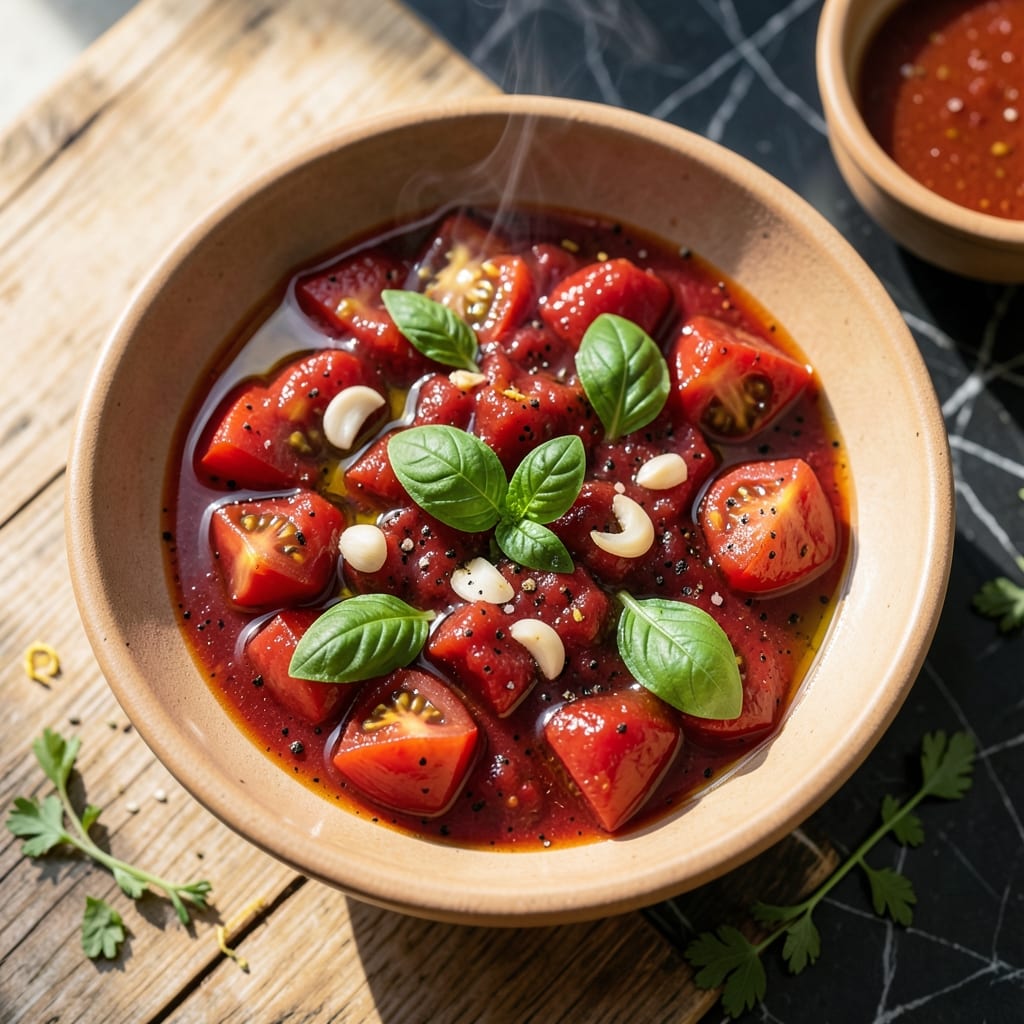
This fresh tomato sauce transforms summer produce into a 15-minute masterpiece with minimal effort. The secret lies in simple ingredients and precise timing.
Ripe tomatoes simmer briefly with garlic, olive oil, and basil to create a bright, tangy sauce that tastes like Italy in a pan. No long cooking required—just fresh flavors at their peak.
You’ll get a vibrant, chunky sauce perfect for pasta, pizza, or dipping. The short cook time preserves the tomatoes’ natural sweetness while developing just enough depth.
Store leftovers in the fridge for up to a week, or freeze for later. This sauce proves great flavor doesn’t need hours of simmering.
Ingredients for Pomodoro Recipe Fresh Tomatoes
Eight simple ingredients capture summer in a vibrant, tangy sauce ready in minutes.
| Ingredient | Amount | Notes |
|---|---|---|
| Ripe Tomatoes 🍅 | 2 lb | Fresh, diced, Roma or vine-ripened |
| Extra-Virgin Olive Oil 🫒 | ¼ cup | High quality, fruity preferred |
| Garlic Cloves 🧄 | 4 cloves | Minced or thinly sliced |
| Fresh Basil Leaves 🌿 | ½ cup | Loosely packed, torn |
| Sea Salt 🧂 | 1 tsp | Fine grain preferred |
| Black Pepper 🌶️ | ½ tsp | Freshly ground |
| Crushed Red Pepper Flakes 🔥 | ¼ tsp | Optional for heat |
| Lemon Juice 🍋 | 1 tbsp | Freshly squeezed for brightness |
The tomatoes are everything here. Farmers market or homegrown ripe tomatoes have the best flavor and texture—avoid underripe or mealy ones. Roma tomatoes work great (less watery), but vine-ripened or heirlooms add sweetness. Whole Foods or local organic markets often have peak-season tomatoes. For the olive oil, California Olive Ranch or Colavita are solid everyday options that won’t break the bank.
No fresh basil? Dried basil at one-third the amount works in a pinch, though the flavor won’t be as bright. Out of tomatoes? Canned San Marzano tomatoes (crushed or whole) can substitute—drain some liquid for a chunkier texture. Want more depth? A pinch of sugar balances acidity if your tomatoes aren’t perfectly sweet. Skip the garlic powder; fresh is essential for that sharp, aromatic bite.
Sauce keeps in the fridge for 5-7 days in an airtight container. Freeze for up to 3 months—portion into ice cube trays for easy single servings. The flavor actually improves after a day as everything melds together (worth the wait).
Why You’ll Love This Recipe
- 20-Minute Meal: I can go from garden to table before the pasta finishes boiling—just chop, simmer, and go.
- Sun-Kissed Taste: The ripe tomatoes and basil explode with that bright, summery flavor that canned sauce just can’t match.
- Pasta Night MVP: It’s my Tuesday hero, but fancy enough for weekend guests when I drizzle a little extra olive oil on top.
- Pantry Friendly: Five ingredients, no fancy tools, and honestly, it tastes better the next day for lunch.
Step-by-Step Instructions for Pomodoro Sauce
This method delivers restaurant-quality results in record time with minimal effort.
Step 1: Prepare the Tomato Base
Start by dicing the 2 lb ripe tomatoes into ½-inch pieces. I prefer Roma or vine-ripened varieties for their meaty texture and balanced acidity. Place them in a large bowl and set aside.
This is the foundation of your sauce, so take care with the prep. The tomatoes should be uniformly diced to ensure even cooking. Don’t worry about removing all the seeds— they’ll add body and flavor to the finished sauce.
Step 2: Sauté the Aromatics
Heat the 0.25 cup extra-virgin olive oil in a large skillet over medium heat. Add the 4 cloves garlic cloves (minced or thinly sliced) and sauté for 30-45 seconds until just fragrant and golden.
Be careful not to let the garlic brown—it can turn bitter quickly. The oil should shimmer but not smoke. If using, add the 0.25 tsp crushed red pepper flakes now to infuse the oil with a subtle heat.
Step 3: Cook the Tomatoes
Add the diced tomatoes to the skillet, along with the 1 tsp sea salt and 0.5 tsp black pepper. Stir well to combine. Increase the heat to medium-high and cook for 8-10 minutes, stirring occasionally.
You’ll notice the tomatoes begin to break down and release their juices. Use a wooden spoon to mash them slightly against the side of the pan—this helps create a thicker, more cohesive sauce. The mixture should reduce by about a third.
Step 4: Finish with Fresh Herbs and Acid
Remove the skillet from heat and stir in the 0.5 cup fresh basil leaves and 1 tbsp lemon juice. The basil should wilt slightly but retain its vibrant green color. The lemon juice brightens the flavors and balances the natural sweetness of the tomatoes.
Taste and adjust seasoning if needed. For a smoother texture, you can pulse the sauce briefly with an immersion blender, but I prefer the rustic chunkiness that this method produces. The sauce should be thick enough to coat the back of a spoon but still loose and fluid.
Pro Tips For Making Pomodoro Recipe Fresh Tomatoes
- Blanch the Tomatoes: Drop tomatoes in boiling water for 30 seconds, then shock in ice water—makes peeling them a breeze and saves you from wrestling with slippery skins.
- Sauté Garlic Low: Cook the garlic on medium-low heat until just golden; I learned this the hard way after burning three batches into bitter, blackened regret.
- Salt the Tomatoes First: Sprinkle sea salt on the diced tomatoes and let them sit for 10 minutes before cooking to draw out excess water and intensify their flavor.
- Tear the Basil: Skip the knife and tear the basil leaves with your hands to prevent bruising and keep that fresh, bright aroma in every bite.
Creative Variations of These Flavors
Spicy Arrabbiata Twist
Add ½ tsp crushed red pepper flakes with the garlic for a fiery kick. This Roman variation brings heat while keeping the bright tomato flavor. I love how the spice builds gradually with each bite. 🌶️
Creamy Tomato Basil
Stir in ¼ cup heavy cream or coconut milk at the end for richness. This creates a velvety sauce perfect for heartier pasta shapes like penne. The cream tempers the acidity beautifully.
Roasted Garlic Version
Replace raw garlic with 6 roasted garlic cloves for a sweeter, deeper flavor. Roast at 400°F for 20 minutes until caramelized. This adds complexity without overwhelming the fresh tomato taste.
Sun-Dried Tomato Boost
Add ¼ cup chopped sun-dried tomatoes with the fresh ones for concentrated umami. Soak them in warm water for 10 minutes first to soften. This works especially well in winter when fresh tomatoes aren’t as flavorful.
Herb Garden Variation
Mix in 2 tbsp fresh oregano or thyme along with the basil. These herbs add earthy notes that pair wonderfully with the tomatoes. I grow these in my windowsill garden for fresh access.
Lemon Zest Enhancement
Add 1 tsp lemon zest with the juice for extra brightness. This small addition makes the flavors pop. It’s my secret for making this sauce taste like it simmered all day. 💛
Nutrition Facts
Frequently Asked Questions
Can I use cherry tomatoes instead of Roma?
Cherry tomatoes work great and add natural sweetness. Halve them first for even cooking. They may release more liquid, so simmer an extra 2-3 minutes to thicken.
Why add lemon juice at the end?
The 1 tbsp lemon juice brightens the sauce and balances tomato acidity. It preserves the fresh flavor without overpowering. Add it off-heat to maintain its vibrant taste.
How do I fix a watery sauce?
Simmer uncovered for an extra 5 minutes to reduce. For quick fixes, mash tomatoes more or add a pinch of sugar to balance liquid. Avoid cornstarch—it dulls fresh flavors.
Can I make this without fresh basil?
Yes, use 1 tbsp dried basil instead. Add it with the tomatoes to rehydrate. The flavor won’t be as bright, but it still works well.

- Potato Candy Recipe 1933: Vintage Peanut Butter Roll Delight - October 30, 2026
- Potato Chip Cookie Recipe With Pecans: Buttery Crunch Meets Nutty Richness - October 30, 2026
- Potato Patty Recipe No Egg: Crispy Edges Without the Binder - October 30, 2026