
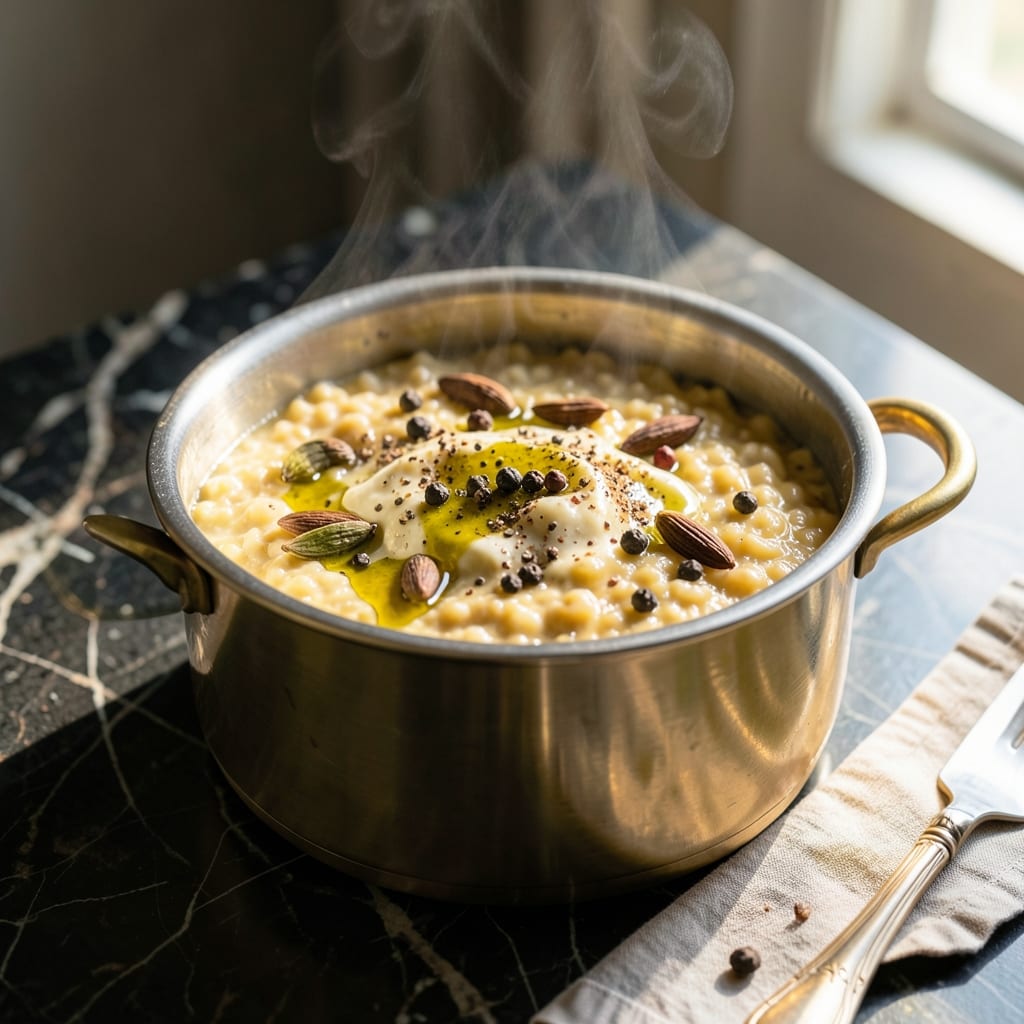
There’s something deeply satisfying about achieving perfect pongal in a pressure cooker—creamy, fragrant, and ready in minutes. This South Indian classic transforms humble rice and moong dal into comfort food at its finest.
The cooker does all the work, infusing every grain with ghee and spices while maintaining that signature soft, porridge-like texture. Traditional flavors shine through with minimal effort, making this ideal for both weeknight dinners and special occasions.
What emerges is a dish that’s rich yet balanced—warm, hearty, and deeply aromatic. The pressure cooker method ensures consistent results every time, with no risk of burning or uneven cooking.
Serve hot with chutney or sambar for the complete experience. Here’s how to make it right.
Ingredients for Pongal Recipe in Cooker
Simple, aromatic ingredients transform into creamy, comforting perfection with minimal effort.
| Ingredient | Amount | Notes |
|---|---|---|
| Moong Dal 🌾 | 1 cup | Split yellow, washed thoroughly |
| Raw Rice 🌾 | 1 cup | Short-grain or sona masoori |
| Ghee 🧈 | ½ cup | Clarified butter, pure preferred |
| Cumin Seeds 🌿 | 2 tsp | Whole, not ground |
| Black Peppercorns 🌶️ | 1 ½ tsp | Whole, lightly crushed |
| Green Cardamom Pods 🌿 | 4 whole | Lightly crushed to release aroma |
| Cashews 🥜 | ¼ cup | Raw, halved or whole |
| Fresh Ginger 🌿 | 1 whole | 1-inch piece, grated |
| Water 💧 | 5 cups | For pressure cooking |
| Salt 🧂 | 1 ½ tsp | Adjust to taste |
| Fresh Cilantro 🌿 | ¼ cup | Chopped, for garnish |
| Curry Leaves 🍃 | 10 pieces | Fresh, optional but recommended |
The moong dal and rice form the heart of this dish. Indian grocery stores carry the best quality—look for bright yellow moong dal without any discoloration. Sona masoori rice gives the authentic texture, but short-grain rice works too. Ghee is non-negotiable for that rich, authentic flavor; Patel Brothers or local South Indian markets are ideal sources for pure, high-quality ghee.
No moong dal? Split pigeon pea lentils (toor dal) can substitute but texture will differ slightly. Out of cashews? Raw peanuts add a nice crunch. Fresh ginger is preferred, but ground ginger at half the amount works in a pinch. Curry leaves might seem niche, but dried curry leaves (rehydrated in warm water) can stand in if fresh aren’t available.
Store dal and rice in airtight containers in a cool, dry place for up to 6 months. Ghee keeps indefinitely at room temperature in a sealed jar. Fresh cilantro and ginger should be used within 1 week—wrap cilantro in damp paper towels to extend freshness.
Why You’ll Love This Recipe
- One-Pot Wonder: I just dump moong dal, rice, and spices in the cooker and let it do the work—no stirring, no fuss.
- Ghee Infused Comfort: That golden ghee with cumin and black peppercorns? It turns simple ingredients into a warm, fragrant hug in a bowl.
- Breakfast or Dinner: Honestly, it’s my go-to for lazy Sunday breakfasts or a quick weeknight dinner when I need something hearty.
- Budget-Friendly Batch: A handful of dal and rice feeds my family for two meals, and the leftovers taste even better the next day.
Step-by-Step Instructions for Pongal in Cooker
Master this pressure cooker technique for consistently perfect results every time.
Step 1: Prepare and Temper the Spices
Heat 0.5 cup Ghee in your pressure cooker over medium heat. Add the 2 tsp Cumin Seeds, 1.5 tsp Black Peppercorns, and 4 whole Green Cardamom Pods and let them sizzle for 1-2 minutes until the cumin turns golden brown and releases its aroma.
Add the 0.25 cup Cashews and sauté for 1 minute until they turn light golden. Stir in the grated 1 whole Fresh Ginger and 10 pieces Curry Leaves and cook for 30 seconds until the ginger loses its raw smell. This tempering builds the flavor foundation.
Step 2: Toast the Lentils and Rice
Add the 1 cup Moong Dal and 1 cup Raw Rice to the pot and stir to coat everything in the spiced ghee. Toast the grains for 2 minutes until they turn slightly translucent at the edges and release a nutty fragrance.
This step removes any raw starch taste and enhances the nutty flavor of the dish. The grains should glisten with the ghee but not brown. Watch carefully to avoid burning.
Step 3: Pressure Cook to Perfection
Pour in the 5 cups Water and add 1.5 tsp Salt. Stir well to combine all the ingredients. Secure the lid on your pressure cooker and cook on high heat until you reach full pressure.
Once pressurized, reduce the heat to medium-low and cook for 5-6 whistles or 15 minutes. Turn off the heat and let the pressure release naturally for 10 minutes before carefully opening the lid. The mixture should be soft and porridge-like with no resistance when stirred.
Step 4: Finish and Garnish
Give the pongal a good stir—it should be thick and creamy. If it appears too thick, add a splash of hot water and mix well. The texture should be smooth like soft porridge, not watery or dry.
Transfer to a serving bowl and garnish with 0.25 cup Fresh Cilantro. The cilantro adds a fresh, bright contrast to the rich, comforting dish. Serve hot with coconut chutney or gotu for a complete meal.
Pro Tips For Making Pongal Recipe In Cooker
- Rinse the Dal: Wash the moong dal thoroughly until the water runs clear—this removes excess starch and prevents a gummy texture in your pongal.
- Toast the Spices: Heat cumin seeds and black peppercorns in ghee for 30 seconds before adding other ingredients; this wakes up their flavors and builds the dish’s aromatic base.
- Maintain Water Ratio: Use a 1:3 ratio of rice and dal to water—any less and it’ll be undercooked; any more and you’ll end up with porridge instead of pongal.
- Mash While Hot: Once cooked, mash the dal and rice mixture immediately while still hot—it blends better and gives that classic smooth yet grainy texture.
Wine and Beer Pairings for pongal recipe in cooker
Light Beer Pairings
I love pairing pongal with a crisp Indian lager like Kingfisher—its clean, refreshing profile cuts through the richness while complementing the dish’s subtle spices. The effervescence also helps cleanse your palate between bites. 🍺
Wheat Beer Options
A German-style hefeweizen with its banana and clove notes adds an interesting contrast to the earthy cumin and cardamom. The slight sweetness balances the dish’s savory depth beautifully.
White Wine Choices
For wine lovers, an off-dry Riesling from Washington state works wonderfully—its stone fruit notes and bright acidity harmonize with the ghee and spices. Chill to 45-50°F for best results.
Red Wine Surprise
While white is traditional, I’ve found a light Pinot Noir with red fruit notes can work surprisingly well. The wine’s earthiness mirrors the cumin and pepper in the dish.
Non-Alcoholic Pairings
For a booze-free option, try sparkling water with lime—the bubbles and citrus lift the dish’s flavors. Or brew a pot of masala chai for a warming, spiced complement.
Nutrition Facts
Frequently Asked Questions
Can I use a rice cooker instead of a pressure cooker?
Yes, but the texture will differ. A rice cooker works for pongal but may require more water (6 cups) and 20-25 minutes of cooking time. Stir occasionally to prevent sticking.
Why did my pongal turn out mushy?
Overcooking or too much water causes mushiness. Stick to 5 cups water for 1 cup rice and dal, and don’t exceed 6 whistles. Natural pressure release helps maintain texture.
Can I make this without ghee?
Ghee is traditional, but you can substitute with butter or neutral oil. However, 2 tbsp oil + 2 tbsp butter works best to mimic ghee’s rich flavor.
How do I store leftovers?
Cool completely, then refrigerate in an airtight container for up to 3 days. Reheat with a splash of water to restore creaminess.

- Potato Chip Cookie Recipe With Pecans: Buttery Crunch Meets Nutty Richness - October 30, 2026
- Potato Patty Recipe No Egg: Crispy Edges Without the Binder - October 30, 2026
- Paula Deen’s Potato Chip Cookies Recipe: Salty-Sweet Crunch in Every Bite - October 30, 2026