
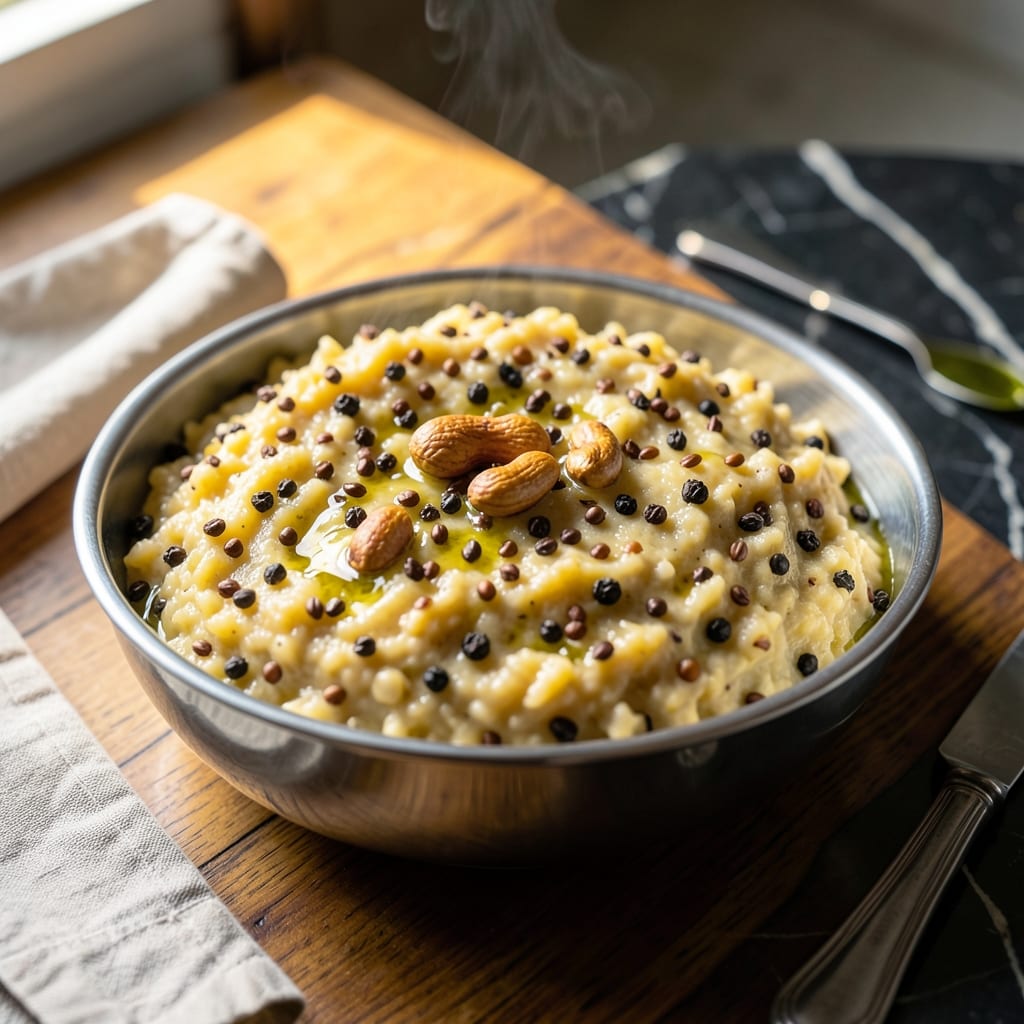
There’s a special warmth in traditional South Indian pongal that’s hard to replicate—until now. This rice cooker method captures that same comfort without the stovetop effort.
By using a rice cooker, the process becomes nearly hands-free, allowing the rice and lentils to cook evenly while the spices infuse perfectly. The result is creamy, fragrant, and just as satisfying as the original.
I’ve refined this approach to ensure the texture stays authentic—soft yet distinct grains of rice and lentils, with golden ghee and cumin adding depth. No stirring, no watching, just set it and forget it.
Perfect for busy mornings or lazy weekends when you crave something hearty. Here’s how to make it effortlessly.
Ingredients for Pongal Recipe in Rice Cooker
Warm spices, creamy rice, and lentils come together for this comforting South Indian dish.
| Ingredient | Amount | Notes |
|---|---|---|
| Raw Rice 🍚 | 1 cup | Short-grain preferred for creaminess |
| Moong Dal 🌾 | ½ cup | Split yellow, washed thoroughly |
| Ghee 🧈 | 3 tbsp | Clarified butter, golden brown |
| Cumin Seeds 🌿 | 1 tsp | Whole, for tempering |
| Black Peppercorns 🌶️ | 1 tsp | Freshly crushed for best flavor |
| Fresh Ginger 🌿 | 1 whole | 1-inch piece, grated |
| Green Chilies 🌶️ | 2 whole | Slit lengthwise, adjust to taste |
| Curry Leaves 🍃 | 10 pieces | Fresh or dried, optional |
| Cashews 🥜 | 2 tbsp | Split or whole, for garnish |
| Water 💧 | 4 cups | For cooking rice and dal |
| Salt 🧂 | 1 tsp | Adjust to taste |
| Asafoetida 🌿 | ¼ tsp | Pinch, optional for depth |
The rice and moong dal are the foundation here. Short-grain rice gives that signature creaminess, while split yellow moong dal cooks soft and quick. Look for both at Indian grocery stores or the international aisle of larger supermarkets. For ghee, Patel Brothers or Haldiram’s brands are reliable—avoid substitutes, as the nutty aroma of ghee is non-negotiable for authentic pongal flavor.
No ghee? Vegan butter works in a pinch, but the taste won’t be the same. Out of moong dal? Split pigeon pea (toor dal) is a decent swap, though it takes longer to cook. Skip the cashews if needed, but don’t omit the cumin—it’s essential for that earthy base. Fresh ginger and green chilies add brightness; dried ginger powder at half the amount can replace fresh if absolutely necessary.
Pongal tastes best fresh but reheats well. Store leftovers in the fridge for up to 3 days—add a splash of water when warming to restore creaminess. Freezer-friendly for 1 month, though texture may firm up. Always use a heavy hand with ghee; it’s the soul of the dish (and worth every calorie).
Why You’ll Love This Recipe
- Hands-Off Cooking: I just dump everything in the rice cooker and let it do the work—no stirring, no watching.
- Ghee Magic: That rich ghee with toasted cumin and peppercorns makes every bite taste like home.
- Breakfast to Dinner: Honestly, it’s my go-to for lazy Sunday brunch or a quick weeknight meal.
- Budget Stretcher: A handful of rice and dal feeds my family for days, and it’s still delicious.
Step-by-Step Instructions for Pongal in Rice Cooker
This hands-free method delivers perfectly creamy pongal with minimal effort and maximum flavor.
Step 1: Prepare and Temper the Ingredients
Rinse the 1 cup Raw Rice and 0.5 cup Moong Dal together under cold water until the water runs clear. Drain thoroughly—excess water will affect the cooking ratio. This step removes starch and ensures a fluffy texture.
In a small bowl, combine 1 tsp Cumin Seeds, 1 tsp Black Peppercorns, grated 1 whole Fresh Ginger, slit 2 whole Green Chilies, and 0.25 tsp Asafoetida. Set aside. These whole spices will bloom in the 3 tbsp Ghee to create the aromatic base of your dish.
Step 2: Temper the Spices in Ghee
Turn your rice cooker to the sauté or quick cook setting. Add all the 3 tbsp Ghee and let it melt and heat until it shimmers slightly. Add the 2 tbsp Cashews and fry for 1-2 minutes until they turn light golden brown.
Immediately add the prepared spice mix and 10 pieces Curry Leaves. Sauté for 30-45 seconds until the cumin seeds sizzle and the curry leaves become crisp. This tempering step infuses the ghee with deep, aromatic flavors that define pongal.
Step 3: Add Rice, Dal, and Water
Add the drained 1 cup Raw Rice and 0.5 cup Moong Dal to the rice cooker. Stir gently to coat the grains in the spiced ghee mixture. This coating ensures every bite carries the rich, tempered flavors.
Pour in all 4 cups Water and add the 1 tsp Salt. Stir once to distribute the ingredients evenly. Do not stir again once cooking begins to avoid breaking the grains. The water should cover the rice and dal by about 1 inch.
Step 4: Cook Until Soft and Creamy
Secure the rice cooker lid and set it to the standard white rice setting. Allow it to cook undisturbed for the full cycle, which typically takes 25-30 minutes. The rice cooker will automatically switch to keep-warm mode once done.
Let the pongal sit in the cooker on the keep-warm setting for an additional 10 minutes. This resting time allows the Raw Rice and Moong Dal to absorb any remaining liquid, resulting in a creamy, porridge-like consistency that defines a perfect pongal.
Step 5: Fluff and Serve
After resting, open the lid and gently fluff the pongal with a fork or spoon. The texture should be smooth and thick, with the grains of rice and dal soft and well-cooked. The ghee will have been absorbed, creating a rich, cohesive dish.
Serve hot, garnished with any remaining cashews and a drizzle of ghee if desired. Each serving should be creamy, fragrant, and comforting, with the warm spices and creamy dal complementing the soft rice perfectly.
Pro Tips For Making Pongal Recipe In Rice Cooker
- Rinse the Dal: Soak moong dal for 10 minutes before cooking—it softens faster and prevents that weird raw taste I used to get.
- Toast the Spices: Heat cumin and peppercorns in ghee for 30 seconds before adding rice and dal; it wakes up the flavors like nothing else.
- Skip the Overflow: Never fill the rice cooker past the halfway mark—moong dal expands and you’ll be cleaning up a mess like I did my first three tries.
- Use Extra Ghee: Add 1 extra tablespoon of ghee at the end and let it sit covered for 5 minutes—it ties everything together without making it greasy.
Serving Suggestions for This Dish
Traditional Pairings
Serve pongal with coconut chutney for a classic South Indian combination—the cool, creamy chutney balances the warm spices beautifully. I also love pairing it with sambar, a tangy lentil-based vegetable stew that adds a flavorful contrast. 💛
Fresh Accompaniments
A simple side of cucumber raita with yogurt, grated cucumber, and a pinch of cumin brings a refreshing coolness. For crunch, add pappadums or banana chips—their crisp texture contrasts perfectly with the creamy pongal.
Beverage Suggestions
A hot cup of filter coffee or chai enhances the comfort factor, especially for breakfast. For a lighter option, mango lassi offers a sweet, creamy complement that pairs wonderfully with the savory flavors. 🍵
Garnish Ideas
Just before serving, garnish with fresh cilantro for brightness or a squeeze of lemon juice for tang. A drizzle of extra ghee and a sprinkle of roasted cashews add richness and crunch to every bite.
Serving Style
Pongal is traditionally served in a banana leaf or a wide bowl to highlight its creamy texture. For a festive touch, shape it into small mounds and top each with a cashew and a curry leaf. This presentation makes it as visually appealing as it is delicious.
Nutrition Facts
Frequently Asked Questions
Can I use a different type of rice?
Short-grain rice works best for creaminess, but basmati can be used in a pinch. Reduce water to 3.5 cups since basmati absorbs less. The texture will be less mushy but still flavorful.
Why is my pongal too watery?
This usually means too much water was used. For a thicker consistency, cook uncovered on the warm setting for 5-10 minutes to evaporate excess liquid. Stir occasionally to prevent sticking.
Can I make this vegan?
Yes! Simply replace ghee with coconut oil or vegan butter. The flavor will differ slightly but still be delicious. Add a pinch of turmeric for color if desired.
How do I store leftovers?
Keep in an airtight container in the fridge for up to 3 days. Reheat with a splash of water to restore creaminess. Avoid freezing as it can make the texture grainy.

- Potato Candy Recipe 1933: Vintage Peanut Butter Roll Delight - October 30, 2026
- Potato Chip Cookie Recipe With Pecans: Buttery Crunch Meets Nutty Richness - October 30, 2026
- Potato Patty Recipe No Egg: Crispy Edges Without the Binder - October 30, 2026