
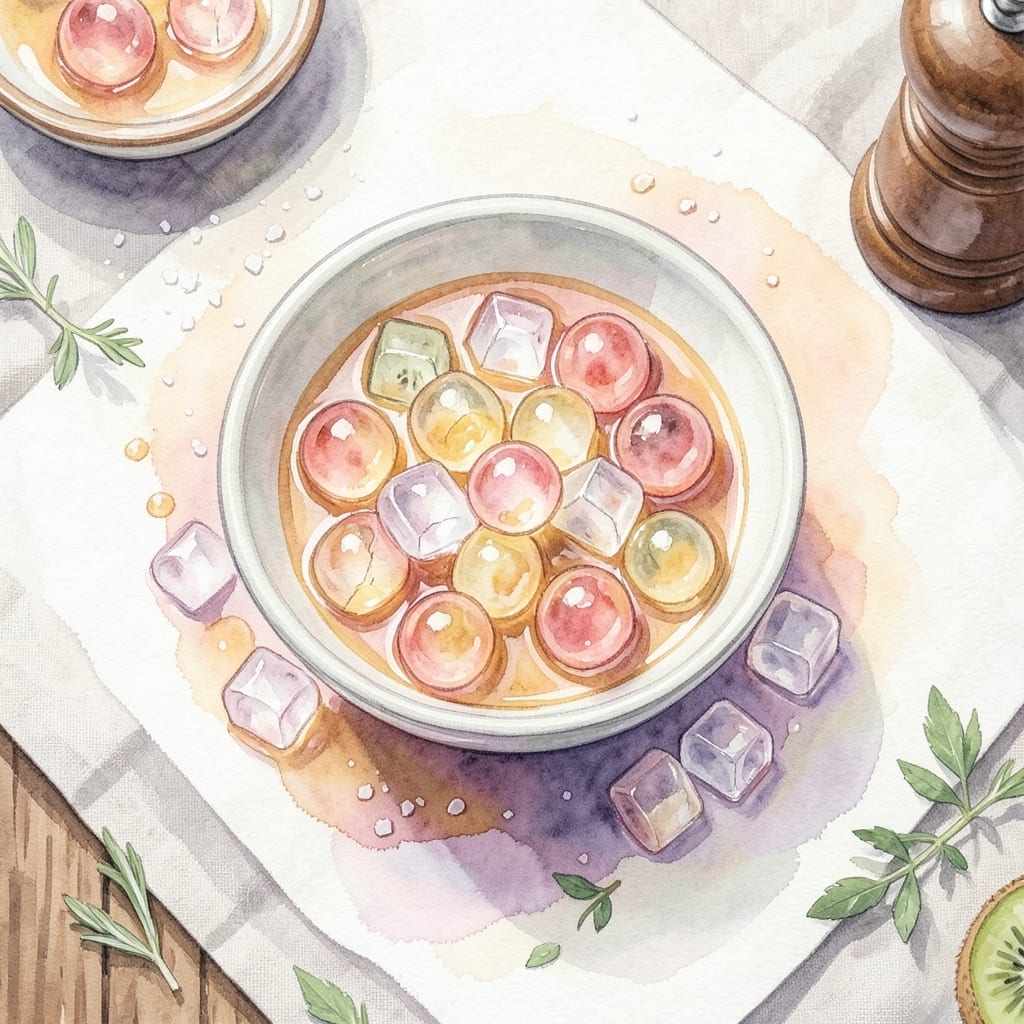
I’ve perfected a method for making popping boba using everyday ingredients, no specialty chemicals required. This approach relies on agar-agar, a plant-based gelling agent that creates the signature burst-in-your-mouth texture.
The process is straightforward: fruit juice is combined with agar-agar, formed into small spheres, and set in a cold bath. The result is simple, flavorful pearls that pop just like store-bought versions.
These homemade pearls work perfectly in bubble tea, desserts, or as a fun topping for yogurt. They hold their shape and texture, delivering a satisfying burst of juice with every bite.
No special equipment is needed—just patience and precision. The technique is reliable and produces consistent results every time.
Ingredients for Popping Boba Recipe Without Sodium Alginate
Simple, plant-based ingredients create these burst-in-your-mouth pearls with ease.
| Ingredient | Amount | Notes |
|---|---|---|
| Fruit Juice 🍹 | 2 cups | Any flavor, no pulp preferred |
| Agar-Agar Powder 🌿 | 2 tsp | Plant-based gelling agent essential |
| Water 💧 | 1 cup | For agar-agar activation |
| Sugar 🍚 | 2 tbsp | Adjust to taste preference |
| Vegetable Oil 🫒 | 4 cups | Cold, for setting bath |
| Ice Cubes ❄️ | 2 cups | For chilling setting bath |
| Corn Syrup 🍯 | 1 tbsp | Optional, for extra sheen |
| Citric Acid 🍋 | ¼ tsp | Optional, for tartness |
| Vanilla Extract 🌿 | ½ tsp | Optional, for flavor depth |
| Food Coloring 🎨 | 0.125 tsp | Optional, for vibrant color |
The agar-agar is non-negotiable here—look for pure powder form at Asian markets or health food stores like Whole Foods. Avoid flakes, as they dissolve differently. Brands like Telang or NOW Foods are reliable. The fruit juice should be high-quality (think 100% juice), as low-sugar or diluted versions won’t set properly. For best results, use room-temperature juice to prevent premature gelling.
No agar-agar? There’s no perfect substitute—this is what makes the popping texture possible. For juice, pomegranate or mango give the most vibrant results (and hide any slight color variations). Swap sugar with agave or maple syrup at a 1:1 ratio. The vegetable oil bath can be replaced with coconut oil (solid at room temp), but it’s trickier to work with. Skip the citric acid if you’re using tart juices like lime or lemon.
The pearls keep in a sugar syrup in the fridge for 3-4 days. For longer storage, freeze on a tray first (so they don’t stick), then transfer to a bag—they’ll last 1 month. Thaw in the syrup before using. The setting bath oil can be reused 2-3 times if strained and re-chilled.
Why You’ll Love This Recipe
- No Fancy Tools: I just need a saucepan, a spoon, and a syringe or dropper—no special equipment clogging my kitchen.
- Juice Bombs: The fruit juice shines through each pop, so every bite tastes like a tiny burst of summer.
- Party Starter: I make a big batch on Friday and let the kids add them to drinks, yogurt, or ice cream all weekend.
- Pantry Staples: Agar-agar is cheap, the juice is whatever I have open, and it keeps for days in the fridge.
Step-by-Step Instructions for Homemade Popping Boba
This method delivers perfectly textured boba using agar-agar as your gelling agent for reliable results.
Step 1: Prepare the Agar-Agar Mixture
In a small saucepan, combine the 2 cups Fruit Juice, 1 cup Water, 2 tbsp Sugar, and 2 tsp Agar-Agar Powder. Whisk thoroughly until the agar-agar fully dissolves—this prevents clumping during heating.
If using the optional flavor enhancers, add the 0.5 tsp Vanilla Extract, 0.25 tsp Citric Acid, 0.125 tsp Food Coloring, and 1 tbsp Corn Syrup now and stir well. The mixture should appear uniform with no visible agar-agar particles before heating begins.
Step 2: Heat and Activate the Gelling Agent
Place the saucepan over medium-high heat and bring to a full rolling boil, stirring constantly. Agar-agar requires boiling to fully activate its gelling properties—this is non-negotiable.
Once boiling, reduce heat to medium and continue cooking for 2-3 minutes, stirring continuously. You’ll notice the mixture thicken slightly as the agar-agar hydrates. Remove from heat immediately after this time to prevent over-thickening.
Step 3: Create the Setting Bath
Pour the 4 cups Vegetable Oil into a deep bowl and add the 2 cups Ice Cubes. The oil should become very cold but not freeze—this cold oil bath is crucial for forming the boba spheres as the hot mixture hits it.
Allow the oil to chill for 5 minutes while you transfer your agar-agar mixture to a squeeze bottle or dropper. The temperature contrast between the hot mixture and cold oil creates the popping boba’s signature gel membrane.
Step 4: Form the Boba Pearls
Hold the squeeze bottle 6-8 inches above the oil surface and slowly drip the hot mixture into the cold oil. The droplets will immediately begin to set as they sink, forming perfect spheres.
Work in batches to avoid overcrowding. You’ll see the pearls become firm within 2-3 minutes of entering the oil. Gently stir the oil occasionally to prevent the boba from sticking together as they set.
Step 5: Rinse and Store the Finished Boba
Using a fine-mesh strainer, carefully remove the boba from the oil bath. Rinse them under cold running water to remove any residual oil—this prevents them from tasting greasy.
Transfer the rinsed boba to a bowl of cold water with a splash of simple syrup to prevent sticking. Store in the refrigerator in this syrup bath for up to 3 days. The boba will develop their characteristic pop as they fully set during chilling.
Pro Tips For Making Popping Boba Recipe Without Sodium Alginate
- Boil the Agar: Heat the agar-agar and water to a full rolling boil for at least 1-2 minutes—I learned this the hard way after my first few batches never set properly.
- Chill Before Dropping: Let the agar mixture cool slightly (but not solidify) before dripping into oil; it prevents the boba from dissolving instantly in the hot oil.
- Use Cold Oil: Skip the hot oil start—drop the mixture into ice-cold vegetable oil first, then heat it gradually to form the gel spheres evenly.
- Strain the Juice: Strain your fruit juice well to remove pulp—after burning three batches, I finally figured out pulp makes the boba burst too easily.
Common Mistakes When Making This Dish
Incorrect Oil Temperature
Using warm oil for your setting bath ruins the gelling process. The cold oil must be ice-cold (around 35°F) to create that signature membrane. I once used room-temp oil and ended up with sad, mushy blobs instead of perfect pearls.
Skipping the Boil
Agar-agar needs a full rolling boil to activate properly. Simply heating it to 185°F won’t cut it. I boil mine for the full 2-3 minutes while stirring constantly to ensure complete activation. 🔥
Overcrowding the Bath
Dripping too many pearls at once causes them to stick together. I limit myself to 20-25 droplets per batch and space them out. Gently stir the oil between batches to separate any that might be clumping.
Premature Removal
Those pearls need the full 2-3 minutes in the cold oil to set properly. I set a timer for each batch. Removing them too soon results in boba that collapses when you try to rinse them.
Skipping the Rinse
Oil residue makes your boba taste greasy. I rinse mine under cold water for 30 seconds in a fine-mesh strainer, then swish them in a bowl of cold water with 1 tsp sugar to remove any lingering oil.
Using the Wrong Juice
Pulp-heavy juices like orange or pineapple create uneven textures. I stick with clear juices like apple or white grape for consistent results. The pulp interferes with the gel formation, leading to weak spots in your pearls.
Nutrition Facts
Frequently Asked Questions
What can I use instead of agar-agar?
There’s no perfect substitute for agar-agar in this recipe. Other gelling agents like gelatin won’t create the same popping texture. Stick with agar-agar for the best results.
Why did my boba not pop?
This usually happens if the oil bath wasn’t cold enough or the pearls weren’t left to set for the full 2-3 minutes. Ensure your oil is ice-cold before starting.
Can I use any fruit juice?
Clear juices like apple or white grape work best. Pulp-heavy juices can create weak spots in the gel. Adjust sweetness with extra sugar if needed.
How long can I store homemade boba?
Store in a sugar syrup in the fridge for up to 3 days. For longer storage, freeze on a tray first, then transfer to a bag for up to 1 month.

- BBQ Sausage Recipe Oven: Smoky Depth Without the Grill - September 28, 2026
- BBQ Chicken Bowl Recipe Rice: Smoky Sweetness Over Fluffy Grains - September 28, 2026
- Beef Cutlet Recipe Ideas: Crispy Breaded Patties With Bold Seasonings - September 28, 2026