
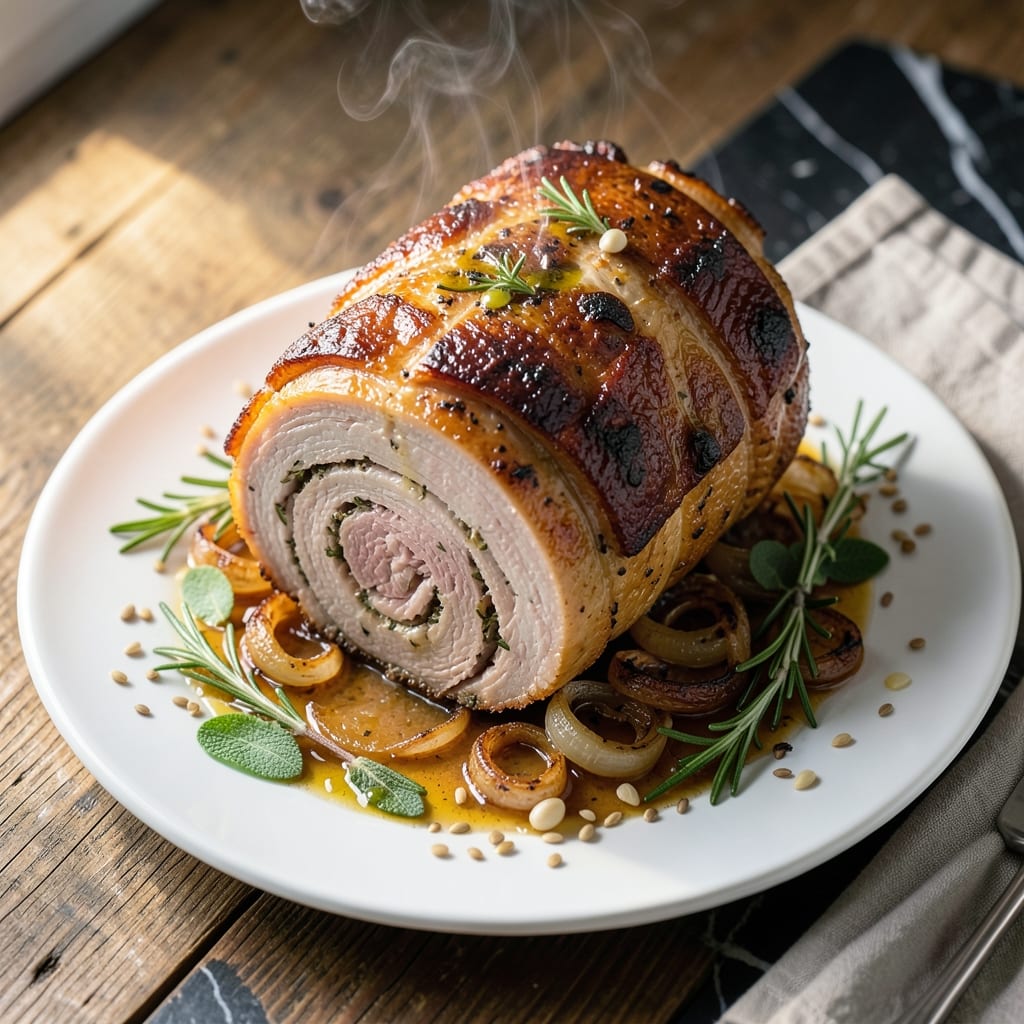
This porchetta roast delivers restaurant-quality results with a fragrant herb crust and shatteringly crispy skin. The secret lies in the overnight marinade, allowing flavors to penetrate deep into the pork.
I’ve perfected this method to ensure the meat stays juicy while the skin transforms into a golden, crackling layer. The combination of rosemary, garlic, and fennel creates an aromatic crust that’s impossible to resist.
Once roasted in a hot oven, the pork emerges tender and flavorful, with herbs that have caramelized into the meat. The skin crackles with every slice, making it the centerpiece of any meal.
Serve it with roasted vegetables or a simple salad to let the porchetta shine. This dish is worth every minute of effort.
Ingredients for Porchetta Roast Recipe Oven
Restaurant-quality porchetta requires pork belly, fresh herbs, and a few pantry staples for that signature crust.
| Ingredient | Amount | Notes |
|---|---|---|
| Pork Belly 🥓 | 4 lb | Skin-on, scored in diamond pattern |
| Fresh Rosemary 🌿 | ¼ cup | Finely chopped, stems discarded |
| Fresh Sage Leaves 🍃 | 20 pieces | Roughly chopped, stems removed |
| Fennel Seeds 🌱 | 1 ½ tbsp | Lightly toasted for aroma |
| Garlic Cloves 🧄 | 8 cloves | Minced to fine paste |
| Kosher Salt 🧂 | 2 tbsp | Diamond Crystal preferred for texture |
| Black Peppercorns 🌶️ | 1 tbsp | Freshly crushed for potency |
| Red Pepper Flakes 🔥 | 1 tsp | Adjust for spice preference |
| Lemon Zest 🍋 | 1 tbsp | From approximately 1 large lemon |
| Extra-Virgin Olive Oil 🫒 | ¼ cup | High-quality, cold-pressed preferred |
| White Wine 🍷 | ½ cup | Dry variety such as Pinot Grigio |
| Fresh Thyme Sprigs 🍃 | 10 pieces | Leaves stripped from stems |
| Yellow Onion 🧅 | 1 whole | Finely minced for even distribution |
The pork belly quality is non-negotiable for optimal results. Source skin-on, thick-cut pieces from a reputable butcher or specialty grocer like Whole Foods. Look for good marbling and a thick fat cap—this ensures both juicy meat and that coveted crackling skin. Fresh herbs should be vibrant and aromatic; avoid any with wilting leaves or brown spots.
No fresh rosemary or sage? Dried herbs at one-third the amount will work, though the flavor won’t be as bright. Fennel seeds can be swapped for anise seeds in a pinch. For the wine, any dry white will do—Sauvignon Blanc or Pinot Grigio are excellent. If avoiding alcohol, substitute apple cider vinegar mixed with water at a 1:1 ratio.
The herb mixture can be prepared 24 hours ahead and stored refrigerated in an airtight container. The pork itself should marinate for at least 12 hours before roasting. Leftovers keep well in the fridge for 4-5 days or frozen for 3 months.
Why You’ll Love This Recipe
- One Pan Magic: I roll up the pork belly with herbs, pop it in the oven, and let it do its thing—minimal cleanup, maximum flavor.
- Herb Heaven: The rosemary, sage, and fennel seeds create a crust so aromatic it fills the kitchen before the roast even hits the table.
- Feeds a Crowd: Between us, this is my go-to for dinner parties because it’s impressive but secretly low-effort.
- Leftovers Love: Honestly, the sandwiches I make with the extras might be even better than the first meal.
Step-by-Step Instructions for Porchetta Roast
Master the art of crispy-skinned, herb-infused pork with this professional technique.
Step 1: Prepare the Aromatic Herb Paste
In a mortar and pestle, combine the 2 tbsp Kosher Salt, 1 tbsp Black Peppercorns, 1.5 tbsp Fennel Seeds, and 1 tsp Red Pepper Flakes. Crush until the peppercorns and fennel are coarsely ground but still textured.
Add the 8 cloves Garlic Cloves, 0.25 cup Fresh Rosemary, 20 pieces Fresh Sage Leaves, 10 pieces Fresh Thyme Sprigs, and 1 tbsp Lemon Zest. Pound into a thick paste, then stir in the 0.25 cup Extra-Virgin Olive Oil. The mixture should be cohesive and fragrant, with visible herb flecks throughout.
Step 2: Score and Season the Pork Belly
Lay the 4 lb Pork Belly skin-side up on a clean surface. Pat it dry with paper towels—this ensures maximum crispiness. Using a sharp knife, deepen the existing diamond pattern scores to about ¼ inch depth, being careful not to cut into the meat.
Rub the herb paste evenly over the entire surface, pressing it into the scores and all sides of the belly. The paste should adhere well, creating a thick, even layer. Let the pork belly sit at room temperature for 30 minutes to absorb the flavors.
Step 3: Roll and Tie for Even Cooking
Place the pork belly skin-side down on a clean surface. Roll it tightly into a log, starting from one of the long sides, keeping the herb paste enclosed. Secure the roll at 1-inch intervals with kitchen twine, tying firmly but not so tight that it deforms the meat.
This step creates the signature porchetta shape and ensures even cooking. The roll should hold its form without gaps. Place the tied pork belly on a wire rack set over a rimmed baking sheet to allow air circulation.
Step 4: Roast Low and Slow, Then Crisp
Preheat your oven to 300°F. Roast the pork belly for 2 hours, then increase the temperature to 425°F and roast for an additional 30-45 minutes. Baste the pork with the 0.5 cup White Wine halfway through the initial low-temperature phase to infuse moisture and flavor.
You’ll know it’s done when the internal temperature reaches 160°F and the skin is deep golden brown and crackling. The skin should feel firm to the touch, and the juices should run clear when pierced.
Step 5: Rest and Serve
Transfer the porchetta to a cutting board and let it rest for 20 minutes. This allows the juices to redistribute, ensuring moist, tender meat. Remove the twine before slicing.
Slice the porchetta into ½-inch thick rounds, revealing the herb-studded interior. Serve immediately with the pan juices spooned over the top for added richness and flavor.
Pro Tips For Making Porchetta Roast Recipe Oven
- Score the Fat Deep: Cut 1/4-inch slits through the pork belly fat cap in a diamond pattern—this lets the rosemary and garlic penetrate while rendering the fat crispy. I learned this the hard way after my first few porchettas came out with chewy fat.
- Toast the Fennel Seeds: Dry-toast the fennel seeds in a pan for 30 seconds before grinding—it wakes up the aroma and makes the flavor pop in the rub. Sounds small, but it actually changes the outcome.
- Start High, Finish Low: Roast at 450°F for the first 30 minutes to get that crackling skin, then drop to 325°F to cook through without burning the herbs. My grandmother swore by this, and she was right.
- Let It Rest Long: Tent the porchetta with foil and rest for at least 20 minutes before slicing—this keeps the juices from running all over the cutting board. I skip this when I’m lazy, but the dish is noticeably better when I don’t.
Serving Suggestions for Leftovers
Classic Italian Plating
Slice the porchetta into ½-inch rounds and fan them slightly on a wooden board. The herb crust and crackling skin deserve to be the star. I love the rustic look of white marble slabs for serving, which contrasts beautifully with the golden-brown pork. 🌟
Fresh Side Pairings
A simple arugula salad with lemon and olive oil cuts through the richness. Toss 4 cups baby arugula with 2 tbsp olive oil and 1 tbsp lemon juice for brightness. Roasted fennel wedges echo the herb notes in the crust.
Bread and Pickles
Serve with crusty Italian bread to soak up the juices. I recommend ciabatta or a focaccia loaf from your local bakery. Quick-pickled red onions (thinly sliced with ½ cup vinegar and 1 tbsp sugar) add a tangy crunch.
Wine Recommendations
A crisp Italian white like Vermentino or Pinot Grigio complements the herb crust beautifully. For red lovers, a light Chianti works well. I always serve wine slightly chilled at 50-55°F for whites. 🍷
Family-Style Feast
For a hearty meal, pair with roasted potatoes and sautéed broccolini. Toss 2 lbs baby potatoes with olive oil, salt, and rosemary, then roast at 400°F for 45 minutes. The porchetta will be the centerpiece everyone gathers around.
Nutrition Facts
Frequently Asked Questions
How do I get the skin extra crispy?
Pat the pork belly completely dry before seasoning. Roast at 425°F for the last 30-45 minutes and baste with pan juices halfway through.
Can I use pork shoulder instead of belly?
Pork shoulder works but won’t have the same fat cap for crackling. For best results, add a layer of fatback or cook at 325°F until tender.
How long should it rest before slicing?
Let the porchetta rest for at least 20 minutes after roasting. This keeps the juices inside the meat, ensuring moist slices.
What if the herb paste slides off while roasting?
Secure the roll tightly with kitchen twine at 1-inch intervals. If needed, brush the meat with a little olive oil to help the paste adhere.

- Potato Chip Cookie Recipe With Pecans: Buttery Crunch Meets Nutty Richness - October 30, 2026
- Potato Patty Recipe No Egg: Crispy Edges Without the Binder - October 30, 2026
- Paula Deen’s Potato Chip Cookies Recipe: Salty-Sweet Crunch in Every Bite - October 30, 2026