
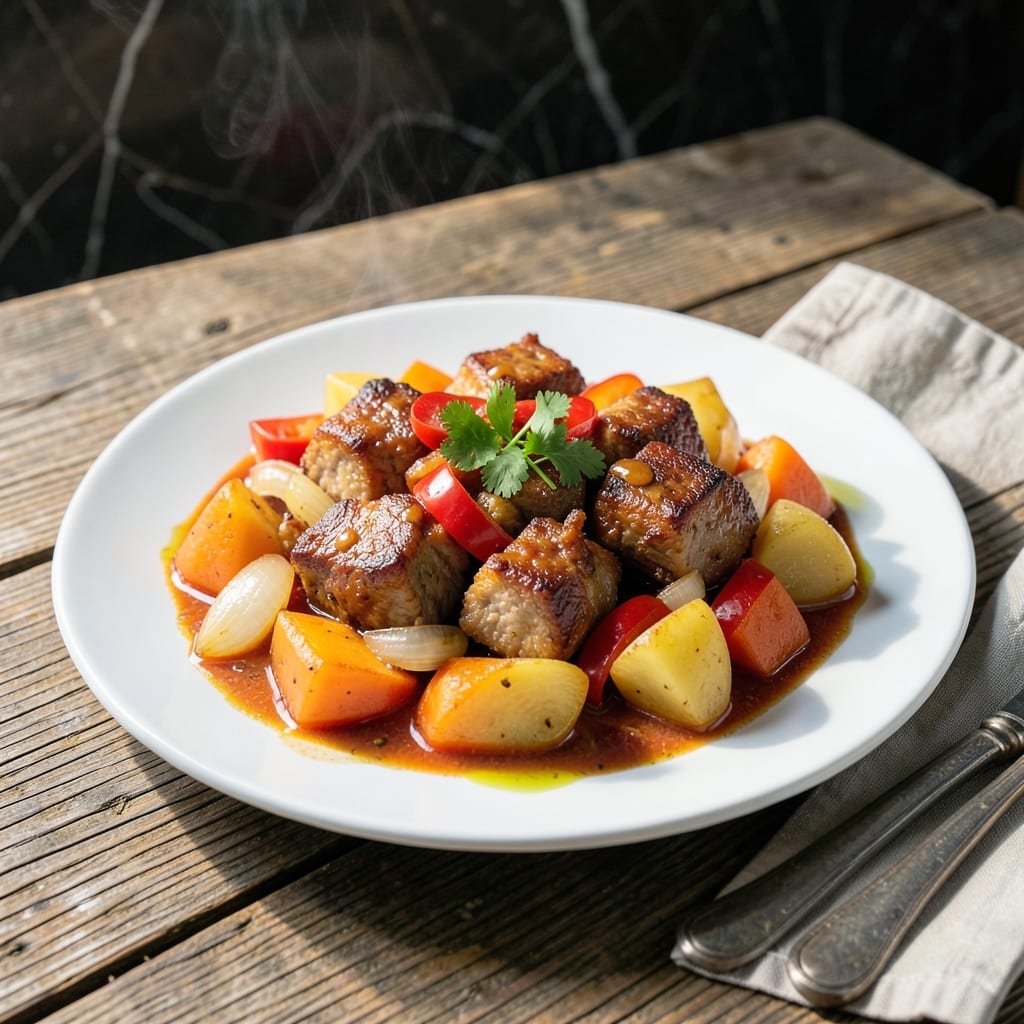
This Filipino pork afritada brings comforting flavors to your table with tender meat and vegetables in a rich tomato sauce. I developed this version after testing multiple techniques to balance the tangy, savory profile just right.
The dish shines through its simple yet flavorful combination of pork, potatoes, and carrots simmered in a tomato-based sauce. Traditional Filipino cooking relies on slow simmering to develop deep, layered flavors without complicated steps.
You’ll achieve a saucy, hearty stew where every ingredient absorbs the savory tomato base. The pork becomes fork-tender, while the vegetables maintain their shape and add natural sweetness.
Perfect for family dinners, this recipe delivers authentic taste with straightforward preparation. The result is a satisfying, homestyle meal that warms from the first bite.
Ingredients for Pork Afritada Recipe Filipino Style
Hearty pork, potatoes, and carrots simmer in a tangy tomato sauce. Comfort in every bite.
| Ingredient | Amount | Notes |
|---|---|---|
| Pork Shoulder 🥩 | 1 ½ lb | Cut into 1.5-inch cubes, bone-in preferred |
| Tomato Sauce 🍅 | 2 cups | Use high-quality canned |
| Potatoes 🥔 | 3 whole | Yukon Gold or Russet, peeled and cubed |
| Carrots 🥕 | 3 whole | Peeled and sliced into rounds |
| Red Bell Pepper 🌶️ | 1 whole | Seeded and sliced into strips |
| Onion 🧅 | 1 whole | Yellow or white, diced |
| Garlic Cloves 🧄 | 6 cloves | Minced for maximum flavor |
| Soy Sauce 🫙 | 2 tbsp | Regular or light, not dark |
| Fish Sauce 🐟 | 1 tbsp | Optional but adds depth |
| Bay Leaves 🍃 | 2 pieces | Dried, for aromatic base |
| Black Peppercorns 🌶️ | 1 tsp | Whole, crushed lightly |
| Vegetable Oil 🛢️ | 2 tbsp | For sautéing aromatics |
| Water 💧 | 1 cup | To thin sauce if needed |
| Salt 🧂 | 1 tsp | Adjust to taste at end |
The pork makes this dish. Pork shoulder (sometimes called pork butt) gives you that melt-in-your-mouth texture—avoid lean cuts like tenderloin. Most grocery stores sell it pre-cut, but ask the butcher to cube it for you (the good stuff, not the pre-packaged kind). Look for good marbling—this is what keeps it juicy through the long simmer. Asian markets often have it at better prices if you’re buying in bulk.
No tomato sauce? Blend canned tomatoes with a pinch of sugar for a quick substitute. Fish sauce can be skipped, but a splash of Worcestershire adds similar umami depth. Red bell pepper not your thing? Swap in green or yellow (just don’t use jalapeños—they’ll overpower everything). The potatoes can be waxy or starchy, but cut them evenly so they cook at the same rate. Fresh garlic is non-negotiable here.
Leftovers taste even better the next day. Keeps in the fridge for 4-5 days or freezes for 3 months (portion before freezing for easy meals). The sauce thickens as it cools—just stir in a splash of water when reheating. Always store in airtight containers to lock in the flavors.
Why You’ll Love This Recipe
- One Pot Wonder: I just toss the pork shoulder, potatoes, and carrots in a single pan with tomato sauce—minimal cleanup, maximum flavor.
- Rich Tomato Depth: The tomato sauce soaks into the pork and veggies, giving that classic Filipino tangy-sweet richness I crave.
- Feeds a Crowd: Between us, this stretches easily for family dinners or potlucks, and the leftovers taste even better the next day.
- Budget Friendly: Pork shoulder and root veggies keep costs low, but the dish never tastes cheap. Honestly, it’s my go-to for filling, flavorful meals.
Step-by-Step Instructions for Pork Afritada
Here’s my tested method for building layers of flavor in this classic Filipino stew.
Step 1: Brown the Pork Shoulder
Heat the 2 tbsp vegetable oil in a large pot over medium-high heat. Add the 1.5 lb pork shoulder cubes in a single layer, working in batches if needed to avoid crowding. Brown aggressively on all sides for 8-10 minutes until deep golden brown.
This caramelization creates the flavor foundation for your afritada. Don’t rush—let each piece develop a rich crust before turning. Remove the pork and set aside, leaving the flavorful browned bits in the pot.
Step 2: Sauté the Aromatics
In the same pot, add the diced onion and cook for 2-3 minutes until translucent. Stir in the minced 6 cloves garlic cloves and cook for 30 seconds until fragrant—don’t let it burn.
Toss in the sliced red bell pepper and cook for 2 minutes until slightly softened. The pepper adds sweetness that balances the tangy tomato sauce. Add the 2 tbsp soy sauce, 1 tbsp fish sauce, 2 pieces bay leaves, and crushed 1 tsp black peppercorns, stirring to combine.
Step 3: Build the Sauce and Simmer
Return the pork to the pot along with any accumulated juices. Pour in the 2 cups tomato sauce and 1 cup water. Stir well to combine, scraping up all the browned bits from the bottom of the pot.
Bring to a boil, then reduce heat to low. Cover and let simmer for 45 minutes, stirring occasionally. This slow cooking tenderizes the pork and allows the flavors to meld deeply.
Step 4: Add Vegetables and Finish
Stir in the cubed 3 whole potatoes and sliced 3 whole carrots. Season with 1 tsp salt. Cover and simmer for another 20-25 minutes until the pork is fork-tender and the potatoes and carrots are soft but still holding their shape.
Taste and adjust seasoning if needed. The sauce should be thick enough to coat the back of a spoon but still pourable. If it’s too thick, add a splash more water. Discard the bay leaves before serving.
Pro Tips For Making Pork Afritada Recipe Filipino Style
- sear the pork first: Brown the pork shoulder pieces in batches over medium-high heat until golden—this locks in the juices and adds depth to the tomato sauce later.
- cut veggies evenly: Slice potatoes, carrots, and bell peppers into uniform, bite-sized pieces so they cook at the same rate and absorb the sauce evenly.
- skip the watery tomatoes: I learned this the hard way—use thick tomato sauce, not fresh tomatoes, to avoid a soupy afritada that takes forever to reduce.
- simmer uncovered: After adding all ingredients, let it simmer uncovered for 15-20 minutes to thicken the sauce naturally without diluting the flavors.
Common Mistakes When Making This Dish
Overcrowding the Pot
Always brown the 1.5 lb pork shoulder in batches to avoid steaming instead of searing. Crowding the pot drops the temperature, which prevents that crucial deep golden brown crust from forming. I learned this the hard way with my first afritada attempt!
Skipping the Aromatics
Rushing the onion, garlic, and red bell pepper sautéing step means missing out on the flavor base. Cook the onion for 2-3 minutes until translucent, then give the garlic just 30 seconds—it burns easily and turns bitter. 🌡️
Underseasoning the Sauce
Taste as you go! The 2 tbsp soy sauce and 1 tbsp fish sauce are essential, but you might need more salt at the end. The potatoes and carrots absorb a lot of flavor, so don’t be shy with seasoning.
Adding Vegetables Too Early
Wait until after the pork has simmered for 45 minutes before adding the potatoes and carrots. Adding them earlier turns them to mush. The vegetables should be soft but still holding their shape when done.
Ignoring the Sauce Consistency
If your sauce is too thick, stir in a splash of water. If too thin, simmer uncovered for 5-10 minutes. Aim for a consistency that coats the back of a spoon but still pourable.
Forgetting to Remove Bay Leaves
Those 2 pieces bay leaves are for aroma, not eating! Always fish them out before serving. Nothing ruins a perfect bite like chewing on a tough bay leaf. 💡
Nutrition Facts
Frequently Asked Questions
Can I use a different cut of pork?
Pork shoulder works best for its marbling and tenderness. For a leaner option, pork loin can be used but may result in slightly drier meat. Avoid cuts like tenderloin, as they lack the fat needed for 45 minutes of simmering.
Why do I need to brown the pork first?
Browning develops deep, caramelized flavors that form the base of your sauce. This step also helps the pork retain moisture during the long cooking time. Skip it, and your dish will taste flat.
Can I add other vegetables?
Yes! Green beans or peas work well. Add them with the potatoes and carrots during the final 20-25 minutes of cooking. Avoid delicate veggies like spinach, which would turn mushy.
How do I fix a sauce that’s too thin?
Simmer uncovered for an additional 5-10 minutes to reduce the liquid. If you’re in a hurry, mix 1 tbsp cornstarch with cold water and stir it in, then cook for 2 minutes.

- Potato Candy Recipe 1933: Vintage Peanut Butter Roll Delight - October 30, 2026
- Potato Chip Cookie Recipe With Pecans: Buttery Crunch Meets Nutty Richness - October 30, 2026
- Potato Patty Recipe No Egg: Crispy Edges Without the Binder - October 30, 2026