
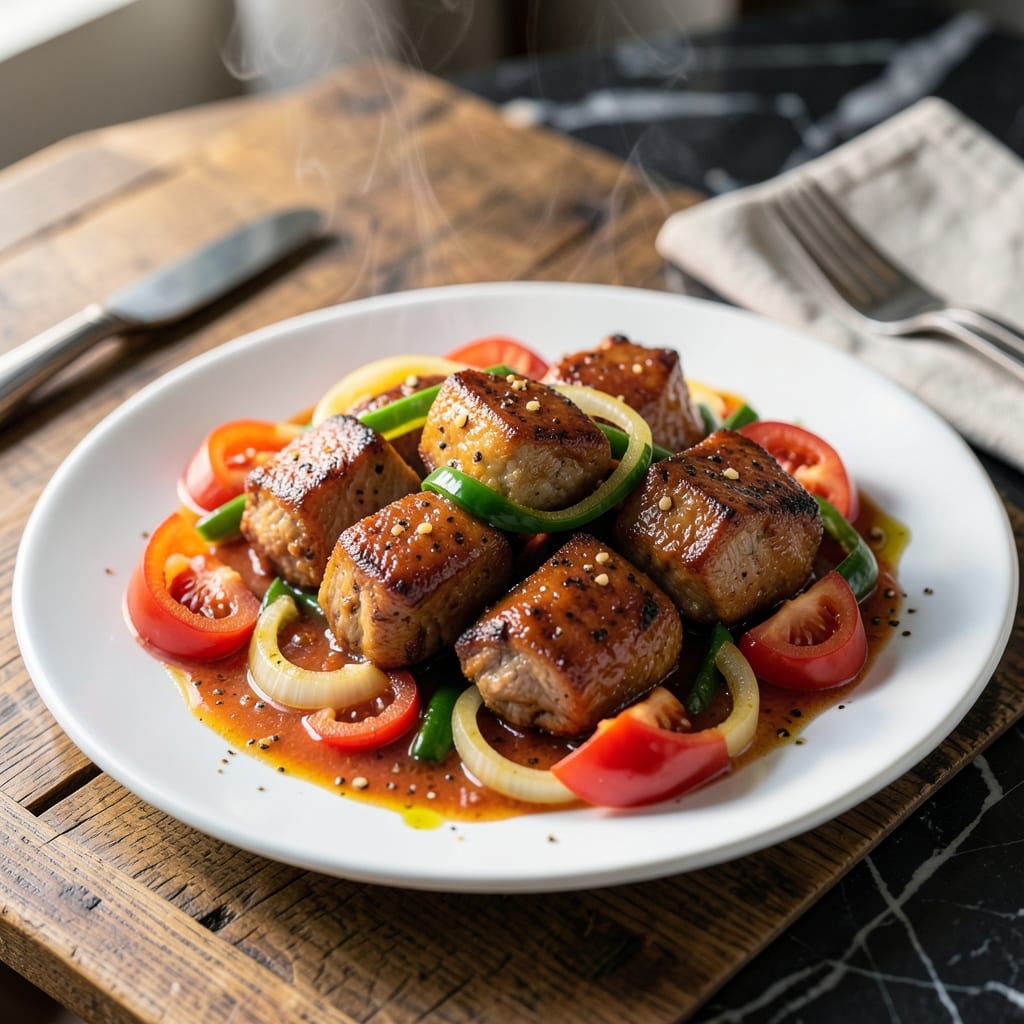
This Filipino stew brings together tender pork, vibrant bell peppers, and tomatoes in a rich, savory sauce that defines comfort food. I learned this classic method from my grandmother, who insisted on slow cooking for maximum flavor.
The dish starts with browning the pork to lock in juices, then simmering it in a tomato-based sauce. Bell peppers are added later to maintain their color and crisp texture. The result is a hearty, balanced meal.
What makes this version special is the layering of flavors—garlic, onions, and tomatoes create a deep, aromatic base. The pork becomes fork-tender, soaking up the sauce, while the vegetables add freshness.
Serve this with steamed rice to complete the experience. The sauce is perfect for soaking up every last bite.
Ingredients for Pork Afritada Recipe Pinoy
Tender pork, crisp bell peppers, and tomatoes make this stew a hearty classic.
| Ingredient | Amount | Notes |
|---|---|---|
| Pork Shoulder 🥩 | 1 ½ lb | Cut into 1-inch cubes |
| Red Bell Pepper 🌶️ | 2 whole | Cored and sliced into strips |
| Green Bell Pepper 🌶️ | 1 whole | Cored and sliced into strips |
| Tomatoes 🍅 | 3 whole | Medium, quartered |
| Yellow Onion 🧅 | 1 whole | Large, sliced |
| Garlic Cloves 🧄 | 6 cloves | Minced |
| Tomato Sauce 🍅 | 1 cup | Canned or bottled |
| Soy Sauce 💧 | 2 tbsp | Regular or light |
| White Vinegar 💧 | 1 tbsp | Or calamansi juice |
| Bay Leaf 🍃 | 2 pieces | Dried or fresh |
| Sugar 🥄 | 1 tsp | White or brown |
| Salt 🧂 | 1 tsp | Or to taste |
| Black Pepper 🌶️ | ½ tsp | Freshly ground |
| Cooking Oil 🫒 | 2 tbsp | Neutral-flavored |
| Potatoes 🥔 | 2 whole | Medium, peeled and cubed |
Pork shoulder is ideal for this stew—it stays tender after slow cooking (the good stuff, not the lean cuts). Asian markets or Costco often have it pre-cubed, which saves time. The tomatoes should be ripe and firm, not mushy. For the bell peppers, I prefer a mix of red and green for color and sweetness. Filipino brands like Silver Swan for soy sauce add authentic flavor.
No pork shoulder? Pork belly or ribs work too, though they’ll need longer cooking. Short on tomatoes? Canned whole tomatoes (drained) are a solid backup. The vinegar can be swapped for calamansi juice if you’ve got it (worth the extra minute). Dried bay leaves are fine—just remove them before serving. For extra richness, some folks add a splash of oyster sauce (optional).
This stew tastes even better the next day once the flavors meld. Keeps in the fridge for 3-4 days or in the freezer for 3 months. Reheat gently on the stove—microwaving can make the pork tough.
Why You’ll Love This Recipe
- One Pot Meal: I just brown the pork shoulder, toss in the peppers, tomatoes, and onions, then let it simmer—easy cleanup with only one pot to wash.
- Rich Tomato Sauce: The tomatoes and onions melt into this deep, savory sauce that coats every bite of tender pork.
- Feeds the Family: I make a big batch and it disappears fast, whether it’s a weeknight dinner or a weekend gathering.
- Budget Stretcher: Pork shoulder stays affordable, and the veggies bulk it up so it goes further without breaking the bank.
Step-by-Step Instructions for Pork Afritada
This classic method delivers rich, tangy flavors with tender pork and vibrant veggies.
Step 1: Sear the Pork Shoulder
Heat 2 tbsp cooking oil in a large pot over medium-high heat. Add the 1.5 lb pork shoulder cubes and sear until lightly browned on all sides, about 5-7 minutes. I like to work in batches to avoid crowding the pan—this ensures each piece gets a good crust.
You’ll know it’s ready to flip when the pork releases easily from the bottom. Don’t rush this step; a good sear builds the flavor base for the entire dish. Remove the pork and set aside.
Step 2: Sauté the Aromatics
In the same pot, add the sliced yellow onion and cook for 2-3 minutes until soft and translucent. Then add the minced 6 cloves garlic cloves and sauté for 30 seconds until fragrant—be careful not to burn it.
Next, toss in the quartered 3 whole tomatoes and cook for 3-4 minutes until they begin to soften and release their juices. This creates a rich, natural tomato base that complements the added 1 cup tomato sauce.
Step 3: Build the Sauce and Simmer
Return the pork to the pot. Add 1 cup tomato sauce, 2 tbsp soy sauce, 1 tbsp white vinegar, 1 tsp sugar, 1 tsp salt, 0.5 tsp black pepper, and 2 pieces bay leaf. Stir well to combine.
Pour in enough water to just cover the pork, then bring to a boil. Reduce heat to medium-low, cover, and simmer for 40-45 minutes or until the pork is fork-tender. Check occasionally and add water if it gets too dry.
Step 4: Add the Vegetables
Once the pork is tender, stir in the cubed 2 whole potatoes. Cook for 5 minutes, then add the sliced 2 whole red bell pepper and 1 whole green bell pepper. Simmer for another 5-7 minutes until the potatoes are tender and the peppers are slightly softened but still vibrant.
Here’s the thing—you want the peppers to retain some crispness and color. Overcooking them turns the dish mushy and dull. Taste and adjust seasoning if needed, then remove the 2 pieces bay leaf before serving.
Pro Tips For Making Pork Afritada Recipe Pinoy
- Brown the Pork Well: Give the pork shoulder cubes 3-4 minutes per side on medium-high heat until deeply browned—I learned this the hard way after ending up with pale, bland meat that didn’t hold up to the sauce.
- Pre-cook the Peppers: Sauté the bell peppers separately for 2 minutes before adding to the stew; it keeps their color vibrant and texture crisp instead of mushy.
- Skip Overcrowding the Pot: Resist the urge to dump all the pork in at once—cooking in batches guarantees a proper sear and prevents steaming, which turns the meat gray.
- Use Ripe Tomatoes: Pick the reddest, softest tomatoes you can find; their natural sweetness balances the dish better than underripe ones, which can taste harsh even after simmering.
Regional Styles of These Flavors
Luzon Tradition
In Central Luzon, this dish often includes extra potatoes and a touch more vinegar for tang. My grandmother would simmer it longer, reducing the sauce to a thick, rich consistency. This version stays true to her handwritten notes. 💛
Visayas Twist
In the Visayas region, cooks add coconut milk for creaminess, creating a variation called Afritadang Putol. The sweetness of the coconut balances the tomatoes beautifully. I tried this once with 1 cup coconut milk and was amazed by the depth it added.
Mindanao Spice
Southern Mindanao versions often include chili peppers or siling labuyo for heat. A single chopped chili added with the bell peppers gives a subtle kick without overpowering. I learned this from a neighbor who grew up in Davao.
Manila Street Food
In urban Manila, street vendors serve this with hard-boiled eggs and sliced hot dogs for extra heartiness. It’s a budget-friendly way to stretch the meal. I add 2 boiled eggs when feeding a crowd.
Modern Adaptations
Some contemporary cooks use pineapple chunks for sweetness, adding them with the peppers. Others swap soy sauce for fish sauce (patis) for a saltier profile. I stick to the classic but admire the creativity.
Nutrition Facts
Frequently Asked Questions
Can I use chicken instead of pork?
Yes! Use 1.5 lb boneless chicken thighs for best results. Reduce simmering time to 20-25 minutes since chicken cooks faster. The flavors work just as well with poultry.
Why do you add vinegar to the stew?
The 1 tbsp vinegar balances the richness of the pork and tomatoes. It adds a subtle tang that’s classic in Filipino cooking. Don’t skip it—it brightens all the flavors!
How do I prevent the peppers from getting mushy?
Add bell peppers only during the last 5-7 minutes of cooking. This keeps them crisp and vibrant. Overcooking turns them soft and dull.
Can I make this in a slow cooker?
Brown the pork first, then transfer to a slow cooker with all ingredients except peppers. Cook on low for 6-7 hours, adding peppers in the last 30 minutes.

- Potato Candy Recipe 1933: Vintage Peanut Butter Roll Delight - October 30, 2026
- Potato Chip Cookie Recipe With Pecans: Buttery Crunch Meets Nutty Richness - October 30, 2026
- Potato Patty Recipe No Egg: Crispy Edges Without the Binder - October 30, 2026