
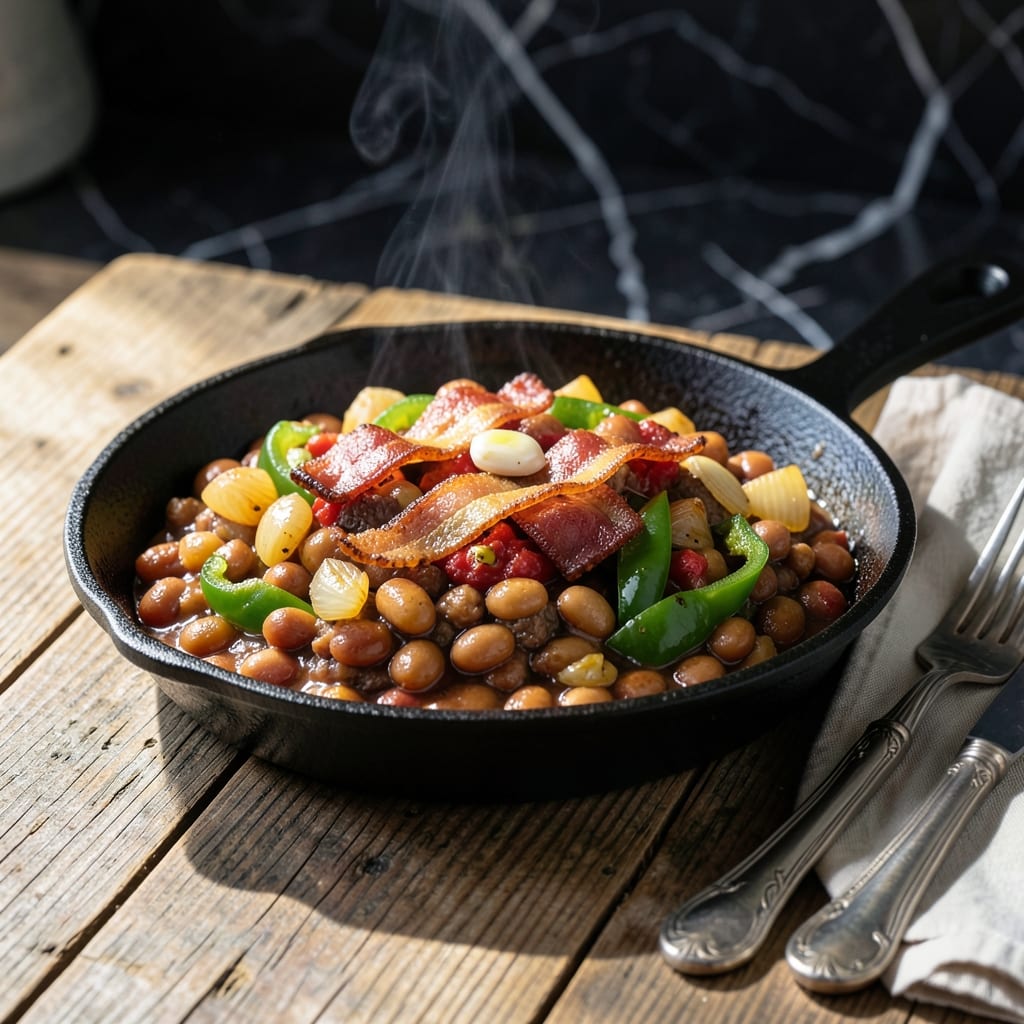
There’s something timeless about a classic campfire side that brings comfort to any meal. This one-pot dish combines savory flavors with minimal effort, delivering a classic taste that feels like tradition on a plate.
Using canned beans simplifies the process without sacrificing depth of flavor. A few key ingredients and one pot are all you need to create a dish that’s been a staple at gatherings for generations.
The pork adds richness while the beans soak up the smoky, savory sauce. It’s the kind of recipe that tastes like it took hours but comes together quickly.
Perfect for weeknight dinners or your next outdoor adventure. The result is always satisfying.
Ingredients for Pork and Beans Recipe with Canned Beans
Thick-cut bacon, canned beans, and a handful of pantry staples create this timeless one-pot classic.
| Ingredient | Amount | Notes |
|---|---|---|
| Bacon 🥓 | ½ lb | Thick-cut, diced, for smoky depth |
| Canned Pork and Beans 🫘 | 2 cans | 28 oz cans, undrained for sauce |
| Yellow Onion 🧅 | 1 whole | Medium, finely diced for base |
| Green Bell Pepper 🌶️ | 1 whole | Seeds removed, finely diced |
| Garlic Cloves 🧄 | 3 cloves | Minced for aromatic foundation |
| Tomato Paste 🍅 | 2 tbsp | For concentrated umami richness |
| Apple Cider Vinegar 🍏 | 1 tbsp | For tangy brightness balance |
| Brown Sugar 🍚 | 2 tbsp | Light or dark, for molasses depth |
| Prepared Yellow Mustard 🟡 | 1 tbsp | Classic American style preferred |
| Worcestershire Sauce 🥫 | 1 tbsp | Adds complex savory depth |
| Smoked Paprika 🌶️ | 1 tsp | For authentic campfire smoke |
| Kosher Salt 🧂 | 1 tsp | Diamond Crystal preferred for even seasoning |
| Ground Black Pepper 🌶️ | ½ tsp | Freshly ground for optimal flavor |
The bacon is non-negotiable for authentic flavor—thick-cut from a quality butcher or Whole Foods renders better fat. Canned pork and beans should be Bush’s or Van Camp’s for consistent texture. The onion and bell pepper form the classic mirepoix base; choose firm, unblemished vegetables for best results. Fresh garlic cloves are essential—avoid pre-minced for superior aroma.
No thick-cut bacon? Regular bacon works but watch the cooking time to prevent burning. Substitute molasses for brown sugar in a pinch (use 1.5 tbsp). Ketchup can replace tomato paste at 3 tbsp, though the flavor profile shifts slightly sweeter. For alcohol-free, swap Worcestershire for coconut aminos. The smoked paprika is key—don’t skip it (or use regular plus a pinch of liquid smoke).
Leftovers keep 4-5 days refrigerated in airtight containers. Freezes beautifully for 3 months—portion into meal-sized containers. Reheat gently on the stove with a splash of water to restore consistency. This tastes even better the next day as flavors meld.
Why You’ll Love This Recipe
- One-Pot Wonder: I love that I can dump everything—bacon, beans, onion, pepper—in one skillet and walk away while it simmers.
- Smoky, Sweet Depth: The bacon fat cooks down with the garlic and peppers, turning simple canned beans into something rich and crave-worthy.
- Feeds a Hungry Crowd: Honestly, it’s my go-to for potlucks or lazy Sundays when everyone’s hovering in the kitchen.
- Stretches Pennies Far: A few cans of beans and a pack of bacon feed my family for two nights, and the leftovers taste even better.
Step-by-Step Instructions for Pork and Beans With Canned Beans
This classic preparation delivers deep, smoky flavor with minimal effort in one pot.
Step 1: Render the Bacon and Sauté Aromatics
Place a large Dutch oven or heavy pot over medium heat. Add the 0.5 lb bacon and cook for 8-10 minutes, stirring occasionally, until the fat renders out and the bacon becomes crispy and golden brown.
Using a slotted spoon, transfer the bacon to a paper towel-lined plate, leaving the rendered fat in the pot. Add the finely diced yellow onion and finely diced green bell pepper, and sauté for 5-6 minutes until the vegetables are soft and translucent.
Stir in the 3 cloves minced garlic cloves and cook for 30 seconds until fragrant. The garlic should release its aroma without browning, as burnt garlic will impart a bitter flavor to the dish.
Step 2: Build the Sauce Base
Add the 2 tbsp tomato paste to the pot and cook for 1-2 minutes, stirring constantly. This step develops the tomato paste’s natural sugars and deepens its flavor, which is essential for a rich sauce.
Next, stir in the 1 tbsp apple cider vinegar, 2 tbsp brown sugar, 1 tbsp prepared yellow mustard, 1 tbsp Worcestershire sauce, 1 tsp smoked paprika, 1 tsp kosher salt, and 0.5 tsp ground black pepper.
Cook for another 1-2 minutes, stirring to combine all the ingredients into a thick, fragrant paste. The mixture should be glossy and slightly darkened in color, signaling that the flavors are melding together.
Step 3: Simmer with the Canned Pork and Beans
Add the 2 cans canned pork and beans, including all the liquid from the cans, to the pot. Stir well to combine the beans with the sauce, ensuring every bean is coated evenly.
Bring the mixture to a gentle simmer over medium heat. Once simmering, reduce the heat to low and let it cook uncovered for 15-20 minutes, stirring occasionally.
This simmering time allows the flavors to fully integrate and the sauce to thicken slightly. You’ll notice the sauce clinging to the beans, with a rich, glossy appearance and the aroma of smoky, tangy depth filling your kitchen.
Step 4: Finish and Rest Before Serving
Return the reserved crispy bacon to the pot and stir to incorporate. Taste the dish and adjust the seasoning if needed, though the kosher salt and smoked paprika should provide a balanced, savory profile.
Remove the pot from the heat and let it rest for 5 minutes. This brief rest allows the sauce to thicken further and the flavors to settle. The beans should be tender, coated in a rich, slightly sweet and smoky sauce with visible flecks of bacon throughout.
Serve warm as a hearty side dish that pairs perfectly with grilled meats or as a comforting standalone meal.
Pro Tips For Making Pork And Beans Recipe With Canned Beans
- Render the Bacon First: Cook the bacon until crispy, then use the fat to sauté the onion and bell pepper—it adds a smoky depth you can’t get with oil. I learned this the hard way when I tried skipping it for “health.”
- Drain and Rinse Beans: Always rinse canned beans under cold water to remove the starchy liquid, or your final dish will taste flat and pasty. Sounds weird, but it works.
- Skip Overcooking Onions: Sauté the onion and bell pepper just until soft, not browned—about 5 minutes over medium heat. After burning three batches, I finally figured out they turn bitter if left too long.
- Add Garlic Late: Toss in the minced garlic only in the last 30 seconds of sautéing the veggies, or it’ll burn and turn harsh. My grandmother swore by this, and she was right.
Essential Equipment for This Dish
Dutch Oven Essentials
I always reach for my 5-quart Le Creuset Dutch oven for this dish. Its heavy enameled cast iron distributes heat evenly, preventing hot spots that can burn the bacon or sauce. The deep sides also contain splatters when stirring. 🔥
Wooden Spoon Workhorse
A sturdy wooden spoon is my go-to for stirring the bacon and scraping up those flavorful browned bits from the bottom. I love the OXO Good Grips version—it’s heat-resistant and comfortable for the 20-30 minutes of cooking time.
Quality Knife Matters
Dicing the onion, bell pepper, and bacon requires a sharp 8-inch chef’s knife. My Victorinox Fibrox handles this effortlessly. Keep a cutting board nearby—bamboo or plastic works best to avoid dulling the blade.
Slotted Spoon for Bacon
To remove the crispy bacon while leaving the rendered fat behind, a stainless steel slotted spoon is indispensable. I use one from Cuisinox—it’s durable and the perfect size for this job. The fat left in the pot is pure flavor gold.
Measuring Tools
Accurate measurements matter, especially for the 2 tbsp tomato paste and 1 tbsp Worcestershire sauce. I keep a set of stainless steel measuring spoons from RSVP International in my drawer. They nest together and clean up easily.
Thermometer for Precision
While not strictly necessary, I like using my ThermoWorks Instant Read to check the internal temperature if I’m doubling the batch. It ensures the pork reaches a safe 165°F if using fresh additions. Honestly, it gives me peace of mind. 💡
Nutrition Facts
Frequently Asked Questions
Can I use turkey bacon instead of regular?
Yes, but expect less fat and smokiness. Use 1/4 cup olive oil to compensate for missing bacon grease. The flavor will be milder but still delicious.
How do I make it less sweet?
Reduce the brown sugar by half or replace it with 1 tbsp molasses. Add an extra 1/2 tsp smoked paprika for depth without sweetness.
Can I add ground beef?
Brown 1/2 lb ground beef with the bacon, drain excess fat, then proceed. This makes it heartier and stretches servings.
Why is my sauce too thin?
Uncovered simmering for 5-10 extra minutes usually fixes it. For quicker thickening, mix 1 tsp cornstarch with 1 tbsp water and stir in.

- Potato Chip Cookie Recipe With Pecans: Buttery Crunch Meets Nutty Richness - October 30, 2026
- Potato Patty Recipe No Egg: Crispy Edges Without the Binder - October 30, 2026
- Paula Deen’s Potato Chip Cookies Recipe: Salty-Sweet Crunch in Every Bite - October 30, 2026