
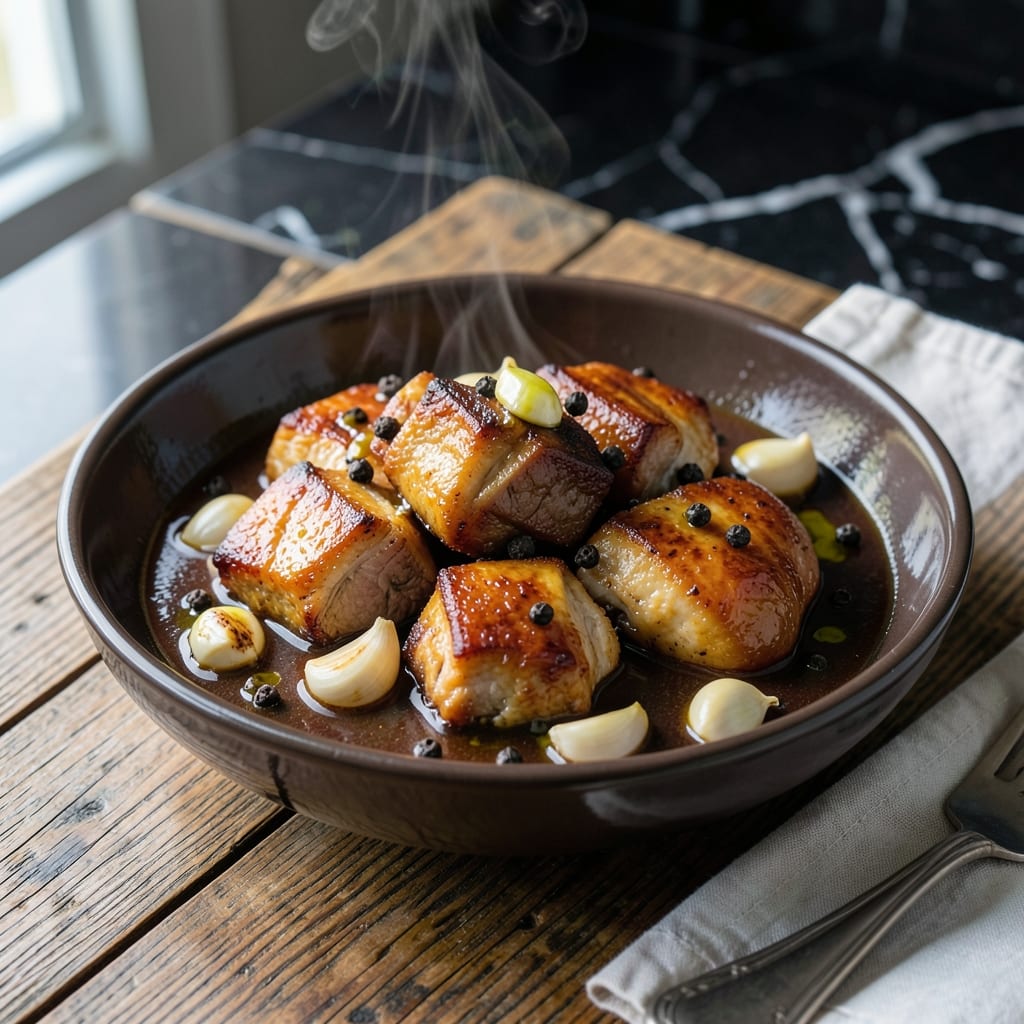
This adobo-style braise brings Filipino comfort to your table with tender pork and chicken in a garlicky, tangy sauce. The combination of vinegar, soy sauce, and black peppercorns creates a perfectly balanced dish.
I’ve perfected this method over years, ensuring the meats absorb every bold, savory note while staying juicy. The slow simmer allows the flavors to meld deeply, making each bite rich and satisfying.
The result is fall-off-the-bone meat coated in a glossy, umami-packed sauce that’s irresistible over rice. This dish is hearty, traditional, and foolproof for home cooks.
Serve it with steamed rice and a side of pickled vegetables for the full experience.
Ingredients for Pork and Chicken Recipe Pinoy
Pantry staples meet bold Filipino flavors in this adobo-style braised dish.
| Ingredient | Amount | Notes |
|---|---|---|
| Pork Belly 🥓 | 1 ½ lb | Cut into 2-inch pieces |
| Chicken Thighs 🍗 | 1 ½ lb | Boneless, skin-on preferred |
| Garlic Cloves 🧄 | 12 cloves | Peeled, smashed lightly |
| White Vinegar 💧 | ¾ cup | Cane vinegar preferred |
| Soy Sauce 🫒 | ¾ cup | Filipino brand like Silver Swan |
| Black Peppercorns 🌶️ | 1 tbsp | Whole, lightly crushed |
| Bay Leaves 🍃 | 3 whole | Dried, for aromatic depth |
| Brown Sugar 🍚 | 2 tbsp | Balances the acidity |
| Water 💧 | 1 cup | To adjust sauce consistency |
| Salt 🧂 | 1 tsp | Adjust to taste |
| Cooking Oil 🫒 | 2 tbsp | Neutral oil for searing |
| Green Onions 🧅 | 4 whole | Sliced thin, for garnish |
The soy sauce is non-negotiable here—Silver Swan or Datu Puti are the gold standard for authentic Filipino adobo. Pork belly gives that melt-in-your-mouth texture, but if you can’t find it, pork shoulder works too (just trim excess fat). Most Asian markets carry the right vinegar and soy sauce, but H-Mart or Seafood City are solid bets if you’re in the US. The black peppercorns should be whole—pre-ground loses its punch fast.
No cane vinegar? Apple cider vinegar gets you 90% there. Chicken breasts can sub for thighs, but they dry out faster—keep an eye on them. Out of bay leaves? Skip it, but add an extra garlic clove for depth. The brown sugar isn’t traditional but trust me on this—it rounds out the tang perfectly. If you’re watching sodium, low-sodium soy sauce works but you’ll need to adjust the salt at the end.
This tastes even better the next day—2-3 days in the fridge is ideal. Freezes beautifully for up to 3 months. Store the meat in its sauce to keep it moist. Leftovers? Perfect over fresh rice or in a sandwich (yes, really).
Why You’ll Love This Recipe
- One Pot Wonder: I toss everything in, let it simmer, and the pork belly soaks up all that garlic-soy goodness without me babysitting the stove.
- Tangy Umami Bomb: The vinegar cuts through the richness while the soy sauce gives that deep, salty-sweet flavor I can’t get enough of.
- Feeds a Crowd: Honestly, it’s my go-to for family gatherings—pork and chicken together means there’s something for everyone.
- Leftovers for Days: Between us, it tastes even better the next day, and I love having it ready for quick lunches.
Step-by-Step Instructions for Adobo-Style Braised Meats with Garlicky Depth
Here’s the method I use to create this Filipino classic with rich, tangy-savory layers.
Step 1: Sear the Meats for Deep Flavor
Heat the 2 tbsp cooking oil in a large, heavy pot over medium-high heat. Pat the 1.5 lb pork belly and 1.5 lb chicken thighs dry with paper towels, then sear in batches until golden brown on all sides, about 4-5 minutes per batch.
Don’t overcrowd the pot—this prevents steaming and ensures a proper sear. The pork belly will render some fat, which adds to the overall richness. Transfer the seared meats to a plate and set aside.
Step 2: Build the Aromatic Base
In the same pot, reduce heat to medium and add the 12 cloves garlic cloves. Sauté for 1-2 minutes until lightly golden and fragrant. Be careful not to let it burn; burnt garlic turns bitter.
Add the 1 tbsp black peppercorns and 3 whole bay leaves, stirring for 30 seconds to toast them slightly. This releases their essential oils and deepens their aromatic contribution to the dish.
Step 3: Braise with the Adobo Sauce
Return the seared meats to the pot. Pour in the 0.75 cup white vinegar, 0.75 cup soy sauce, 2 tbsp brown sugar, 1 cup water, and 1 tsp salt. Stir to combine, ensuring the sugar dissolves completely.
Bring the mixture to a boil, then reduce heat to low. Cover and let it simmer for 45-50 minutes, stirring occasionally. The meats are done when they’re fork-tender and the sauce has thickened slightly.
Step 4: Finish and Garnish
Once the meats are tender, uncover the pot and let the sauce reduce for an additional 10-15 minutes if needed. You want it to coat the back of a spoon but still be slightly loose—it will thicken further as it cools.
Taste and adjust the seasoning, adding a bit more salt if necessary. Discard the bay leaves before serving. Slice the 4 whole green onions thinly and sprinkle them over the top for a fresh, oniony finish.
Pro Tips For Making Pork And Chicken Recipe Pinoy
- Sear Pork First: Start with pork belly in the pan first—it renders fat that chicken thighs will cook in, adding depth. I learned this the hard way after my early batches tasted flat.
- Crush Garlic Hard: Smash garlic cloves with the side of your knife before mincing. Sounds weird, but it works: the crushed cloves release way more flavor into the vinegar and soy sauce.
- Skip Early Vinegar: Add white vinegar only after the meat has browned—adding it too soon can steam the meat instead of searing. After burning three batches, I finally figured this out.
- Simmer Low and Slow: Once everything’s in the pot, keep it at a gentle simmer, not a boil. My grandmother swore by this, and she was right: tough meat comes from rushing it.
Pro Cooking Tips for This Dish
Searing Perfection
Pat the pork belly and chicken thighs completely dry before searing—this ensures a deep, golden crust. Use medium-high heat and work in batches to avoid crowding the pot, which can cause steaming instead of browning. 🔥
Garlic Care
When sautéing the 12 garlic cloves, keep the heat at medium to prevent burning. Lightly golden is ideal—burnt garlic will add an unpleasant bitterness to your adobo. Stir frequently for even cooking.
Sauce Balance
The brown sugar balances the acidity of the vinegar, but taste as you go. Some prefer a tangier adobo, while others like it sweeter. Adjust with 1 tsp increments of sugar or vinegar as needed.
Simmering Time
For fall-off-the-bone tenderness, maintain a gentle simmer. The 45-50 minute cook time allows the pork belly to soften beautifully. Check occasionally and add a splash of water if the sauce reduces too quickly.
Sauce Consistency
After braising, uncover and let the sauce reduce for 10-15 minutes on low heat. You want it thick enough to coat the meats but still pourable. This step intensifies the flavors.
Rest Before Serving
Let the dish rest for 10 minutes off the heat before serving. This allows the flavors to meld further. Garnish with fresh green onions for a bright finish. 💛
Nutrition Facts
Frequently Asked Questions
Can I use chicken breast instead of thighs?
Yes, but they dry out faster. Reduce simmering time to 30-35 minutes and check doneness early. Thighs stay juicier, but breasts work in a pinch.
What if I don’t have cane vinegar?
Apple cider vinegar is the best substitute. Use the same 0.75 cup amount. Avoid balsamic—its sweetness overpowers the dish.
How do I store leftovers?
Keep in an airtight container with sauce for up to 3 days in the fridge. Freeze for 3 months. Reheat gently to preserve texture.
Can I skip the brown sugar?
though it balances the tang. Omit it for a more traditional, sharper adobo flavor. Taste and adjust vinegar as needed.

- Potato Chip Cookie Recipe With Pecans: Buttery Crunch Meets Nutty Richness - October 30, 2026
- Potato Patty Recipe No Egg: Crispy Edges Without the Binder - October 30, 2026
- Paula Deen’s Potato Chip Cookies Recipe: Salty-Sweet Crunch in Every Bite - October 30, 2026