
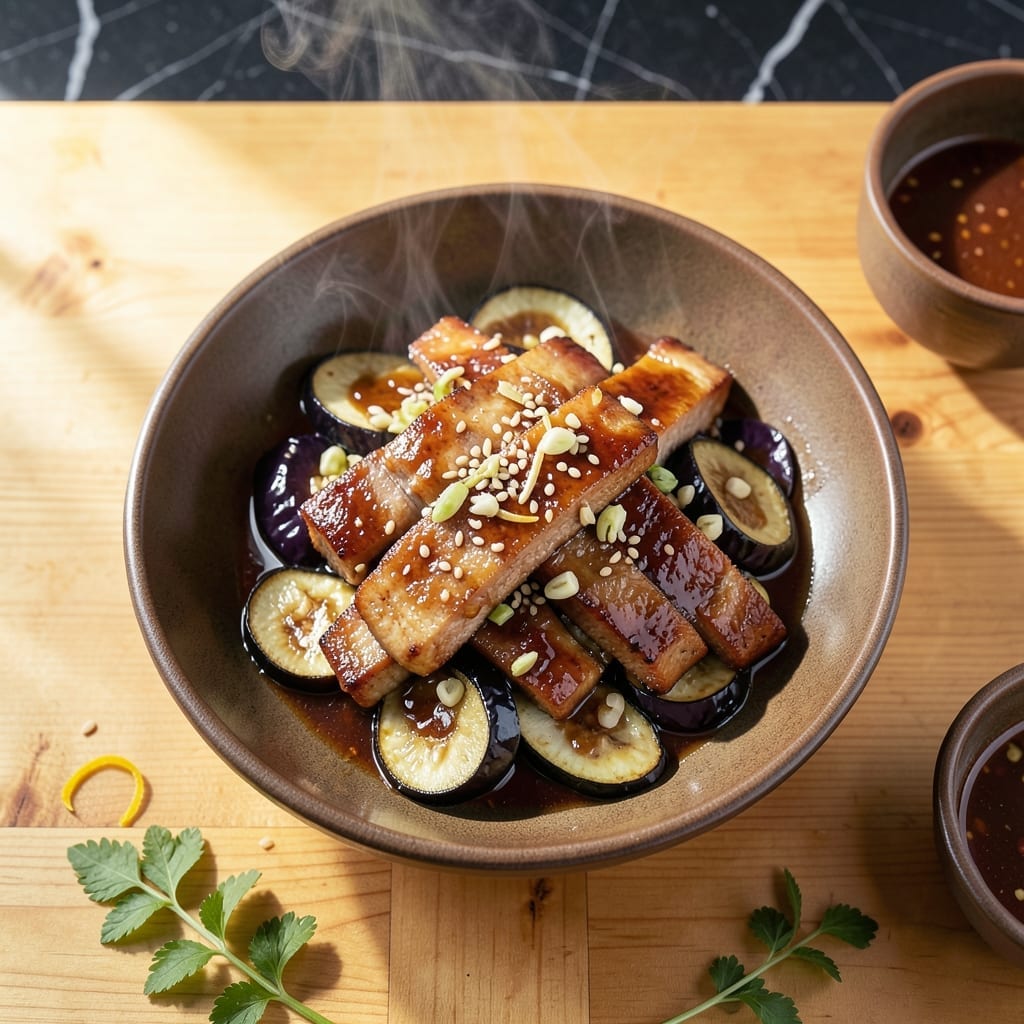
This Hawaiian-style stir-fry brings together tender pork and silky eggplant in a perfect balance of sweet and savory. The dish captures the islands’ love for bold, layered flavors without overwhelming complexity.
I developed this recipe to showcase how simple ingredients can create restaurant-quality results. The pork absorbs the rich, slightly sweet sauce while the eggplant becomes perfectly tender without turning mushy.
What emerges is a vibrant, colorful dish that’s hearty enough for dinner but light enough for warm weather. The sauce coats every piece just enough to deliver maximum flavor in each bite.
Serve this over steamed rice to soak up every drop of the delicious pan sauce. The combination of textures and flavors makes it a new favorite.
Ingredients for Pork and Eggplant Recipe Hawaii
A short list of bold, fresh ingredients for that island-inspired dish you’ll crave.
| Ingredient | Amount | Notes |
|---|---|---|
| Pork Shoulder 🥩 | 1 ½ lb | Cut into thin strips |
| Japanese Eggplant 🍆 | 2 whole | Sliced into rounds |
| Soy Sauce 🫒 | ½ cup | Low-sodium preferred |
| Brown Sugar 🍚 | ¼ cup | Light or dark |
| Rice Vinegar 🍯 | 3 tbsp | For tangy balance |
| Garlic Cloves 🧄 | 4 cloves | Minced finely |
| Fresh Ginger 🌿 | 1 tbsp | Grated or minced |
| Red Bell Pepper 🌶️ | 1 whole | Sliced into strips |
| Green Onions 🧅 | 4 whole | Thinly sliced for garnish |
| Cornstarch 🌾 | 1 tbsp | For thickening sauce |
| Vegetable Oil 💧 | 3 tbsp | High smoke point preferred |
| Sesame Oil 🫒 | 1 tsp | Toasted for aroma |
| Steamed Rice 🍚 | 4 cups | Cooked, for serving |
| Red Pepper Flakes 🔥 | ½ tsp | Optional for heat |
The pork is the star here—pork shoulder stays tender and soaks up the sauce beautifully. Look for well-marbled pieces at your local butcher or Whole Foods. The eggplant? Japanese eggplant is ideal (thinner skin, fewer seeds), but Italian works in a pinch. Pro tip: salt the eggplant slices for 10 minutes before cooking to draw out bitterness (worth the extra minute).
No pork shoulder? Pork tenderloin or chicken thighs work well—just adjust cooking time. Swap brown sugar for coconut sugar or honey if you’re out. Rice vinegar can be replaced with apple cider vinegar (slightly sharper but fine). For the oil, peanut or avocado oil are great high-heat alternatives. Fresh ginger is best, but ground ginger at half the amount does the job.
Store raw pork in the fridge for up to 3 days or freeze for 3 months. Eggplant does best used the same day, but keeps 4-5 days in the crisper. The cooked dish reheats well—actually tastes even better the next day once flavors meld.
Why You’ll Love This Recipe
- One Pan Wonder: I just toss the pork shoulder and eggplant with the soy sauce, brown sugar, and rice vinegar—one pan, minimal cleanup.
- Sweet & Tangy Magic: The brown sugar caramelizes with the soy sauce, and the rice vinegar adds that bright, tangy kick I crave.
- Weeknight Lifesaver: Between us, it’s my go-to for busy evenings—ready before the rice even finishes cooking.
- Stretches Further: Pork shoulder is budget-friendly, and the leftovers taste even better the next day over rice.
Step-by-Step Instructions for Island-Style Sweet and Savory Stir-Fry
Here’s how I create this flavor-packed dish with perfect texture every time.
Step 1: Marinate the Pork Shoulder
In a bowl, combine the 1.5 lb Pork Shoulder strips with 0.5 cup Soy Sauce, 0.25 cup Brown Sugar, 3 tbsp Rice Vinegar, minced 4 cloves Garlic Cloves, and 1 tbsp Fresh Ginger. Mix well to coat every piece evenly.
Let it sit for 15-20 minutes while you prep the rest. This marinade infuses the pork with a sweet-savory depth that’s signature to Hawaiian flavors. The sugar will caramelize later, adding that irresistible glossy finish.
Step 2: Sauté the Vegetables
Heat 2 tbsp Vegetable Oil in a large wok or skillet over medium-high heat. Add the 2 whole Japanese Eggplant rounds and 1 whole Red Bell Pepper strips. Stir-fry for 5-6 minutes until the eggplant softens slightly and the pepper brightens in color.
You’ll notice the eggplant soaks up flavors like a sponge—this is exactly what you want. Push the vegetables to one side of the pan to make room for the pork. Keep the heat steady; you’re building layers of texture here.
Step 3: Cook the Pork and Combine
Add the remaining 1 tbsp Vegetable Oil to the pan and lay the marinated pork in a single layer. Sear undisturbed for 2-3 minutes until the edges turn golden brown. Then stir everything together, including the vegetables.
Pour in any leftover marinade and sprinkle the 1 tbsp Cornstarch over the mixture. Toss gently for 2-3 minutes until the sauce thickens into a glossy coat. The cornstarch will turn the marinade into a rich, clingy sauce that hugs every bite.
Step 4: Finish and Serve
Drizzle the 1 tsp Sesame Oil over the stir-fry and sprinkle with 0.5 tsp Red Pepper Flakes for a subtle kick. Stir once more to distribute the heat and aroma evenly.
Serve immediately over 4 cups Steamed Rice, garnished with thinly sliced 4 whole Green Onions. The contrast of tender pork, silky eggplant, and crisp-tender peppers over fluffy rice makes this dish unforgettable. Each bite should be a perfect balance of sweet, savory, and umami.
Pro Tips For Making Pork And Eggplant Recipe Hawaii
- Salt the Eggplant: Sprinkle sliced Japanese eggplant with salt and let sit for 10 minutes before cooking—this draws out bitterness and helps it absorb the soy-brown sugar glaze better.
- Sear the Pork: Brown the pork shoulder in batches over medium-high heat to build flavor, and resist the urge to stir too often or it won’t develop a proper crust.
- Balance the Sauce: Taste as you go—Hawaiian-style dishes need a good sweet-sour balance, so add rice vinegar in small splashes until the sauce tastes bright but not sharp.
- Simmer Low and Slow: Once everything’s in the pot, keep the heat low so the pork becomes tender without the eggplant turning to mush—I learned this the hard way after overcooking it twice.
Essential Equipment for This Recipe
Wok or Skillet
A large carbon steel wok is ideal for this dish—its high sides and wide surface area make tossing ingredients effortless. I use a 14-inch Joyce Chen wok for even heat distribution. A heavy stainless steel skillet works too if that’s what you have. 🔥
High-Heat Oil
You need an oil with a high smoke point to handle the stir-fry heat. I always keep peanut oil or avocado oil on hand for this. Avoid olive oil—it burns at the temperatures this recipe requires.
Sharp Chef’s Knife
A good 8-inch chef’s knife makes quick work of slicing the pork into thin strips and the eggplant into perfect rounds. I recommend Wüsthof or Victorinox for durability and precision. Dull knives make prep frustrating and uneven.
Cutting Board
Use a large, stable bamboo or plastic cutting board to handle all your prep. Avoid glass boards—they’ll damage your knife edge. I prefer a 12×18-inch board to give myself plenty of space for all the ingredients.
Mixing Bowls
A set of nested mixing bowls in various sizes is essential for marinating the pork and holding prepped vegetables. I use stainless steel bowls from OXO—they’re lightweight, durable, and nest for easy storage.
Tongs or Spatula
For stir-frying, you need a tool that can handle high heat. I prefer 12-inch stainless steel tongs for tossing ingredients. A wooden spatula works too, but avoid plastic—it can melt at high temperatures. 💡
Nutrition Facts
Frequently Asked Questions
Can I use regular eggplant instead of Japanese?
Yes, but salt the slices for 10 minutes first to remove bitterness. Japanese eggplant has thinner skin and fewer seeds, but regular works with this extra step.
What if I don’t have rice vinegar?
Apple cider vinegar makes a fine substitute. Use the same 3 tbsp amount, though it has a slightly sharper taste. The dish will still taste balanced.
How do I prevent the pork from getting tough?
Slice it thinly against the grain and don’t overcook—2-3 minutes per side is perfect. The marinade helps keep it tender too.
Can this be made ahead?
The flavors actually improve overnight. Store in an airtight container for up to 3 days. Reheat gently to keep the eggplant soft.

- BBQ Sausage Recipe Oven: Smoky Depth Without the Grill - September 28, 2026
- BBQ Chicken Bowl Recipe Rice: Smoky Sweetness Over Fluffy Grains - September 28, 2026
- Beef Cutlet Recipe Ideas: Crispy Breaded Patties With Bold Seasonings - September 28, 2026