
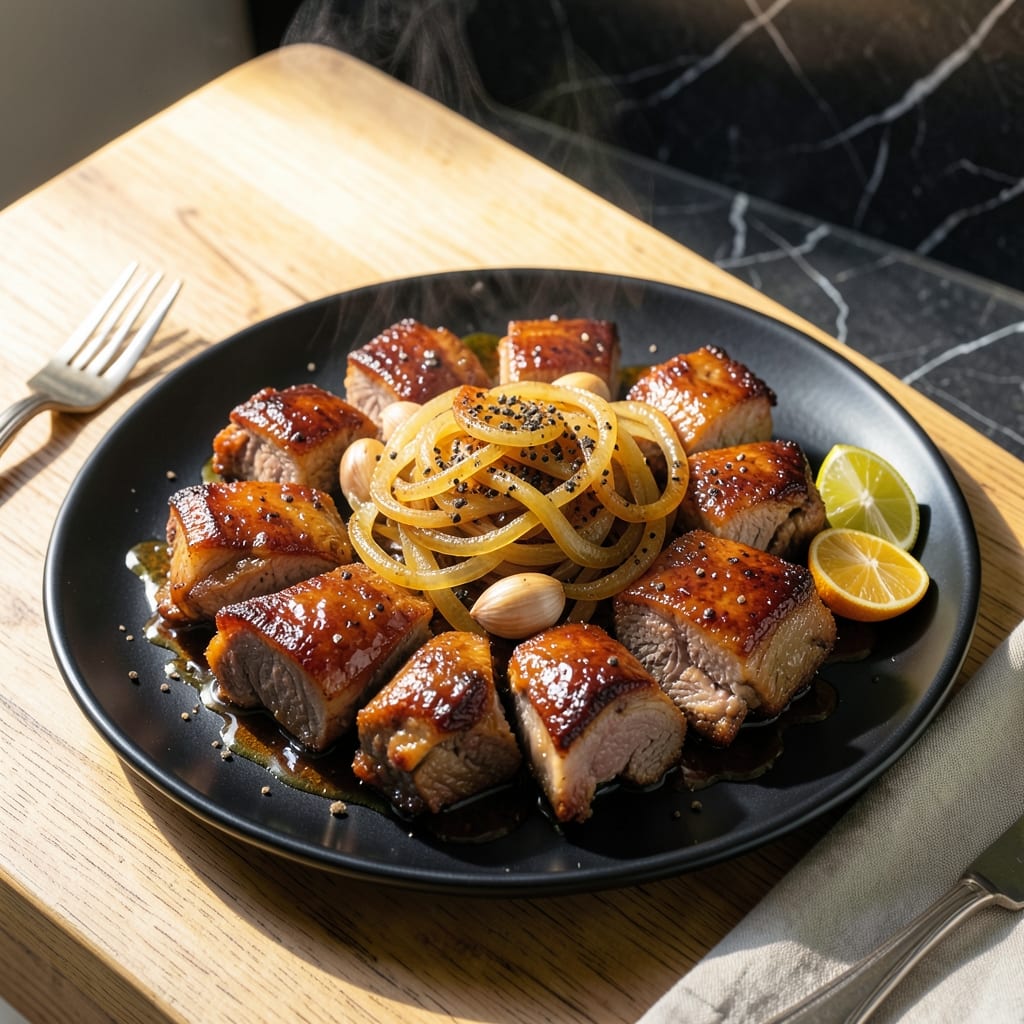
This slow-cooked pork asado captures the heart of Kapampangan cuisine with its tender meat and rich, aromatic sauce. I learned the value of patience from my grandmother, who insisted good food cannot be rushed.
The dish transforms tough cuts into melt-in-your-mouth perfection through a careful balance of soy sauce, vinegar, and spices. Traditional methods ensure every bite carries deep, savory notes with a subtle sweetness.
What emerges is pork so tender it falls apart at the touch of a fork, bathed in a glossy, deeply flavored sauce. The slow cooking process allows the flavors to develop fully and penetrate the meat.
Perfect for family gatherings or Sunday dinners, this creation brings authentic Kapampangan flavors to your table without complicated techniques.
Ingredients for Pork Asado Recipe Kapampangan Style
Rich, aromatic ingredients transform tough pork into melt-in-your-mouth perfection every time.
| Ingredient | Amount | Notes |
|---|---|---|
| Pork Shoulder 🐖 | 2 lb | Cut into 2-inch chunks |
| Soy Sauce 🥄 | ¾ cup | Prefer dark soy for depth |
| White Vinegar 💧 | ½ cup | Cane vinegar traditional |
| Brown Sugar 🍚 | ½ cup | Packed, for caramelization |
| Garlic Cloves 🧄 | 8 cloves | Peeled, smashed |
| Yellow Onion 🧅 | 1 whole | Large, sliced thin |
| Bay Leaves 🌿 | 3 pieces | Dried or fresh |
| Whole Black Peppercorns 🌶️ | 1 tsp | Lightly crushed |
| Star Anise Pods ⭐ | 2 pieces | Whole, no grinding |
| Pineapple Juice 🍍 | ½ cup | For natural sweetness |
| Cooking Oil 🫒 | 2 tbsp | Neutral flavor preferred |
| Salt 🧂 | 1 tsp | Adjust to taste |
| Ground Black Pepper 🌶️ | ½ tsp | Freshly ground |
The pork shoulder is non-negotiable here—look for well-marbled cuts at your butcher counter or Costco for the best price per pound. Dark soy sauce adds that deep color and complexity you want, but regular soy works in a pinch (just add a splash of molasses). Filipino cane vinegar is traditional, but apple cider vinegar gets you 90% there.
No pineapple juice? Substitute orange juice with a teaspoon of sugar for similar sweetness. Star anise is key for that authentic Kapampangan flavor, but a pinch of five-spice powder can stand in if you’re stuck. Bay leaves are easier to find fresh at Asian markets, but dried works too—just use one less. The brown sugar can be swapped for coconut sugar if you want a deeper caramel note.
This tastes even better the next day—reheat gently to keep the meat tender. Stores in the fridge for 4-5 days or freezes beautifully for up to 3 months. Leftovers make killer sandwiches or fried rice.
Why You’ll Love This Recipe
- One Pot Wonder: I just toss pork shoulder, soy sauce, vinegar, and brown sugar in a pot and let it do its thing.
- Sweet & Tangy: That caramelized brown sugar with the vinegar’s sharpness? Ridiculously good.
- Feeds a Crowd: Between us, it’s my go-to for family gatherings—everyone cleans their plate.
- Budget Stretch: Pork shoulder is cheap, and leftovers taste even better the next day.
Step-by-Step Instructions for Slow-Cooked Pork Asado with Aromatic Spices
Here’s the method I use to achieve fall-apart tender pork with rich, complex flavors every time.
Step 1: Sear the Pork Shoulder for Depth of Flavor
Heat the 2 tbsp cooking oil in a large pot over medium-high heat until shimmering. Add the 2 lb pork shoulder chunks and sear on all sides for 5-7 minutes until deep golden brown. I don’t overcrowd the pot—work in batches if needed to ensure proper browning.
This step builds a flavorful fond on the bottom of the pot that will dissolve into your sauce later. You’ll know it’s ready to flip when the pork releases easily from the pan. Remove the pork and set aside temporarily.
Step 2: Build the Aromatic Foundation
In the same pot, add the sliced 1 whole yellow onion, 8 cloves garlic cloves, 3 pieces bay leaves, 1 tsp whole black peppercorns, and 2 pieces star anise pods. Sauté for 2-3 minutes until the onions soften and the aromatics become fragrant.
I lightly crush the peppercorns before adding them to release their oils. The star anise should be whole—don’t grind it, as we want subtle, not overpowering, licorice notes. This aromatic base is what gives Kapampangan asado its distinctive character.
Step 3: Create the Braising Liquid and Return Pork
Pour in the 0.75 cup soy sauce, 0.5 cup white vinegar, 0.5 cup brown sugar, and 0.5 cup pineapple juice. Stir well to dissolve the brown sugar completely. Return the seared pork to the pot along with any accumulated juices.
The liquid should come about halfway up the pork pieces. I prefer dark soy sauce for its deeper color and richer flavor, but regular soy sauce works too. The pineapple juice adds a subtle sweetness that balances the dish beautifully.
Step 4: Slow-Cook to Tender Perfection
Bring the mixture to a boil, then reduce heat to low, cover, and simmer gently for 1.5 to 2 hours. I check occasionally to ensure the liquid isn’t evaporating too quickly—add a splash of water if needed.
You’ll know it’s done when the pork is fork-tender and the sauce has reduced slightly. The meat should pull apart easily with a gentle tug. Season with 1 tsp salt and 0.5 tsp ground black pepper, adjusting to taste.
Step 5: Reduce the Sauce and Serve
Once the pork is tender, uncover and simmer for an additional 10-15 minutes to thicken the sauce slightly. The sauce should coat the back of a spoon but still be pourable.
Remove the bay leaves and star anise pods before serving. The sauce will be rich and deeply flavored from the long cooking time. I like to serve this over steamed rice to soak up all that delicious sauce, with the pork chunks spooned generously on top.
Pro Tips For Making Pork Asado Recipe Kapampangan Style
- Sear the Pork First: Brown the pork shoulder in the pot before adding liquids—I learned this the hard way after my first few batches turned out pale and bland.
- Balance the Vinegar: Use equal parts soy sauce and vinegar, but taste before adding all the vinegar at once; some brands are sharper than others.
- Skip the Overcrowding: If doubling the recipe, use a bigger pot or cook in batches. Steer clear of cramming too much pork, or it’ll steam instead of caramelize.
- Add Sugar Late: Stir in the brown sugar only after the pork has simmered for 20 minutes—this prevents burning and gives that glossy Kapampangan-style glaze.
Make-Ahead Tips for This Dish
Overnight Marination
For even deeper flavor, combine the pork with soy sauce, vinegar, and spices the night before. I’ve found 12 hours of marinating time transforms the meat’s texture and taste. Just sear and braise the next day. 💡
Partial Prep Method
Brown the pork and sauté aromatics ahead, then refrigerate. The next day, add liquids and slow-cook as usual. This saves 30 minutes of active time while keeping flavors intact.
Freezer-Friendly
Cook the entire dish, cool completely, and freeze in portions. It reheats beautifully after 3 months—just thaw in the fridge overnight. I always make double batches for this reason. ❄️
Sauce Separation
Store sauce and pork separately if possible. When reheating, combine them and simmer for 10 minutes to meld flavors. This prevents the meat from drying out.
Reheating Tip
Gently warm on the stove over low heat with a splash of water. Microwaving works too, but cover with a damp towel to retain moisture.
Flavor Boost
If reheating, taste and adjust seasoning. A pinch of brown sugar or splash of vinegar often revives the original balance perfectly.
Nutrition Facts
Frequently Asked Questions
What cut of pork works best for this dish?
Use pork shoulder for its marbling and connective tissue, which breaks down beautifully during the 1.5-2 hour slow cook. Shoulder stays moist and absorbs flavors deeply. Avoid lean cuts like tenderloin.
Can I substitute the star anise?
Yes, use 1/4 tsp five-spice powder or 1 whole clove for similar warm, aromatic notes. Star anise is traditional, but these alternatives work in a pinch.
Why does the sauce separate after refrigeration?
This happens naturally as the fat solidifies. Simply reheat gently while stirring to reincorporate everything. The flavors will meld back together perfectly.
How do I know when it’s done?
The pork is ready when it pulls apart effortlessly with a fork. If it resists, cook for another 20-30 minutes on low heat. Overcooking isn’t possible here!

- Potato Chip Cookie Recipe With Pecans: Buttery Crunch Meets Nutty Richness - October 30, 2026
- Potato Patty Recipe No Egg: Crispy Edges Without the Binder - October 30, 2026
- Paula Deen’s Potato Chip Cookies Recipe: Salty-Sweet Crunch in Every Bite - October 30, 2026