
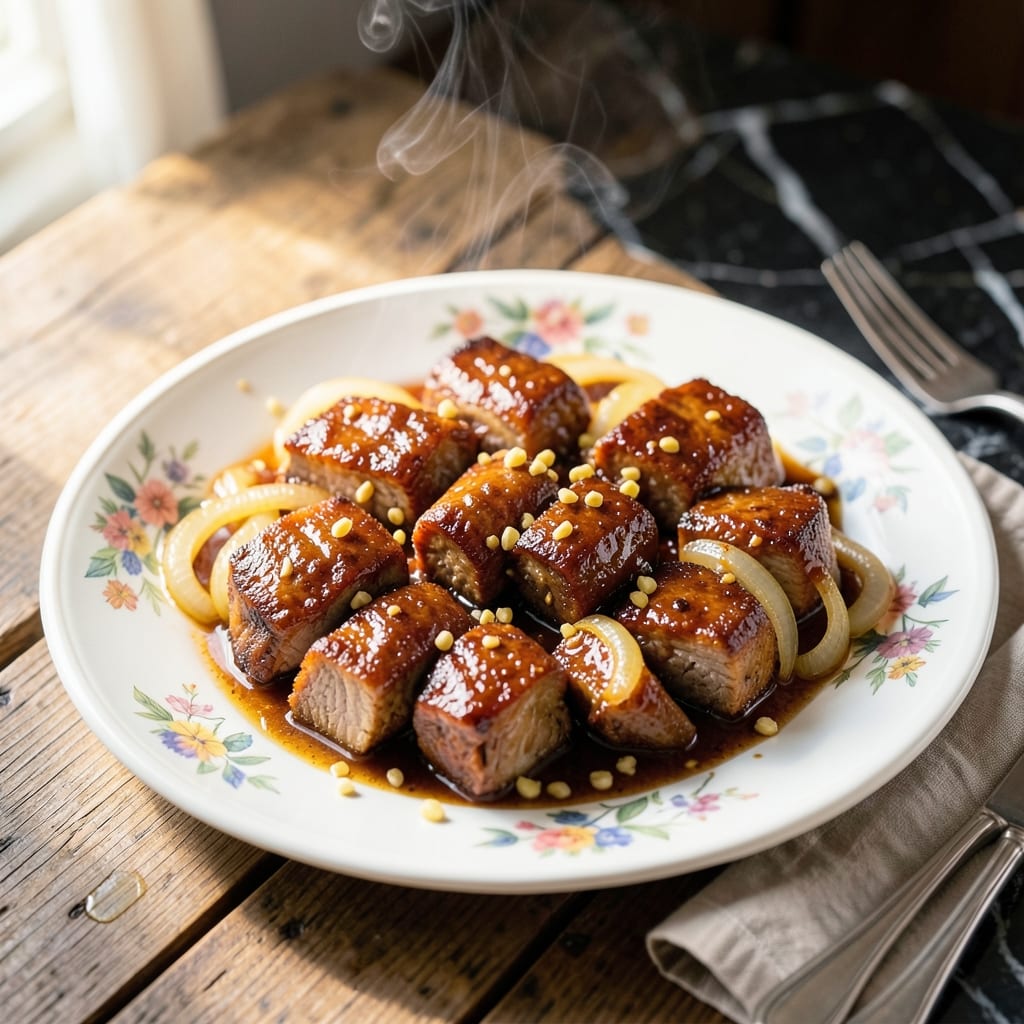
There’s nothing like the rich, tangy-sweet flavors of a traditional Pinoy pork asado to bring comfort to the dinner table. This slow-cooked stew transforms humble pork into tender, caramelized perfection with every bite.
I’ve refined this recipe to balance the classic trio of soy sauce, calamansi, and brown sugar, creating a sauce that’s both bold and deeply satisfying. The slow cooking process allows the pork to absorb all those vibrant flavors.
The result is fall-apart tender meat coated in a glossy, savory-sweet glaze that’s impossible to resist. Serve it over steamed rice to soak up every last drop of that incredible sauce.
This dish is perfect for family gatherings or when you want to recreate the warmth of a Filipino kitchen at home. Here’s how to make it just right.
Ingredients for Pork Asado Recipe Pinoy Style
Simple ingredients, big Filipino flavors. Most are already in your pantry or fridge.
| Ingredient | Amount | Notes |
|---|---|---|
| Pork Shoulder 🥩 | 2 lb | Cut into 2-inch cubes, fat cap on |
| Soy Sauce 🫒 | ¾ cup | Use Filipino brands like Silver Swan |
| Calamansi Juice 🍋 | ½ cup | Or substitute with lime juice |
| Brown Sugar 🍚 | ½ cup | Packed, for caramelization |
| Garlic Cloves 🧄 | 8 cloves | Peeled and minced |
| Yellow Onion 🧅 | 1 whole | Large, thinly sliced |
| Bay Leaves 🍃 | 3 pieces | Dried, for aromatic depth |
| Black Peppercorns 🌶️ | 1 tsp | Whole, crushed lightly |
| Water 💧 | 1 ½ cups | For braising liquid |
| Vegetable Oil 🫒 | 2 tbsp | For searing pork |
| Green Onions 🧅 | 4 whole | Thinly sliced, for garnish |
| Star Anise ⭐ | 2 pieces | Whole, optional for depth |
The pork is everything here. Pork shoulder (sometimes called pork butt) gives you that fall-apart texture—avoid lean cuts like tenderloin. Grab it from local Asian markets if you can; they often have better marbling. The soy sauce should be Filipino-style (like Silver Swan or Datu Puti), which is saltier and more umami-rich than Chinese brands. Don’t skip the calamansi if you can find it (look at Filipino grocery stores).
No calamansi? Lime or lemon juice works in a pinch, but reduce it by half—calamansi is milder. Brown sugar can be swapped for coconut sugar for a deeper flavor. Out of pork shoulder? Pork belly is richer, but trim some fat first. The star anise is optional but adds that classic Pinoy touch (find it in the spice aisle at H Mart or any Asian market).
This tastes even better the next day. Store in the fridge for up to 5 days or freeze for 3 months. The sauce thickens as it cools—just reheat with a splash of water to loosen. Always serve with steamed rice to soak up that glossy, tangy-sweet glaze.
Why You’ll Love This Recipe
- One Pot Wonder: I just toss everything in a pot and let the soy sauce and calamansi work their magic.
- Sweet & Tangy: The brown sugar and calamansi juice balance each other perfectly—honestly, it’s the first thing my family asks for.
- Feeds a Crowd: I make a big batch for gatherings, and it’s always a hit.
- Budget Stretch: Pork shoulder stays tender and flavorful, so a little goes a long way for leftovers.
Step-by-Step Instructions for Pork Asado Pinoy Style
This method delivers that perfect balance of tangy, sweet, and savory flavors in every bite.
Step 1: Sear the Pork Shoulder Cubes
Heat the 2 tbsp vegetable oil in a large pot over medium-high heat. Add the 2 lb pork shoulder cubes and sear until golden brown on all sides, about 5-7 minutes. I don’t overcrowd the pot—work in batches if needed to ensure each piece gets that beautiful crust.
This browning step builds a flavor foundation and locks in juices. You’ll know it’s ready when the pork releases easily from the pot and develops a deep caramelized color. Remove the pork and set aside temporarily.
Step 2: Sauté Aromatics and Build the Sauce
In the same pot, add the 8 cloves garlic and 1 whole yellow onion. Sauté for 2-3 minutes until fragrant and translucent. Then pour in the 0.75 cup soy sauce, 0.5 cup calamansi juice, and 0.5 cup brown sugar. Stir until the sugar dissolves completely.
This is where the magic happens—the soy sauce adds umami depth, the calamansi brings that signature tang, and the brown sugar will caramelize slightly as it cooks. Let this mixture simmer for 2 minutes to meld the flavors before adding the pork back in.
Step 3: Braise with Spices Until Tender
Return the seared pork to the pot. Add the 1.5 cups water, 3 pieces bay leaves, 1 tsp black peppercorns, and 2 pieces star anise. Bring to a boil, then reduce heat to low, cover, and let it simmer for 1.5 to 2 hours.
You’ll know it’s done when the fork slides into the pork with no resistance. I check at the 1.5-hour mark and let it go longer if needed. The sauce should thicken slightly and coat the back of a spoon. Stir occasionally to prevent sticking, but don’t overdo it—you want those flavors to settle.
Step 4: Adjust and Serve
Once the pork is tender, taste and adjust the seasoning if needed. The sauce should be a perfect balance of sweet, tangy, and salty. If it’s too strong, add a splash of water and simmer for another 5 minutes.
Discard the bay leaves and star anise. Garnish with the 4 whole green onions, thinly sliced. Serve hot over steamed rice, making sure each serving gets plenty of that rich, flavorful sauce. The pork should be fall-apart tender with a glossy, thick sauce clinging to every piece.
Pro Tips For Making Pork Asado Recipe Pinoy Style
- Sear Before Simmering: Brown the pork shoulder first in a hot pan—about 3-4 minutes per side—until deeply caramelized. Sounds weird, but it works: this builds a flavor base that soy sauce and calamansi can’t replicate on their own.
- Crush the Garlic: Smash the garlic cloves with the flat of your knife before mincing, then let them sit for 5 minutes. I learned this the hard way—it mellows the bite and lets the flavor bloom in the marinade.
- Skip the Water Bath: Resist the urge to boil the pork in water first; it washes away flavor. Start the pork directly in the soy-calamansi marinade and let it absorb every bit of that tangy-sweet goodness.
- Use Fresh Calamansi: Bottled calamansi juice lacks the bright, sharp punch you need. My grandmother swore by this, and she was right: fresh-squeezed makes a real difference in balancing the brown sugar’s sweetness.
Dietary Considerations for This Recipe
Gluten-Free Options
For a gluten-free version, swap the soy sauce with tamari or a certified gluten-free soy sauce like San-J. I’ve tested this with coconut aminos too—use ⅔ cup and add ½ tsp salt to match the flavor profile. The texture remains identical. 💡
Lower Sodium Alternatives
Cut sodium by using low-sodium soy sauce and reducing the total amount to ½ cup. Boost flavor with 1 tbsp fish sauce and extra calamansi juice. The dish stays vibrant without the salt overload.
Sugar Substitutes
Replace brown sugar with coconut sugar for a lower glycemic index. For a sugar-free version, use erythritol or monk fruit sweetener—start with ⅓ cup and adjust to taste. The caramelization won’t be as deep, but the sweetness shines.
Pescatarian Adaptation
Swap pork shoulder for firm tofu or jackfruit. Press tofu for 30 minutes before cubing, then sear until golden. Use the same sauce and cooking time—it absorbs flavors beautifully, like my grandma’s tofu adobo.
Dairy-Free Note
This recipe is naturally dairy-free, but always check your soy sauce for hidden lactose. I source mine from Portland farmers markets to avoid surprises. Serve with jasmine rice for a classic pairing.
Allergen Awareness
Common allergens here are soy and star anise (related to birch pollen). For soy allergies, use coconut aminos and skip the star anise. The dish remains just as comforting and rich. 🌱
Nutrition Facts
Frequently Asked Questions
What cut of pork works best?
Use pork shoulder for perfect tenderness. Its marbling breaks down during the 1.5-2 hour braise, creating melt-in-your-mouth texture. Avoid lean cuts like tenderloin.
Can I substitute calamansi juice?
Yes! Use lime or lemon juice but reduce by half, as calamansi is milder. For best results, find calamansi at Filipino markets. The citrusy tang is key to authentic flavor.
How do I fix sauce that’s too salty?
Add 1-2 tbsp brown sugar or a splash of water, then simmer for 5 minutes. The sweetness balances saltiness naturally. Always taste before adjusting.
Can this be made in a slow cooker?
Sear the pork first, then transfer everything to the slow cooker. Cook on low for 6-7 hours or high for 3-4 hours. The flavors deepen beautifully.

- Potato Chip Cookie Recipe With Pecans: Buttery Crunch Meets Nutty Richness - October 30, 2026
- Potato Patty Recipe No Egg: Crispy Edges Without the Binder - October 30, 2026
- Paula Deen’s Potato Chip Cookies Recipe: Salty-Sweet Crunch in Every Bite - October 30, 2026