
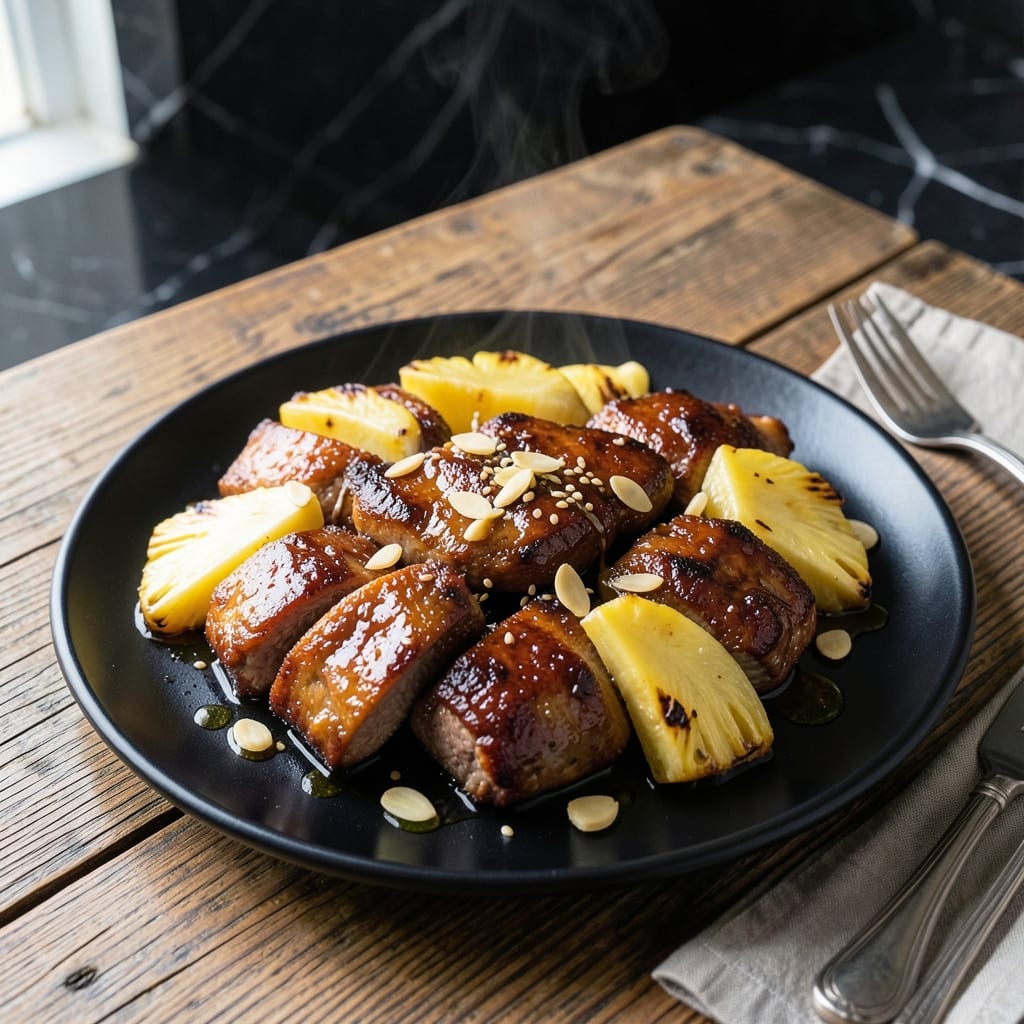
This Filipino braise delivers juicy pork and pineapple in a tangy-sweet sauce that’s impossible to resist. I learned this technique from my grandmother’s handwritten notes, where she described the perfect balance of sweet and sour without precise measurements.
The pork marinates in a mixture of soy sauce, vinegar, and garlic before slow-cooking with pineapple chunks. This method ensures the meat absorbs maximum flavor while staying tender. The pineapple adds natural sweetness that caramelizes slightly during cooking.
What emerges is fall-apart pork with a glossy, flavorful sauce that clings to every piece. The pineapple softens just enough to soak up the braising liquid while maintaining its shape. It’s the kind of dish that tastes like it simmered all day but comes together in under two hours.
Serve over steamed rice to soak up every last drop of that incredible sauce. Here’s how to make this family favorite.
Ingredients for Pork Asado Recipe with Pineapple
Pork, pineapple, and pantry staples create this irresistible Filipino braise.
| Ingredient | Amount | Notes |
|---|---|---|
| Pork Shoulder 🥩 | 2 lb | Cut into 2-inch chunks, bone-in preferred |
| Fresh Pineapple 🍍 | 2 cups | Cut into 1-inch chunks, core removed |
| Soy Sauce 🫒 | ½ cup | Use regular or light, not low-sodium |
| White Vinegar 💧 | ½ cup | Cane vinegar if available |
| Garlic Cloves 🧄 | 8 cloves | Peeled and crushed |
| Brown Sugar 🍚 | ¼ cup | Light or dark, packed |
| Bay Leaves 🌿 | 2 whole | Dried, for braising liquid |
| Black Peppercorns 🌶️ | 1 tsp | Lightly crushed for depth |
| Onion 🧅 | 1 whole | Medium, sliced into rings |
| Water 💧 | 1 cup | For braising liquid |
| Cooking Oil 🫒 | 2 tbsp | Neutral oil for searing |
| Salt 🧂 | 1 tsp | Adjust to taste after cooking |
The pork is the star here. Pork shoulder with good marbling gives you that juicy, fall-apart texture—avoid lean cuts like tenderloin. Most Asian markets carry pre-cut chunks, but any grocery store butcher will cube it for you (just ask for bone-in if you want extra flavor). I grab mine from H Mart when I’m making a big batch, but even the pre-packaged stuff at Kroger works fine.
No fresh pineapple? Canned pineapple chunks in juice (not syrup) work in a pinch. Out of cane vinegar? Apple cider vinegar at the same amount is a solid backup. The soy sauce is non-negotiable though—Silver Swan or Datu Puti if you can find them at an Asian grocery. If you’re watching sodium, cut back on the sugar instead of using low-sodium soy. The bay leaves can be fresh if you’ve got them, but dried is totally fine.
This tastes even better the next day once the flavors meld. Keeps for 4-5 days in the fridge, freezes for up to 3 months. I always make extra—leftovers reheat beautifully for quick lunches.
Why You’ll Love This Recipe
- One Pan Wonder: I just toss the pork shoulder, pineapple, soy sauce, vinegar, and garlic in a pot and let it simmer—hardly any cleanup.
- Sweet-Savory Magic: The pineapple caramelizes in the soy-vinegar marinade, while the garlic gives it that deep, aromatic punch.
- Feeds a Hungry Crowd: I made this for a family gathering and everyone asked for seconds—even the picky eaters.
- Leftovers for Days: Honestly, it tastes even better the next day, and it reheats like a dream.
Step-by-Step Instructions for Pork Asado With Pineapple
This method delivers tender meat and vibrant flavor with minimal effort.
Step 1: Sear the Pork Shoulder for Depth
Heat the 2 tbsp cooking oil in a large, heavy pot over medium-high heat until it shimmers. Pat the 2 lb pork shoulder chunks dry—this prevents steaming and ensures a proper sear. I add the meat in a single layer, leaving space between pieces so they brown rather than boil.
Sear undisturbed for 3-4 minutes per side until each piece develops a deep golden-brown crust. Don’t rush this step; that caramelized exterior builds the foundation for rich flavor. Transfer the pork to a plate and set aside—it’ll finish cooking in the braising liquid.
Step 2: Build the Aromatic Braising Liquid
In the same pot, add the sliced 1 whole onion and cook for 2 minutes until softened and just beginning to color. Toss in the 8 cloves garlic cloves and 1 tsp black peppercorns, stirring constantly for 30 seconds until fragrant. The garlic should sizzle but not brown—burnt garlic turns bitter.
Pour in the 0.5 cup soy sauce, 0.5 cup white vinegar, 0.25 cup brown sugar, 2 whole bay leaves, and 1 cup water. Stir to dissolve the sugar, scraping up any browned bits from the bottom. Bring the mixture to a gentle boil, then reduce heat to medium-low.
Step 3: Braise Until Fork-Tender
Return the pork to the pot along with the 2 cups fresh pineapple. The liquid should just cover the meat—if it doesn’t, add a splash more water. Cover and simmer for 1 hour, then uncover and simmer for another 30-45 minutes until the pork is fork-tender and the sauce has thickened slightly.
Here’s the thing—you’ll know it’s ready when the pork shreds easily with a fork and the pineapple has softened but still holds its shape. Stir occasionally during the uncovered phase to prevent sticking, and taste the sauce; it should balance sweet, tangy, and savory notes.
Season with the 1 tsp salt if needed.
Step 4: Rest and Serve
Remove the pot from heat and let the pork asado rest for 10 minutes. This allows the flavors to meld and the juices to redistribute. Discard the bay leaves before serving—they’ve infused their essence into the dish.
I like to serve this over steamed rice, spooning plenty of the pineapple-studded sauce on top. The pork should be juicy and falling apart, while the pineapple adds bright bursts of sweetness that cut through the richness. Garnish with fresh cilantro or green onions if you’re feeling fancy.
Pro Tips For Making Pork Asado Recipe With Pineapple
- Sear the Pork First: I learned this the hard way—browning the pork shoulder in batches over medium-high heat before braising locks in flavor and keeps the meat from turning gray. About 3-4 minutes per side does the trick.
- Use Ripe Pineapple: Sounds obvious, but underripe pineapple stays tough and sour. Pick one that smells sweet at the base and yields slightly when squeezed—it’ll melt into the sauce beautifully.
- Skip the Boiling Vinegar: Resist the urge to dump all the vinegar in at once. Add it toward the end of cooking, or it’ll make the pork tough instead of tender.
- Crush the Garlic: My grandmother swore by this, and she was right: lightly crushing the garlic cloves (peeled, of course) releases way more flavor into the asado than mincing. Just fish them out before serving if you prefer.
Wine and Beer Pairings for These Flavors
Filipino Beer Pairings
Nothing beats an ice-cold San Miguel Pale Pilsen with this dish—the crisp, light lager cleanses your palate between each rich, saucy bite. The beer’s subtle sweetness complements the pineapple beautifully. I grab mine from the international aisle at H Mart or any Asian market. 🍺
Light White Wines
A chilled Riesling with its bright acidity and touch of sweetness mirrors the dish’s tangy-sweet balance. Look for a German Kabinett or Washington State version. The wine’s citrus notes lift the pork’s richness without overpowering it.
Sparkling Options
For a celebratory touch, try Prosecco—its effervescence cuts through the braising sauce’s depth. The bubbles also refresh your mouth after each bite of tender pork. I find the La Marca brand reliably crisp and affordable.
Non-Alcoholic Pairing
Sparkling pineapple juice (like Lizano or Kern’s) offers a fun, alcohol-free alternative that echoes the dish’s fruitiness. Serve it well-chilled in a wine glass for a festive feel. It’s a hit with kids and adults alike.
Bold Red Alternative
If you prefer red wine, go for a lightly chilled Pinot Noir—its bright acidity and red fruit flavors won’t clash with the vinegar in the sauce. Avoid heavy tannins, which can make the dish taste harsh. ✨
Nutrition Facts
Frequently Asked Questions
Can I use canned pineapple instead of fresh?
Yes, canned pineapple in juice works fine. Drain it well first to prevent excess liquid in your braise. The texture will be softer than fresh, but the flavor remains excellent.
How do I know when the pork is done?
The pork is ready when it shreds easily with a fork after 1.5-2 hours of braising. The internal temperature should reach 195°F for perfect tenderness. The sauce should coat the back of a spoon.
Why did my sauce turn out too sour?
Balance the acidity by adding 1-2 tablespoons more brown sugar. Simmer for 5-10 minutes to dissolve. Taste as you go—the sweetness should complement, not overpower, the tang.
Can I make this in a slow cooker?
Sear the pork first, then transfer everything to the slow cooker. Cook on low for 6-7 hours or high for 3-4 hours until fork-tender. The flavors will be just as deep.

- Potato Chip Cookie Recipe With Pecans: Buttery Crunch Meets Nutty Richness - October 30, 2026
- Potato Patty Recipe No Egg: Crispy Edges Without the Binder - October 30, 2026
- Paula Deen’s Potato Chip Cookies Recipe: Salty-Sweet Crunch in Every Bite - October 30, 2026