
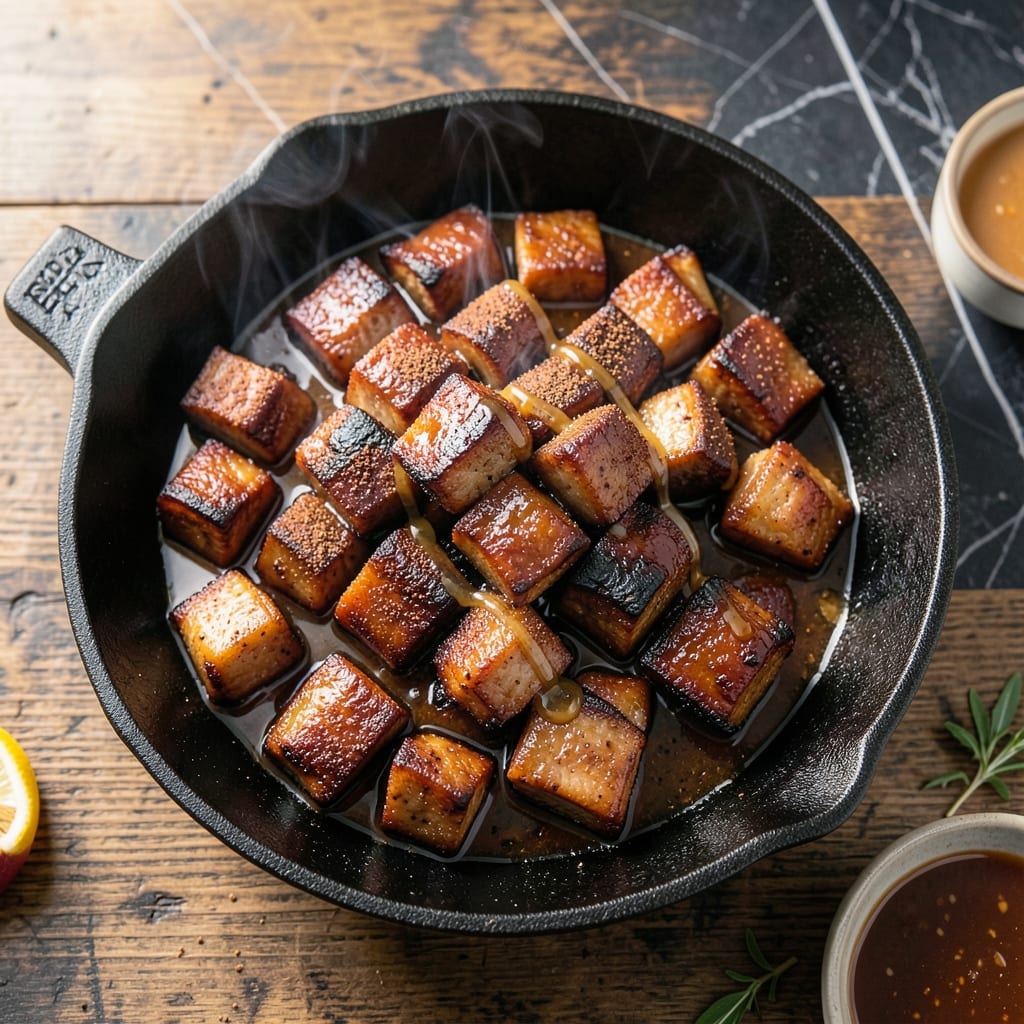
Mastering pork belly burnt ends on the smoker transforms this cut into tender, caramelized bites with deep smoky flavor. The process requires patience but delivers restaurant-quality results at home.
I developed this method after years of experimenting with temperatures and wood types. The key is low and slow smoking followed by a final caramelization step that creates that signature sticky exterior.
What you’ll achieve is cube-sized pieces with a crispy bark outside and melt-in-your-mouth tenderness inside. Each bite carries the perfect balance of sweet, smoky, and savory notes.
This technique works best with fruit woods like apple or cherry for a mild, complementary smoke. Ready your smoker and let’s begin.
Ingredients for Pork Belly Burnt Ends Recipe Smoker
Pantry staples meet smoker magic for these irresistible bite-sized pieces. Nothing too fancy here.
| Ingredient | Amount | Notes |
|---|---|---|
| Pork Belly 🥓 | 2 lb | Skin-on or skinless, cubed |
| Brown Sugar 🍚 | ½ cup | Light or dark variety |
| Honey 🍯 | ¼ cup | For sticky glaze finish |
| Apple Cider Vinegar 🍏 | 2 tbsp | Balances sweetness with tang |
| Yellow Mustard 🟡 | 2 tbsp | Binds rub to meat |
| Kosher Salt 🧂 | 1 tbsp | Diamond Crystal preferred |
| Coarse Black Pepper 🌶️ | 1 tbsp | Freshly ground for best flavor |
| Garlic Powder 🧄 | 1 tbsp | Not garlic salt |
| Onion Powder 🧅 | 1 tbsp | Adds depth to dry rub |
| Smoked Paprika 🌶️ | 1 tsp | Enhances smoky profile |
| Apple Wood Chips 🪵 | 2 cups | Or cherry wood for smoking |
| Butter 🧈 | ½ cup | Unsalted, for finishing |
| Beef Broth 🥩 | ½ cup | For braising liquid |
The pork belly is non-negotiable here. Look for a 2-3 lb slab with even marbling—this ensures those melt-in-your-mouth results. Most butchers will cube it for you if you ask nicely (saves time and ensures even cooking). I always grab mine from Costco or a local butcher—avoid pre-packaged stuff that’s been sitting too long. Skin-on vs. skinless? Both work, but skinless gives you more bark surface.
No apple wood? Cherry or pecan are great backups—just avoid mesquite (too strong for this). Brown sugar can be swapped for turbinado or maple sugar at a 1:1 ratio. Out of honey? Maple syrup works in a pinch. The mustard is just a binder—Dijon or even mayo can stand in. For extra depth, add a dash of cayenne to the rub.
Pre-cubed pork belly keeps in the fridge for 3-4 days or freezes beautifully for 3 months. The dry rub can be mixed ahead and stored in a jar for up to 6 months. Once smoked, burnt ends reheat well in a skillet or oven—add a splash of broth to keep them juicy.
Why You’ll Love This Recipe
- Set It and Forget: That smoker does all the heavy lifting—just season, smoke, and let the pork belly turn magical with almost zero babysitting.
- Sweet & Sticky Heaven: Honestly, the brown sugar and honey create this glossy, caramelized crust that cracks open to tender meat underneath. It’s ridiculous how good it is.
- Crowd-Pleasing Star: I’ve served these at summer BBQs and casual family dinners alike. They disappear faster than I can slice them.
- Leftovers? Yes Please: Between us, they taste even better the next day—toss them into tacos or over rice for a quick meal that still feels special.
Step-by-Step Instructions for Pork Belly Burnt Ends
Here’s the method I’ve perfected for achieving competition-worthy burnt ends with a sticky, caramelized bark.
Step 1: Season and Smoke the Pork Belly
Begin by cubing the 2 lb pork belly into 1-inch pieces. In a bowl, mix the 1 tbsp kosher salt, 1 tbsp coarse black pepper, 1 tbsp garlic powder, 1 tbsp onion powder, and 1 tsp smoked paprika to create your dry rub.
Toss the pork belly cubes in the 2 tbsp yellow mustard first—this helps the rub adhere. Then coat them thoroughly with the dry rub. I’ve found that massaging the seasoning into the meat ensures every bite is packed with flavor.
Step 2: Smoke Until Deeply Flavored
Preheat your smoker to 225°F and add the 2 cups apple wood chips for that essential smoky aroma. Place the seasoned pork belly cubes directly on the grates, ensuring they’re not touching each other for even smoke exposure.
Smoke the pork belly for 3 hours or until the internal temperature reaches 165°F. You’re looking for a deep mahogany color and a firm texture at this stage. The wood chips should be producing a steady stream of thin blue smoke—this is the sweet spot for ideal flavor infusion.
Step 3: Braise for Tenderness
Transfer the smoked pork belly to a disposable aluminum pan. Pour the 0.5 cup beef broth over the cubes, then add the 0.5 cup butter, 0.5 cup brown sugar, and 0.25 cup honey. The liquid should come about halfway up the pork belly.
Cover the pan tightly with foil and return it to the smoker. Braise for another 2-3 hours until the pork belly is probe-tender. This step transforms the meat from chewy to melt-in-your-mouth tender while the sugars begin to caramelize.
Step 4: Glaze and Caramelize
Carefully remove the foil and stir the pork belly to coat it in the braising liquid. Increase the smoker temperature to 275°F and cook uncovered for 30-45 minutes, stirring every 10-15 minutes.
Add the 2 tbsp apple cider vinegar during this final stage to balance the sweetness. You’ll know it’s ready when the sauce has reduced to a thick, sticky glaze and the pork belly cubes have developed a dark, glossy bark. The glaze should cling to the meat, creating those signature burnt ends we all love.
Pro Tips For Making Pork Belly Burnt Ends Recipe Smoker
- Cube Evenly: Cut your pork belly into 1-inch cubes before smoking—any smaller and they’ll dry out, any larger and they won’t caramelize properly. I learned this the hard way after my first batch came out half burnt, half underdone.
- Dry the Surface: Pat the pork belly cubes completely dry before applying the rub. Sounds tedious, but it’s the only way to get that sticky, crunchy bark instead of a steamed exterior.
- Skip the Sauce Early: Don’t brush on the honey-brown sugar glaze until the last 30 minutes of smoking. Adding it too soon causes burning—yes, even at low temps.
- Rest Before Saucing: Let the burnt ends rest for 10 minutes after pulling them off the smoker, then toss in the apple cider vinegar and mustard mix. This keeps the meat from absorbing too much liquid and turning mushy.
Serving Suggestions for This Recipe
Plating Presentation
Serve these burnt ends in a cast iron skillet for a rustic presentation that keeps them warm. The skillet retains heat beautifully and looks stunning on the table. I love the way the glaze pools at the bottom.
Garnish Ideas
Sprinkle with chopped fresh parsley or cilantro for a pop of color. A drizzle of the leftover glaze from the pan adds extra shine and flavor. For texture contrast, add toasted sesame seeds or crushed peanuts. 🌟
Side Dish Pairings
These rich bites need something fresh to cut through the sweetness. I recommend a crisp coleslaw with apple cider vinegar dressing or pickled vegetables. For heartier meals, serve with smoked baked beans.
Bread Options
Soft brioche buns make perfect sliders, while cornbread offers a sweet-savory combination. For a lighter option, serve with grilled garlic bread to soak up the delicious juices.
Serving Temperature
These are best served hot, straight from the smoker. If making ahead, reheat in a 350°F oven for 10-15 minutes to restore the sticky glaze. The bark will re-crisp beautifully. 🔥
Portion Sizes
Plan for 4-6 cubes per person as a main course, or 2-3 cubes as part of a larger spread. These disappear quickly at gatherings, so I always make extra for seconds.
Nutrition Facts
Frequently Asked Questions
What’s the ideal smoker temperature for these?
Start at 225°F for the initial smoking phase, then increase to 275°F for the final caramelization. This two-stage process ensures both tenderness and that perfect sticky bark.
Can I use a different type of wood?
Apple and cherry woods are ideal, but pecan or hickory work well too. Avoid mesquite—it’s too strong and can overpower the pork’s natural sweetness.
How do I know when they’re done?
Look for a dark, glossy bark and internal temp of 203°F. The meat should be probe-tender, like butter. The glaze will thicken noticeably in the final stage.
Why did my burnt ends turn out dry?
This usually happens if they’re overcooked or the braising liquid evaporates. Keep them covered during the braising phase and check the pan occasionally to ensure there’s enough liquid.

- Potato Chip Cookie Recipe With Pecans: Buttery Crunch Meets Nutty Richness - October 30, 2026
- Potato Patty Recipe No Egg: Crispy Edges Without the Binder - October 30, 2026
- Paula Deen’s Potato Chip Cookies Recipe: Salty-Sweet Crunch in Every Bite - October 30, 2026