
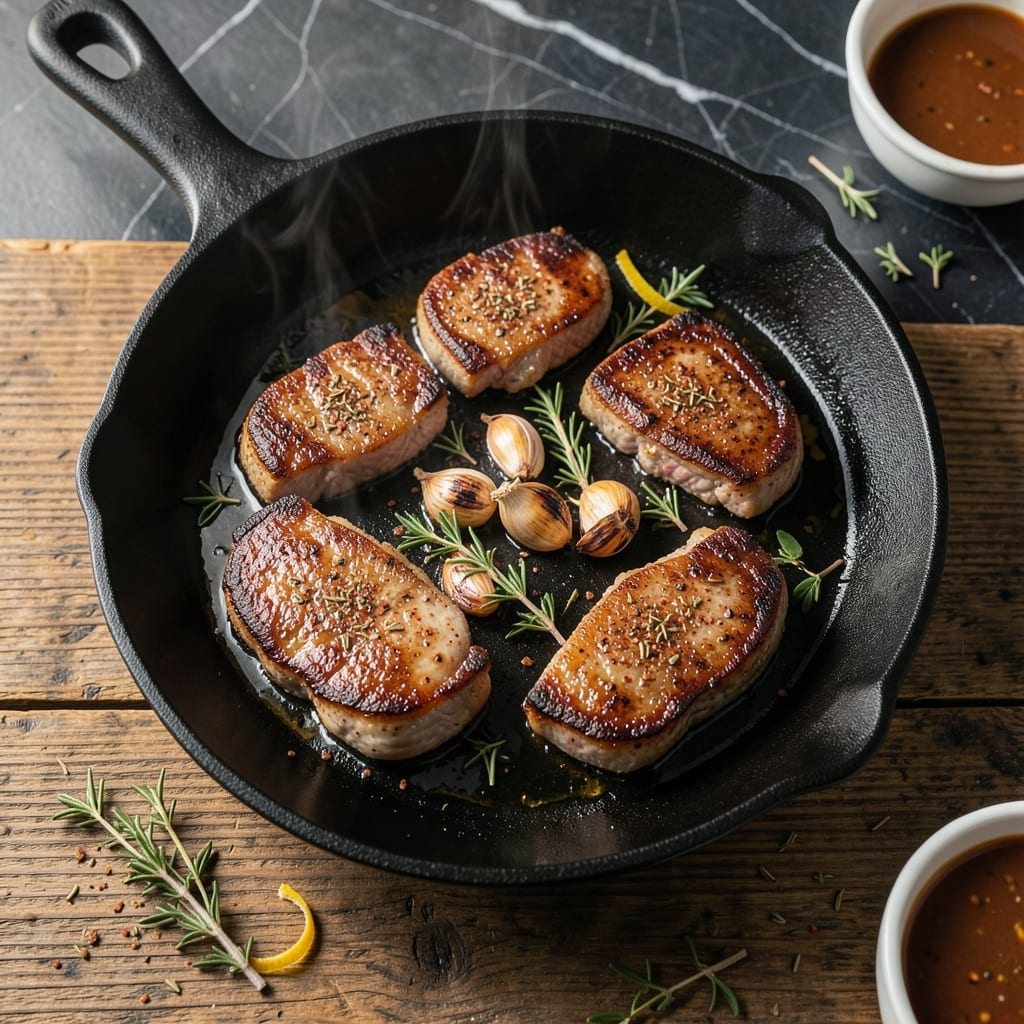
Achieving crispy pork belly steaks at home is easier than you might think. The key lies in proper preparation and precise cooking techniques that transform this rich cut into perfectly seared bites.
I developed this method after testing various approaches to get that ideal balance of tender interior and golden exterior. The process involves scoring the skin, seasoning generously, and cooking in stages to render fat while maintaining moisture.
The result is crispy edges giving way to succulent meat that melts in your mouth. Each bite delivers layers of flavor with minimal effort but maximum payoff.
This technique works for both quick weeknight dinners and impressive weekend meals. The secret is patience during the cooking process to achieve that signature texture.
Ingredients for Pork Belly Steaks
Transform rich pork belly into crispy steaks with these carefully selected ingredients for maximum flavor and texture.
| Ingredient | Amount | Notes |
|---|---|---|
| Pork Belly 🥩 | 2 lb | Skin-on, cut into 1-inch thick steaks |
| Kosher Salt 🧂 | 1 tbsp | Diamond Crystal preferred for even seasoning |
| Freshly Ground Black Pepper 🌶️ | 1 tsp | Coarse grind for texture |
| Garlic Powder 🧄 | 1 tsp | Not garlic salt |
| Smoked Paprika 🌶️ | 1 tsp | Adds depth of flavor |
| Dried Thyme 🍃 | ½ tsp | Crushed between fingers to release oils |
| Olive Oil 🫒 | 2 tbsp | High smoke point variety for searing |
| Apple Cider Vinegar 🍏 | 1 tbsp | Balances richness of pork |
| Brown Sugar 🍚 | 1 tbsp | Light or dark, for caramelization |
| Fresh Rosemary Sprigs 🌿 | 2 whole | Optional, for aromatic infusion |
| Unsalted Butter 🧈 | 2 tbsp | For basting during searing |
| Fresh Garlic Cloves 🧄 | 3 cloves | Smashed for basting |
The pork belly is non-negotiable here—source skin-on, high-quality cuts from a trusted butcher or specialty grocer like Whole Foods. Look for pieces with even fat marbling and firm skin; avoid anything with a grayish tint. The skin must be intact and unblemished for that signature crisp. For the best results, ask your butcher to cut it into 1-inch thick steaks, or do it yourself at home with a sharp knife.
No smoked paprika? Regular paprika with a pinch of cayenne works in a pinch, though the smoky depth will be less pronounced. Fresh rosemary can be swapped for fresh thyme or sage—both pair beautifully with pork. If avoiding sugar, a touch of maple syrup can replace brown sugar, but use sparingly. Apple cider vinegar is key for cutting through the fat, but white vinegar or lemon juice are acceptable substitutes.
Pork belly keeps well in the fridge for 3-4 days before cooking, or freeze for up to 3 months. Once cooked, the steaks are best enjoyed immediately but can be reheated in a hot oven to revive crispiness. Store leftovers in an airtight container for 2-3 days.
Why You’ll Love This Recipe
- One Pan Wonder: I just rub the pork belly with salt, pepper, garlic powder, and smoked paprika, then sear—minimal cleanup.
- Smoky Depth: The smoked paprika gives that rich, almost bacon-like flavor without the fuss.
- Dinner or Lunch: Honestly, these steaks work for a fancy dinner or a quick lunch the next day.
- Stretches Far: One slab of pork belly gives me 4-6 servings, and leftovers reheat beautifully.
Step-by-Step Instructions for Pork Belly Steaks
Master the technique for achieving perfectly crispy edges and tender centers with this method.
Step 1: Season the Pork Belly Steaks
Begin by patting the 2 lb pork belly steaks dry with paper towels to ensure maximum crispiness. In a small bowl, combine the 1 tbsp kosher salt, 1 tsp freshly ground black pepper, 1 tsp garlic powder, 1 tsp smoked paprika, and 0.5 tsp dried thyme. Crush the dried thyme between your fingers to release its essential oils.
Rub this seasoning mixture generously over all sides of the pork belly steaks, pressing it into the meat. This creates a flavorful crust while enhancing the natural richness of the pork. Let the seasoned steaks sit at room temperature for 15-20 minutes to allow the salt to begin penetrating the meat.
Step 2: Sear the Steaks to Perfection
Heat the 2 tbsp olive oil in a large, heavy skillet over medium-high heat until it shimmers but does not smoke. Carefully place the seasoned pork belly steaks in the pan, skin-side down first. Sear undisturbed for 5-6 minutes until the skin develops a deep golden-brown crust.
Flip the steaks and sear the other side for an additional 4-5 minutes. The steaks should release easily from the pan when properly seared. Add the 1 tbsp apple cider vinegar and 1 tbsp brown sugar to the pan, allowing it to caramelize slightly around the edges of the steaks.
Step 3: Baste with Aromatics
Reduce the heat to medium and add the 2 tbsp unsalted butter, 3 cloves fresh garlic cloves (lightly smashed), and 2 whole fresh rosemary sprigs to the skillet. Tilt the pan slightly and use a spoon to baste the pork belly steaks with the melted butter, garlic, and rosemary continuously for 2-3 minutes.
This basting process infuses the steaks with aromatic flavors while promoting even cooking. The garlic should turn light golden brown but not burn. Remove the rosemary sprigs before serving if desired, though they can be left in for presentation.
Step 4: Rest and Serve
Transfer the pork belly steaks to a cutting board or serving plate. Tent loosely with foil and let them rest for 5-10 minutes. This allows the juices to redistribute throughout the meat, ensuring each bite is moist and flavorful.
The steaks should have a crispy exterior with a tender, juicy interior. Slice against the grain if desired, though the steak cuts are typically served whole. Serve immediately while hot, with any pan juices spooned over the top for added richness.
Pro Tips For Making Pork Belly Steaks
- Score the Fat: Cut 1/4-inch deep slits in the fat cap before seasoning—this renders the fat evenly and prevents curling during cooking.
- Start Cold, Finish Hot: Sear the pork belly in a cold pan first, then increase to medium-high—this renders fat slowly without burning the spices.
- Pat It Dry: Blot the pork belly with paper towels before seasoning; moisture is the enemy of a good crust with kosher salt and smoked paprika.
- Rest Before Slicing: Let the steaks rest 5-10 minutes after cooking—skipping this and the juices will run, leaving dry meat despite the fat content.
Dietary Considerations for This Dish
Keto-Friendly Option
This dish fits perfectly into a keto diet, as pork belly is naturally high in fat and zero-carb. The recipe contains only 1 tbsp brown sugar, which is minimal and can be omitted entirely without sacrificing flavor. 💪
Gluten-Free Naturally
All ingredients in this preparation are inherently gluten-free, making it safe for those with celiac disease or gluten sensitivity. Just double-check that your smoked paprika and other spices are certified gluten-free to avoid cross-contamination.
Dairy-Free Adaptation
To make this dairy-free, simply replace the 2 tbsp unsalted butter with an equal amount of olive oil or avocado oil for basting. The result will be just as flavorful, with a slightly different aromatic profile.
Low-Sodium Considerations
For those watching their sodium intake, reduce the 1 tbsp kosher salt by half and use a low-sodium seasoning blend. The pork belly’s natural richness will still shine through beautifully.
Consider adding fresh herbs like rosemary or thyme to compensate for reduced salt.
Paleo Modifications
This recipe is already paleo-friendly as written. The only adjustment would be ensuring your brown sugar is replaced with a paleo-approved sweetener like coconut sugar or simply omitted. 🥗
Nutrition Facts
Frequently Asked Questions
Do I need to score the skin before cooking?
Scoring helps render fat and create crispier skin. Use a sharp knife to make shallow cuts in a crosshatch pattern, spaced about 1/2 inch apart.
What oil works best for searing?
Use oils with a high smoke point like avocado, grapeseed, or refined coconut oil. These handle the medium-high heat without burning.
How do I prevent the steaks from curling?
Make a few small slits along the fat cap edges before cooking. This releases tension and helps them stay flat during searing.
Can I cook these in the oven?
Start with a stovetop sear, then finish in a 400°F oven for 10-12 minutes for even cooking. Use a cast iron skillet for best results.

- BBQ Sausage Recipe Oven: Smoky Depth Without the Grill - September 28, 2026
- BBQ Chicken Bowl Recipe Rice: Smoky Sweetness Over Fluffy Grains - September 28, 2026
- Beef Cutlet Recipe Ideas: Crispy Breaded Patties With Bold Seasonings - September 28, 2026