
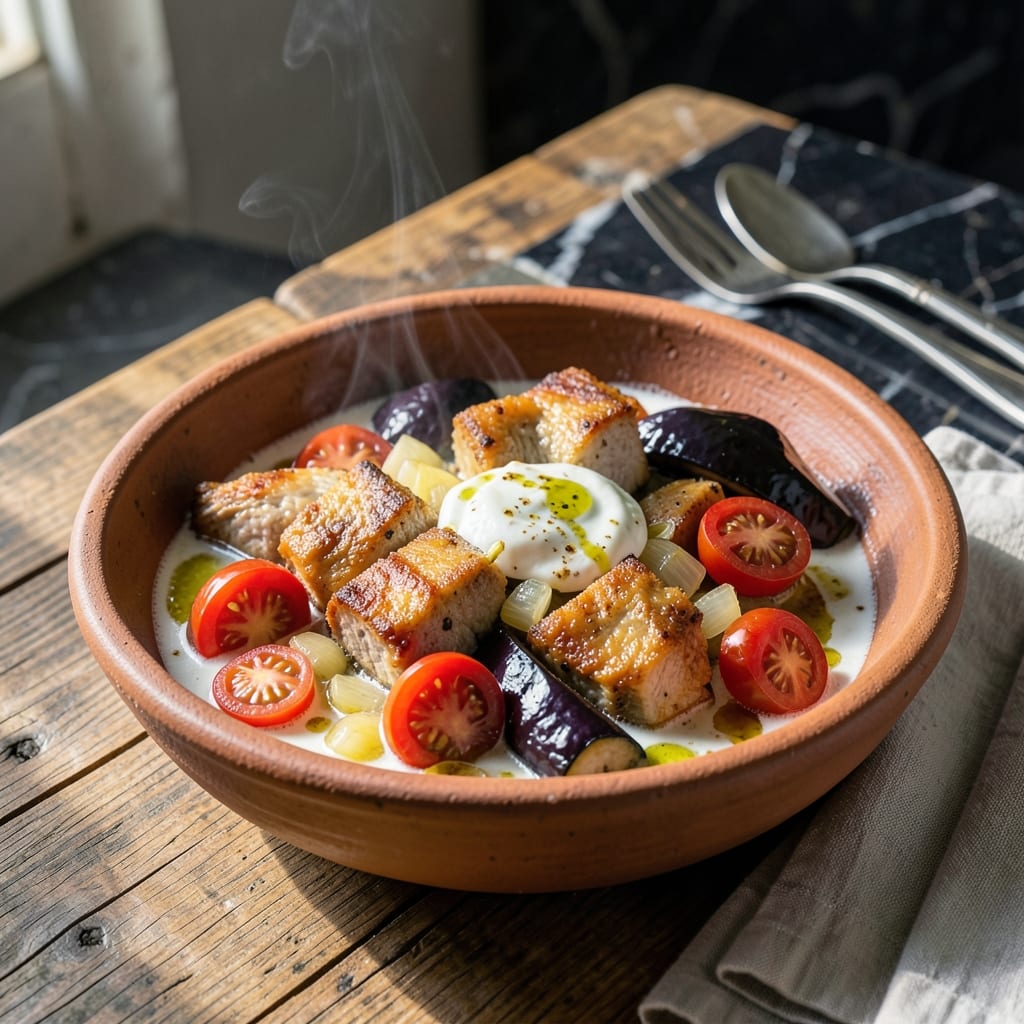
This Filipino pork stew captures the bold, umami-rich flavors of fermented shrimp paste combined with tender pork and silky eggplant. I perfected this traditional dish after studying my grandmother’s handwritten notes, which lacked precise measurements.
The key is balancing the salty shrimp paste with tangy tomatoes and creamy coconut milk. This method transforms simple ingredients into a deeply flavorful stew that’s both comforting and complex.
You’ll achieve tender pork pieces soaking up the rich, savory sauce, with eggplant that melts in your mouth. The aroma alone will transport you to a Filipino kitchen.
Serve with steamed rice to soak up every last bit of the sauce. This recipe stays true to tradition while being simple enough for any home cook.
Ingredients for Pork Binagoongan Recipe Simpol
Rich pork, briny shrimp paste, and silky eggplant come together beautifully here.
| Ingredient | Amount | Notes |
|---|---|---|
| Pork Belly 🥩 | 1 ½ lb | Cut into 1-inch cubes, skin-on preferred |
| Fermented Shrimp Paste 🦐 | ¼ cup | Filipino bagoong alamang variety |
| Japanese Eggplant 🍆 | 2 whole | Sliced into 1-inch rounds |
| Roma Tomatoes 🍅 | 3 whole | Diced, seeds removed |
| Coconut Milk 🥥 | 1 can | Full-fat for creaminess |
| Yellow Onion 🧅 | 1 whole | Finely chopped |
| Garlic Cloves 🧄 | 5 cloves | Minced for depth |
| Ginger Root 🌿 | 1 whole | 1-inch piece, thinly sliced |
| Long Green Chile 🌶️ | 2 whole | Sliced diagonally, optional for heat |
| Fish Sauce 🐟 | 1 tbsp | Patis or Thai tiparos preferred |
| White Vinegar 💧 | 2 tbsp | Balances saltiness of shrimp paste |
| Brown Sugar 🍚 | 1 tsp | Optional, to round out flavors |
| Vegetable Oil 🫒 | 2 tbsp | For sautéing aromatics |
| Bay Leaf 🍃 | 1 whole | Dried, for aroma |
| Steamed Rice 🍚 | 4 cups | Cooked, for serving |
The shrimp paste is non-negotiable—Filipino markets or Asian grocery stores carry the real stuff (look for bagoong alamang). Pork belly gives the best texture (that melt-in-your-mouth fat), but pork shoulder works if that’s what’s available. I always grab my coconut milk from Trader Joe’s—consistent quality without weird additives. For eggplant, Japanese variety has thinner skin and fewer seeds (less bitterness).
No shrimp paste? Anchovy paste at half the amount gets you close but won’t be the same. Short on eggplant? Zucchini or okra hold up well in the stew. Can’t find long green chiles? Jalapeños or serranos work—just adjust for heat. The fish sauce can be swapped for soy sauce in a pinch, but expect a different flavor profile. Fresh ginger is ideal, but ground ginger at a quarter the amount works too.
Leftovers taste even better the next day once flavors meld. Stores 3-4 days in the fridge, freezes for 3 months. Reheat gently to keep the eggplant intact (it gets mushy if boiled hard). Always serve with fresh steamed rice—it’s the perfect vehicle for that rich, umami-packed sauce.
Why You’ll Love This Recipe
- One Pot Wonder: I toss everything in a single pan—pork belly, shrimp paste, and eggplant—and let it simmer. Minimal cleanup, maximum flavor.
- Umami Bomb: The fermented shrimp paste and coconut milk create this rich, funky depth that’s honestly addictive. It’s salty, creamy, and a little tangy all at once.
- Feeds a Crowd: I make a big batch for family dinners and it disappears fast. Leftovers taste even better the next day.
- Budget Stretcher: Pork belly and eggplant are affordable, and a little shrimp paste goes a long way. Here’s what sold me—it’s fancy-tasting without the fancy price.
Step-by-Step Instructions for Fermented Shrimp Paste Pork Stew with Eggplant
This method balances bold flavors with simple technique for authentic results.
Step 1: Sauté Aromatics to Build Flavor Base
Heat the 2 tbsp Vegetable Oil in a large pot over medium heat. Add the finely chopped Yellow Onion and cook for 3-4 minutes until translucent and fragrant. This creates the sweet foundation for your stew.
Add the minced Garlic Cloves, thinly sliced Ginger Root, and 2 whole Long Green Chile. Sauté for another 1-2 minutes until the garlic turns light golden. Be careful not to burn the garlic—it turns bitter quickly.
Step 2: Brown the Pork and Develop Depth
Increase heat to medium-high and add the 1.5 lb Pork Belly cubes. Cook for 5-7 minutes, stirring occasionally, until the pork develops a light brown crust on all sides. This browning adds rich, meaty depth to the dish.
Stir in the 0.25 cup Fermented Shrimp Paste and cook for 2 minutes, allowing it to toast slightly. You’ll notice the aroma become more pronounced—this is the shrimp paste releasing its umami essence. Add the 1 whole Bay Leaf at this stage.
Step 3: Incorporate Vegetables and Liquids
Add the 2 whole Japanese Eggplant slices and 3 whole Roma Tomatoes. Stir to combine and cook for 3-4 minutes until the eggplant begins to soften slightly. The eggplant will absorb the flavors of the pork and aromatics beautifully.
Pour in the 1 can Coconut Milk, 1 tbsp Fish Sauce, 2 tbsp White Vinegar, and 1 tsp Brown Sugar. Stir well to combine all ingredients. The vinegar helps balance the saltiness of the shrimp paste, while the sugar rounds out the flavors.
Step 4: Simmer to Perfection
Bring the mixture to a gentle boil, then reduce heat to low. Cover and let it simmer for 30-40 minutes, stirring occasionally. You want the pork to become tender and fork-easy while the eggplant melts into the sauce.
The stew should thicken slightly as it cooks, with the coconut milk creating a rich, creamy base. Taste and adjust seasoning if needed—remember that the shrimp paste is already quite salty, so go easy on additional salt.
Step 5: Rest and Serve Over Rice
Once the pork is tender and the flavors have melded together, remove the 1 whole Bay Leaf. Let the stew rest for 5 minutes off the heat to allow the flavors to settle.
Serve hot over the 4 cups Steamed Rice. The contrast between the rich, tangy stew and the neutral rice is what makes this dish truly special. Each bite should deliver a perfect balance of savory, slightly funky shrimp paste, tender pork, and creamy coconut.
Pro Tips For Making Pork Binagoongan Recipe Simpol
- Sauté Shrimp Paste First: Cook the fermented shrimp paste in oil for 2-3 minutes before adding anything else—this mellows the Funk and deepens the flavor. I learned this the hard way after my first batch tasted harsh.
- Parboil the Pork: Boil the pork belly cubes for 8-10 minutes first to render some fat and remove impurities. Skipping this leaves the sauce greasy, and nobody wants that.
- Salt the Eggplant: Sprinkle salt on the sliced Japanese eggplant and let it sit for 10 minutes to draw out bitterness. Rinse and pat dry before cooking—sounds fussy but actually changes the outcome.
- Use Full-Fat Coconut Milk: Resist the urge to use light coconut milk; the fat carries the shrimp paste flavor and balances the dish. My grandmother swore by this, and she was right.
Dietary Considerations for This Recipe
Gluten-Free Naturally
This dish is inherently gluten-free since it relies on rice as the base and contains no wheat products. The fermented shrimp paste and fish sauce are traditionally gluten-free, but always check labels as some brands add wheat as a thickener. 💪
Dairy-Free Option
The recipe uses coconut milk instead of dairy, making it naturally dairy-free. No modifications are needed for those avoiding lactose. I love how the coconut milk adds creaminess without any dairy at all.
Low-Carb Adjustments
To reduce carbs, simply decrease the steamed rice portion or serve with cauliflower rice instead. The stew itself is naturally low in carbohydrates, with most coming from the vegetables. This keeps the dish keto-friendly with minimal changes.
Allergen Awareness
This stew contains shrimp paste and fish sauce, so it’s not suitable for those with shellfish or fish allergies. For nut allergies, ensure your coconut milk is processed in a nut-free facility. Always verify ingredient sources.
Sodium Considerations
The fermented shrimp paste and fish sauce are high in sodium. I recommend reducing other added salts and using low-sodium fish sauce if available. Taste as you cook to control saltiness.
Vegetable Swaps
For a lighter version, replace pork belly with chicken thighs or tofu. The eggplant can be swapped for zucchini or okra without affecting the dish’s core character. These changes keep the stew delicious while fitting different dietary needs. ✨
Nutrition Facts
Frequently Asked Questions
What can I use if I can’t find shrimp paste?
Anchovy paste works as the closest substitute at half the amount. The flavor won’t be identical but it provides the needed umami.
How do I know when the pork is done?
It should be fork-tender after 30-40 minutes of simmering. The pork will easily pull apart and the eggplant will have softened significantly.
Can I make this ahead of time?
The flavors deepen overnight in the fridge for up to 3-4 days. Reheat gently to avoid breaking up the eggplant.
Why did my stew turn out too salty?
Shrimp paste is naturally salty. Balance it with extra coconut milk or vinegar. Next time, start with less paste and adjust to taste.

- Potato Chip Cookie Recipe With Pecans: Buttery Crunch Meets Nutty Richness - October 30, 2026
- Potato Patty Recipe No Egg: Crispy Edges Without the Binder - October 30, 2026
- Paula Deen’s Potato Chip Cookies Recipe: Salty-Sweet Crunch in Every Bite - October 30, 2026