
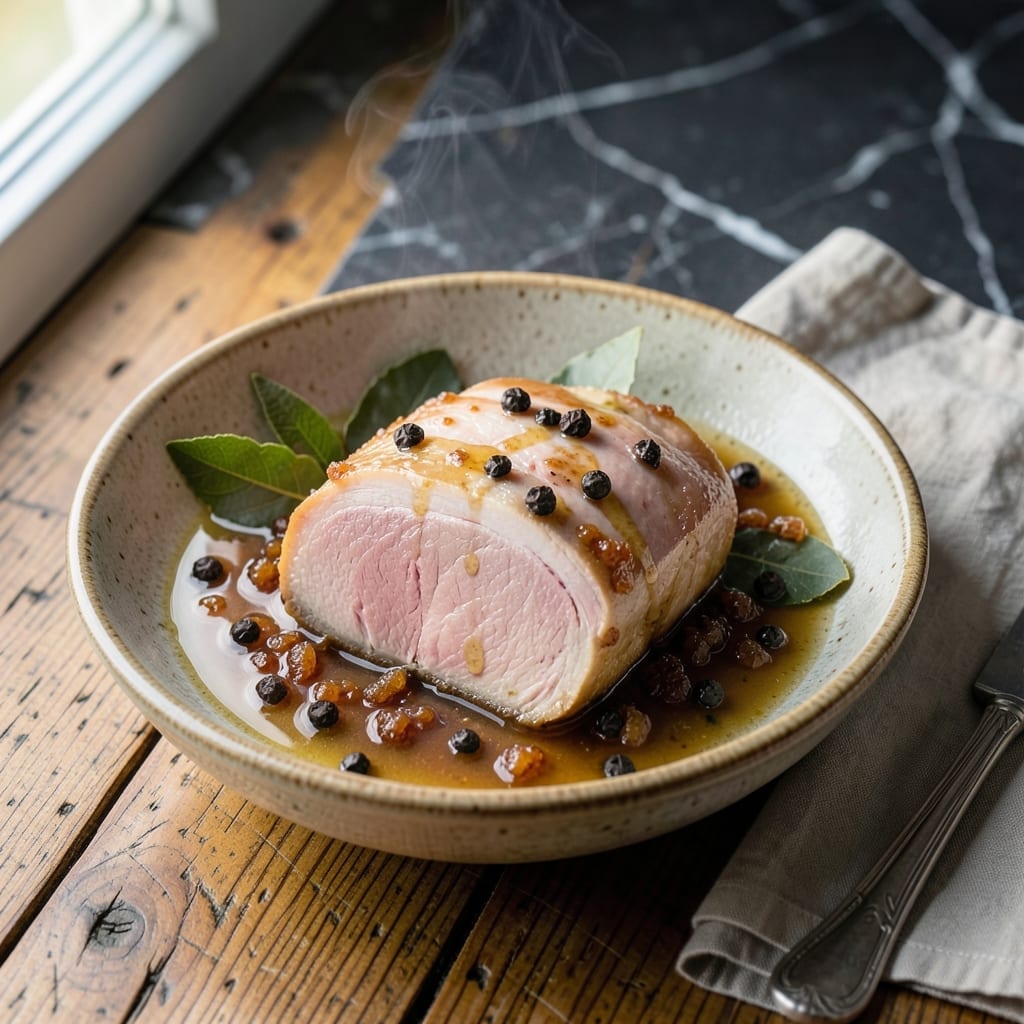
This brine transforms pork from dry to perfectly juicy every time. I developed this method after too many disappointing roasts in my tiny Boston kitchen.
The apple cider vinegar adds a subtle tang while tenderizing the meat. Combined with salt and sugar, it creates a simple yet effective solution that penetrates deep into the pork.
Use this for chops, tenderloin, or ribs. The brine works its magic in just 12-24 hours, ensuring moist results whether you’re grilling, roasting, or smoking.
No more tough, stringy pork. This preparation guarantees tender, flavorful meat that falls apart at the touch of a fork.
Ingredients for Pork Brine Recipe Apple Cider Vinegar
Nine ingredients create this juice-locking brine for perfectly tender pork every time.
| Ingredient | Amount | Notes |
|---|---|---|
| Water 💧 | 4 cups | Cold, for brine base |
| Apple Cider Vinegar 🍏 | 1 cup | For tang and tenderizing |
| Kosher Salt 🧂 | ½ cup | Diamond Crystal preferred |
| Brown Sugar 🍚 | ¼ cup | Light or dark works |
| Black Peppercorns 🌶️ | 1 tbsp | Crushed for depth |
| Bay Leaves 🌿 | 2 whole | Dried, for aroma |
| Garlic Cloves 🧄 | 4 cloves | Smashed, peeled |
| Juniper Berries 🫒 | 1 tsp | Optional, for complexity |
| Fresh Rosemary 🌿 | 2 sprigs | Bruised to release oils |
The salt is critical here—Diamond Crystal kosher salt dissolves cleanly and gives consistent results. I grab mine from Whole Foods in the bulk section (cheaper than those little boxes). Apple cider vinegar should be raw and unfiltered—Bragg is my go-to. The sugar balances the salt and vinegar; don’t skip it. For the peppercorns, a quick crush with a rolling pin releases their oils.
No juniper berries? Skip them entirely—they’re a nice touch but not essential. Fresh rosemary can be swapped for 1 tsp dried rosemary. Out of bay leaves? Thyme sprigs work in a pinch. If you’re using table salt instead of kosher, cut the amount in half (it’s much denser). The garlic can be left whole if you’re lazy, but smashing it exposes more surface area.
Brine keeps for 1 week in the fridge in a sealed container. Don’t reuse it after raw pork has soaked in it. For best results, brine pork for 12-24 hours—any longer and it can get too salty. Always rinse meat after brining to remove excess surface salt.
Why You’ll Love This Recipe
- 5-Minute Mix: I just dump everything in a pot, heat, and cool—no fancy steps.
- Sweet-Tangy Magic: The apple cider vinegar and brown sugar give pork that bright, caramelized bite I can’t get enough of.
- Brines Anything: I’ve used this for chops, ribs, even turkey—works every single time.
- Stays Fresh: Honestly, a big batch keeps in the fridge for a week, so I brine whenever I need to.
Step-by-Step Instructions for Pork Brine with Apple Cider Vinegar
This method guarantees juicy, flavorful pork every time with minimal effort.
Step 1: Bloom the Aromatics
In a large saucepan, combine the 4 cups Water with the 1 cup Apple Cider Vinegar, 0.5 cup Kosher Salt, and 0.25 cup Brown Sugar. Place over medium-high heat and stir until both the salt and sugar dissolve completely—this ensures even distribution throughout the brine.
As the mixture heats, add the 1 tbsp Black Peppercorns, 2 whole Bay Leaves, 4 cloves Garlic Cloves, 1 tsp Juniper Berries, and 2 sprigs Fresh Rosemary. You want to see tiny bubbles forming around the edges before removing from heat—this releases the oils and flavors from the spices.
Step 2: Cool the Brine Completely
Remove the saucepan from heat and let the brine cool to room temperature. I like to stir it occasionally to speed up the process. The liquid should feel cool to the touch before using—hot brine will start cooking the pork and alter its texture.
This step usually takes about 30-45 minutes. If you’re in a hurry, you can place the saucepan in an ice bath to cool it faster. Just make sure no ice gets into the brine itself, as it will dilute the flavors.
Step 3: Submerge the Pork Fully
Place your pork in a large, non-reactive container or brining bag. Pour the cooled brine over the meat, ensuring it’s completely submerged. For best results, use a brine bag or a container just large enough to hold the pork and liquid snugly.
If the pork floats, place a small plate or weight on top to keep it under the surface. This guarantees every part of the meat absorbs the brine evenly. For larger cuts, you may need to make additional brine to fully cover the pork.
Step 4: Brine for Optimal Tenderness
Refrigerate the pork in the brine for 12-24 hours. I’ve found that 18 hours hits the sweet spot for most cuts, giving enough time for the brine to penetrate deeply without over-softening the meat’s texture.
The apple cider vinegar works to tenderize the pork while the salt helps it retain moisture. You’ll notice the meat looks slightly plumper after brining—that’s the liquid being absorbed. Don’t exceed 24 hours or the texture can become mushy.
Step 5: Rinse and Prepare for Cooking
Remove the pork from the brine and discard the liquid. Rinse the meat briefly under cold water to remove any excess salt and spices from the surface. Pat it thoroughly dry with paper towels before cooking.
This step is crucial for achieving a good sear or bark on your pork. The drier the surface, the better it will brown. Let the meat rest at room temperature for 30 minutes before cooking to ensure even doneness throughout.
Pro Tips For Making Pork Brine Recipe Apple Cider Vinegar
- Brine Long Enough: Give the pork at least 12 hours in the brine—any less and the apple cider vinegar won’t have time to tenderize the meat properly.
- Dissolve the Sugar: Heat the water, salt, and brown sugar together first to fully dissolve them, otherwise you’ll end up with gritty patches on your pork.
- Skip the Metal: Use a non-reactive container like glass or plastic for brining, or the vinegar will react with metal and leave a weird aftertaste.
- Rinse Before Cooking: After brining, give the pork a quick rinse under cold water to remove excess salt—otherwise your dish will taste unpleasantly briny.
Health Benefits of This Dish
Moisture Retention
This brine keeps pork juicy by breaking down muscle proteins, allowing the meat to hold onto 20-30% more moisture during cooking. The salt in the solution alters the protein structure, creating a barrier that prevents liquid loss as the pork cooks. I notice the difference most with lean cuts like tenderloin. 💪
Tenderizing Effect
The apple cider vinegar in this recipe does double duty—its mild acidity gently breaks down tough muscle fibers while adding a subtle tang. Combined with the salt, it creates a synergistic effect that tenderizes without turning the meat mushy, even for budget-friendly cuts.
Flavor Infusion
Garlic, rosemary, and bay leaves infuse the pork with aromatic depth during brining. Unlike surface seasoning, these flavors penetrate deep into the meat. The brown sugar balances the vinegar’s acidity while promoting caramelization during cooking for a beautiful crust.
Food Safety Benefits
Brining in a controlled salt solution helps inhibit bacterial growth on the meat’s surface. The 12-24 hour soak gives the salt time to work its preservative magic. Always brine in the refrigerator at 40°F or below for safety.
Nutrient Preservation
This method helps retain water-soluble vitamins like B12 and zinc that might otherwise leach out during cooking. The shorter cooking time needed for brined pork also helps preserve heat-sensitive nutrients. I’ve found brined pork retains more of its natural juices and nutrients.
Digestive Ease
The tenderizing effect of this brine makes pork easier to digest by partially breaking down proteins before cooking. The apple cider vinegar may also aid digestion. Many of my friends with sensitive stomachs find brined pork gentler on their systems. 💛
Nutrition Facts
Frequently Asked Questions
How long should I brine pork chops?
For pork chops, brine for 12-18 hours in the refrigerator. This gives enough time for the flavors to penetrate without making the meat too soft. Any longer risks over-salting.
Can I reuse the brine for another batch?
No, never reuse brine after it has been in contact with raw pork. This can spread bacteria and compromise food safety. Always discard used brine and make a fresh batch.
What if I don’t have apple cider vinegar?
White vinegar or rice vinegar can work in a pinch, but they lack the fruity depth. Use the same 1 cup amount, and add 1 tbsp of brown sugar to balance the sharper taste.
Does brining work for all pork cuts?
Yes, but adjust the time. Lean cuts like tenderloin benefit from the full 12-24 hours, while fattier cuts like ribs can handle up to 24 hours. Always keep it refrigerated.

- Potato Chip Cookie Recipe With Pecans: Buttery Crunch Meets Nutty Richness - October 30, 2026
- Potato Patty Recipe No Egg: Crispy Edges Without the Binder - October 30, 2026
- Paula Deen’s Potato Chip Cookies Recipe: Salty-Sweet Crunch in Every Bite - October 30, 2026