
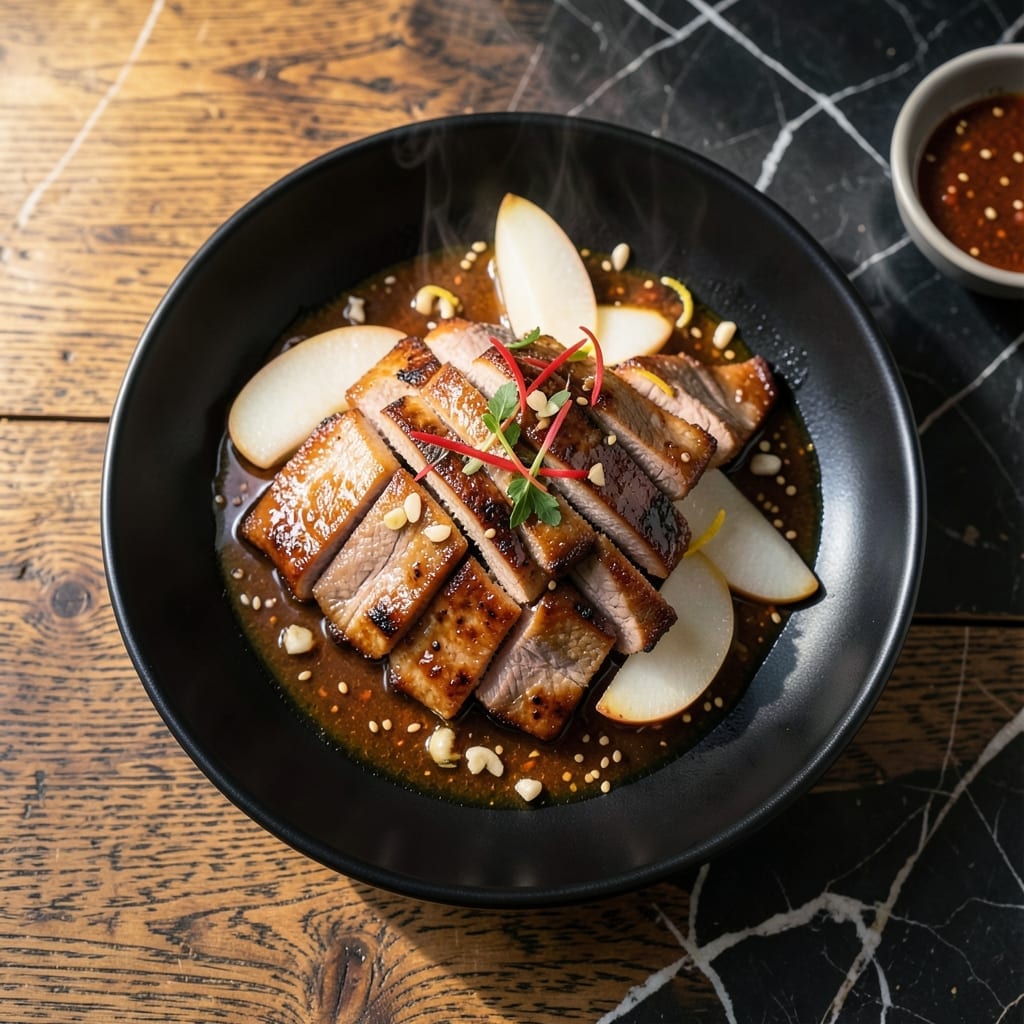
This classic Korean dish proves that bold flavor doesn’t need heat. My grandmother’s version, discovered among her handwritten cards, skipped the chili entirely—focusing instead on the perfect balance of sweet and savory.
Thinly sliced pork marinated in soy sauce, brown sugar, garlic, and pear creates tender, caramelized meat with no spice. The pear is the secret, naturally tenderizing the pork while adding subtle sweetness.
The result is fall-apart tender pork with a glossy, sweet-savory glaze that’s addictive without being overwhelming. It’s the dish that made me understand why Korean cooking relies on balance, not just heat.
Serve over rice with quick-pickled cucumbers for the full experience. This version stays true to tradition while being completely approachable for home cooks.
Ingredients for Pork Bulgogi Recipe Not Spicy
Thin pork, sweet pear, and savory soy create this dish’s signature caramelized magic.
| Ingredient | Amount | Notes |
|---|---|---|
| Pork Shoulder 🥩 | 1 ½ lb | Thinly sliced, about 1/8-inch thick |
| Soy Sauce 🫒 | ½ cup | Low-sodium preferred for balance |
| Brown Sugar 🍚 | ⅓ cup | Light or dark, packed |
| Asian Pear 🍐 | 1 whole | Peeled, grated for marinade |
| Garlic Cloves 🧄 | 6 cloves | Minced for maximum flavor infusion |
| Fresh Ginger 🌿 | 1 tbsp | Peeled and finely grated |
| Sesame Oil 🫒 | 1 tbsp | Toasted, for depth of flavor |
| Green Onions 🧅 | 4 whole | Thinly sliced, for garnish |
| Neutral Cooking Oil 🫒 | 2 tbsp | For searing pork slices |
| White Sesame Seeds 🌰 | 1 tbsp | Toasted, for garnish |
| Black Pepper 🌶️ | ½ tsp | Freshly ground preferred |
| Jasmine Rice 🍚 | 2 cups | Uncooked, for serving |
The pork is the foundation—pork shoulder (also called pork butt) has the right fat-to-meat ratio for that melt-in-your-mouth texture. H-Mart or Korean markets often sell it pre-sliced for bulgogi (ask for it), but any supermarket will work—just freeze it for 30 minutes to slice thinly yourself. The pear is non-negotiable here; Bosc or Asian pears have the enzymes that tenderize the meat naturally (the good stuff, not the rock-hard ones).
No Asian pear? Bartlett pear or even grated apple works in a pinch. Kiwi’s a great substitute too (use one, peeled and mashed)—it’s got the same tenderizing enzymes. Out of brown sugar? White sugar plus a teaspoon of molasses gets you close. The soy sauce can be regular if that’s what you’ve got, just taste before adding extra salt. And if you’re missing ginger, ground ginger at one-third the amount saves the day.
Marinate the pork for at least 4 hours—overnight’s ideal for maximum flavor. Cooked bulgogi keeps in the fridge for 3-4 days and freezes beautifully for up to 3 months. Reheat gently to keep the meat tender (don’t blast it in the microwave).
Why You’ll Love This Recipe
- One Pot Marvel: I toss everything in a pan and let the soy sauce and brown sugar do the work while I set the table.
- Sweet & Savory Magic: The Asian pear tenderizes the pork shoulder while garlic and brown sugar create this addictive caramelized crust.
- Meal Prep Hero: I double the batch and it tastes even better the next day in rice bowls or wrapped in lettuce.
- Budget Win: Pork shoulder stays cheap, and a little goes a long way with this flavor-packed marinade.
Step-by-Step Instructions for Sweet and Savory Pork Bulgogi
This classic method transforms thinly sliced pork into a caramelized, tender delight with minimal effort.
Step 1: Create the Marinade Base
In a large bowl, whisk together the 0.5 cup Soy Sauce, 0.33 cup Brown Sugar, 1 tbsp Sesame Oil, and 0.5 tsp Black Pepper until the sugar fully dissolves. The mixture should look glossy and slightly thickened from the sugar.
Add the 1 whole Asian Pear (peeled and grated) to the soy sauce mixture. The pear’s natural enzymes will tenderize the pork while adding subtle sweetness. Stir in the 6 cloves Garlic Cloves (minced) and 1 tbsp Fresh Ginger (peeled and grated) for aromatic depth.
Step 2: Marinate the Pork Thoroughly
Add the 1.5 lb Pork Shoulder (thinly sliced) to the marinade, ensuring each piece is fully coated. I like to use my hands for this—they do a better job than a spoon. The pork should glisten with the marinade, with no dry spots visible.
Cover the bowl and refrigerate for at least 2 hours (overnight is ideal). This extended marinating time allows the flavors to penetrate deeply. The pork will absorb most of the liquid, becoming slightly pliable when ready to cook.
Step 3: Sear the Pork to Caramelized Perfection
Heat 2 tbsp Neutral Cooking Oil in a large skillet over medium-high heat until it shimmers. Working in batches to avoid crowding, add the marinated pork in a single layer. Let it sear undisturbed for 2-3 minutes until the edges become deep golden brown.
Flip the slices and cook for another 2-3 minutes until caramelized and cooked through. The sugar in the marinade will create beautiful dark brown crusts on the pork. Remove to a plate and repeat with remaining pork.
Step 4: Garnish and Serve with Jasmine Rice
Just before serving, sprinkle the cooked pork with 1 tbsp White Sesame Seeds (toasted) and 4 whole Green Onions (thinly sliced). The sesame seeds add a nutty crunch while the green onions provide fresh contrast.
Serve immediately over steamed 2 cups Jasmine Rice. The pork should be tender with a glossy, caramelized exterior. Each bite will offer the perfect balance of sweetness from the pear and sugar, saltiness from the soy, and rich umami from the seared pork.
Pro Tips For Making Pork Bulgogi Recipe Not Spicy
- Slice Thin Against Grain: Cut the pork shoulder into 1/8-inch slices against the grain—I learned this the hard way after chewing through tough strips. It makes the meat melt-in-your-mouth tender, even without long cooking.
- Grate the Pear Fine: Use a microplane to grind the Asian pear into the marinade. Sounds weird, but it works: the fine pulp blends seamlessly and tenderizes the pork better than chunks.
- Marinate 4 Hours Minimum: Skip the 30-minute rush job. After burning three batches of under-marinated pork, I finally figured out that 4-6 hours in the fridge is the sweet spot for flavor and tenderness.
- Char Over High Heat: High heat. Seriously, crank it up when searing the pork to get those caramelized edges from the brown sugar and soy sauce—your future self will thank you.
Common Mistakes When Making This Dish
Skipping the Marinating Time
I learned the hard way that 2 hours is the minimum for flavor penetration. Once I rushed it with just 30 minutes—the pork tasted bland and the texture was tough. The pear’s enzymes need time to work their tenderizing magic on the meat. 💡
Overcrowding the Pan
When searing, resist the urge to cook all the pork at once. Crowding lowers the pan temperature, causing the pork to steam instead of caramelize. I use my 12-inch cast iron skillet and cook in batches—it makes all the difference in achieving that perfect deep golden brown crust.
Using the Wrong Cut
Pork shoulder is ideal for its fat marbling, but I once used lean pork tenderloin. The result was dry and chewy. If you must substitute, choose pork loin and slice it extra thin to compensate for the lack of fat.
Neglecting the Pear
This ingredient is non-negotiable for authentic texture. Once I skipped it, thinking the sugar would suffice. The pork lacked tenderness and that subtle sweetness. Bosc or Asian pears work best—avoid rock-hard varieties that won’t break down properly.
High Heat Mistakes
Burnt sugar ruins the flavor balance. I keep my burner at medium-high heat and watch for the telltale caramelization. If the marinade starts smoking, lower the heat immediately. The goal is a glossy glaze, not a charred mess.
Skipping the Rest
After cooking, let the pork rest for 5 minutes before serving. This allows the juices to redistribute. I made the mistake of serving immediately once—the juices ran all over the plate instead of staying in the meat. 🌟
Nutrition Facts
Frequently Asked Questions
What can I use instead of Asian pear?
Bartlett pear or grated apple work well as substitutes. Kiwi is another great option—use one peeled and mashed for similar tenderizing effects.
Can I make this ahead of time?
Yes! Marinate the pork overnight for deeper flavor. Cooked bulgogi keeps in the fridge for 3-4 days and freezes well for up to 3 months. Reheat gently to maintain tenderness.
Why isn’t my pork caramelizing?
Overcrowding the pan or using low heat prevents proper browning. Cook in batches over medium-high heat and avoid stirring too soon. The sugar needs time to create that glossy crust.
Is pork shoulder the only cut that works?
Pork shoulder is ideal for its fat content, but pork loin can work if sliced extra thin. Avoid lean cuts like tenderloin—they tend to dry out during cooking.

- Potato Chip Cookie Recipe With Pecans: Buttery Crunch Meets Nutty Richness - October 30, 2026
- Potato Patty Recipe No Egg: Crispy Edges Without the Binder - October 30, 2026
- Paula Deen’s Potato Chip Cookies Recipe: Salty-Sweet Crunch in Every Bite - October 30, 2026